Imagining Otherwise: Architectural and Urban Visions from the Drawing Matter Collection – 19 & 20 September 2026
Saturday 19 & Sunday 20 September
11.00–18.00
8 Smart’s Place, London, WC2B 5LW
Free and open to all
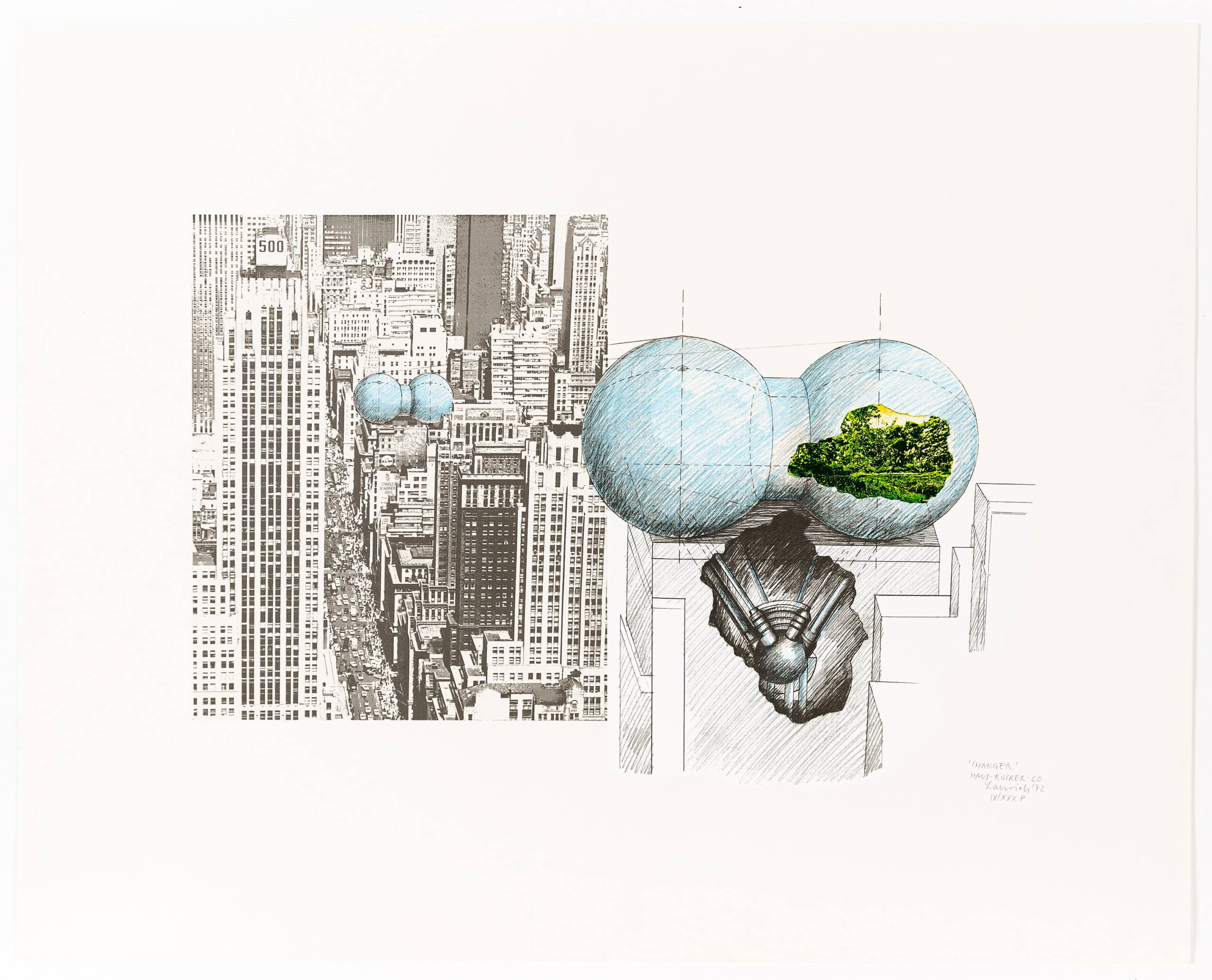
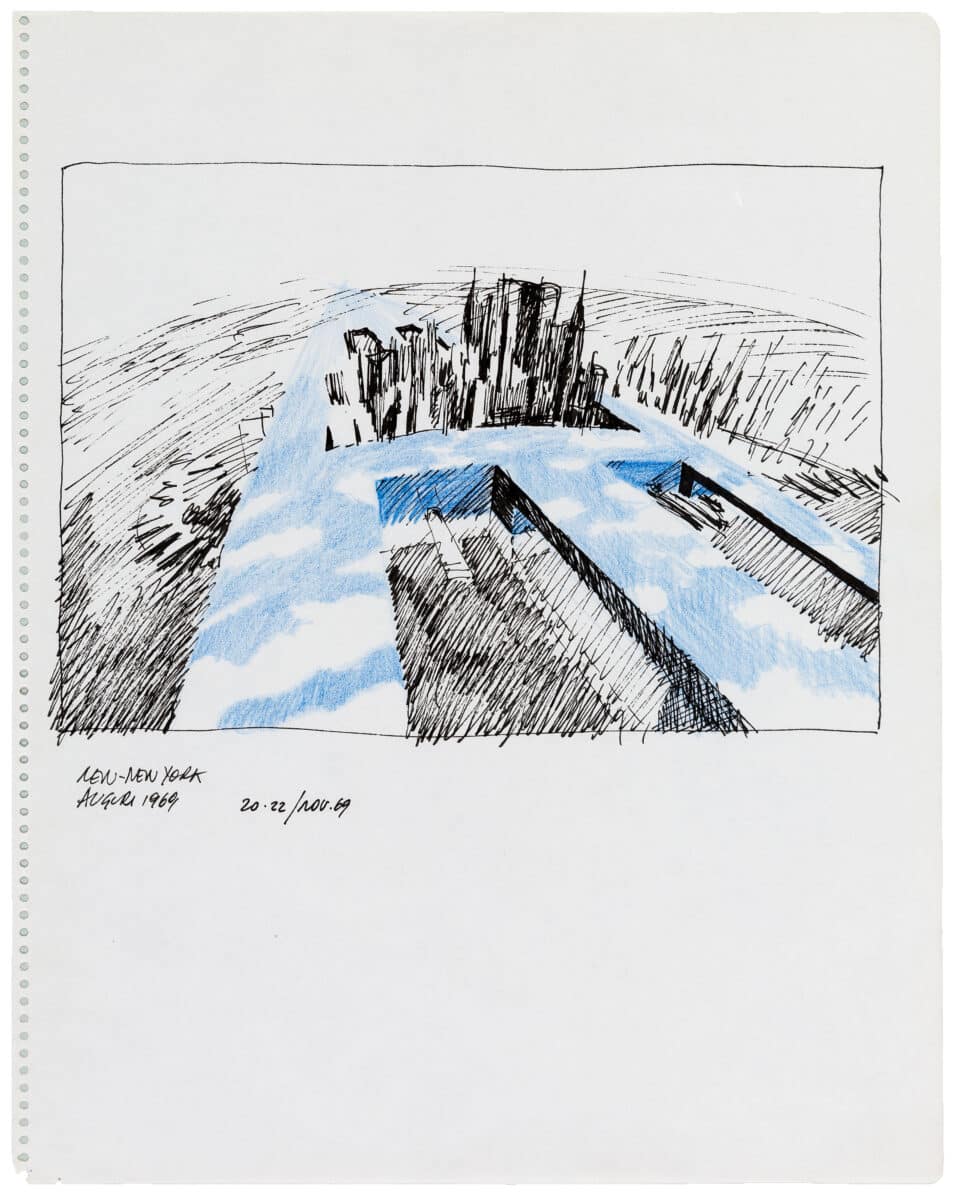
For this year’s Open House Festival, Drawing Matter will present an exhibition that explores how architects have used drawing(s) to imagine alternative ways of living, from the scale of individual dwellings to radical urban and planetary visions. Primarily focused on work made from the 1950s to the 1970s, but also looking to more historical examples, the exhibition brings together drawings from an international group of architects and designers, including Superstudio, Archigram, Hans Hollein, Claude Parent, Yona Friedman, Arata Isozaki, Paolo Soleri, and Aerolande.
Walk arounds
At 11.00 on Saturday 19 and Sunday 20, members of the Drawing Matter team will lead informal walk-arounds of the exhibition, offering the chance to learn more about the drawings on display and Drawing Matter’s work. Free and open to all; no booking required.
Exhibition Text
IMAGINING OTHERWISE: ARCHITECTURAL AND URBAN VISIONS FROM THE DRAWING MATTER COLLECTION
The process of reading images is a game of inference, a game of this possibility or that possibility.
– Lola Olufemi, Experiments in Imagining Otherwise, p.19.
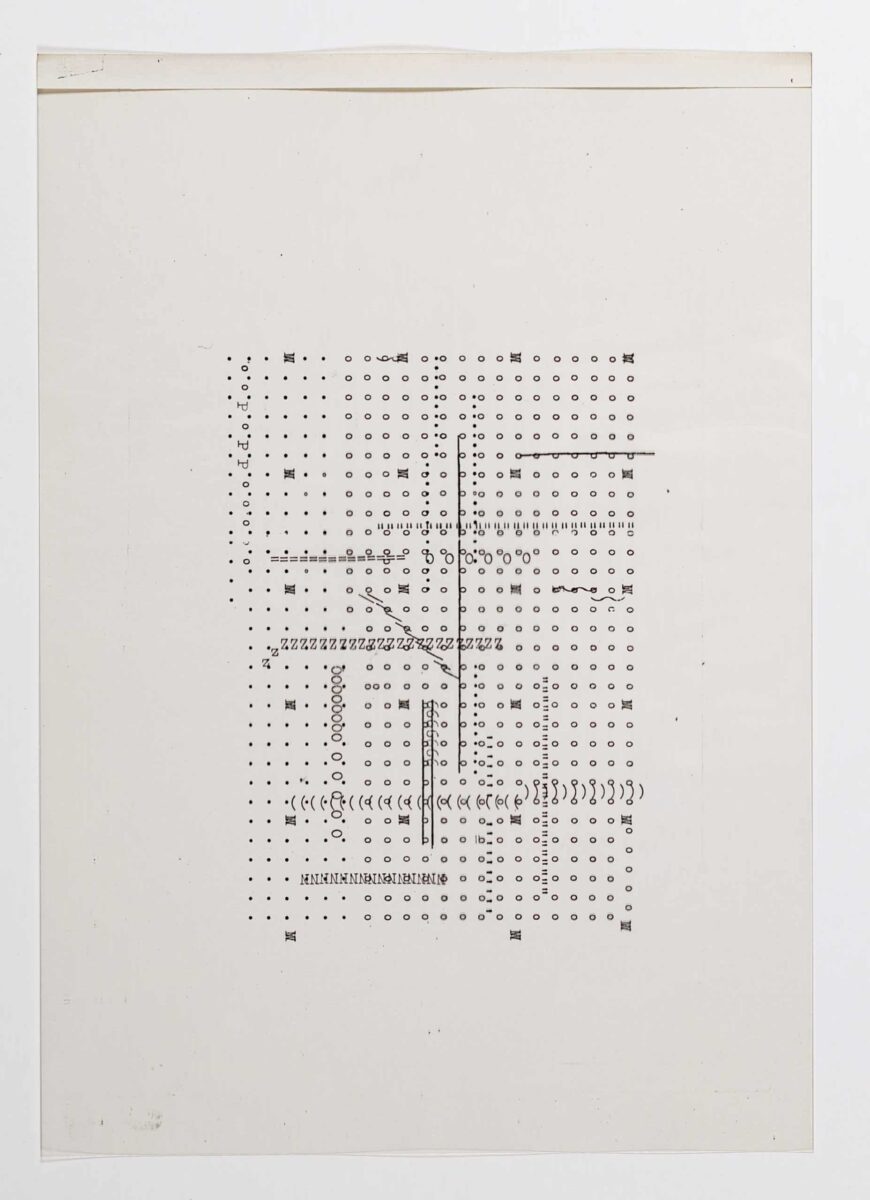
For this year’s Open House Festival, Drawing Matter has curated an exhibition exploring how drawing(s) has been used to imagine alternative ways of living, from the scale of individual dwellings to radical urban and planetary visions. Primarily focused on work made from the 1950s to the 1970s, but also looking to more historical examples, the exhibition brings together drawings from an international group of architects and designers represented in the Drawing Matter Collection.
The title of the exhibition is inspired by Lola Olufemi’s 2019 book, Experiments in Imagining Otherwise. The drawings included in the exhibition can all be seen as experiments—experiments with form and typology; experiments with ways of creating architectural images; experiments in reacting to political contexts.
There is a gap of nearly fifty years between us and some of the most recently made drawings included in the exhibition. In this period, creating fantastical architecture has become easier than ever. The release of free Artificial Intelligence software has meant that anyone can generate images of imaginary buildings through inputting prompts. On one hand these technological developments can be seen to democratise image-making processes; on the other, they shift the relationship between imagination and representation into a situation that bypasses the poetics of producing images (either by hand or CAD).
Instances of friction between ideas and their expression characterise many of the drawings included in the exhibition. The collages made in the 1960s and 1970s by the Italian collective Superstudio, for example, carry the traces of the human labour behind their creation, combining drawing, collage, and analogue means of manipulating found images—made possible by a new abundance of printed colour magazines and books. The limitations of making images in this way forced their creators to be resourceful and to push to the limits what was available to them. It might be asked: what would their work be like with access to the tools of today?
In considering visionary architecture, which sometimes is described as ‘paper architecture’, another gap is brought forward: the relationship between drawing and building. In projects for imaginary buildings, architectural drawing shifts from an instructional role to a discursive one. Although more pronounced in the age of AI, questions of projects’ buildability have often been subordinated to the ideas that they communicate: Chernikhov’s cities drawn in the 1920s and 30s are pure fantasies; Vaudoyer’s 1782 spherical house for a cosmopolitan was not advanced as a project to be constructed.
Critiques of established ways of thinking and engagement shifting political contexts lie behind many of the drawings in the exhibition. Mário Ramos and Fernando Barroso’s collages (1975) made in post-revolutionary Portugal, for example, challenge urbanism as a system of domination and create situations that aim to libertate the creativity of individual thought. Other drawings ironically reimagine earlier utopian thinking and its politics. The Estonian architect Leonhard Lapin’s ‘Anti-International Monument’ (1979), for example, turns Tatlin’s International Monument, an icon of Soviet propaganda, into a crudely constructed donkey stable.
The exhibition has been curated following the qualities of the drawings themselves, creating chains of associations that fit together like a game of dominoes. Drawings have been positioned next to one another based on formal or visual resonances, or in some cases, to highlight contrasts.
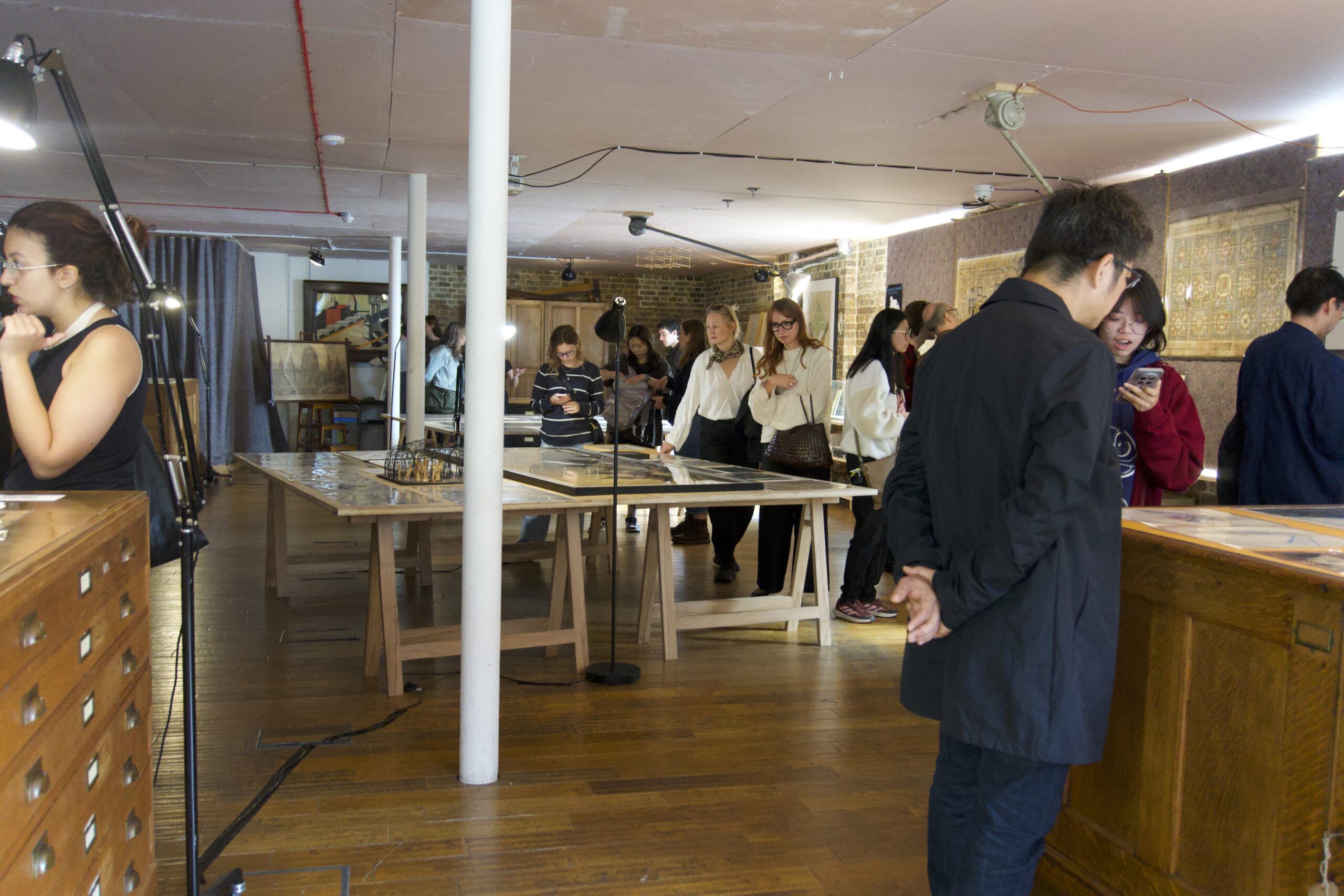
Drawing Matter’s public programme offers the public opportunities to experience our drawings collection, which is usually only open to researchers by appointment and for student/practice workshops. Events take the form of talks at the archive, workshops by practitioners and open weekends.
To be notified of future events, subscribe to our newsletter and follow us on Instagram.
