Chandigarh’s Forgotten Modernists
– Maristella Casciato, Eashan Chaufla, Deepika Gandhi and Vikramaditya Prakash
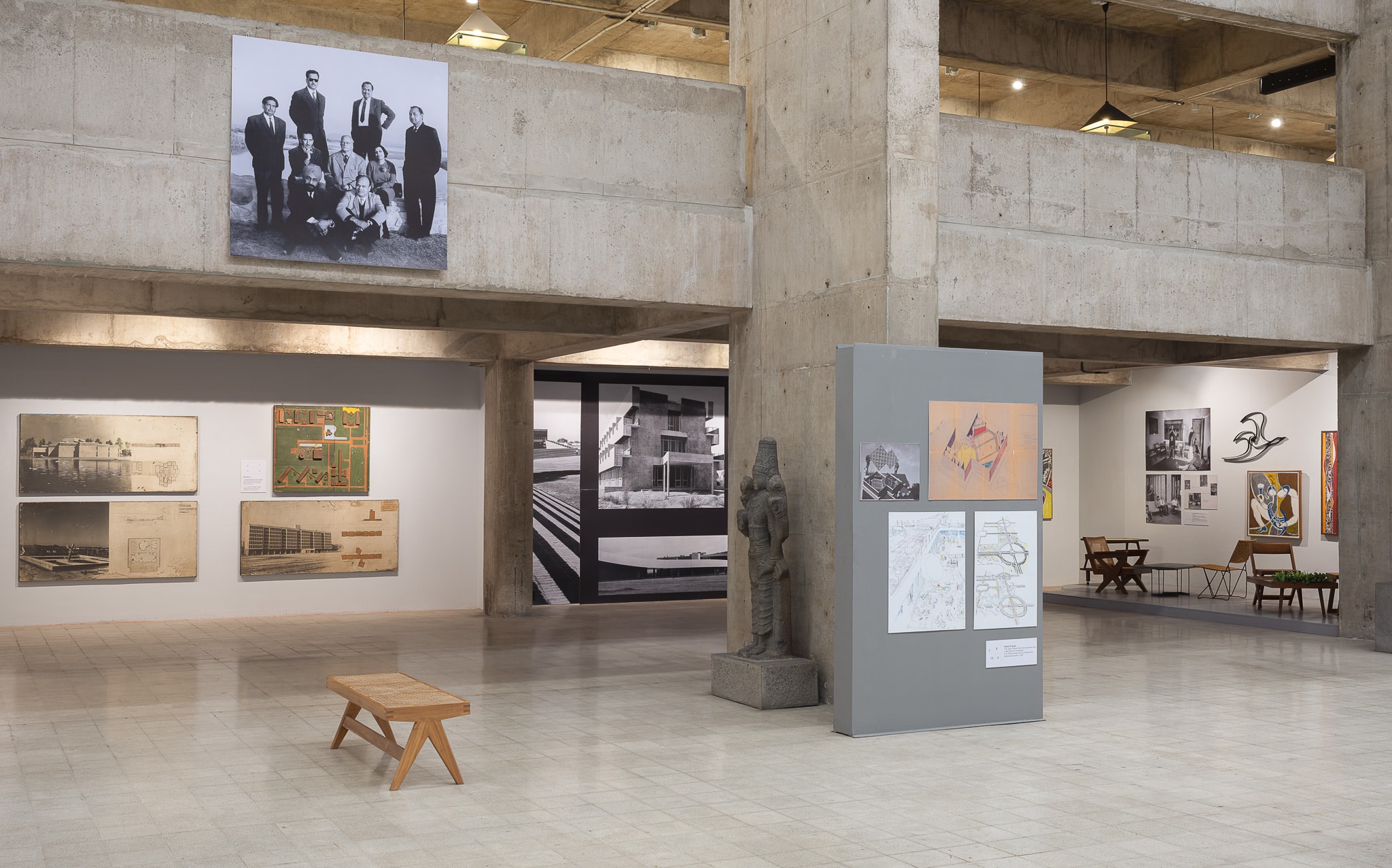
The following conversation took place to mark the opening of Chandigarh’s Indian Modernists at the Government Museum and Art Gallery, Chandigarh (28 February–25 April 2026). The exhibition was curated by Deepika Gandhi, Eashan Chaufla, Vikramaditya Prakash, and Maristella Casciato. The text is illustrated with objects included in the exhibition.
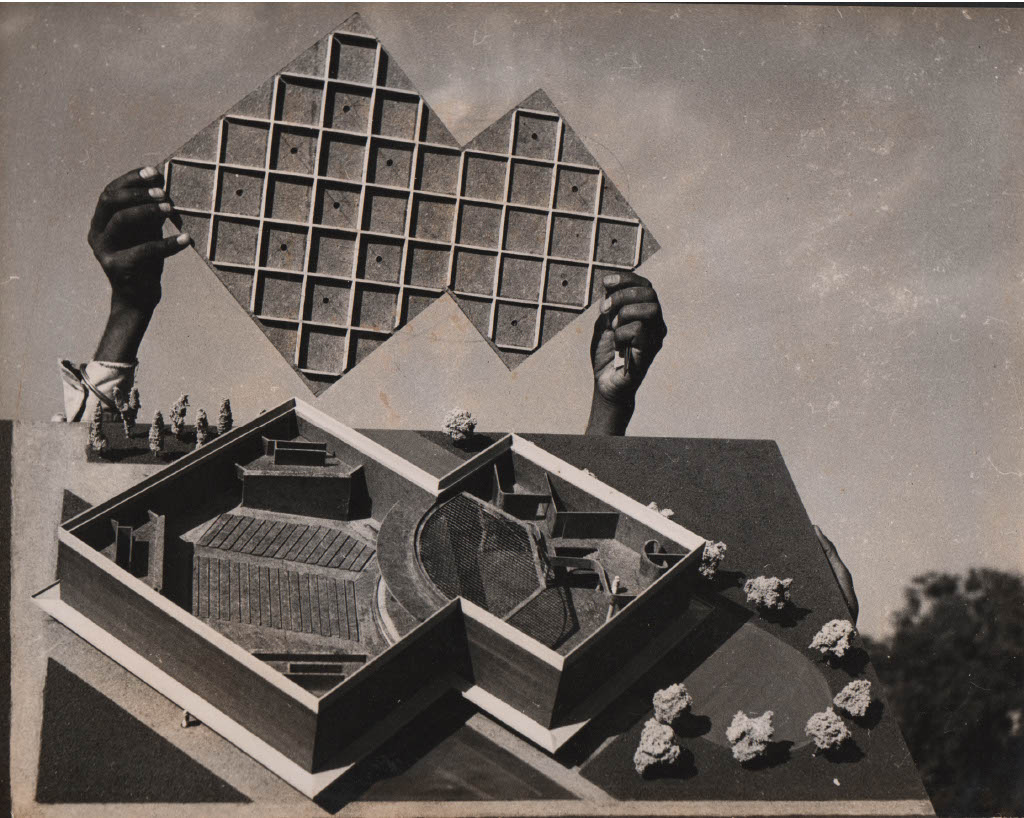
What do we mean when we call Chandigarh ‘modern’?
Deepika Gandhi: Chandigarh is famous all over the world as a ‘modern city’, but people use the term loosely—almost casually—without asking what modernity really means. Many assume it’s simply an architectural style: buildings made in a certain way because a few architects arrived and imposed what they had in mind on a flat, blank site. That story is convenient, but it misses something far more interesting: how the city’s planning and institutions shaped the evolution of its culture, its society, even its art scene. Modernism here becomes larger than buildings. It becomes a lifestyle.
And what we noticed immediately—again and again—was that many of the architects we’re calling ‘Indian modernists’ did not limit themselves to architecture. Their creativity took many forms: painting, photography, graphic expression, furniture, and public culture.
Vikramaditya Prakash: I’d put it very plainly: the making of Chandigarh was about making modern life. Not just modern buildings. ‘Modernity’ wasn’t a decorative layer. It was a project to align institutions, spaces, and everyday routines with a society that had already begun to change. Life had become modern—through new forms of work, new infrastructures, new aspirations—but the forms and habits of living hadn’t caught up. There was a break: a kind of split between a society moving forward and systems that still carried the weight of colonial history.
So Chandigarh becomes a site where modern life had to be invented—on the ground, in offices, in drawing rooms and classrooms, in the grammar of public space. That’s a very different claim than ‘modernism as style’.
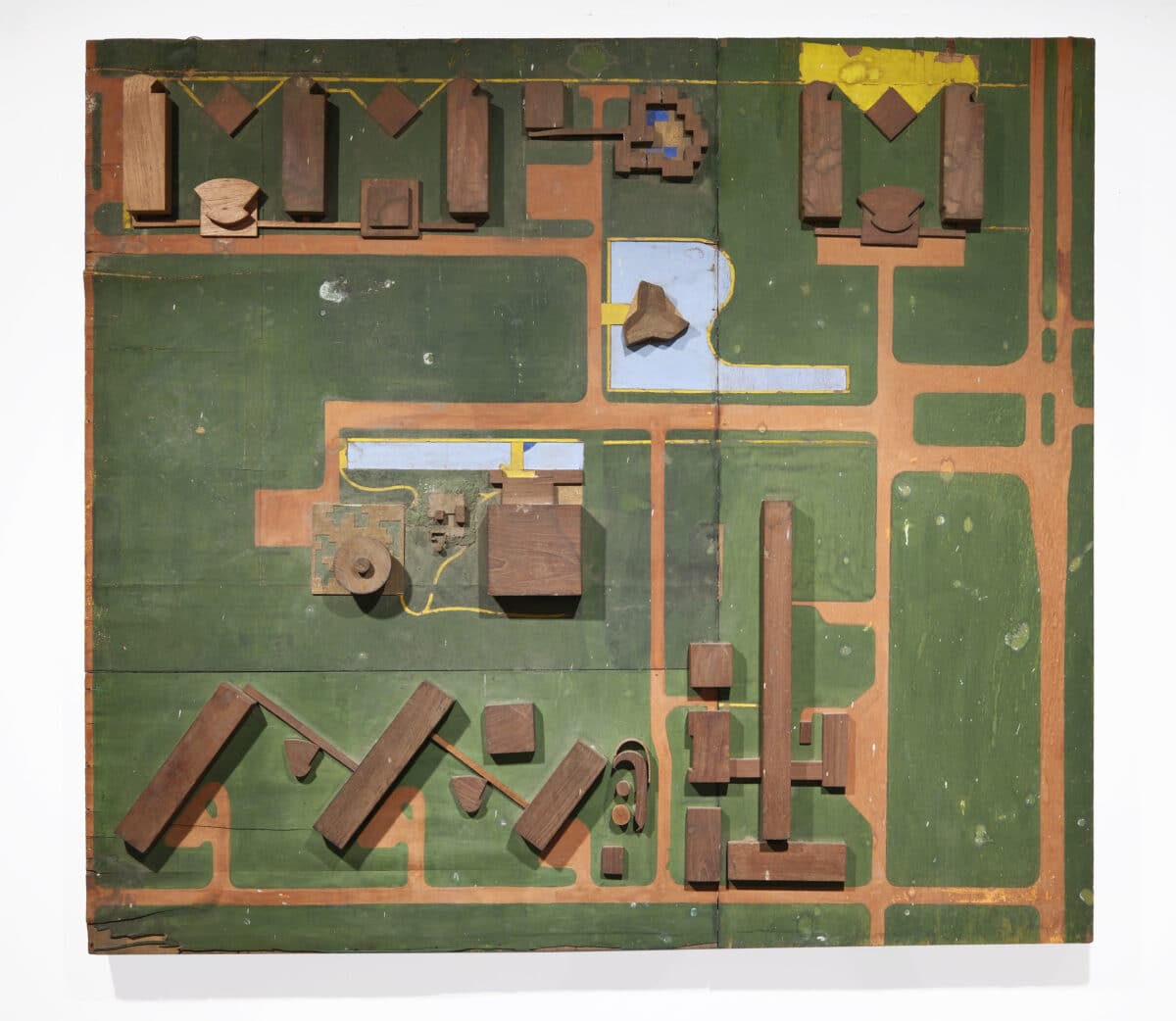
Eashan Chaufla: And there’s another layer. These were decades before the internet and the relentless circulation of global images. Much of the creativity that sprang up in Chandigarh seems to have been inspired by what these architects and administrators saw around them—the climate, the new institutions, the demands of a young city—rather than by simply borrowing ‘international trends’. They weren’t trying to revive traditional idioms to prove Indianness by returning to temple motifs or folk formats. They were evolving new forms that answered the moment.
Maristella Casciato: This is why the exhibition opens with a proposition: ‘Chandigarh’s Indian Modernists opens a window onto a generation of pioneering modern Indian architects, engineers, and administrators whose contribution was deeply intertwined with the foundation, growth, and fate of Chandigarh’. The modernity of Chandigarh was never a single-authored gesture; it was an ecology of roles—technical, administrative, pedagogical, artistic—working together to create a new civic reality.
Why focus on ‘Indian modernists’ now?
MC: Because, despite their central roles, these figures ‘appear only sporadically in histories of Indian modern architecture and remain insufficiently visible in international scholarship’. The omission cannot be explained by lack of significance. Rather, it stems from how the story of Chandigarh has been narrated—often framed by a one-directional historiography that privileges a narrow set of ‘master’ authors.
Architectural history, especially in its popularized forms, often prefers singular authorship: one genius, one signature, one masterpiece. But the work and positions of the first-generation Indian modernists did not align neatly into that convention. Their contributions were collective, embedded in offices, committees, systems, and teams. As a result, their biographies and agencies have been overshadowed.
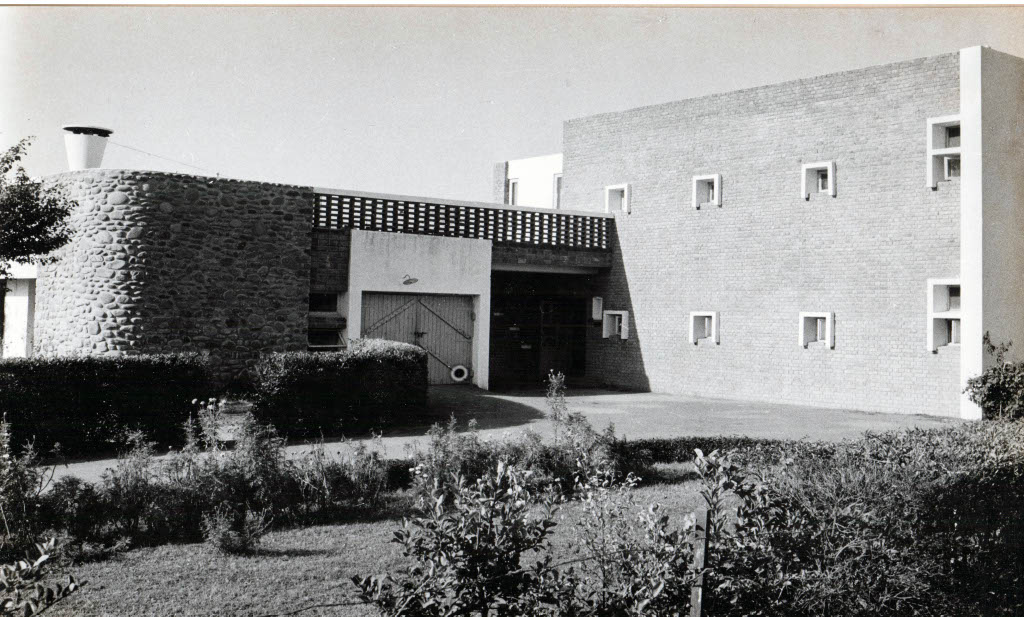
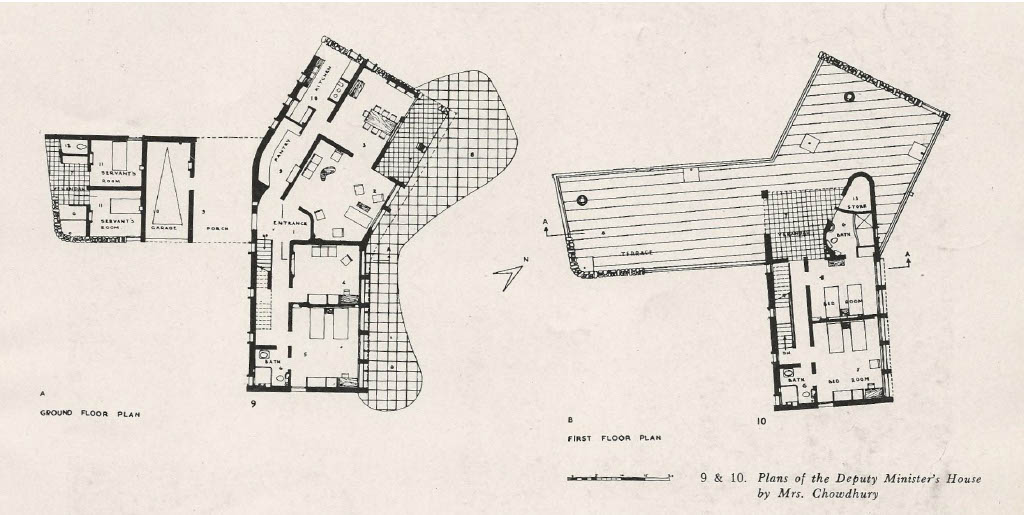
DG: And locally, this flattening has consequences. If Chandigarh is told as an imported object, something imposed from outside, then citizens can begin to feel that the city doesn’t belong to them—at least not in an authorship sense. But Chandigarh was made by Indians in profound ways: in execution, yes—but also in interpretation, expansion, and invention. The foreign architects mattered, but the city as it grew depended on Indian professionals who turned ideas into institutions and adapted them to conditions that no outsider could fully grasp.
VP: There’s also a historical point worth saying clearly: choosing modernity in India was not automatic. After Independence, there was a powerful current of revivalism—an understandable desire to reassert cultural confidence by returning to older forms. And there was another sentiment too: antagonism toward colonial rule could translate into a suspicion of anything that felt ‘modern’. In that climate, building a modern capital city was a choice, a wager, and in some cases, an argument fought for. Chandigarh didn’t simply ‘happen’. It was made.
EC: And that making did not stop with the famous early phase. The exhibition insists that the story doesn’t end at the moment the iconic forms are established. The city continues to be shaped—by administrators, by pedagogues, by designers of furniture and signage, by photographers and artists who documented and interpreted it. If we only tell the early author story, we miss the living processes that made Chandigarh a culture.
Beyond the ‘heroic years’ and the problem of ‘amnesia’
MC: One of the key-moves the exhibition makes is temporal. We explicitly ‘move beyond the celebrated “heroic years” between 1951 and 1965—years documented in archives and collections that have provided a robust foundation of knowledge, but have also fostered a kind of amnesia’. This is not a critique of archives but a reflection on how they become overly determinative: what is well-documented becomes what is remembered; what is less visible becomes what is forgotten. The result is an unbalanced historical imagination. Our exhibition introduces new research—drawing from private and institutional documentation—to expand the field of visibility.
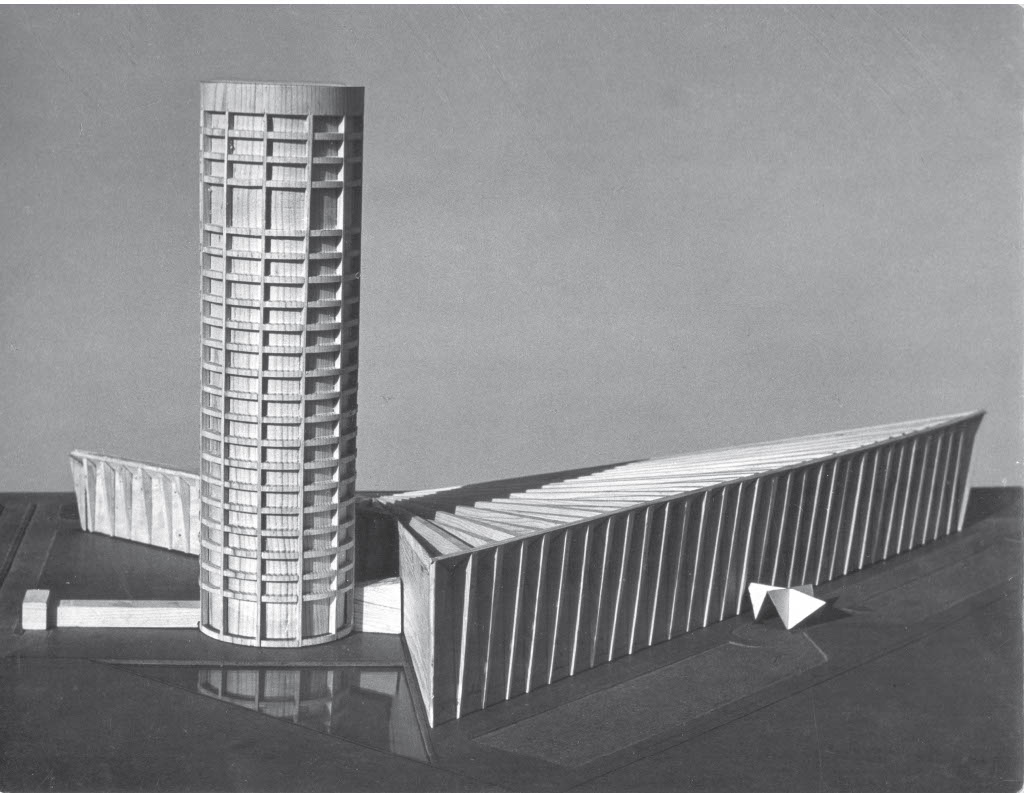
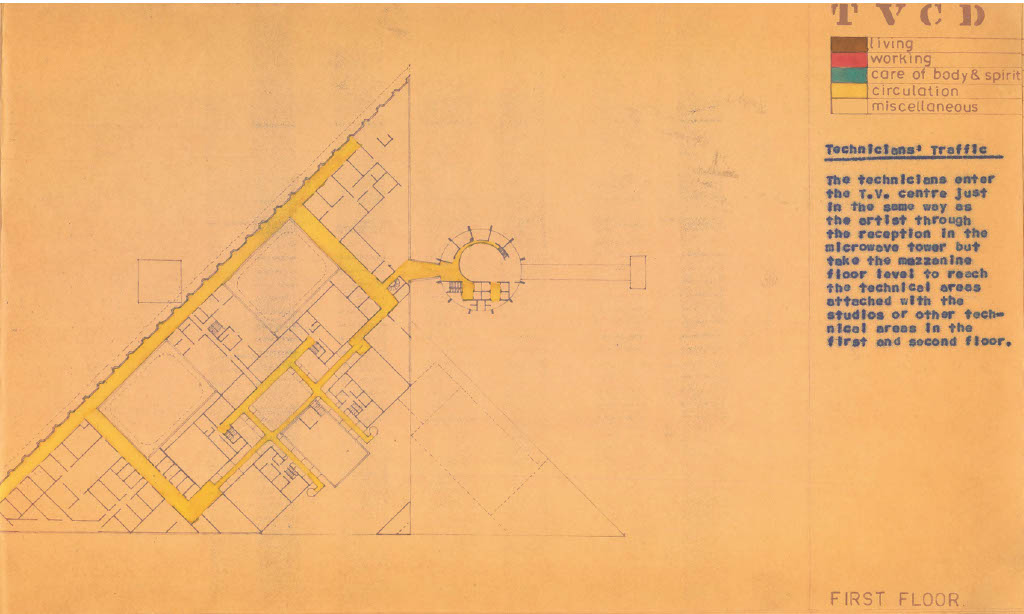
EC: That phrase— ‘a kind of amnesia’—feels sharp because it’s true not only in scholarship but in practice. You can see clustering of work in certain decades and then a falling off. That pattern parallels the broader trajectory of modernism itself: a peak, then a crisis, then fragmentation. But in Chandigarh it’s also about how critique travels.
Western architectural criticism—some of it insightful, some of it reductive—had real effects on self-identification. It’s not trivial when a global discourse frames modernism as authoritarian or alienating. Local confidence can erode. The question becomes: are we only ‘imitating’, and if so, why continue? That doubt changes pedagogy, practice, and even what gets valued.
DG: I’ve felt this very concretely in education. There have been periods when architecture students in Chandigarh were not even taken to the Capitol Complex as a serious site of study. Think about that: a city that is globally discussed, yet locally under-read. That tells you that the problem is not only heritage law or funding; it’s interpretive confidence. If people don’t feel the city’s modernism is theirs—intellectually, culturally—they won’t defend it.
VP: And in a country with millennium-old buildings, modern heritage often gets caught in a time trap: too young to be revered, old enough to be replaced. That makes Chandigarh vulnerable. Which brings us to the reason the exhibition is not merely historical—it is also urgent.
Chandigarh as an experiment in institutions, not just monuments
DG: The popular Chandigarh story tends to focus on monuments. But the city’s modernity is actually most visible in its institutions—in education, health, administration, housing, and everyday infrastructure. It’s in how a sector works, how a market sits in relation to neighbourhoods, how trees, sidewalks, and setbacks produce a sense of calm. These are design choices, but they’re also social choices.
And importantly, these Indian modernists expanded architecture outward. Over time, they ‘expanded the field of architecture into adjacent domains: furniture design, visual arts, photography, and graphic expression’. That’s not peripheral. It’s central to how Chandigarh built an environment, not simply a skyline.
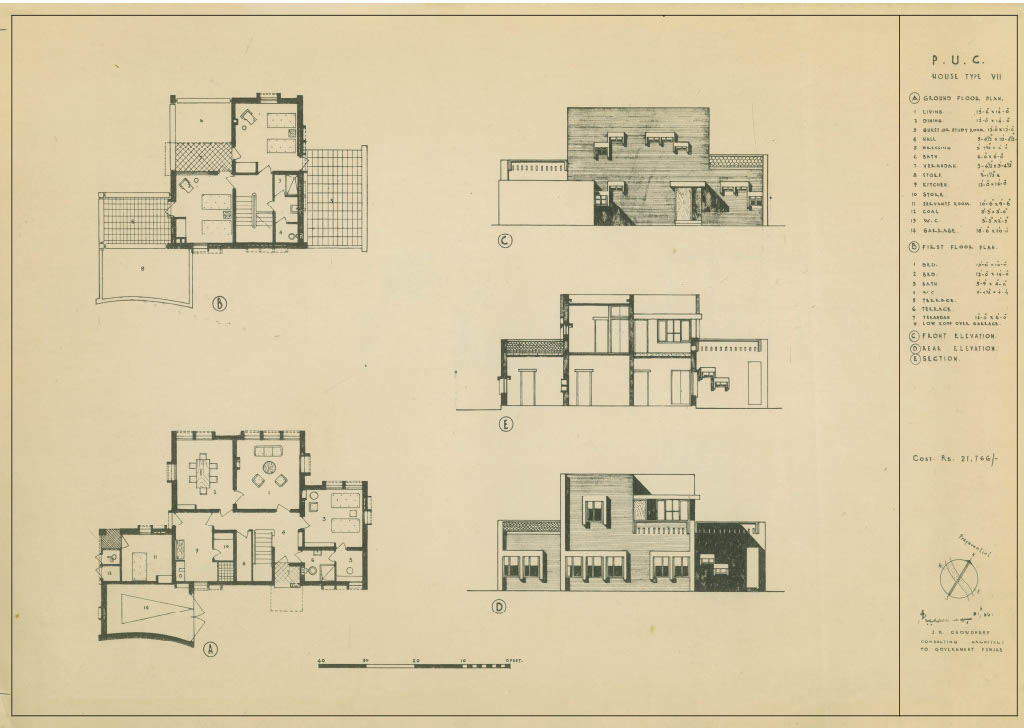
VP: When you look closely, the so-called ‘Architects’ Office’ becomes a pedagogy, not just a bureaucracy. You learn not only to make forms but to think systematically: climate, construction, public life, detailing, maintenance, and the ethics of public work. That kind of institutional modernism—procedural, collective, oriented toward civic outcomes—doesn’t fit neatly into the hero-story of architecture. But it is exactly what makes Chandigarh distinctive.
MC: This is also why the exhibition asserts, without exaggeration, that ‘in many ways, the pedagogical program of the Architects’ Office evolved into a unique total work of art, fully expressing the Indianness of Chandigarh’. Here, ‘Indianness’ is not a stylistic ornament. It is expressed through practices: how design was taught, how systems were coordinated, how the public realm was cultivated, how everyday objects—chairs, signage, photographs—translated civic ideals into daily experience.
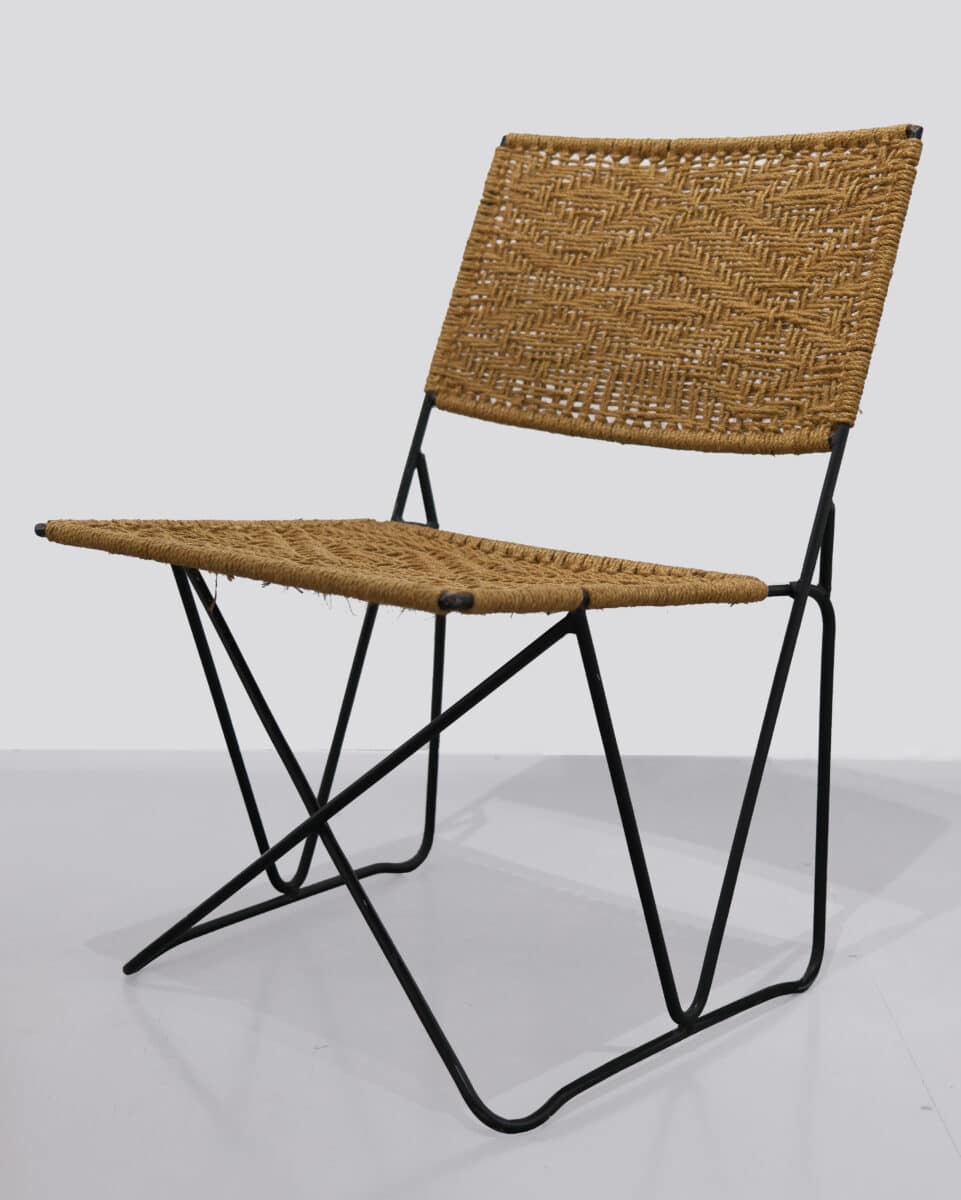
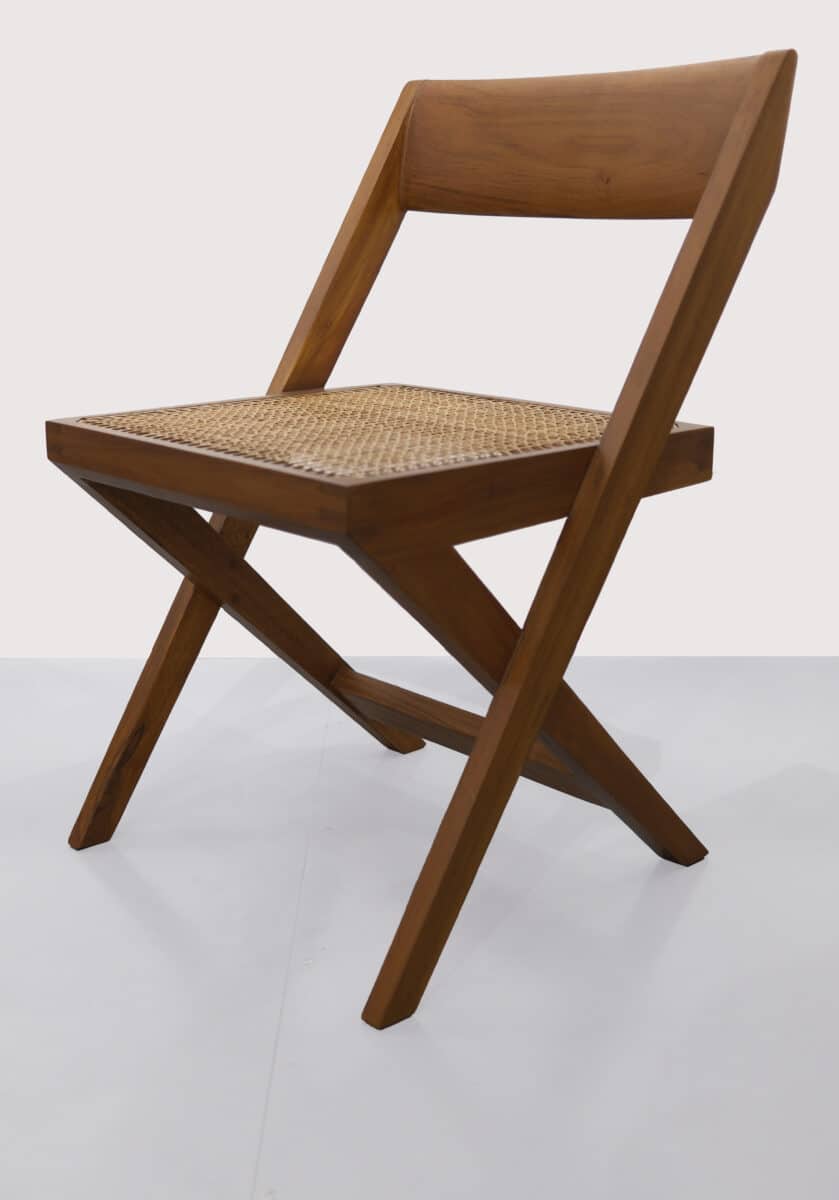
EC: Furniture is a perfect example. People think furniture is ‘interior’. But in Chandigarh, furniture is civic. It becomes a language shared across institutions. And when that furniture is discarded or replaced by generic imports, something critical is lost continuity of a designed world.
The urgency—what is being lost today
EC: The exhibition emerges in a moment of active loss. Many significant residences are being demolished or altered beyond recognition. Institutional buildings face neglect or insensitive renovations. Original furniture, railings, built-in elements—details that make Chandigarh Chandigarh—are discarded because they’re seen as ‘old’ or inconvenient.
What is striking is that people still desire Chandigarh. They desire its ease, its tree cover, its relative coherence. But they don’t always understand what produces those qualities. And if you don’t understand what produces them, you can destroy them while thinking you are ‘improving’ the city.
DG: This is why the exhibition is also a public invitation to look again. Chandigarh’s modernism is not a museum piece—it is a living environment, maintained by everyday decisions. Preservation cannot mean freezing. But change cannot mean erasure. We need what you might call an informed evolution: upgrading systems while respecting the DNA that makes the city work.
VP: And we should say it directly: if Chandigarh is ‘relevant’, it’s because it offers a model of liveability that many Indian cities urgently lack. Even now, people move here seeking order, safety, shade, civic life. That relevance should deepen the obligation to understand. If we want to repair and transform the city intelligently, we need a shared literacy about its origins and its makers.
MC: This brings us back to the exhibition’s core premise: Chandigarh ‘was conceived as a city whose seeds were well sown, yet whose flourishing required young visions and new voices’. These young professionals are not footnotes. They are central to understanding how Chandigarh became a lived modernity—how ideals moved from drawings into classrooms, offices, streets, and homes.
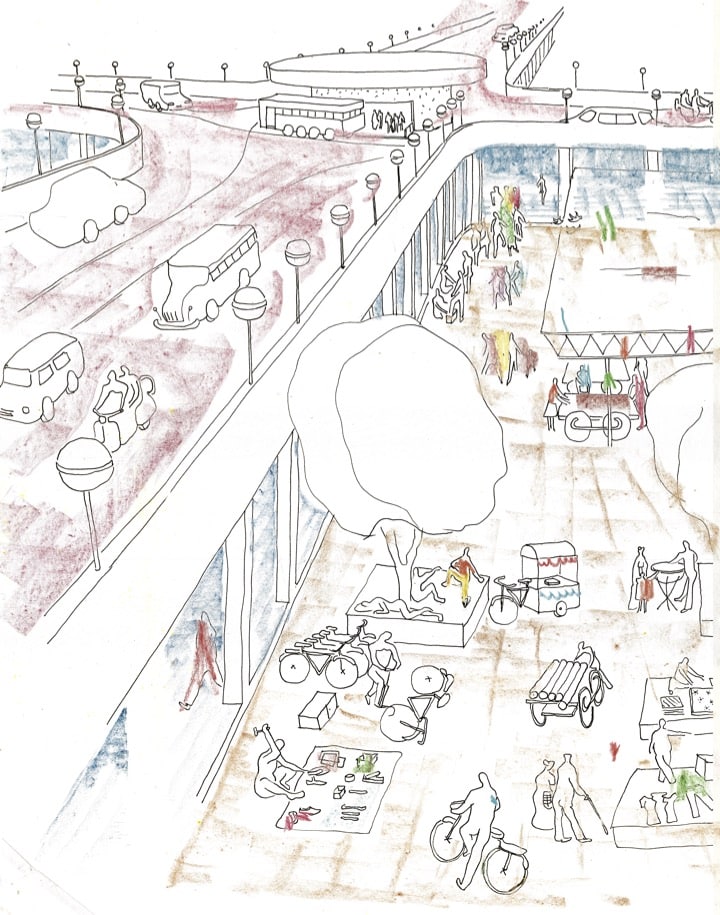
Aditya Prakash, Linear city, c.1975. Aditya Prakash fonds, Canadian Centre for Architecture.
Why a museum exhibition, and why now?
DG: A museum is where a city’s public memory can be revised—carefully, responsibly, with evidence. Chandigarh is full of memory, but much of it is informal: anecdotes, myths, assumptions. The museum allows another kind of seeing. It allows objects and documents to speak drawings, photographs, furniture, letters, institutional records. You begin to understand that Chandigarh is not one story told by one voice.
EC: And it allows an encounter across generations. Younger visitors may know Chandigarh as ‘home’ but not as a historical experiment. Older visitors may remember the early optimism but not the full breadth of who made it. The exhibition creates a meeting place between experience and scholarship.
VP: And it’s also a gesture of recognition. We say plainly: we wish ‘to thank this first generation of Indian modernists and to celebrate their enduring legacy’. That’s not sentimental. It’s corrective. It’s about authorship and accountability—about seeing the city as a shared Indian creation, not a borrowed image.
MC: If the exhibition accomplishes anything, it will be to widen the frame. Not to remove the famous figures, but to situate them within a larger field of agency. Chandigarh becomes far more compelling when seen as a collective project—architectural, administrative, pedagogical, artistic—rather than as a single imported masterpiece.
*
A version of this text was originally published in Chandigarh’s Sunday Tribune on 1 March 2026.
