A House to Live With: 16 Variations by Dom Hans van der Laan and His Companions
Walking around the exhibition Beauty of the Earth: The Art of May, Jane and William Morris in Winchester library, observing first hand their devout interest in nature and its depiction in books and fabrics, I began to reflect on a similar devotion that Hans van der Laan and his pupils show to the plan of a house, and the life that such a plan might shape.
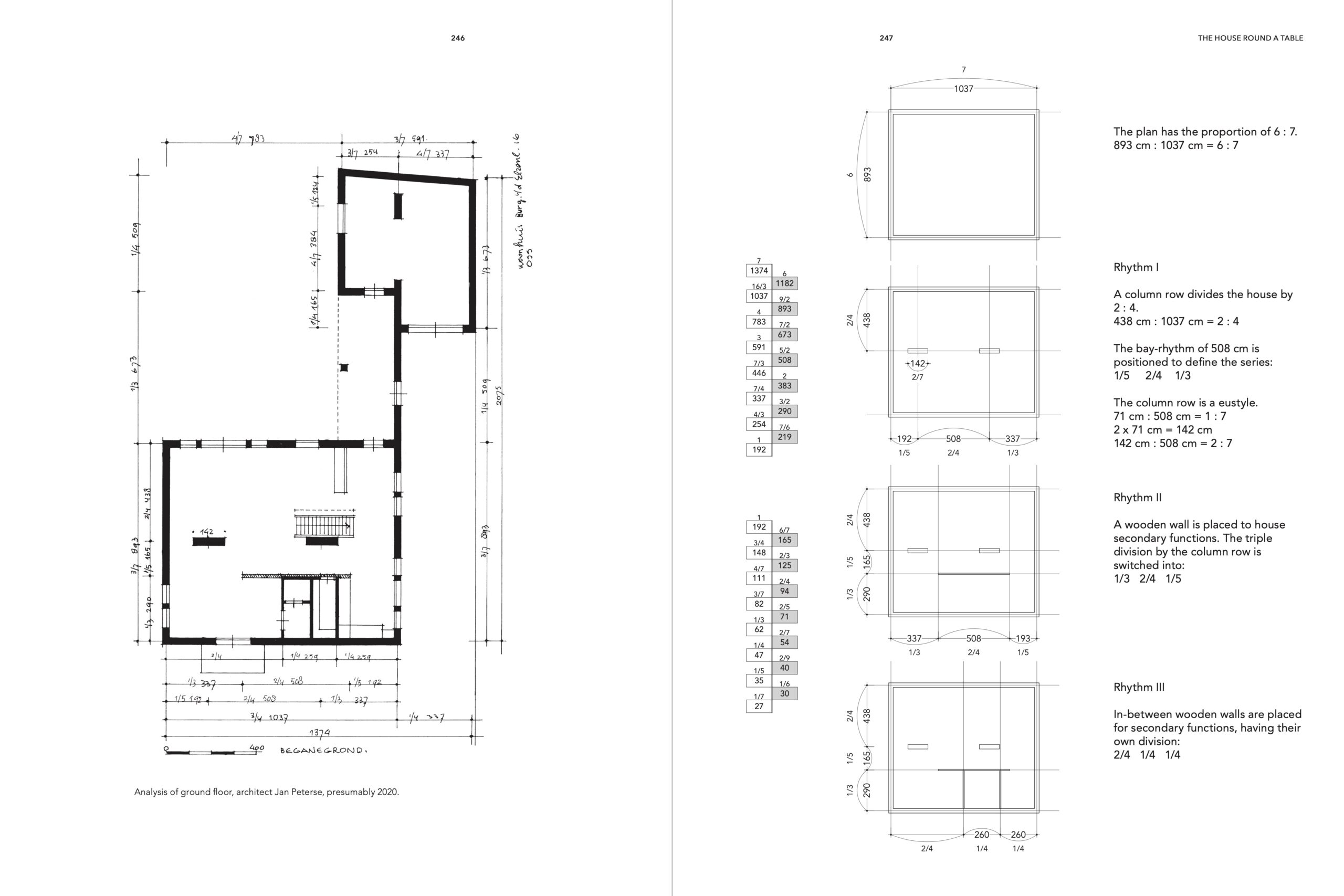
In each case, with each plan, composition dominates. Not the organisation of activities or functions but the explicit question of arrangement, and number. ‘What if there were one, two, three or four?’ I think. A question I might pose of any element, be it the column or aperture in an intermittent wall, the cell, window, and layers of space, of the plan. Immediately pedagogic and collaborative, each invites the curious enthusiast to engage in the game and delight of composition, and to consider each and every decision. I don’t doubt these decisions. Instead, I marvel at each one, in the process ideas and patterns that must have been rejected, and the completed plan that is the consequence of the deliberate actions of the architect.
Architects often speak about the importance of the ‘everyday’. Here how vivid that idea is, how true. Things that are normally so muddled, overlaid and as a result complex, are here completely clear. The architecture is raw, simplified and sublime.
But it’s no accident that I am presented with these plans and their buildings. For months I have been reading—perhaps better described as, staring at—Caroline Voet’s book A House to Live With: 16 Variations by Dom Hans van der Laan and His Companions. Voet’s book is a perfect paperback block; encyclopaedic, heavy, its ‘physical gravity’ (Tavora) mirrors the intelligence of the work.
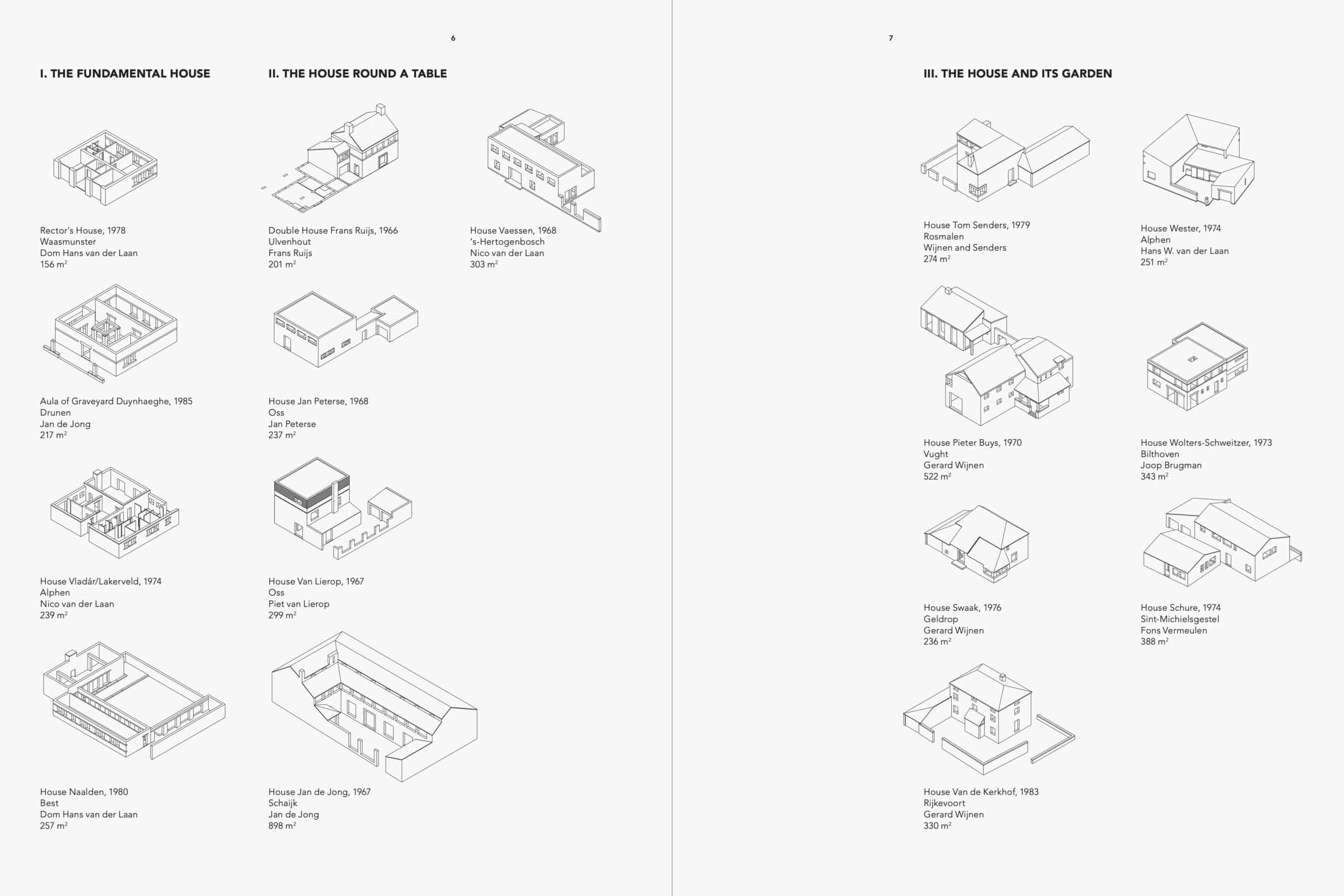
As a result, the sixteen works are an inspiration. Each are analysed and represented through drawings, diagrams, number patterns and equations, photos and accompanying texts. The book frames the work, such that designing a house becomes a science, almost everything can be explained and understood. Each work forms part of a taxonomy of house types, plan types and room configuration types.
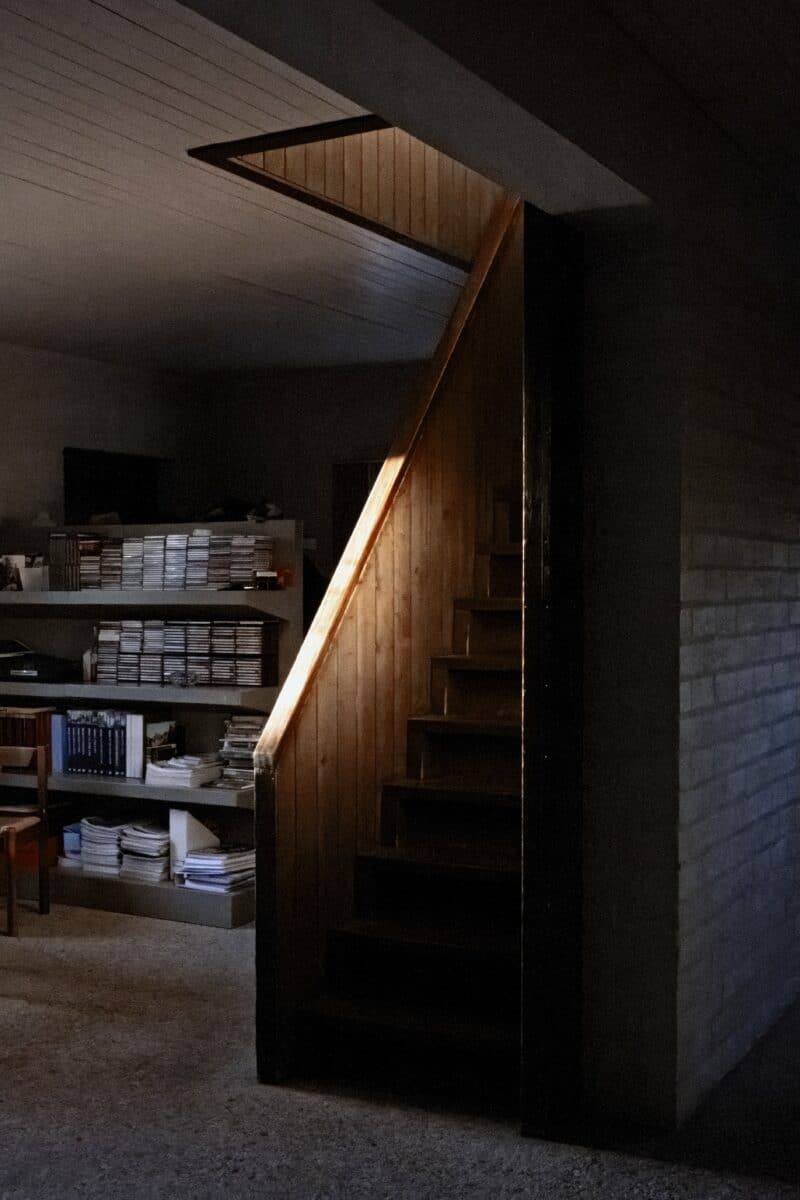
But it is a science whose purpose is art. Much like the way the light in a Dutch seventeenth-century painting illuminates the subject, here light illuminates life, the traces of life, the artefacts, furniture, built elements that reveal the life envisaged by the architect, which is reciprocated by the inhabitants.
The texts, much of which are written by Voet, but with significant contributions by others, form the third side of the triangle—image, number, word—completing our appreciation of the work.
A House to Live With is a very distant cousin of Christopher Alexander’s book The Pattern Language, which if used as a directory of design decisions is a disaster, but if understood to be a catalogue of synthetic ideas that respond to ideas of culture, climate and construction is powerful. Both remind an architect of their usefulness and the only medium in which we truly contribute to knowledge—drawing.
I return to the book. I am a student. Flipping between plans—studying the composition, pattern, rhythm, sequence and shape—and photos to appreciate the cause and effect of a drawing. So, again, I find myself studying, then daydreaming about drawing a plan.
*
A House to Live With: 16 Variations by Dom Hans van der Laan and His Companions (2024) is published by Park Books. It includes texts by Caroline Voet, Hans W. van der Laan, Elizabeth Bonde Hatz, Theo Malschaert and Nicola Panzini. More information about the book can be found here.
Simon Henley is an architect and principal at Henley Halebrown.
