Invented from Copies
In 1980, Fred A. Stitt, the doyen of American authors of handbooks on the technical and managerial aspects of architectural practice, defined the distinction between drawing and copy drafting (to use the American spelling of draughting) in uncompromising terms:
Drawing is an originating process: a creative, aesthetic, and problem-solving process. Drafting is a copying process, as mechanical as the word “copying” implies. People will object that there is some creativity, some aesthetics, and a fair amount of problem solving in drafting processes. That’s true. But the dominant aspect of drafting is still old plain copying. The last thing any employer wants is a drafting room staffed with creators and aesthetes.[1]
Nearly half a century after Stitt’s pragmatic view of how to keep architecture and engineering offices running efficiently, time has produced a subtle shift in how we now regard drawing and copying. With hand drawing today largely disappearing from architectural practice, except as a medium for sketching, those once ‘mechanical’ copies have acquired a new status. They have become historical artefacts to be studied alongside the original, or if the original is missing, as the object: fascinating documents from a lost world of building practice with new meanings.
In fact, the term original has always been a slippery term in creative making, and nowhere more so than in architectural drawing where new methods of copying have repeatedly led to new ways of designing. Is an eighteenth-century copy of a lost Renaissance drawing not original? Is a signed print by Tadao Ando, produced in its hundreds, any less an original work?
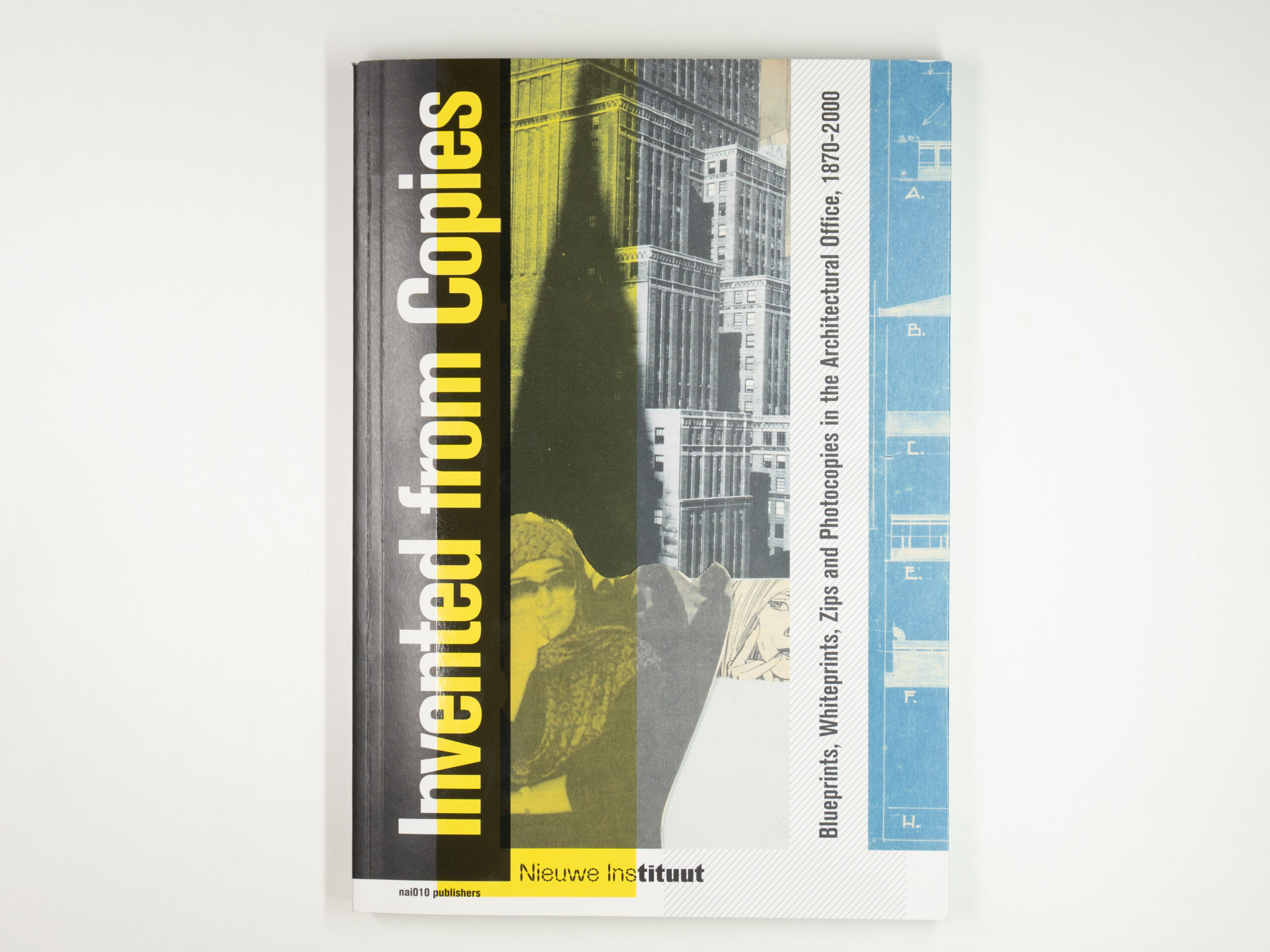
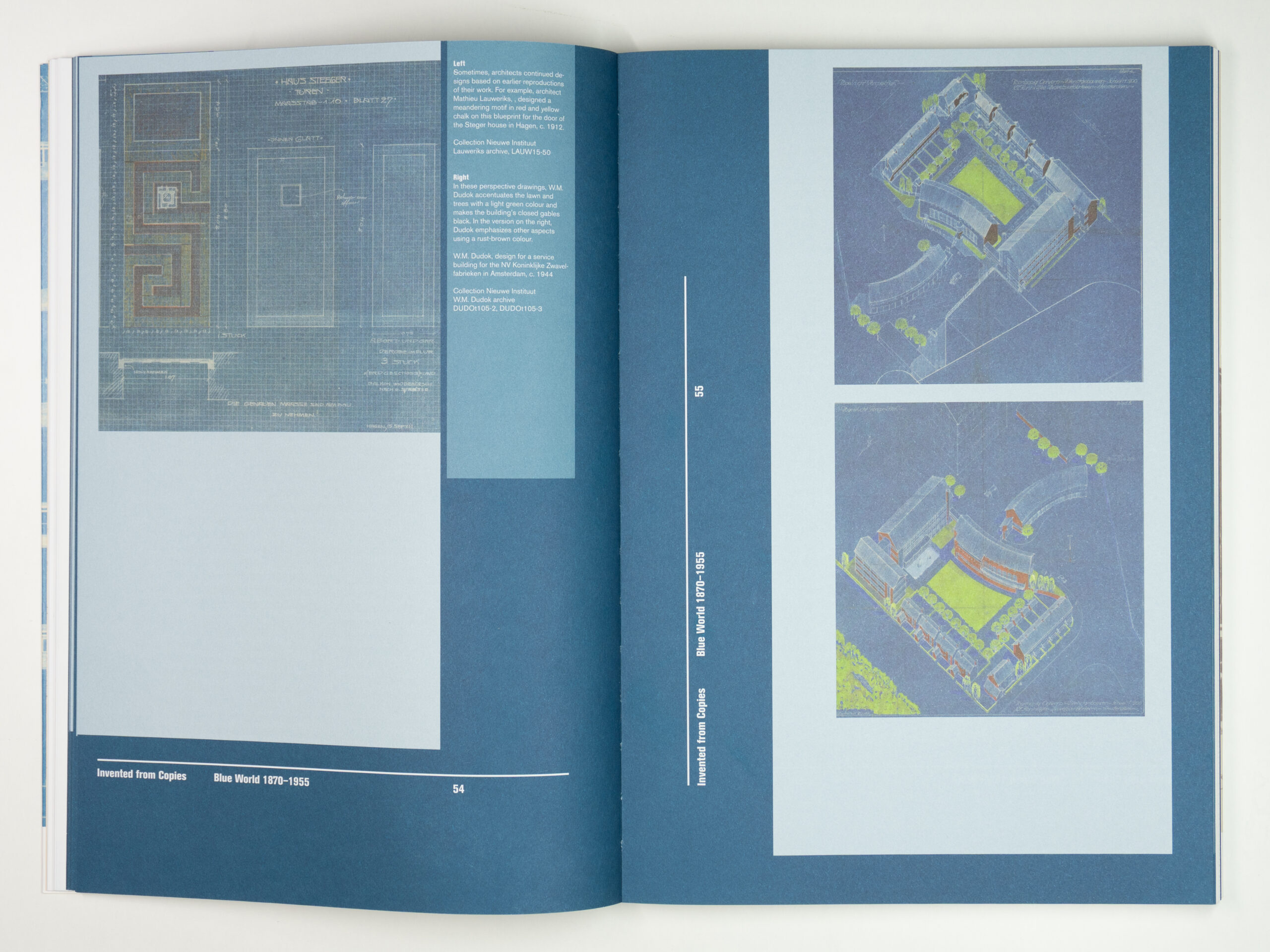
This paradox is neatly captured in the clever title Invented from Copies, a recent publication produced by the archives of the Nieuwe Instituut in Rotterdam, which examines the newly recognised role of the architectural copy.[2] Through an in-depth study of reprographic methods between 1870 and 2000, with a focus on the processes of blueprints, whiteprints (diazotypes), and dry-transfer lettering (referred to here as ‘zips’, though better known in British and American contexts under the trade name Letraset), the book demonstrates how techniques of reproduction became integral to architectural practice.
Supported by numerous examples from the Institute’s extensive and distinguished collection, the study demonstrates that copies were far from passive duplicates. They functioned instead as active working documents, frequently annotated, amended, and layered with additions and corrections. In this way, the design continued to evolve on the copy itself, revealing that the mechanical methods of reproduction were integral to the creative life of the architectural office. The copy, in other words, could be as much a site of invention as the ‘original’.
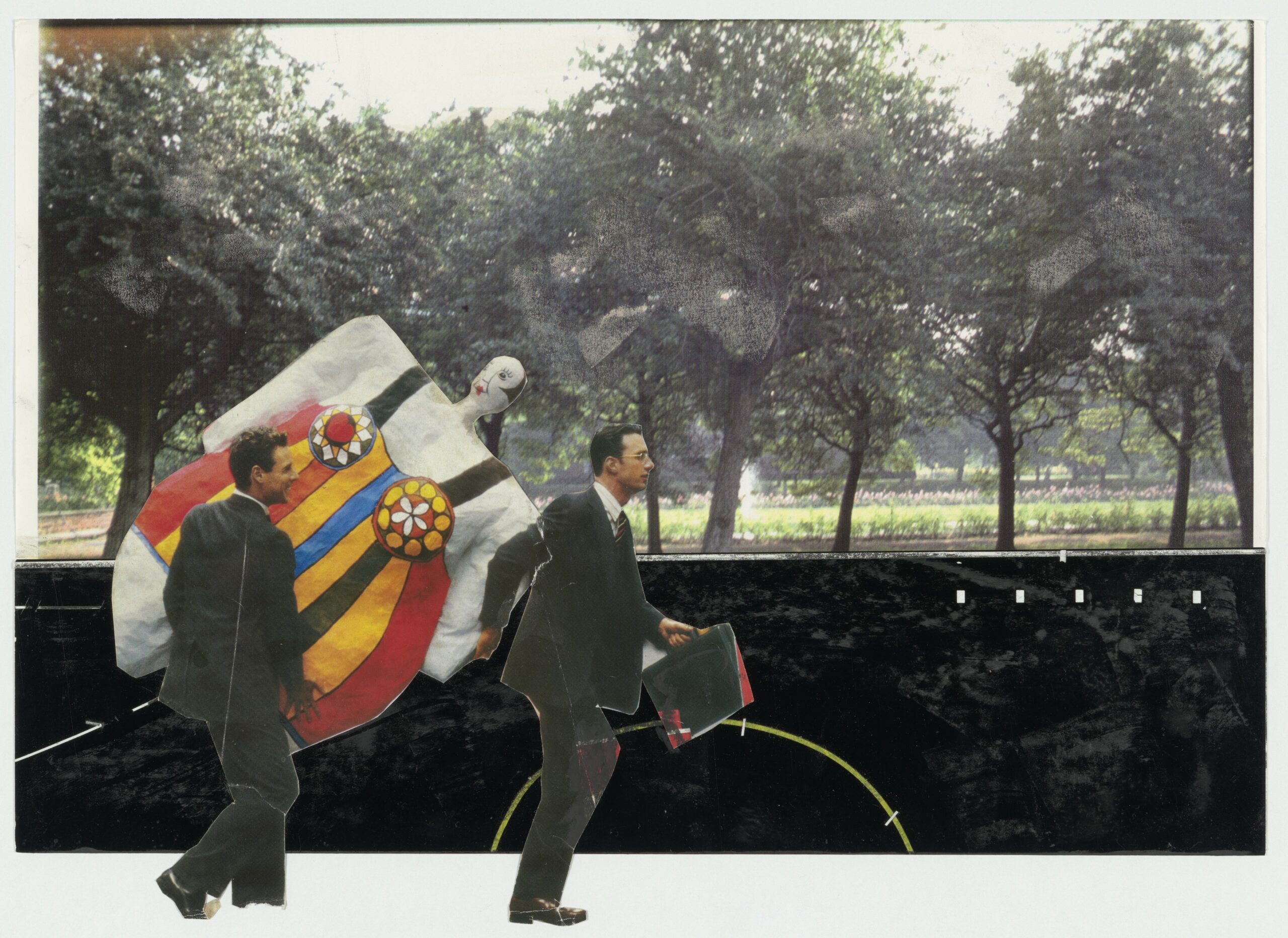
Photocopy with added coloured copies and magazine cut-outs. This collage uses the pop art presentation of two suited businessmen carrying a sculpture by Niki de Saint Phalle through OMA’s design.
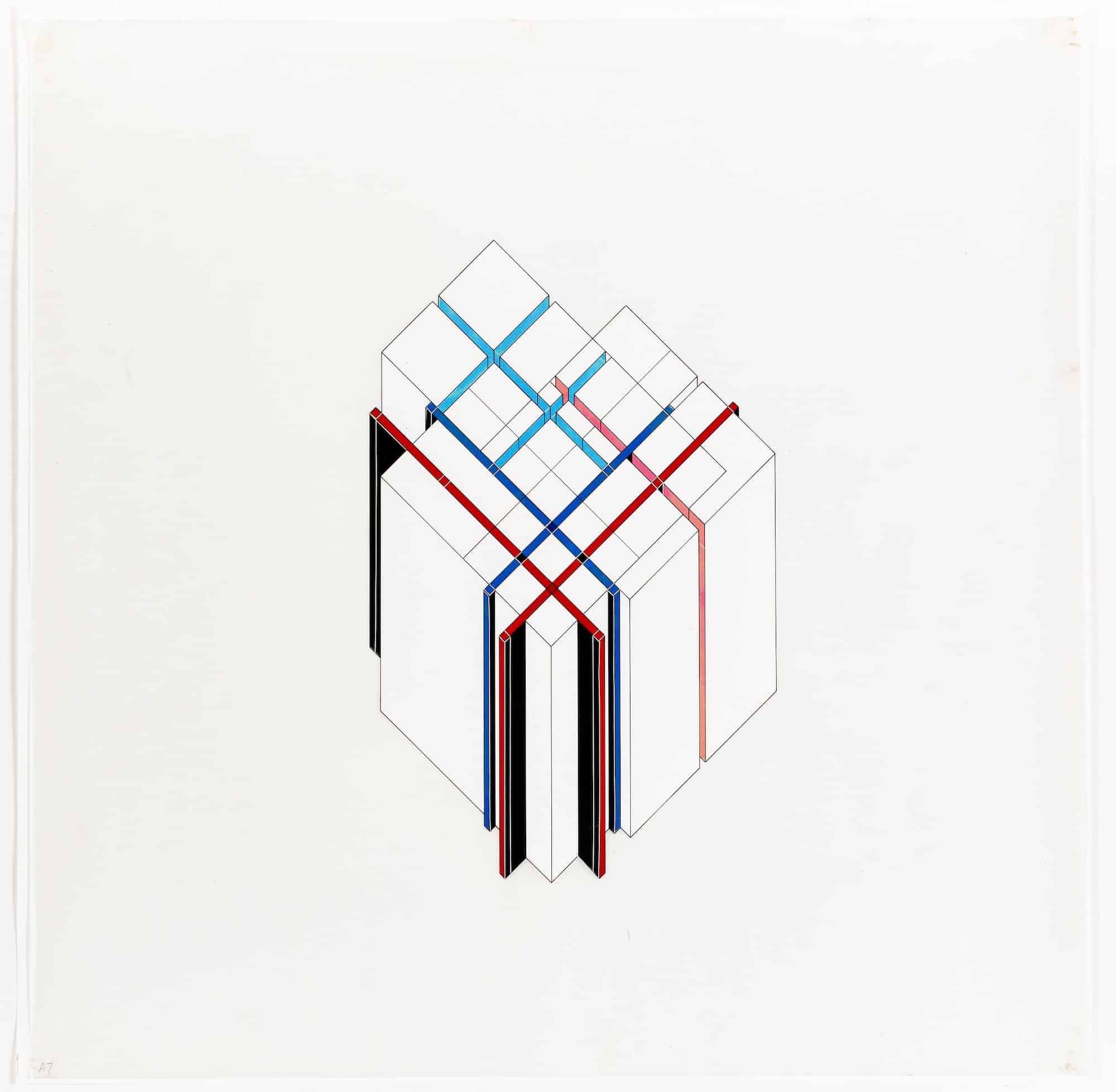
Except for a few thin paper strips, this drawing is composed entirely of plastic elements that produce solid, vibrant tones unmatched by traditional coloured washes.
If this is the case, might those supposedly anonymous draughtspeople, the grunts of the drawing office, have been precisely the creators and aesthetes that Stitt believed they should not be? Perhaps it is time to retire the familiar myth of the principal architect creating in isolation in an ivory tower, and instead celebrate the labour and ingenuity of those working at the coalface of the drawing office.
The situation is not unlike the upstairs–downstairs dynamic familiar from Downton Abbey or from historic country houses themselves where visitors often find the kitchens and servants’ quarters as compelling as the grand reception rooms above. One cannot function without the other. So too in the architectural office: the supposedly mechanical act of copying was often inseparable from the creative process itself.
Notes
- Fred A. Stitt, Systems Drafting: Creative Reprographics for Architects and Engineers (New York: McGraw-Hill, 1980), 231.
- This is the second study by the Nieuwe Instituut on architectural drawing archival practices: The Design Drawings Damage Atlas (2023) (done in collaboration with Metamorfoze) explored damage and preservation.
*
Neil Bingham is an architectural historian and curator specialising in the history of architectural representation and modern design. He is a former curator of architectural collections at the Victoria & Albert Museum, the Royal Academy of Arts and the Royal Institute of British Architects.
Invented from Copies: Blueprints, Whiteprints, Zips and Photocopies in the Architectural Office, 1870–2000 (2025) is edited by Ellen Smit, Clara Haardt, Hetty Berens and Carolin Lange and published by nai010 publishers and the Nieuwe Instituut. Copies can be purchased here.

– Maurizio Diton