Scaletales: Dr Franz Gibarian’s Lecture
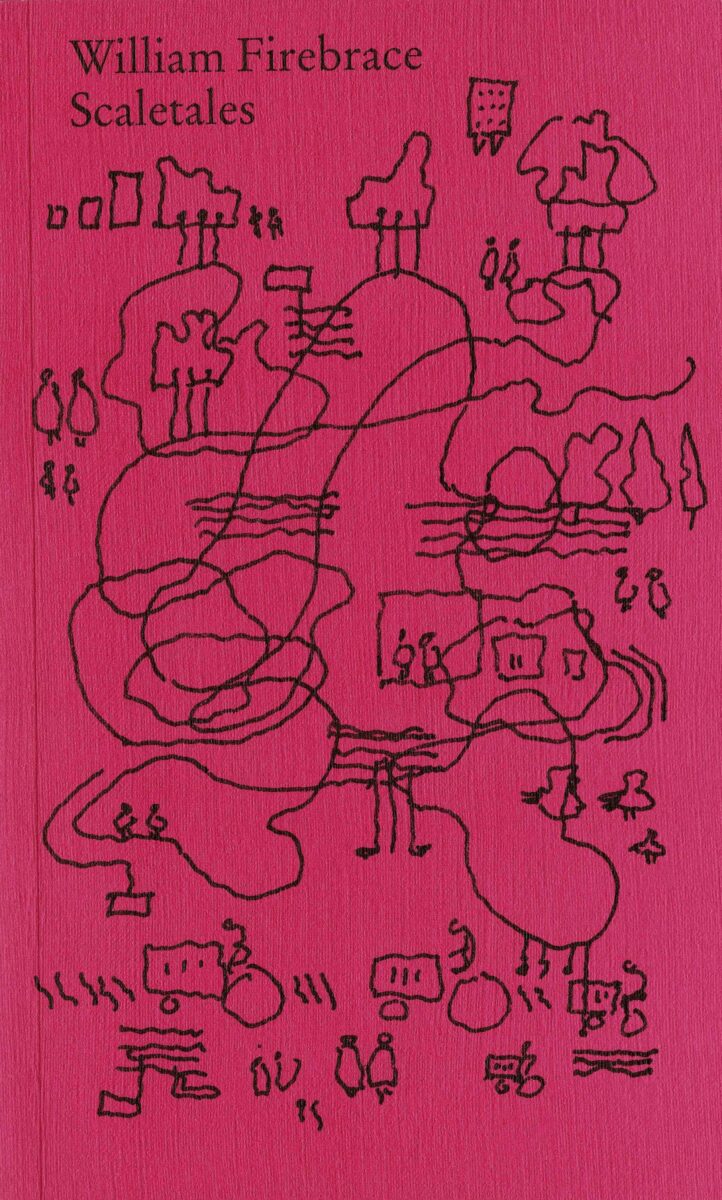
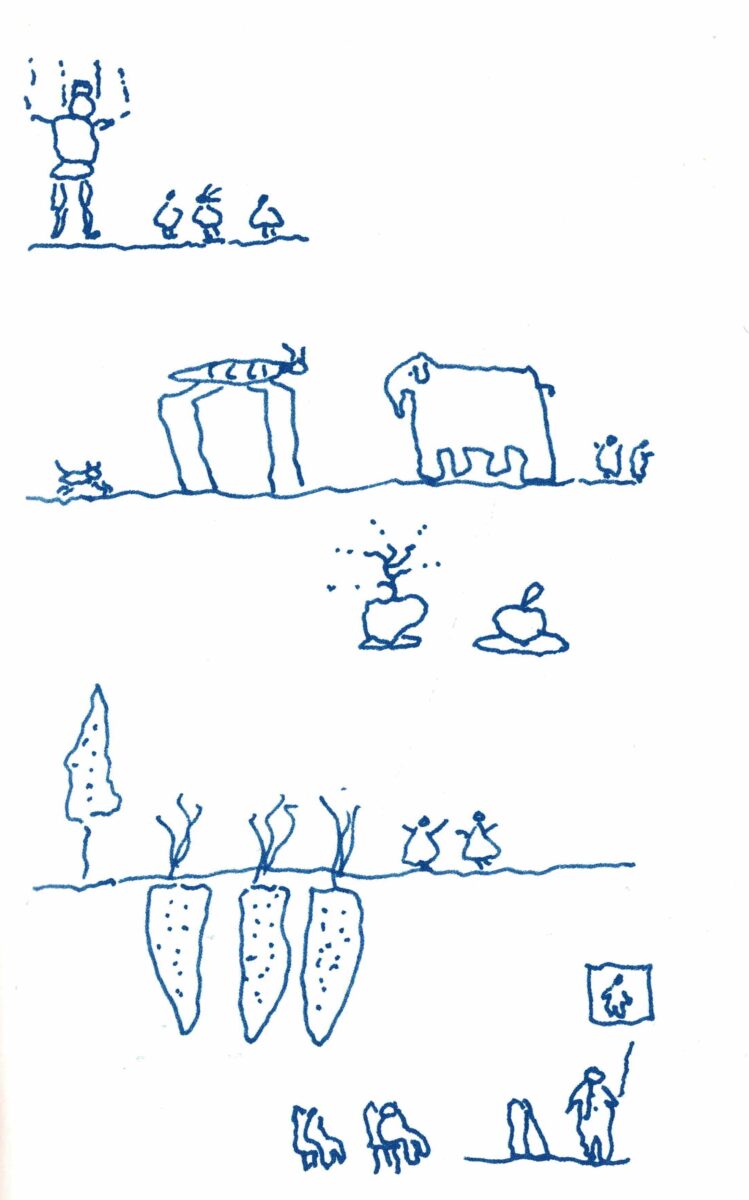
The following fictional text was extracted from William Firebrace’s Scaletales (Cologne: Verlag der Buchhandlung Walther und Franz König, Köln, 2026). The book investigates the various meanings of the word scale through a story about two elderly women on a journey from Finland through central Europe to the Black Sea. They encounter different scales and question the place of scale in their private lives. The tales are narrated twice: first as a drawing, second as a text.
*
A public lecture given by the cyberneticist Dr Franz Gibarian, in the great hall of the Academy of Science, in Przemyśl in southeastern Poland, not far from the border with Ukraine. Dr Gibarian was in his fifties, wearing a dark suit and pink shirt, small moustache, hair a bit long. The two women sat in the front row, taking notes.
Dr Gibarian cleared his throat to get attention and said:
I will consider today a number of issues raised by scale and materials. As a professional cyberneticist, working in an industry involving the creation of artificial beings, this is a matter of considerable importance.
Firstly, I would like to distinguish between size, meaning simply big and small, and scale, such as in a scale model. These two words, size and scale, are related but different. A house, such as we might live in, is bigger than ourselves, a matter of size. But this house is not only bigger than a model house, or a doll’s house, there is also an idea of different scales, say 1:1 and 1:10. The whole matter is of course much more complicated, thinking about scales sometimes keeps me awake at night. Perhaps this is why scaletales are often disturbing, they are about our known world which is both the same but has also somehow become different. And there are many kinds of scale, as we shall discover.
However, my fundamental question for today is this: how is a change in scale effected by the nature of materials? We will call our normal scale, at which we live, 1:1, and for the most part we live happily at this scale and rarely pose any questions as to whether other scales exist, how they might exist and how they might affect our lives. In a novel, we can easily imagine people who are ten or twenty times as small, or perhaps as large, as ourselves. We all know, for instance, the children’s stories about the small people and the big people. And children play with doll’s houses and toys like dolls and miniature soldiers which exist at a smaller scale to that we are used to. But consider this example: We wish to build a doll’s house at one-twentieth the normal scale, an exact replica at 1:20. This is about the scale of Playmobil figures, just so you understand how big the occupants would be. Easy, you say, it happens all the time, my daughter has one in her room and plays with it every day.
But first, how is this small house to be made? What scale of materials is required? Our normal bricks are about 200 millimetres long, made of day which is fired up in kilns. But you cannot with the same clay make bricks that are 10 millimetres long; the fabric of the day would be at the wrong scale, its particles much too large, we need other materials. Then the floors. Say the original has floors which span 5 metres and have timber beams 200 millimetres deep. But now the floors span only 250 millimetres, a tiny amount, they could do easily with a piece of plywood or even cardboard, there is in fact no need for beams at all. And if you did try beams out of timber, the scale of the grain in the wood would be completely wrong. Think also of the paint. At our scale paint has a particular appearance, due to the materials out of which it has been made, but at 1:20 this appearance is wrong, it appears crude and lumpy. Same with the curtains and the bed sheets: with our materials they are stiff, they don’t hang or lie properly. Could we make new materials for bricks and beams and curtains which somehow imitate the change in scale? Well, maybe, but this is difficult to carry out and we would still have other problems. What about the pipes which carry the water for the kitchen? And this is such a wonderful doll’s house that it has bathrooms with flowing water. But our water could not flow in such small pipes, the water molecules would be too large and the friction within the pipes too large. So, we create a new kind of water with a completely different density? Well, no, this is difficult to imagine, I am an inventive scientist, but I think not.
*
William Firebrace is an architect and writer, and teaches in various London schools of architecture, including the Architectural Association School of Architecture. He is the author of a trilogy of books: Marseille Mix, Memo for Nemo, and Zickzack.

– William Firebrace