Printed Matters
Few objects stage anticipation as effectively as a box, especially one whose contents are revealed slowly, piece by piece. The sense of something concealed within prepares the viewer for an experience at once intimate and tactile, one that is focused by the box itself, but that—in the act of unpacking—becomes expansive, an opening. A box sits before me, wrapped in a vivid reddish-orange cloth. It is the limited-edition box folio produced on the occasion of the exhibition The Sixth Somewhat Annual Meeting (2025) by the New York gallery and printmaking studio A83. Inside are 16 unique plates: 305 × 305 mm prints, most of which respond to specific artefacts from the John Nichols Printmakers & Publishers Collection.[1]
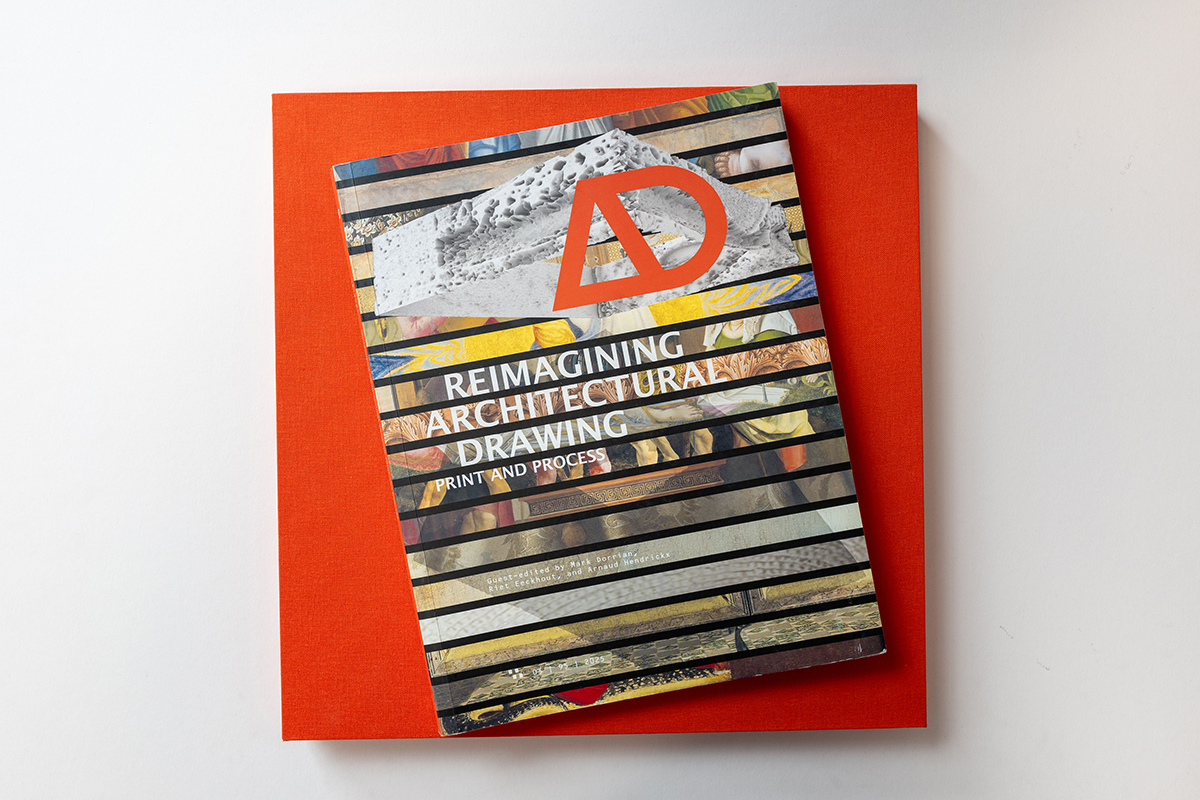
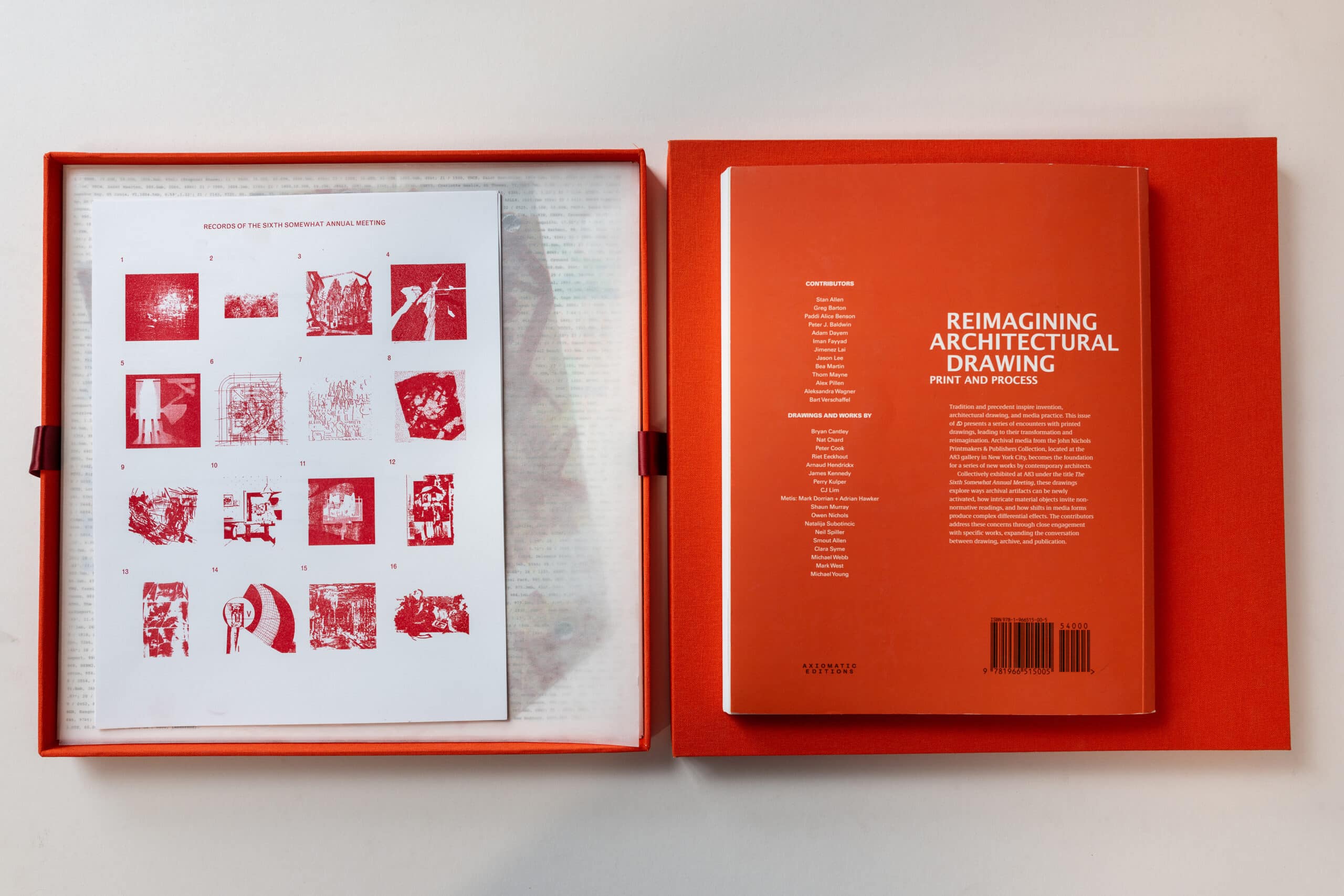
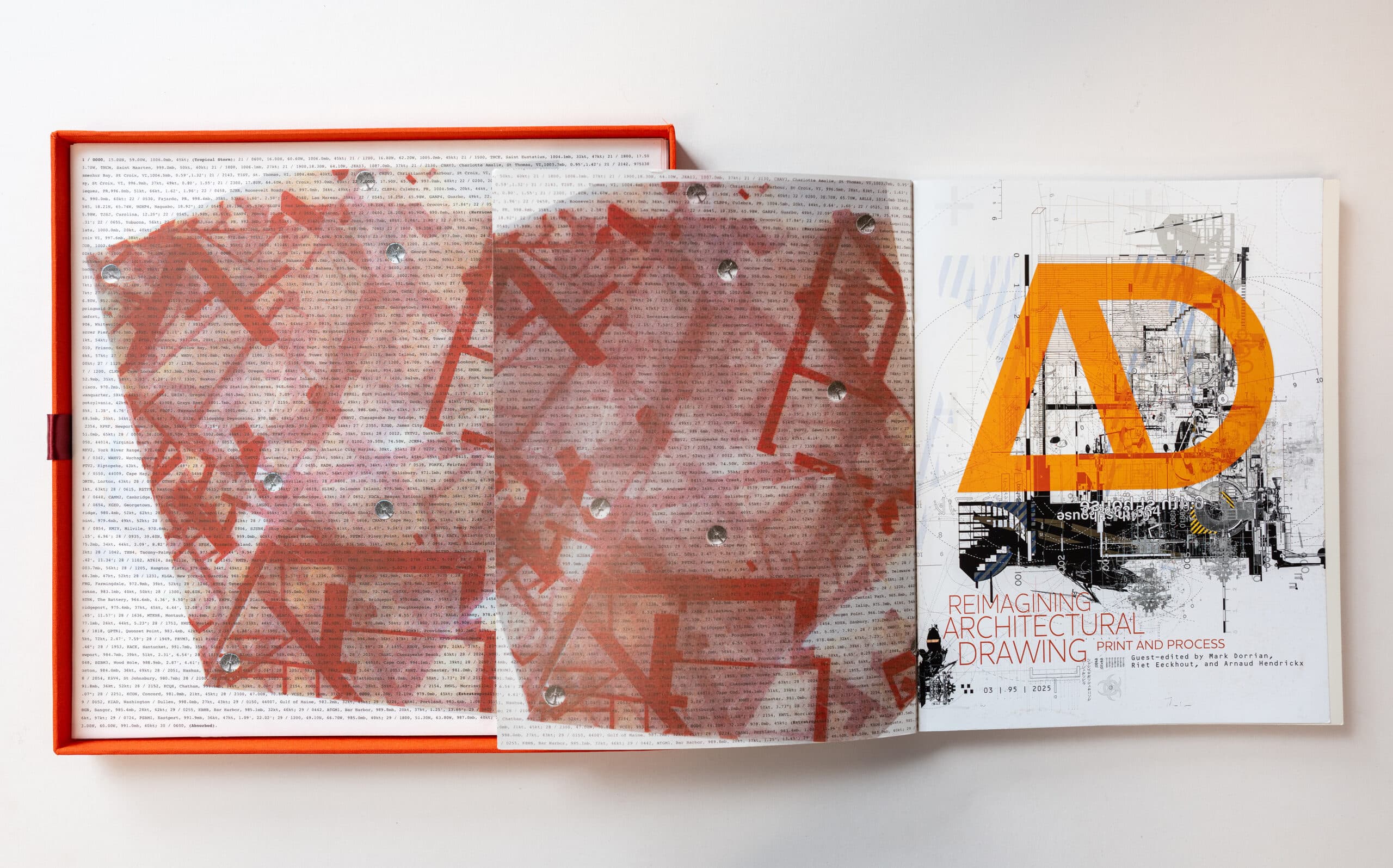
The authors of the prints—a group of 18 scholars, architects, and educators—have met somewhat regularly since 2018, in a range of formats and in various locations (including once at the Drawing Matter archive in Somerset), to discuss the agency of architectural drawing and its role within their respective drawing practices. In this instance, for the first time, the drawing matters explored by the group are situated within a common context: the A83 archive itself. Working closely with A83 directors Owen Nichols and Clara Syme, the participants created drawn interpretations of archival ‘originals’, unpacking materials from the collection and translating them into a series of new risographs and serigraphs. Contained within this beautifully crafted box folio—an ‘exhibition-in-a-box’—these new print works reactivate the archive and recast architectural drawing as a collective, materially contingent practice. One imagines that the anticipation staged by the box may have been similar to how the participants first encountered the archive, and experienced the making of these prints: the box does not contain autonomous reproductions, but drawings formed through the shared conditions of their histories and their making.
The vivid, Oppositions-like red-orange of the folio box is carried onto the cover of the recently published thematic issue of AD, entitled Reimagining Architectural Drawing: Print and Process, guest edited by Mark Dorrian, Riet Eeckhout, and Arnaud Hendrickx, members of the group and contributors to its ongoing activities. Reimagining Architectural Drawing unpacks the contents of the folio, re-presenting and critically reframing its printed matters. Additional contributions from scholars in architecture, anthropology, philosophy, and psychoanalysis are invited into this conversation about architectural drawing. Preparatory drawings, model studies, experimental test prints, and proof sheets are discussed alongside the ‘finished’ prints contained in the box, as supplementary material revealing the intricate and iterative processes of metamorphosis through which the archival ‘original’ images have evolved. This constellation of texts and images—lavishly re-presented throughout the issue—creates a rich discursive field in which drawing and print are seen as mutually constitutive agents in the production of architectural knowledge.
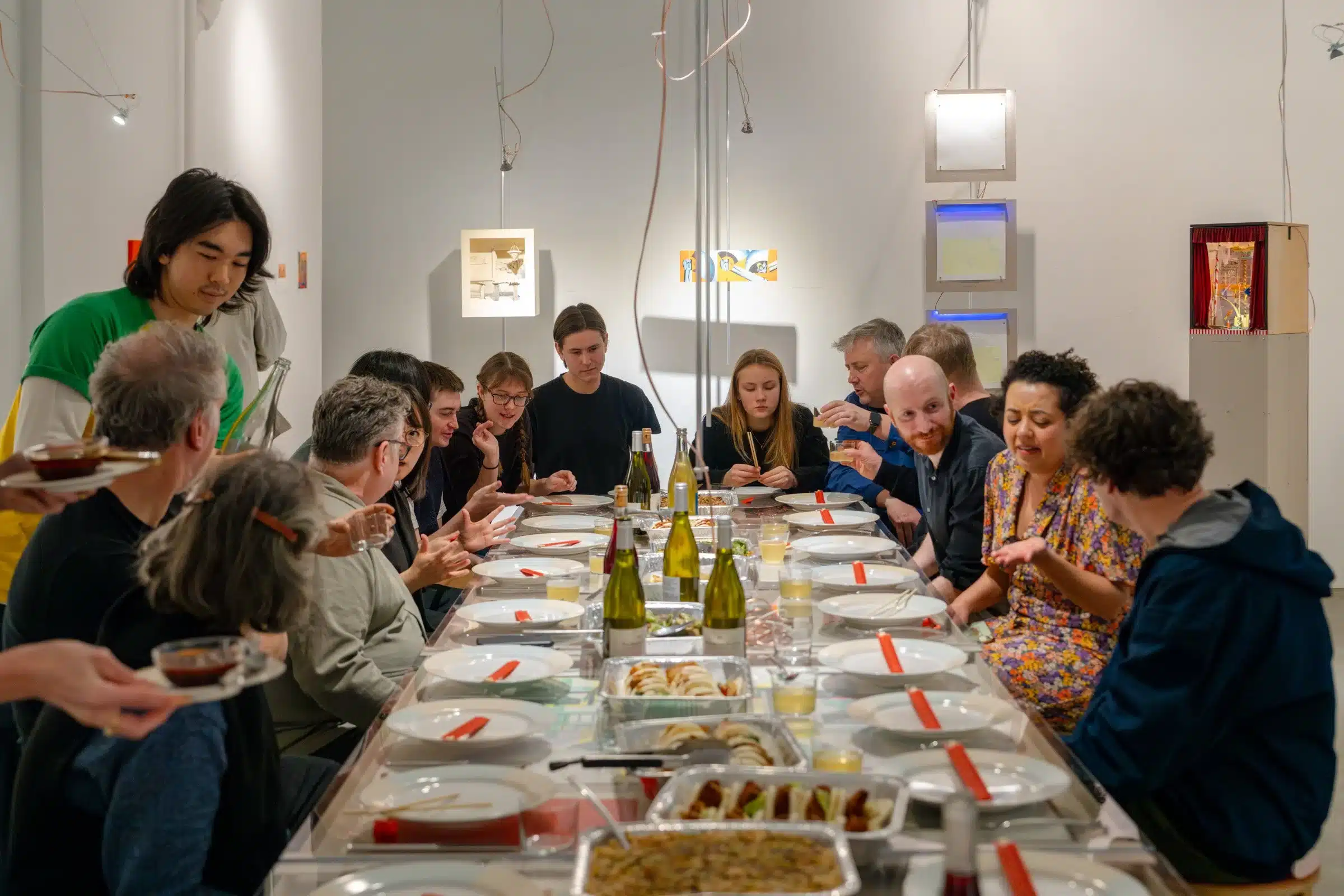
In some ways the issue echoes the operations of the box itself, and of the A83 archive under Owen and Clara’s direction. It invites consideration of the mutual production of architectural knowledge through a gradual unpacking. The introductory essay opens with a striking vignette: the post-opening dinner for The Sixth Somewhat Annual Meeting, held around a transparent table beneath which archival prints and working drawings were displayed. This staging operates as a conceptual apparatus, the editors write. Over the course of the evening, the gradual accumulation of stains, shadows, and residues on the table’s surface becomes an analogue for printmaking—an indexical process shaped by contact, pressure, and contingency. Jennifer L. Roberts’s evocative description of print as ‘a thing that is born from a moment of dark and mysterious contact under intense pressure, in a drama full of inversion and reversal and blindness and uncertainty’ provides a compelling frame for this scene.[2] It also recalls Hélène Cixous’s conception of drawing as an act that proceeds blindly, emerging from and through darkness.[3] In both accounts, the making of the print and the making of the drawing are understood as generative encounters with absence, conditioned by the material qualities of appearance. This is the inevitable tension embedded within representation itself: the imperative to evoke what is absent and simultaneously assert the material presence of the image.[4]
Set against the dominance of digital representation and the immediacy of image circulation, the material assertions of printmaking speak of physical effort, slowness, but also of opacity and ambiguity. Drawings are split into parts that correspond solely through colour, not content, then reassembled through successive layers and reconstituted across multiple media. Ink, plate, screen, and paper emerge as active instruments, contributing to the palimpsestic construction of the printed drawing. Any hierarchy between the original, a copy, and the new begins to dissolve; authorship becomes distributed, dispersed across a network of practitioners, archival artefacts, and technical procedures. The ‘in-between’—between making drawings for prints and making printed drawings—emerges as a site of invention and re-invention: drawing becomes an open-ended process of negotiation rather than a fixed or (fully) controlled act of representation.
In the unpacking of this ‘in-between’, the archive itself is re-presented, and repositioned; it becomes more than a repository. Rather than treating the artefacts in the John Nichols Printmakers & Publishers Collection as inert objects, the A83 project renders them mutable. The archive is seen as a performative space of latent operations, where past, present and future intersect—exemplifying what Catherine Ingraham has described as ‘the paradoxical forces at work in architecture’ whereby the material realisation of architectural objects emerges ‘through a process of design related to the dialectic between concepts of originality and creativity and pressures of what is given as a precedent.’[5]
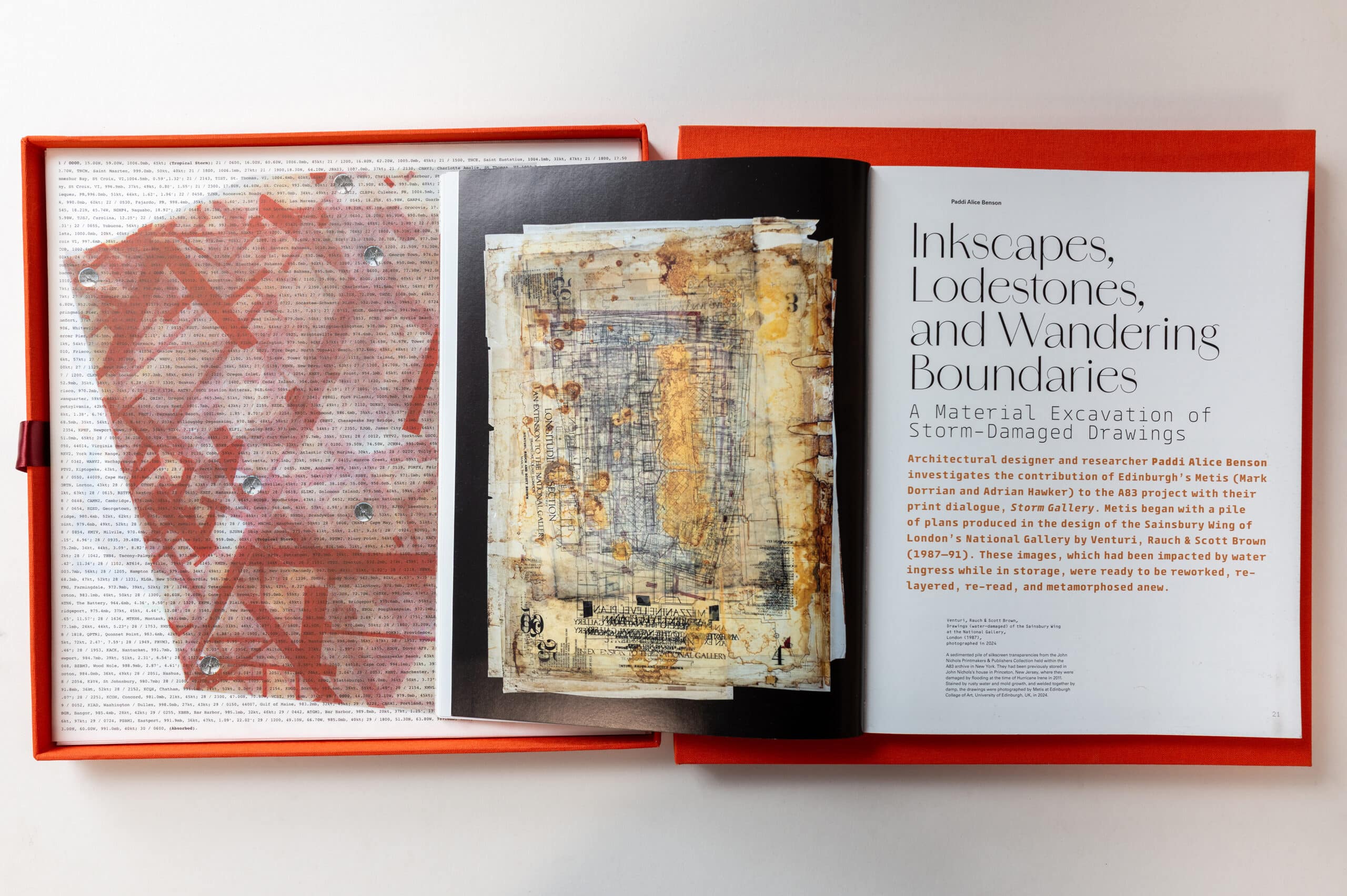
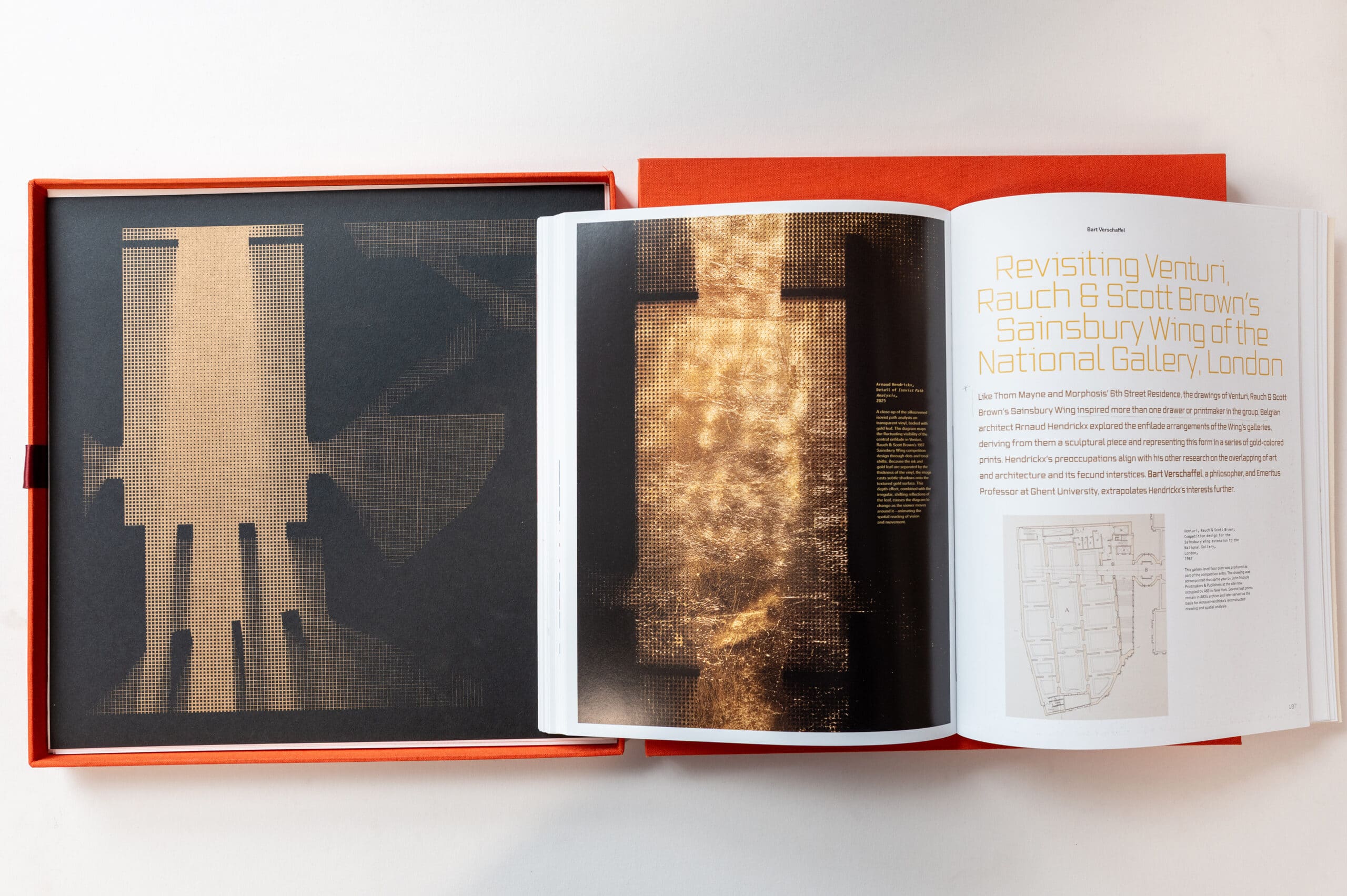
Certain precedents catalyse multiple responses across the group. For instance, the drawings associated with the Sainsbury Wing of London’s National Gallery by Venturi, Rauch & Scott Brown (1987–91) are reimagined in distinct ways by Metis (Mark Dorrian + Adrian Hawker) and Arnaud Hendrickx. Metis turns to a series of transparencies originally produced for silkscreen prints and later damaged by flooding during the passage of Hurricane Irene in 2011. This ‘compromised’ material becomes the basis for Storm Fold 3, a drawing printed on vellum and accompanied by a cloud of meteorological data registering the storm’s passage. Hendrickx, on the other hand, is drawn to the shifting visual field of the gallery’s central enfilade, translating its fluctuating visibility into the drawing Isovist Path Analysis, printed on transparent vinyl in black ink and backed with shimmering gold leaf.
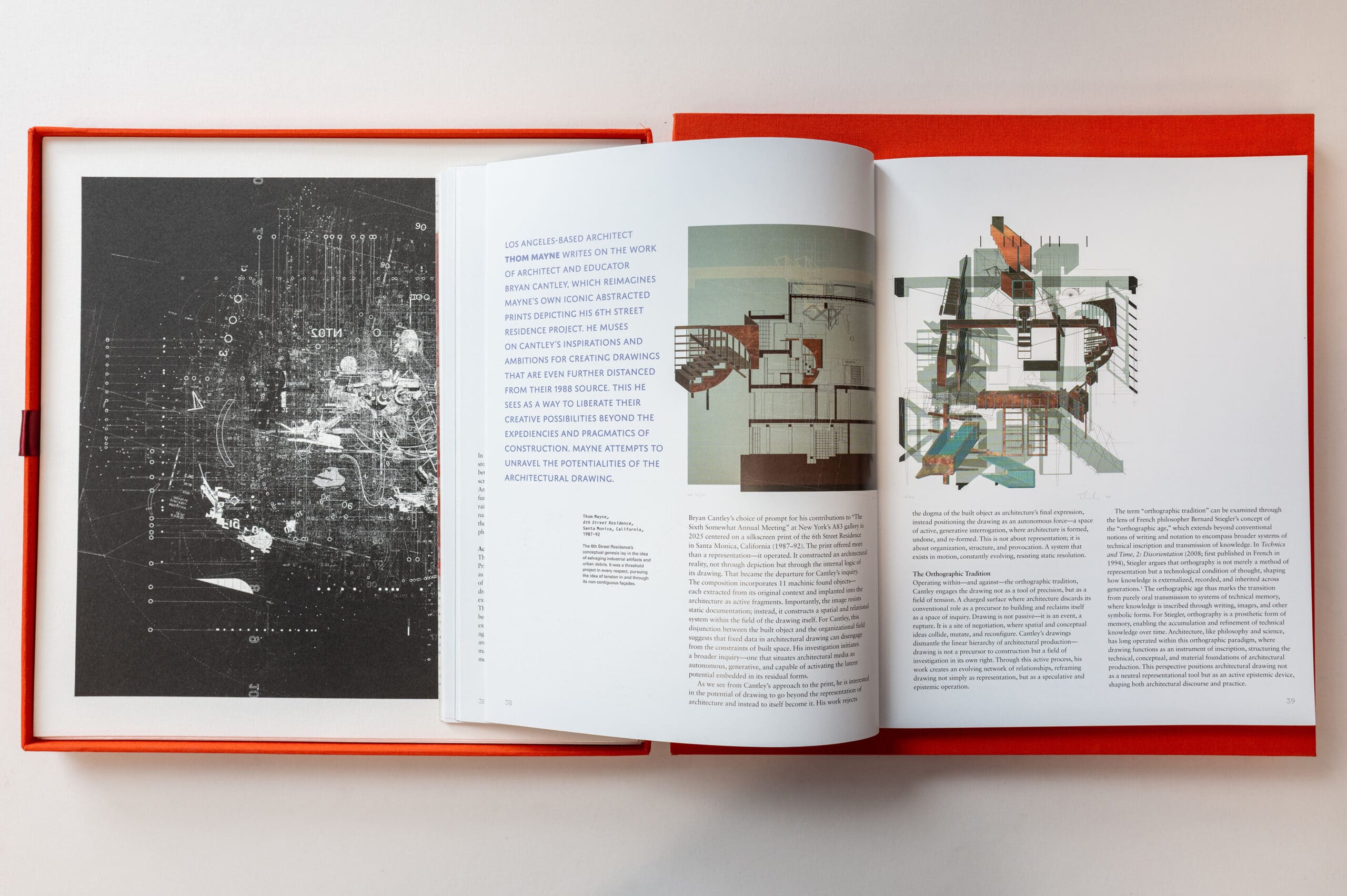
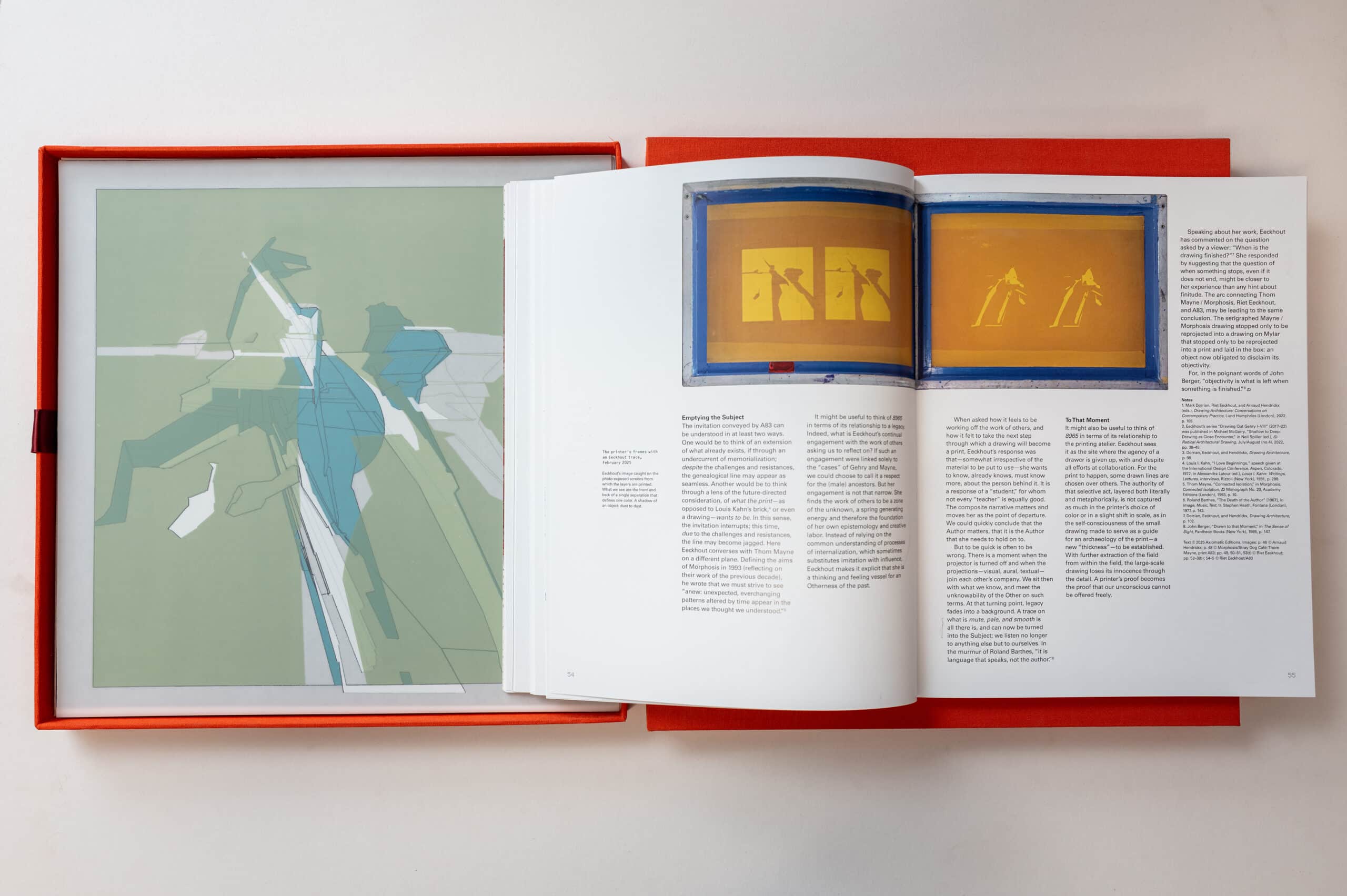
A series of Morphosis prints prompts multiple acts of re-drawings, too. In Bryan Cantley’s response to Thom Mayne’s 6th Street Residence silkscreen print (1987–92), the drawing Data 09-G transforms the technical and mechanical fragments, salvaged industrial artefacts and traces of urban debris into a densely annotated terrain. As Mayne—the author of the original archival artefact—observes, Cantley’s reimagining creates a proliferating organisation system of coded relations. Riet Eeckhout approaches two Thom Mayne / Morphosis prints, The Kate Mantilini, the Lifeguard Station (1988) and 5th of June (1989) differently, painstakingly (re)tracing all their lines—erasing nothing—as Alexandra Wagner perceptively notes. In Eeckhout’s flat yet ‘thickened’ translation, entitled 8965, one cannot escape being ‘drawn to the lines of the Other’[6].
Some contributors challenge the A83 project brief further, working across multiple archival prompts at once. Michael Young combines point-cloud photogrammetry scans of the printmaking file room with a collage made by Michael Graves, drawn from the A83 archive, alongside works by Caravaggio. The resulting diptych, Paul Graves and Peter Graves, traverses temporalities, histories, and media. Likewise, CJ Lim’s The Phantoms of A83—an embossed print overprinted with fluorescent ink—mobilises the archive as a generative matrix. Drawing on Aldo Rossi’s Lighthouse (1980), Frank Gehry’s Rebecca’s Restaurant Placemat (1991), and Bernard Tschumi’s Nine Houses for K-Town (1982), the new work constructs ‘an architectural ghost story’, Jason Lee comments, in which the original formal figures return as spectres within the printed image.
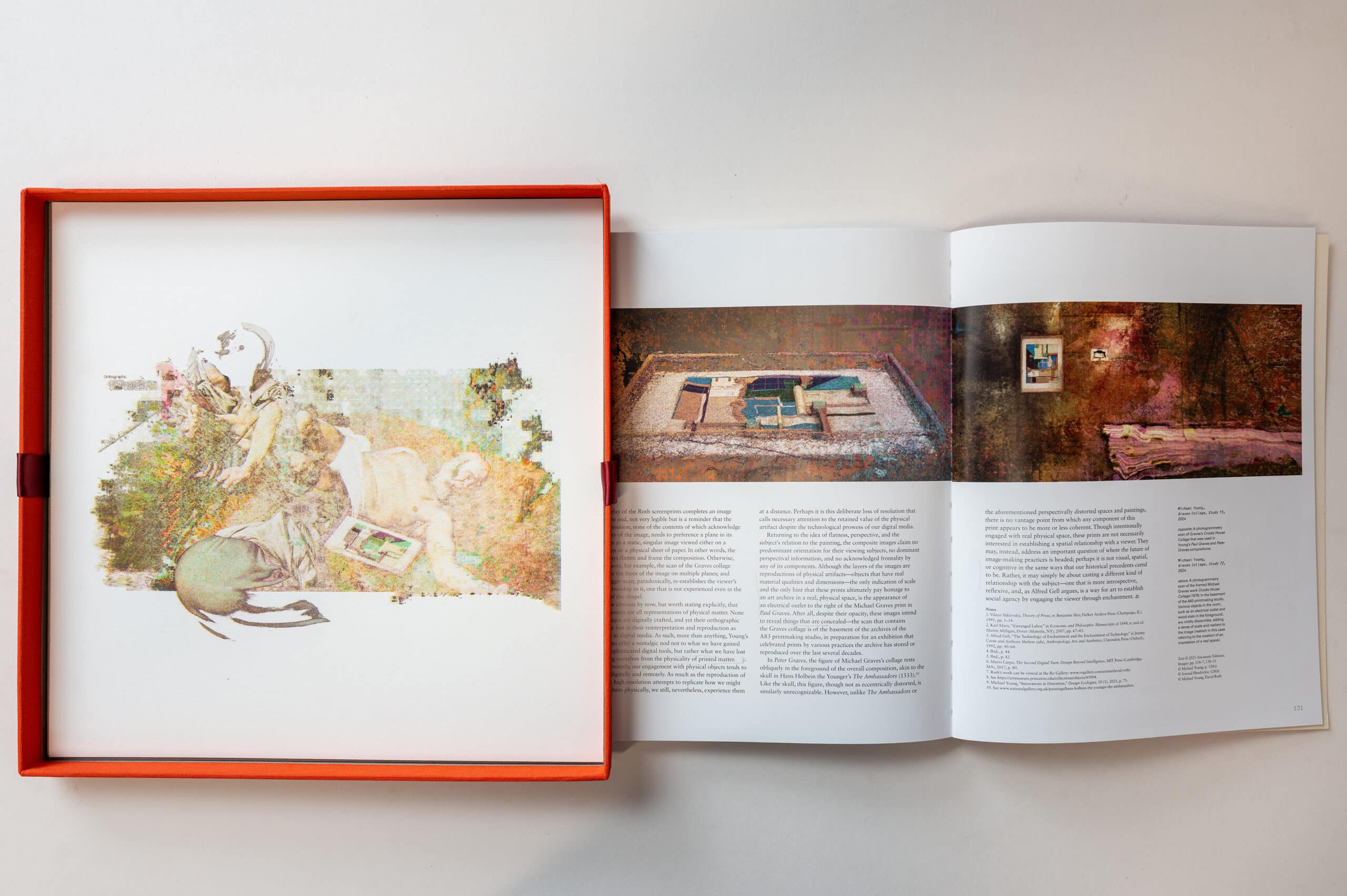
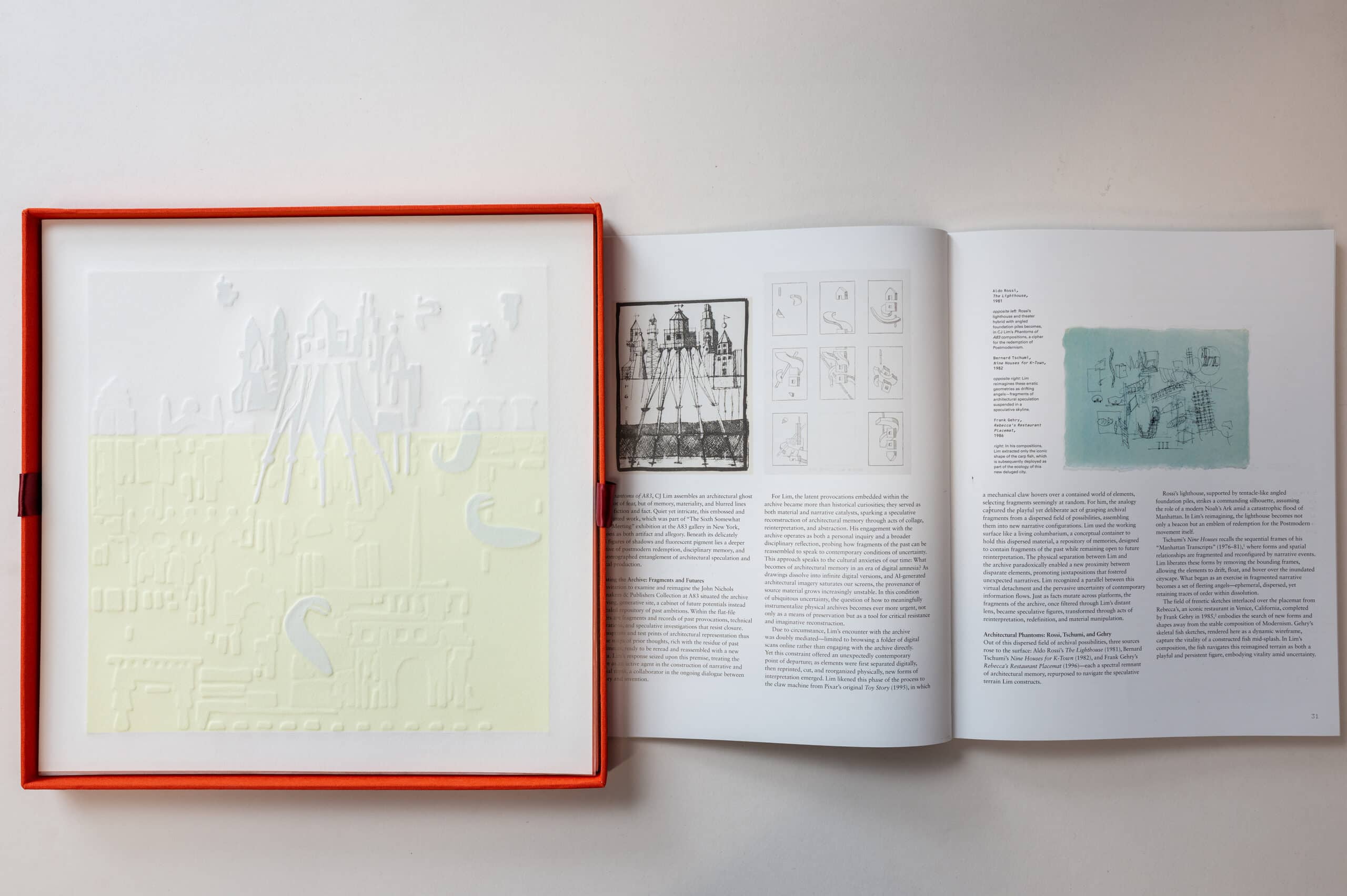
The work recorded, recounted, and reflected upon in this thematic issue of AD builds on the publication Drawing Architecture: Conversations on Contemporary Practice (2022), further developing the group’s ongoing research agenda concerned with exploratory forms of architectural drawing beyond conventional academic frameworks. The earlier book foregrounds ‘conversation’ as a means of inquiry; this thematic issue retains those dialogical exchanges and extends them by repositioning ‘print’ itself as both medium and method. It is the latest in the somewhat regular unpacking undertaking by the group. Drawing is not only discussed and debated but reconsidered and reconstituted through the processes and techniques of printing. This is not a nostalgic return to an analogue technique but rather an engagement with materially grounded forms of architectural thinking. This is what gives Reimagining Architectural Drawing its urgency and agency: it expands those processes which lay bare the productive intersections of absence and material presence critical to developing drawing as a practice. It offers a critical reimaging of architectural drawing as a dense material surface—one in which the ‘mysteries’ of its latent matters, of what is smoothed in the printed image, remain insistently present.
*
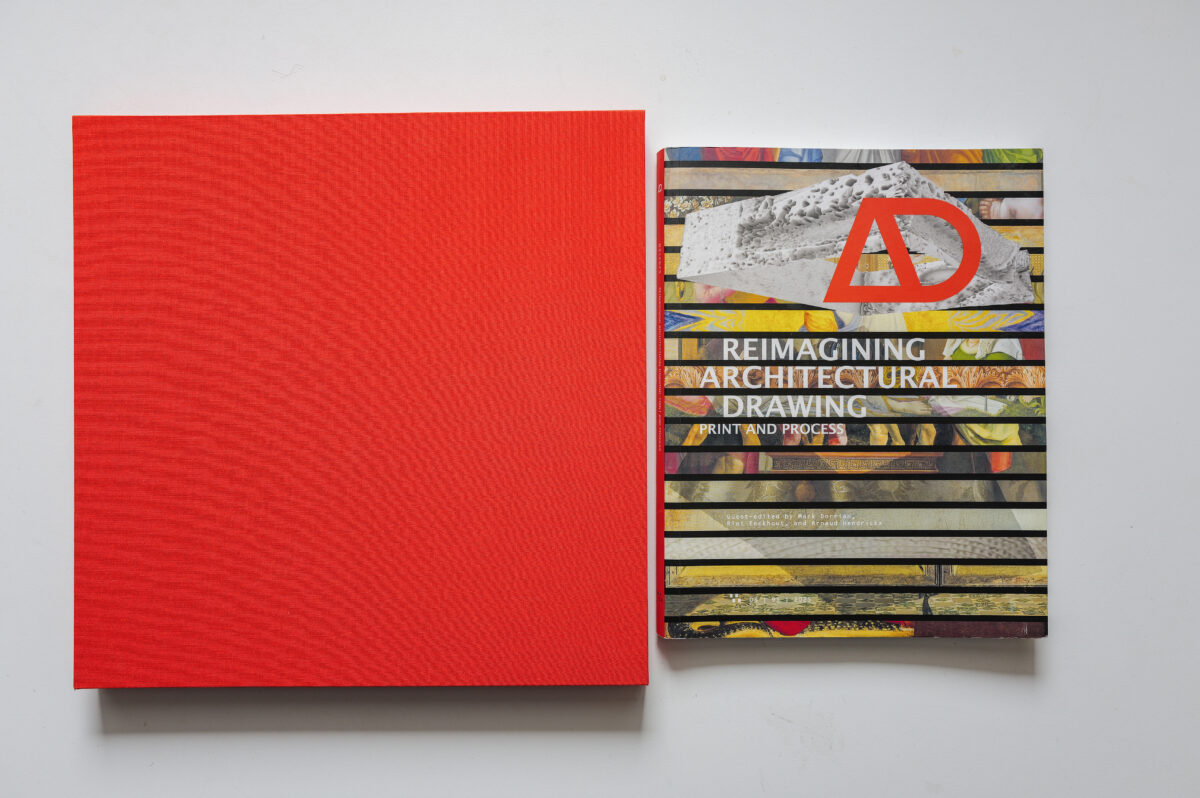
The box folio Records of the Sixth Somewhat Annual Meeting and the thematic issue of AD Reimagining Architectural Drawing: Print and Process. Photographs by the author. 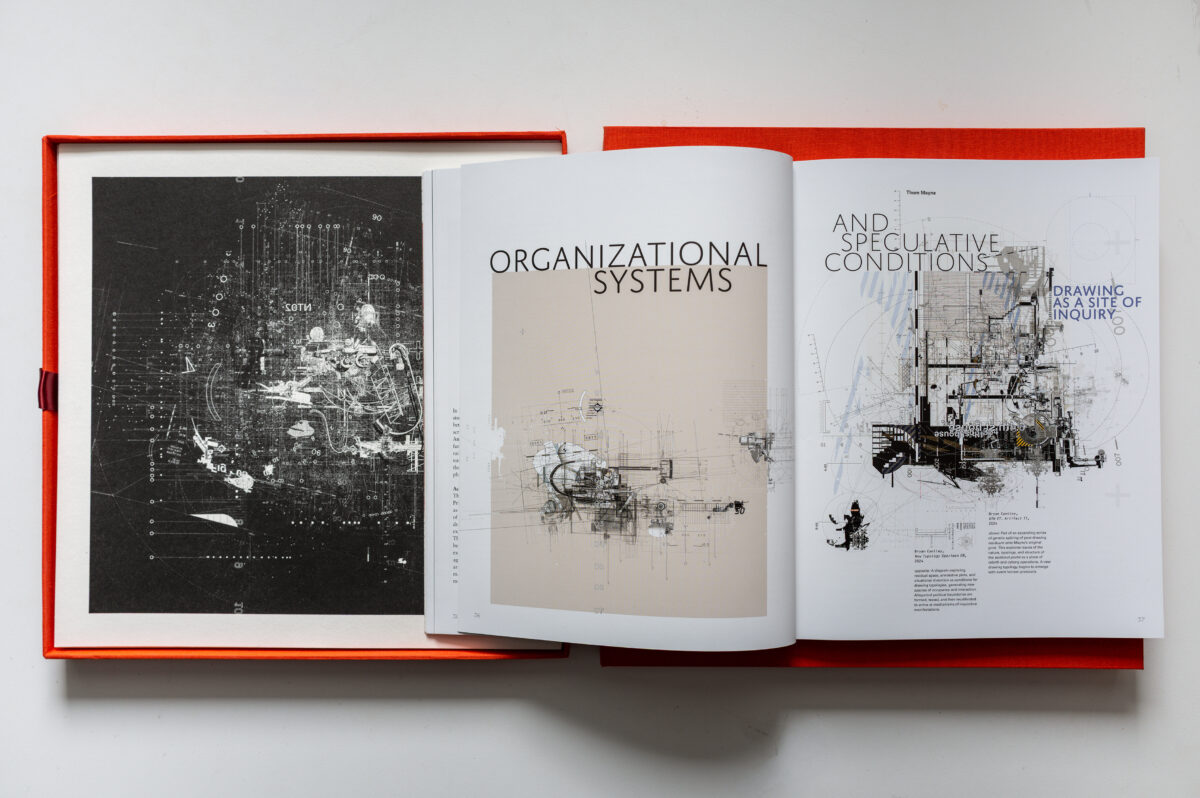
Bryan Cantley, storm[orph] 10.06 and Thom Mayne, ‘Organisational Systems and Speculative Conditions’. 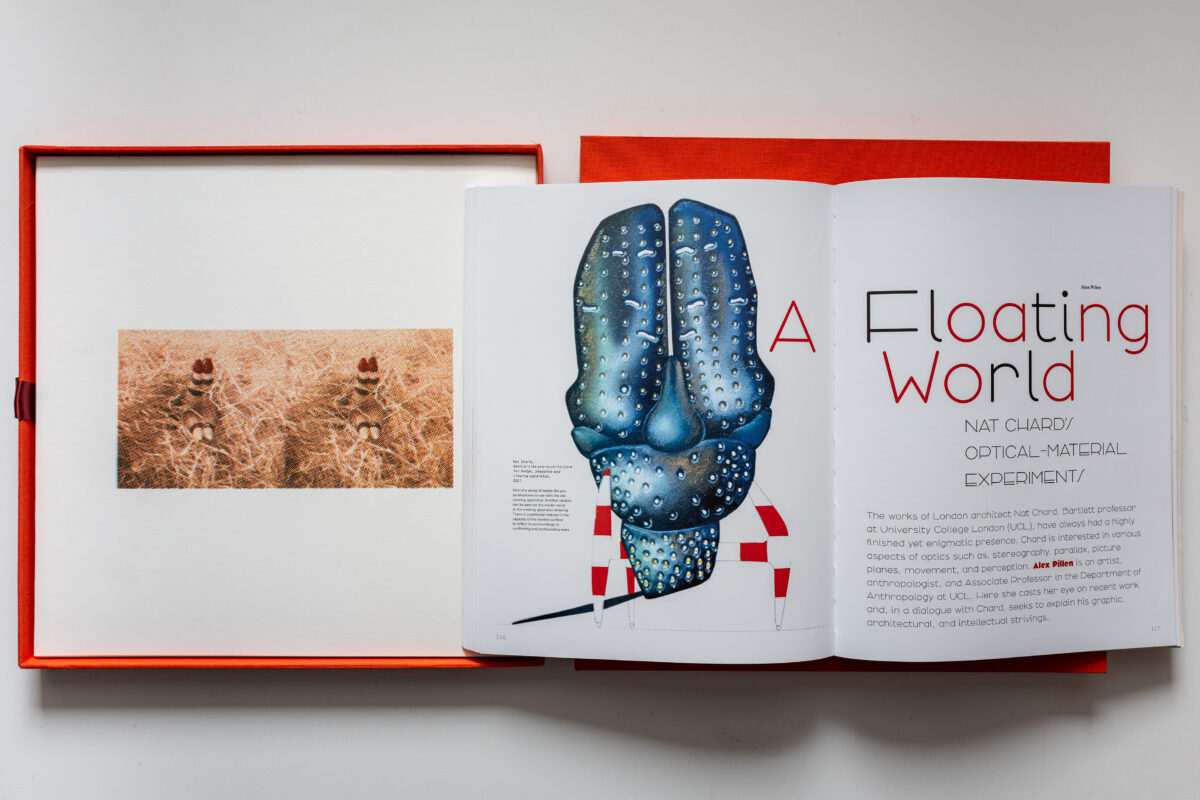
Nat Chard, Hedge with floating shadow peepshow (and floating picture plans) and Alex Pillen, ‘A Floating World’. 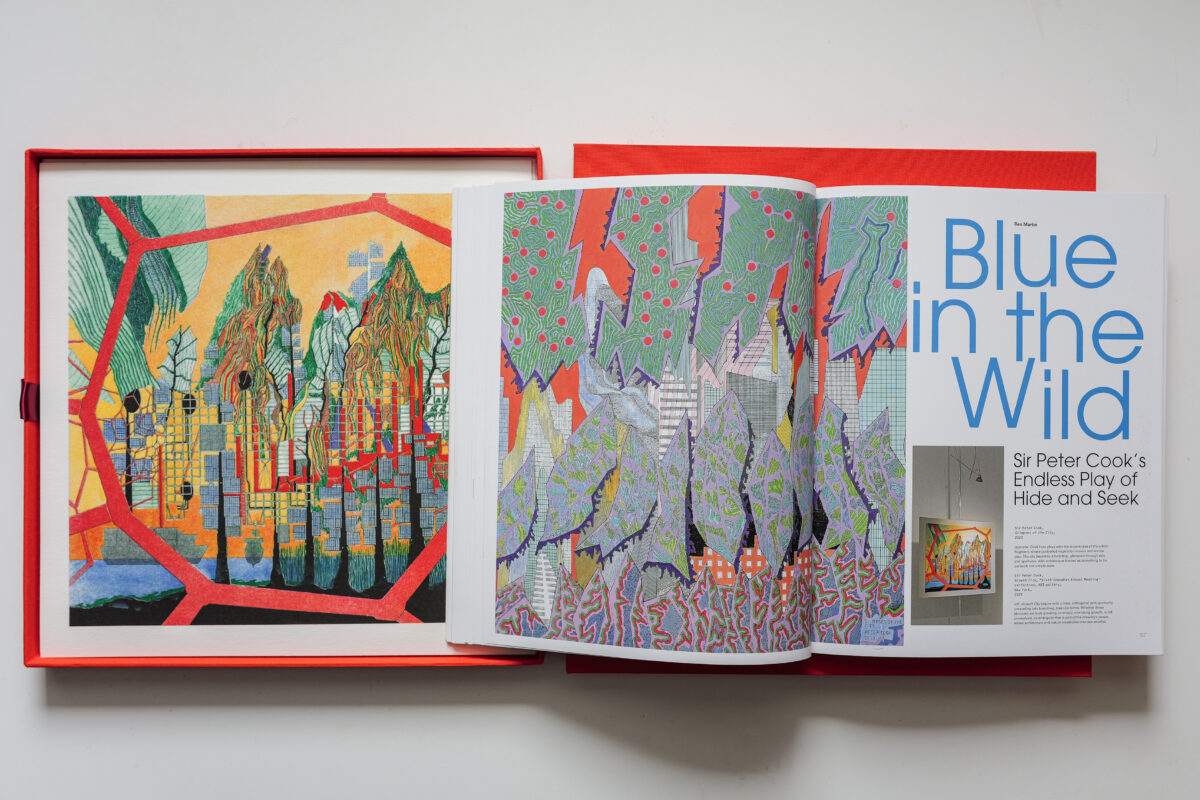
Peter Cook, Growth City and Bea Martin, ‘Blue in the Wild’. 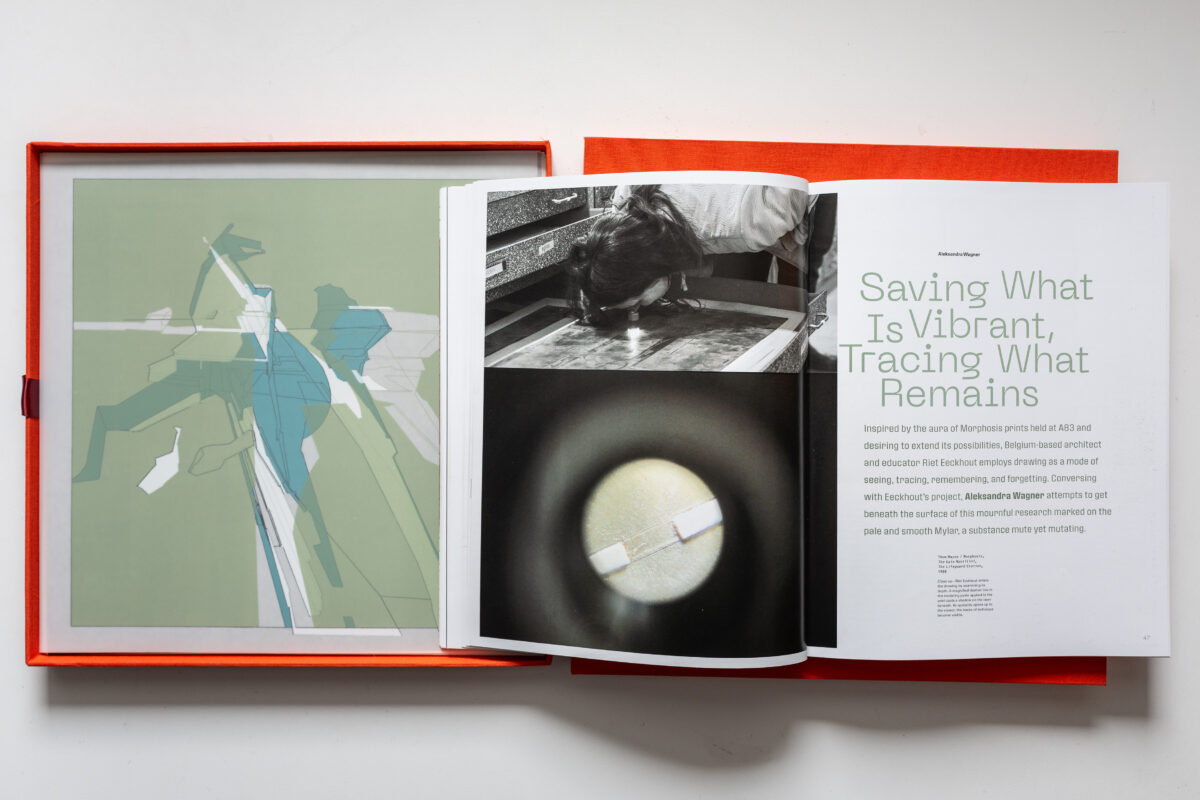
Riet Eeckhout, 8964 and Aleksandra Wagner, ‘Saying What Is Vibrant, Tracing What Remains’. 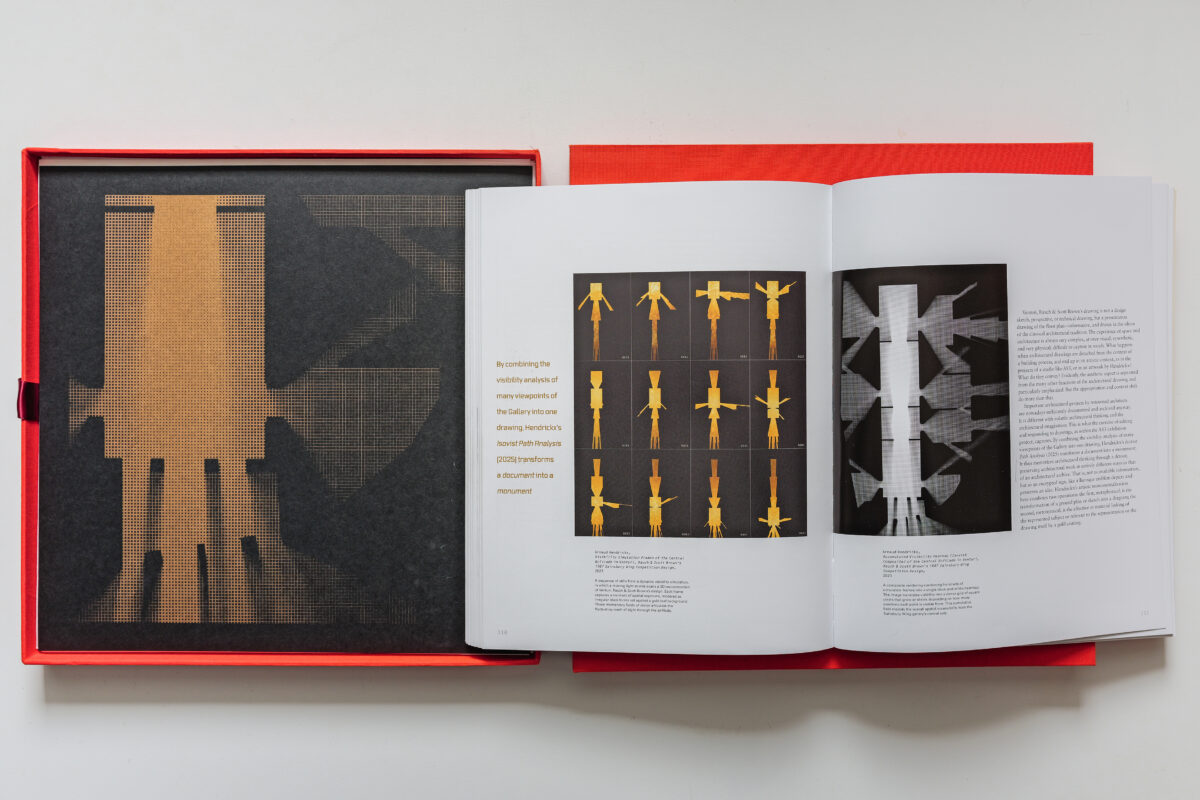
Arnaud Hendrickx, Isovist Path Analysis and Bart Verschaffel, ‘Revisiting Venturi, Rauch & Scott Brown’s Sainsbury Wing of the National Gallery, London’. 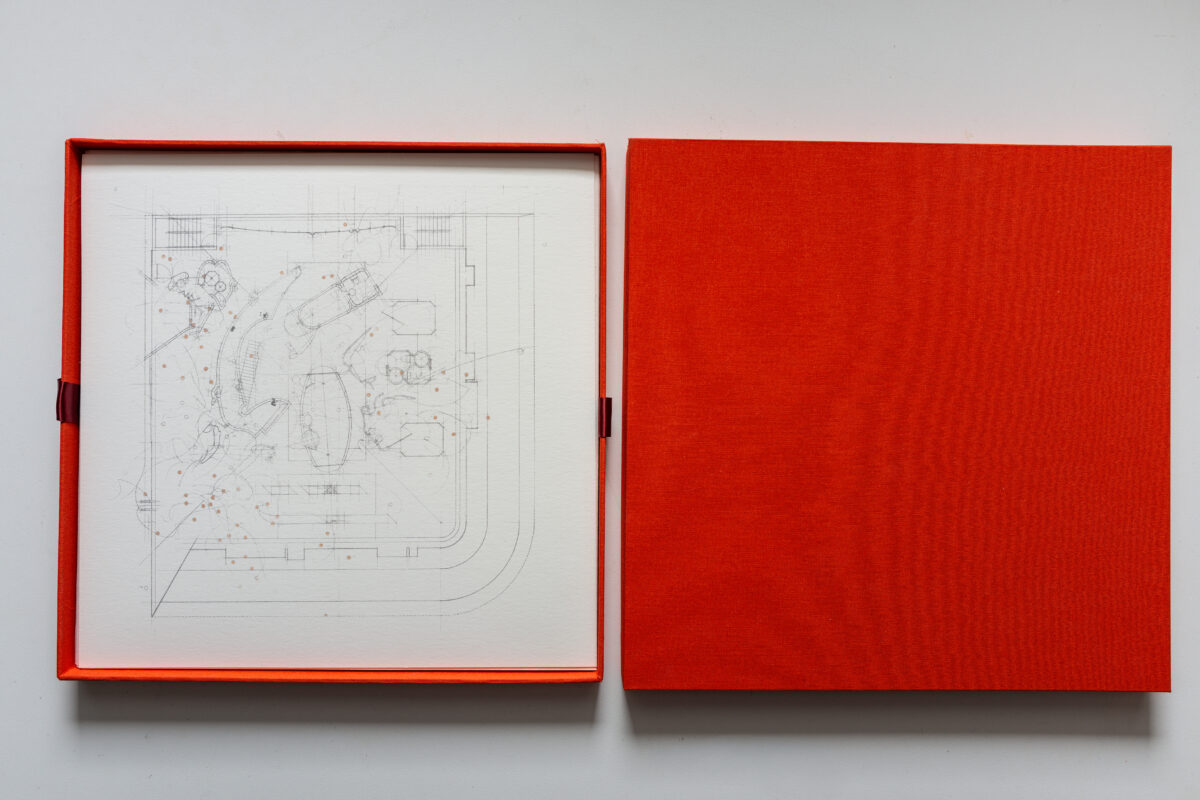
Perry Kulper, Speculative Rooftop House Plan. 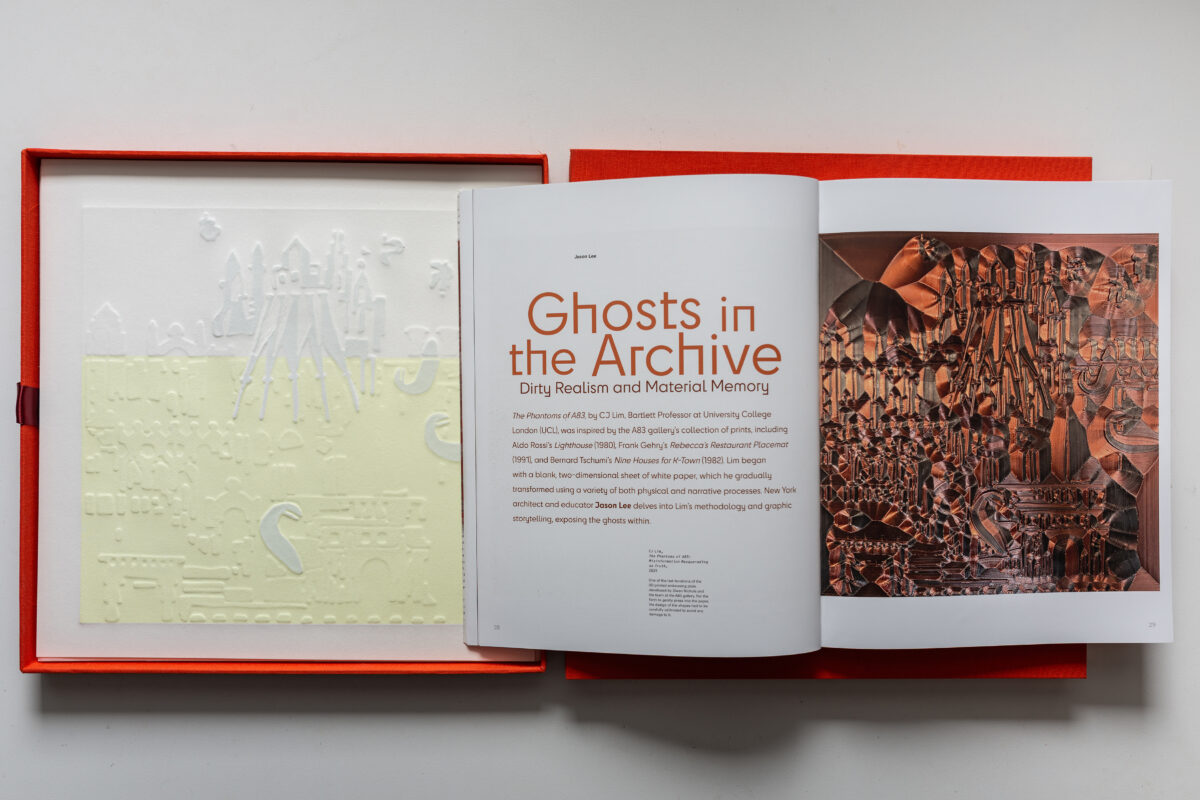
CJ Lim, The Phantoms of A83 and Jason Lee, ‘Ghosts in the Archive’. 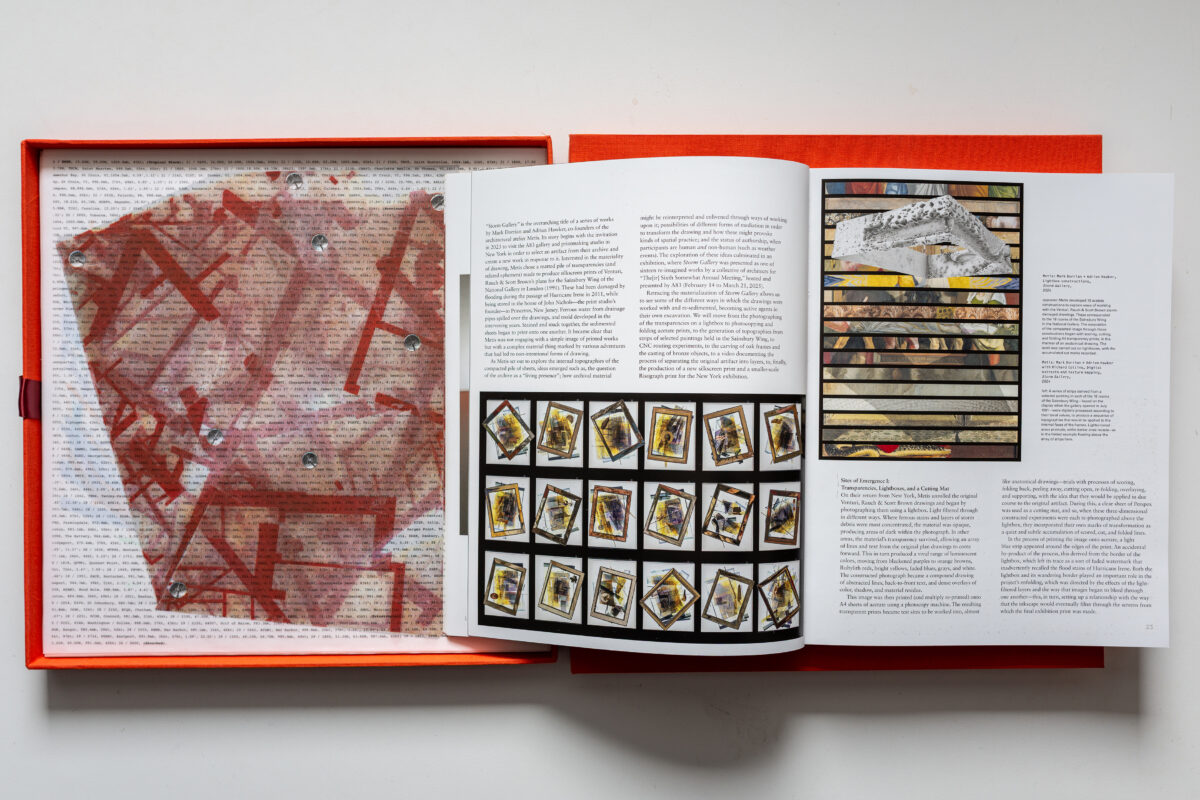
METIS (Mark Dorrian + Adrian Hawker), Storm fold 3 and Paddi Alice Benson, ‘Inkscapes, Lodestones, and Wandering Boundaries’. 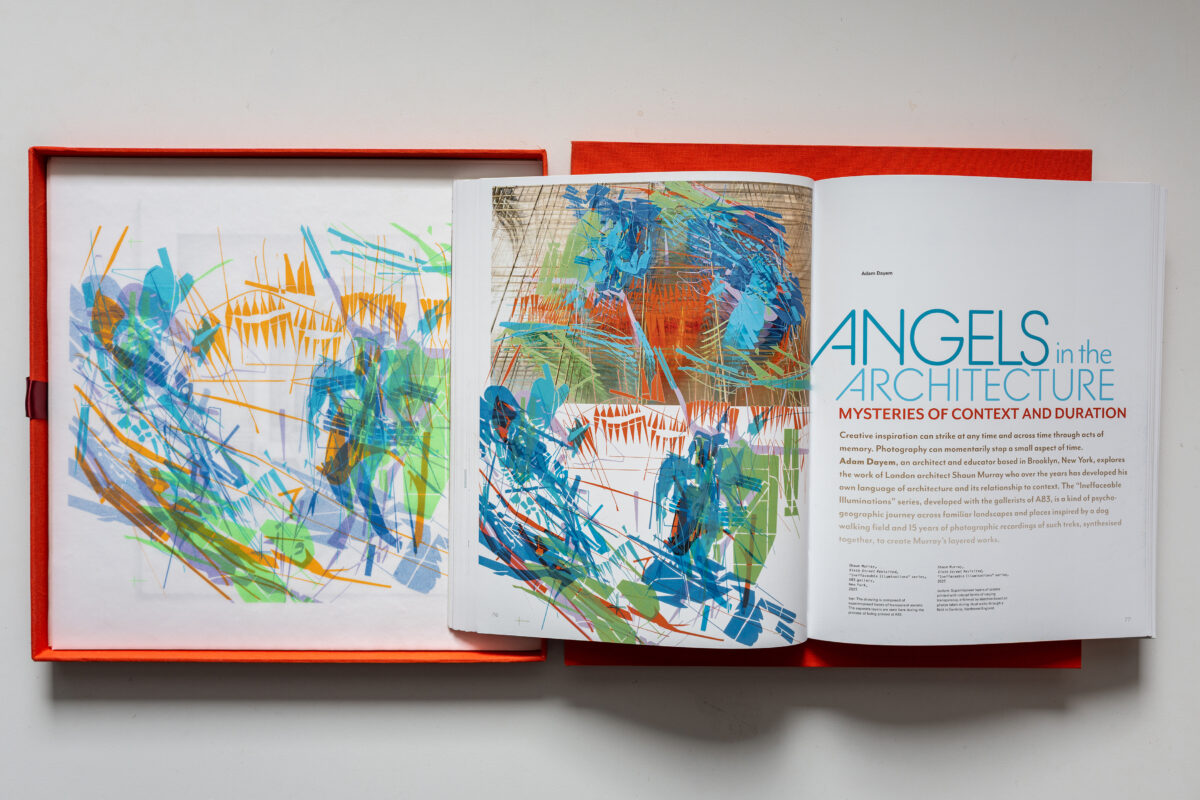
Shaun Murray, Ineffaceable Illuminations and Adam Dayhem, ‘Angels in the Architecture’. 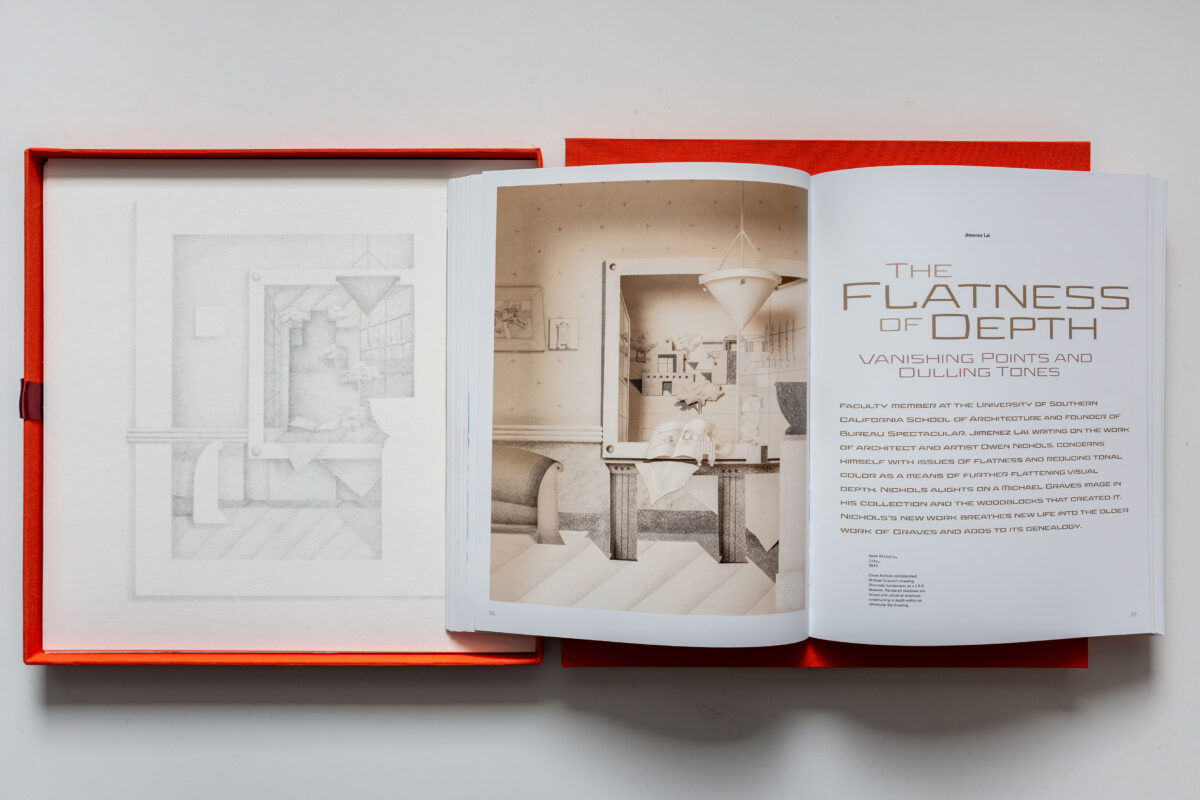
Owen Nichols, Icky and Jiminez Lai, ‘The Flatness of Depth’. 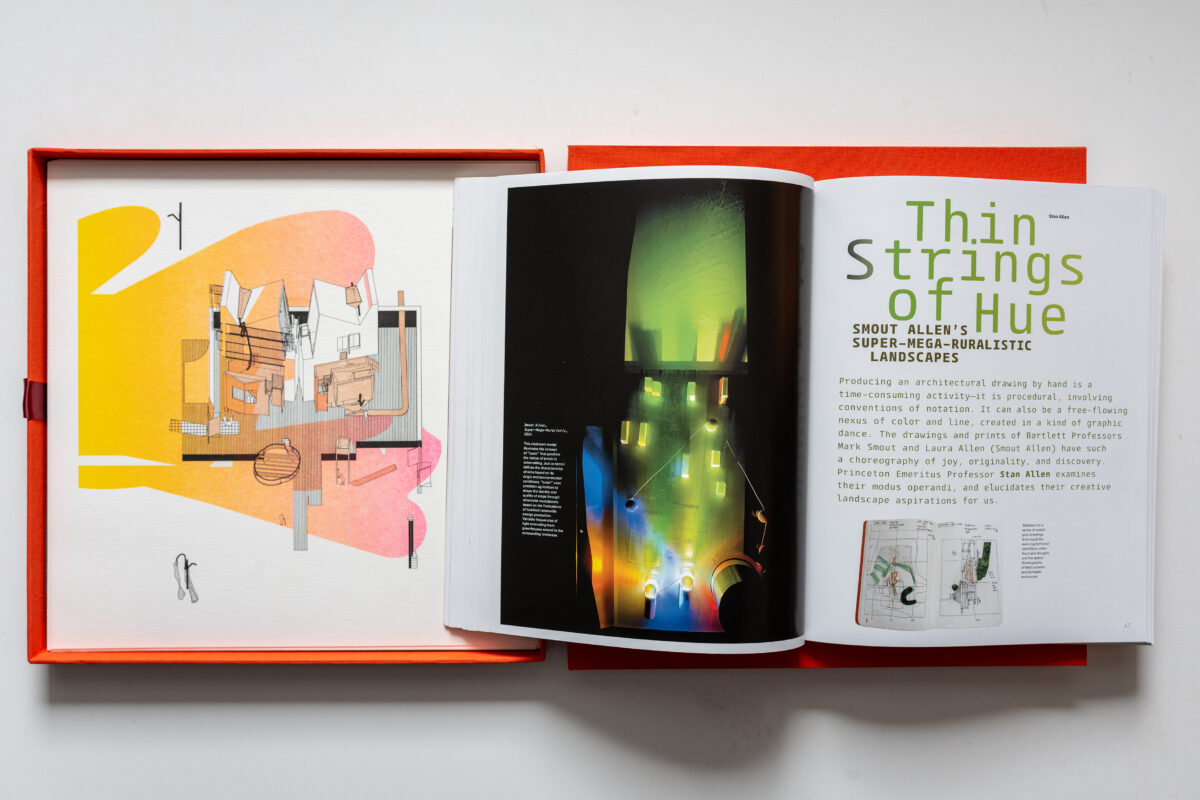
Smout Allen (Laura Allen and Mark Smout), Super-Mega-Ruralistic and Stan Allen, ‘Thin Strings of Hue’. 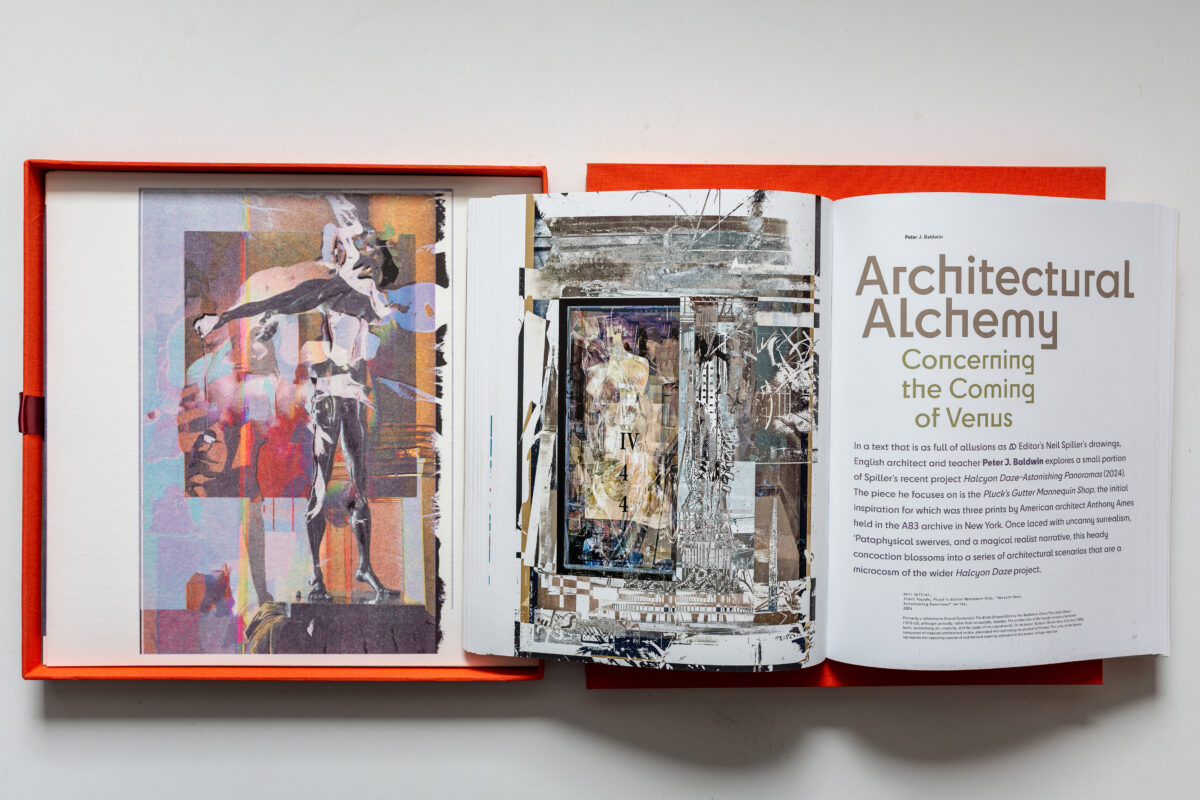
Neil Spiller, Handler of Gravity and Peter J. Baldwin, ‘Architectural Alchemy’. 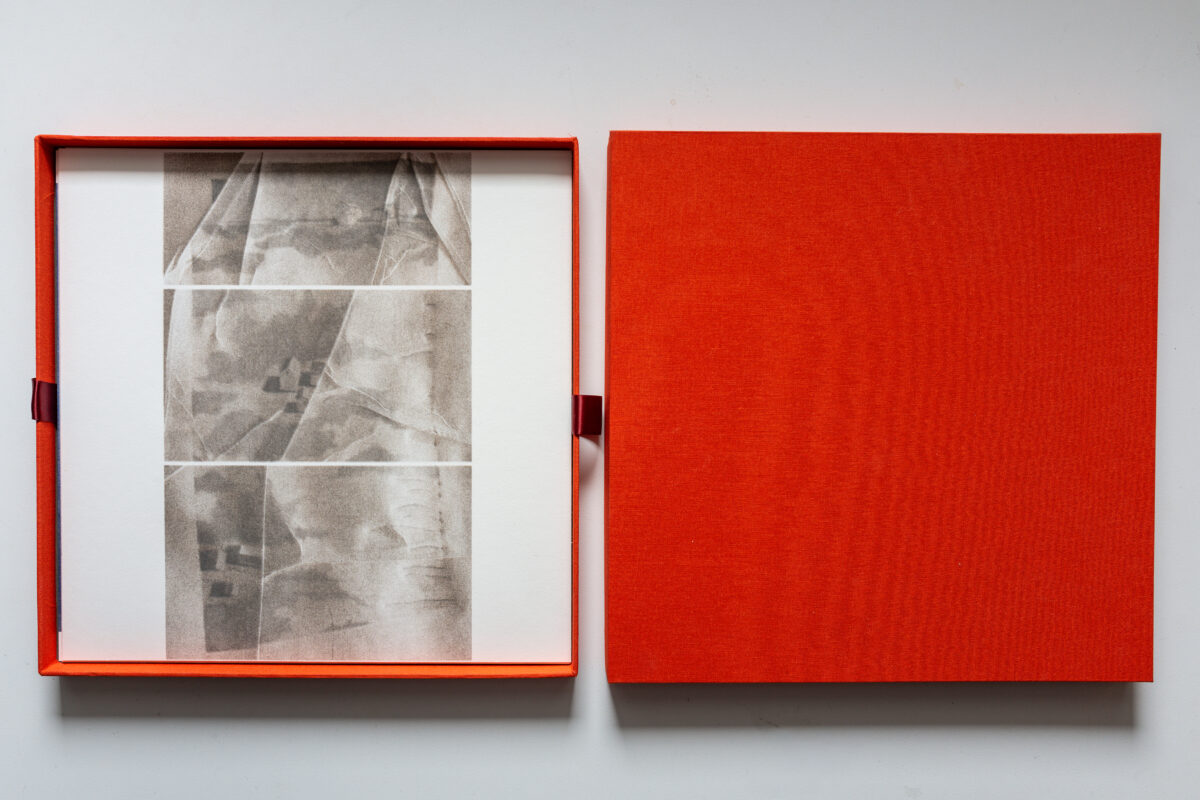
Natalija Subotincic, Far Afield. 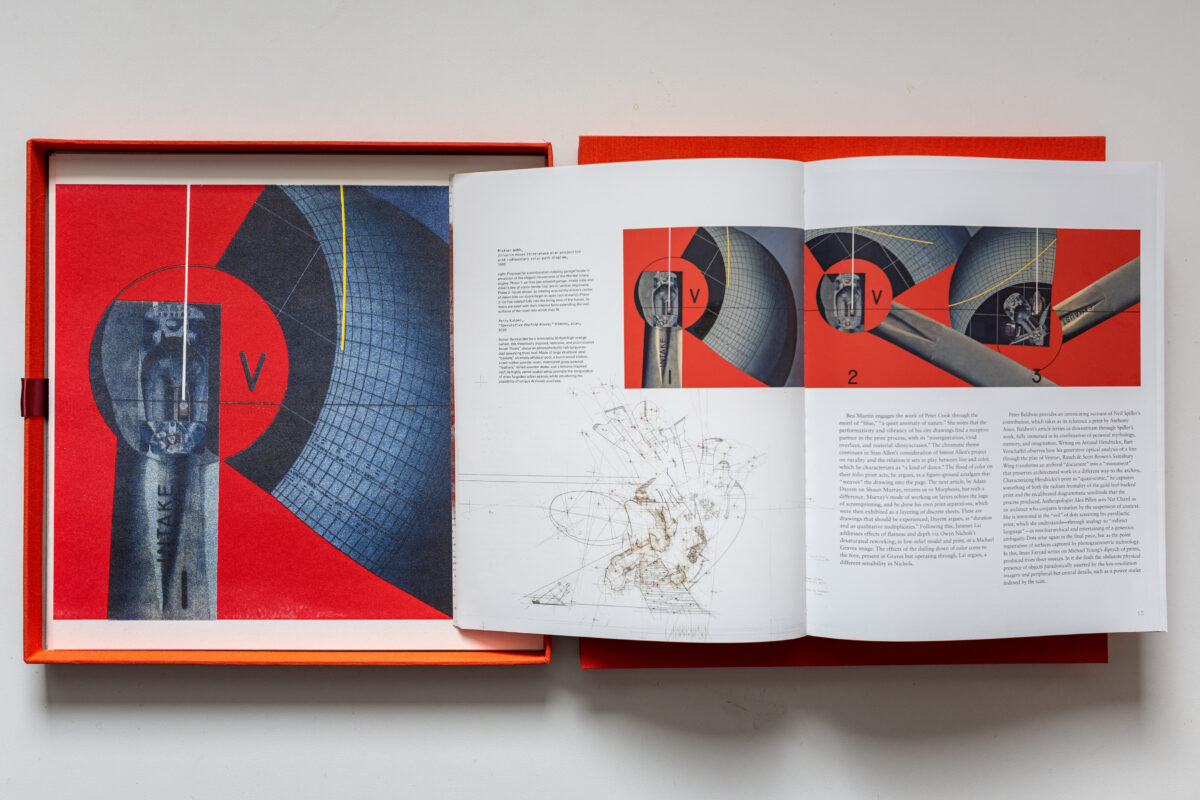
Michael Webb, Rotating Garage in 3 Movements. 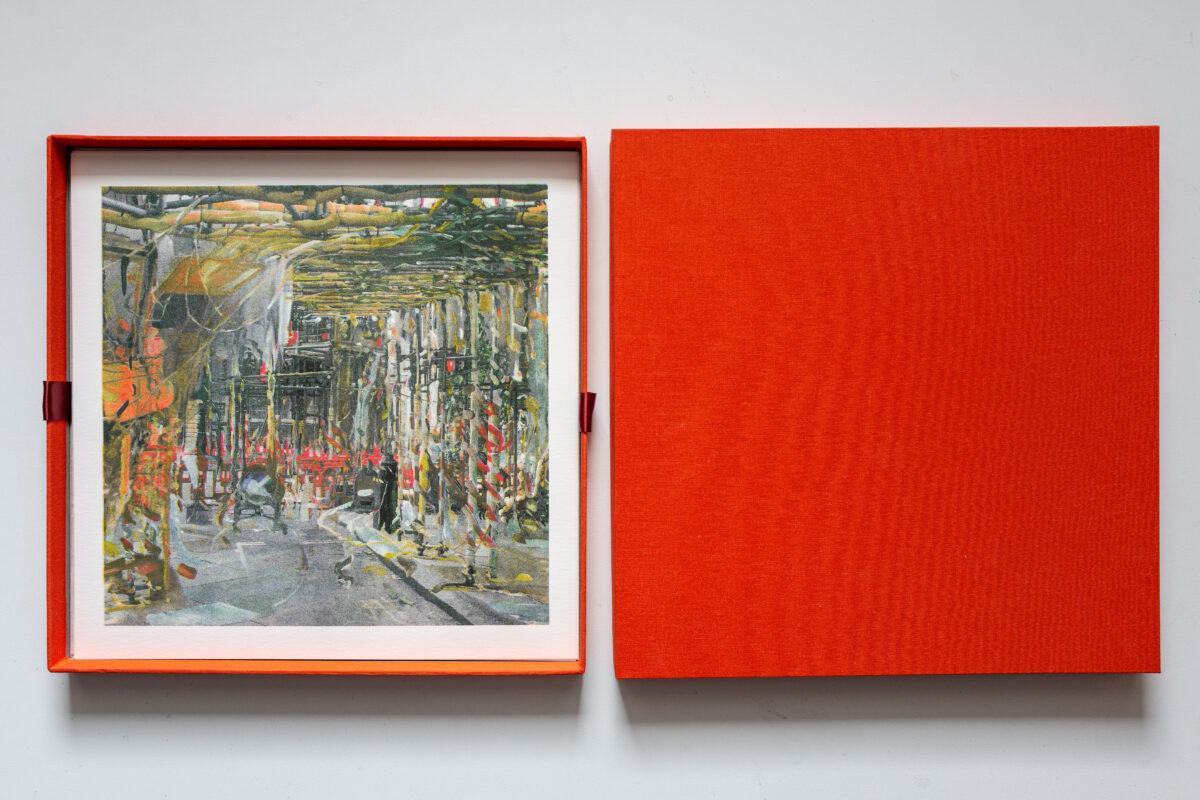
Mark West, Broiler Street. 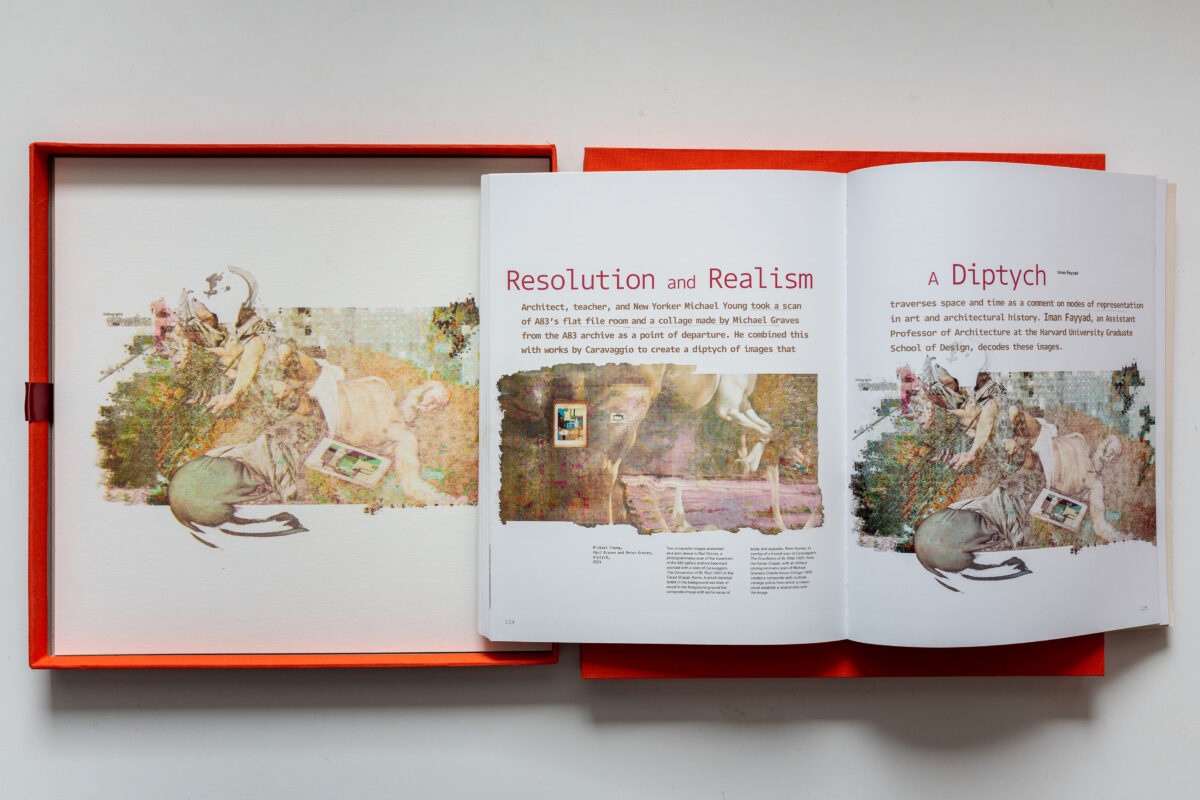
Michael Young (Young & Ayata), Peter Graves and Iman Fayyad, ‘Resolution and Realism’. 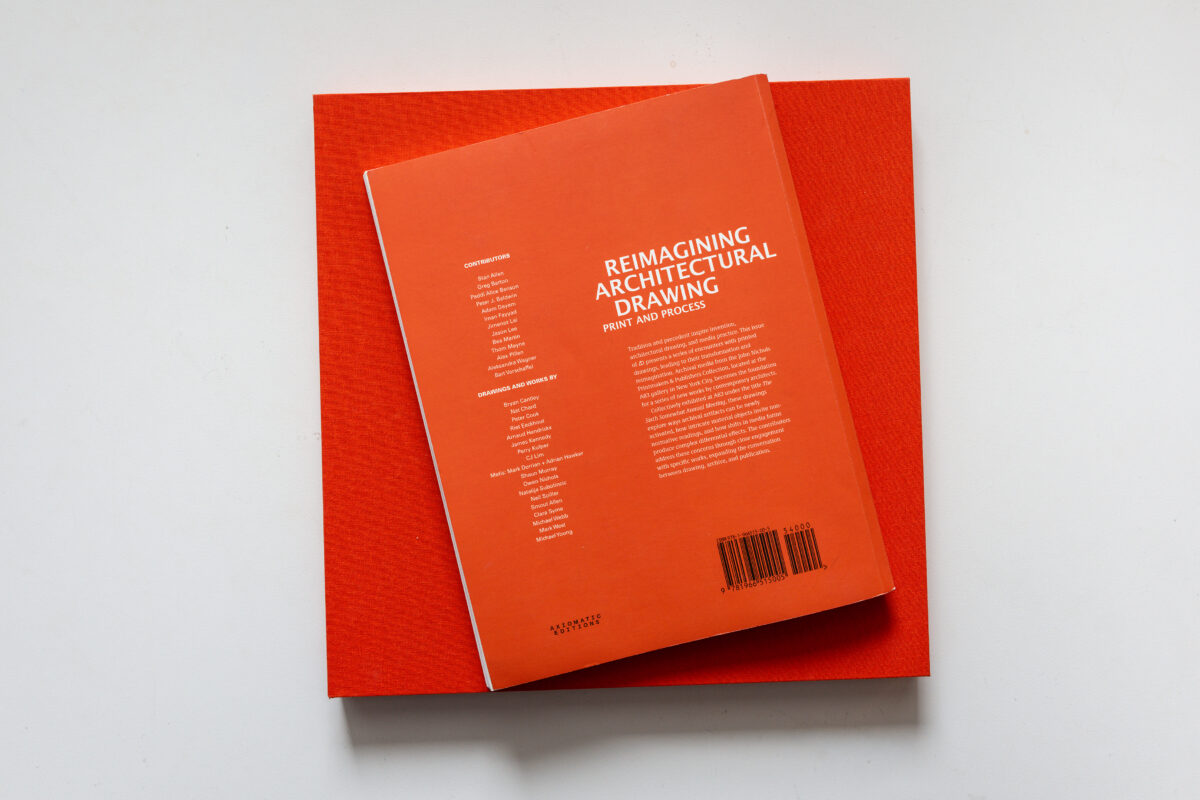
The box folio Records of the Sixth Somewhat Annual Meeting and the thematic issue of AD Reimagining Architectural Drawing: Print and Process. Photographs by the author.
Contributors: Stan Allen, Greg Barton, Paddi Alice Benson, Peter J. Baldwin, Adam Dayem, Iman Fayyad, Jimenez Lai, Jason Lee, Bea Martin, Thom Mayne, Alex Pillen, Aleksandra Wagner, and Bart Verschaffel.
Drawings and print works by: Bryan Cantley, Nat Chard, Peter Cook, Riet Eeckhout, Arnaud Hendrickx, James Kennedy, Perry Kulper, CJ Lim, Metis (Mark Dorrian and Adrian Hawker), Shaun Murray, Owen Nichols, Smout Allen, Neil Spiller, Natalija Subotincic, Clara Syme, Michael Webb, Mark West, and Michael Young.
Archival drawings by: Venturi, Rauch & Scott Brown, Aldo Rossi, Frank Gehry, Bernard Tschumi, Thom Mayne, Michael Graves, Paul Graves, Anthony Ames, and David Roth.
For more information on this thematic issue of AD, click here.
*
Notes
- Owen Nichols notes that the box directly references and reinterprets the AA Folios—the influential publication series produced by the Architectural Association from 1983 to 1991, under the leadership of Alvin Boyarsky. For the legacy of John Nichols Printmakers & Publishers, see: Diana Budds, ‘How a Storied Printmaker Advances the Practice of Architecture’, Untapped,<https://untappedjournal.com/stories/diana-budds-a83-printmaker-advances-architecture>[accessed 9 May 2026]
- As quoted in Mark Dorrian, Riet Eeckhout, and Arnaud Hendrickx, ‘Transference, Passages between Prints and Drawings’, AD Reimagining Architectural Drawing: Print and Process, Vol. 95:3 (2025), 6–15 (6).
- See Hélène Cixous, ‘Without End no State of Drawingness no, rather: The Executioner’s Taking off,’ New Literary History, Vol. 24, no.1 (Winter 1993), 91–103.
- This echoes the dual structure and ‘fruitful tension that permeates the meaning of the term [representation]’ as Louis Marin theorises in ‘The Frame of Representation and Some of Its Figures’, in On Representation, trans. by Catherine Porter (Stanford, CA: Stanford University Press, 2001), 352–372.
- Catherine Ingraham, ‘Creative Omnipotence: Architectural Objects,’ in Architecture’s Theory (Cambridge, MA: MIT Press, 2023), 42.
- Aleksandra Wagner, ‘Saving what is Vibrant, Tracing what Remains,’ AD Reimagining Architectural Drawing: Print and Process, Vol. 95:3 (2025), 47–55 (49).
*
Maria Mitsoula is an architect, a senior editor at Drawing Matter and a tutor at the Edinburgh School of Architecture and Landscape Architecture. She is also the co-founder of DRAWING ON.
