Mark Fisher: The Wall for Pink Floyd
– Editors
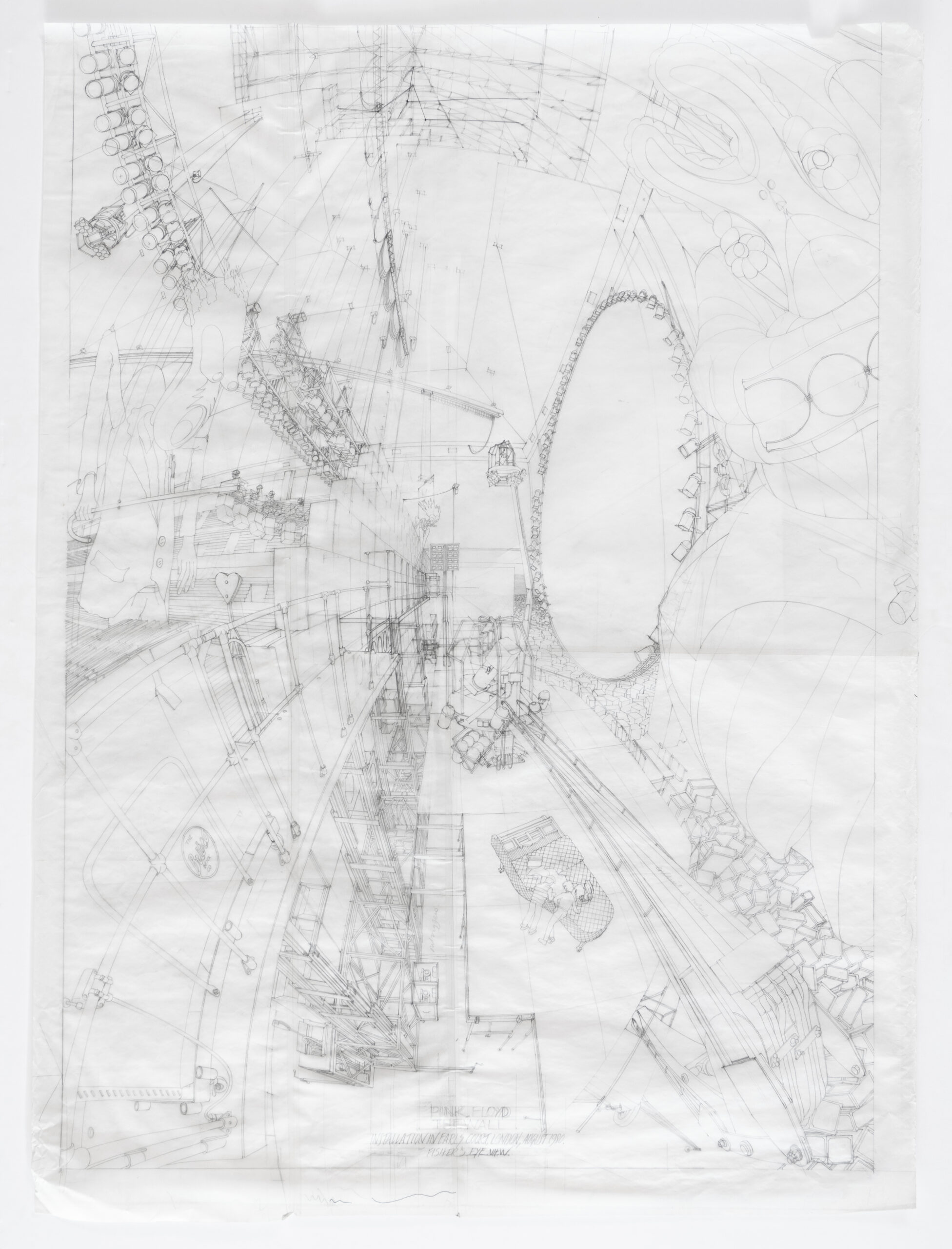
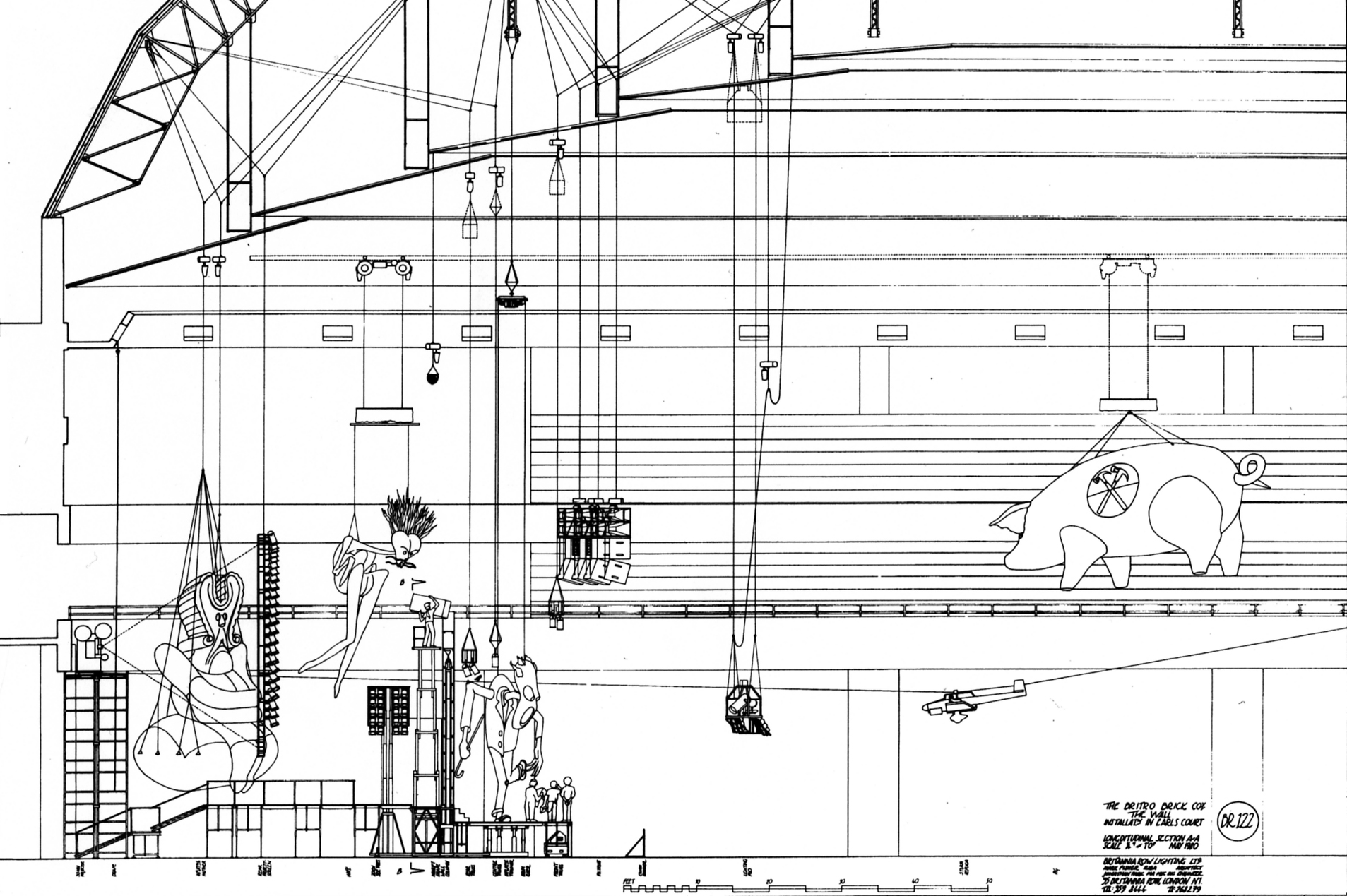
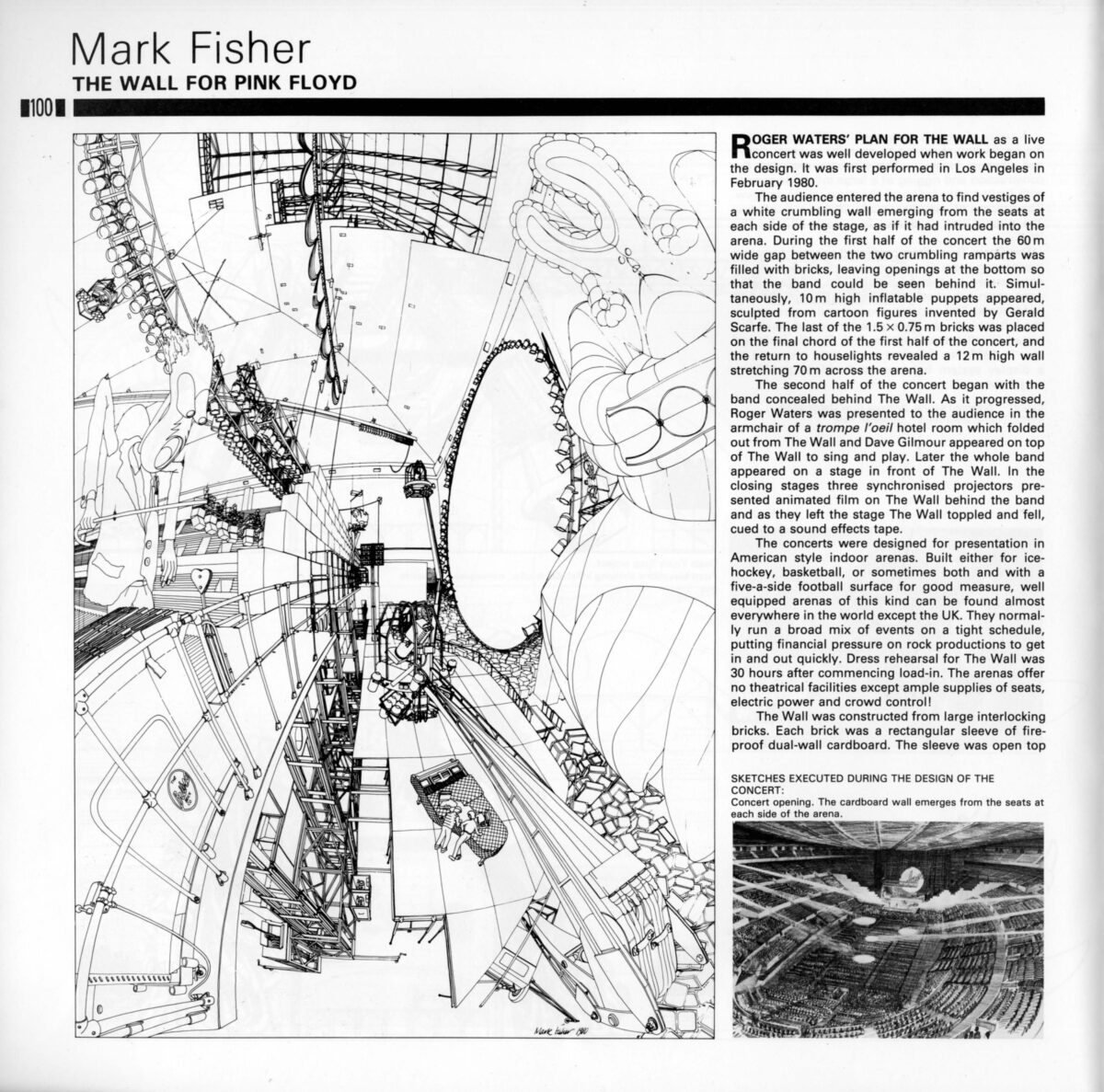
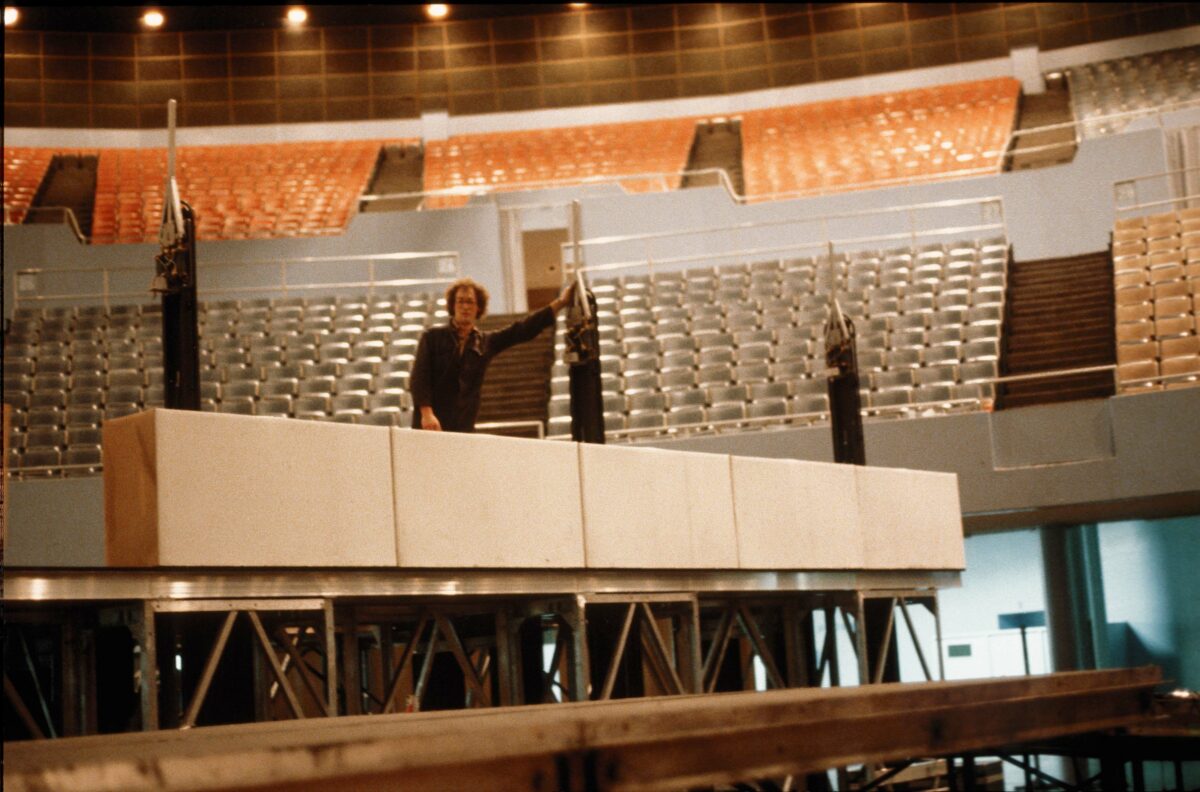
Drawing Matter is excited to have recently acquired a drawing by Mark Fisher showing the backstage design for Pink Floyd’s ‘The Wall’ concert at Earl’s Court. The concert was first performed in 1980 at the Los Angeles Sports Arena and was toured to Nassau Coliseum (Long Island), and Earl’s Court (London); it further toured in 1981 to Westfallenhalle Dortmund before returning to Earl’s Court. In 1990, after the fall of the Berlin Wall, the concert was restaged on a site between Potsdamer Platz and the Brandenburg Gate.
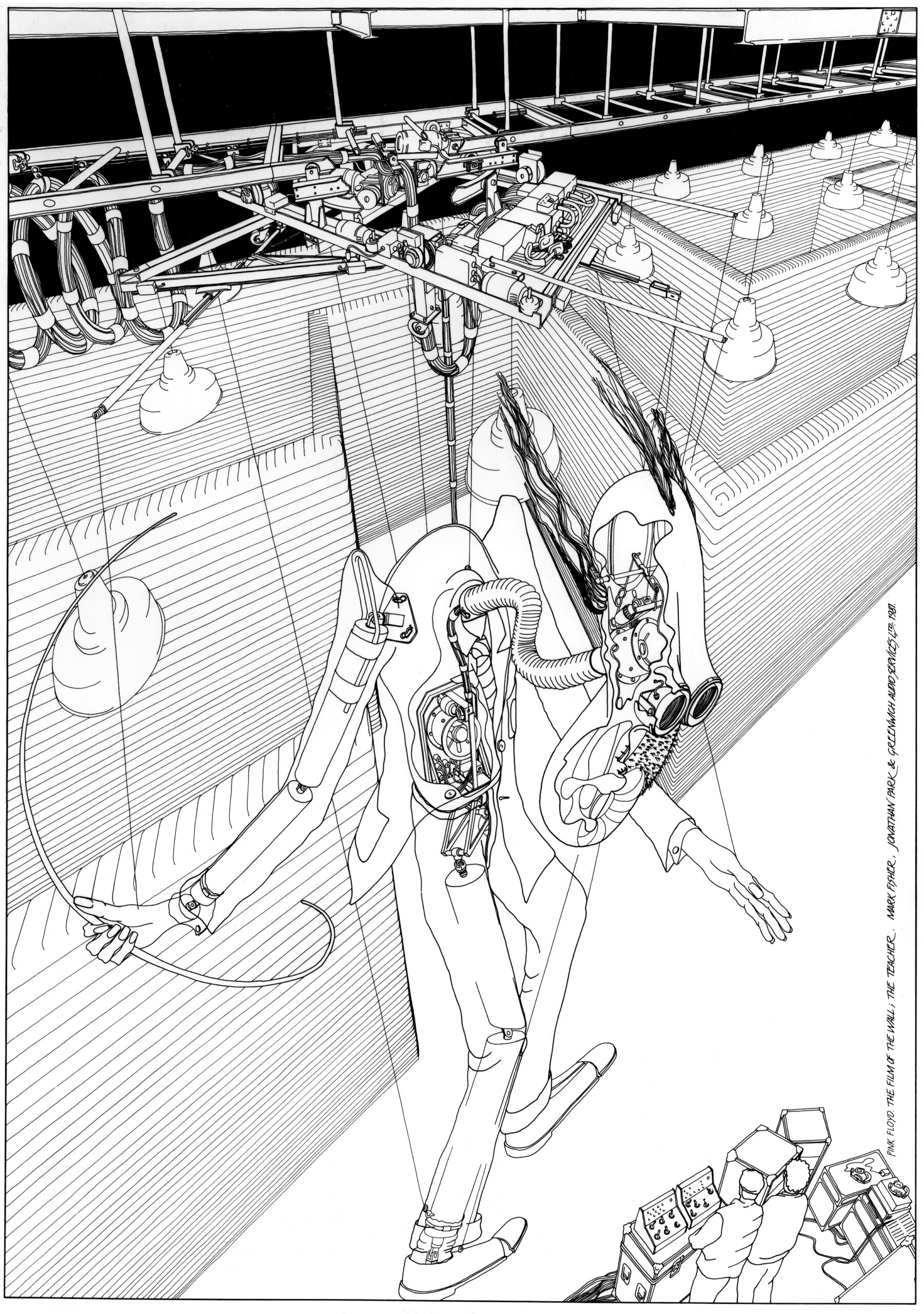
The drawing is reproduced below alongside photographs, sketches from Mark Fisher’s sketchbooks, and other drawings relating to the stage design. Drawing Matter would like to thank Cristina Garcia for sharing this material with us.
‘What will stick in the memory are the special effects, created with care and on a scale literally unprecedented in rock concert annals. Above all, there was the gigantic wall itself, constructed ‘brick’ by ‘brick’ during the first hour of the show and eventually extending across the entire stage end of the Coliseum, some 40 feet high at the center and 200 feet long at the top. Christo, the Bulgarian conceptual artist who likes to build his own walls, would have been envious—or proud.
The wall was destroyed at the end, in a satisfying heap of falling bricks, dry ice and electronic rumbling. The collapse of the temple at the end of ‘Samson et Dalila’ at the Metropolitan Opera should look this good.
But before the wall collapsed there was much else to wonder at: gigantic, balloon-like puppets that embodied the animations of Gerald Scarfe that could otherwise be seen in brilliant slides and animated films; little vignettes that took place in front of the wall or on top of it, or in one instance on a mini-stage that appeared when a panel opened up in the wall, and two wonderful effects, from previous Pink Floyd tours—a large model air plane that traversed the full length of the auditorium (on wire), before smashing into one end of the wall, and a huge pig (at least 30 feet long) that lumbered out over the crowd on a track, its eyes glowing evilly.’
—Excerpt from John Rockwell, ‘Floyd’s Great Wall’, New York Times, 2 March 1980.
‘When Pink Floyd bring the live version of their spectacularly grim double album The Wall to London, they announce a complete press ban. I wouldn’t otherwise have even thought about going—but as soon as I discover they’re trying to keep people out, I am determined to get in, beating their heavy-handed embargo.
I’d seen the Floyd a lot and loved them until about Atom Heart Mother, which was bollocks on toast. Neither Dark Side Of The Moon or Wish You Were Here meant much to me, while The Wall on record seemed an impossibly miserable psychodrama, four apparently endless sides of groaning self-pity, morbid pessimism and musical hogwash.
Live, amazingly, it turns out to be even worse—more self-indulgent, pompous, bloated and up its own arse that anyone could possibly have imagined, the much-vaunted special effects a tawdry spectacle, the whole thing about as much fun as ritual disembowelment. I confess to sitting in distraught horror as the show proceeds, funereal and glum, a turgid opera, as I have written before, of woe and witless posturing.
As the band trudge mournfully through the musical bilge, a huge wall is being built in front of them. As far as I’m concerned the fucking thing can’t go up fast enough, and I am more than slightly relieved when by the interval it’s almost complete, except for one final space, through which Roger Waters now warbles the cheerless lyric of “Goodbye Cruel World”. The music starts to fade, his voice drifts into nothingness and he places the final brick in the wall. This final entombment comes not a moment too soon – if it had gone on any longer, I would have been down front myself with a trowel and a bucket of cement, helping the bugger brick himself up for all eternity or slightly longer.
I am amused, as a footnote, when I learn that the next night, appalled by my review in that morning’s Melody Maker, they dedicate a song to me. “This is for Allan Jones of Melody Maker,” either Waters or Gilmour announces. “It’s called ‘Run To Hell’, and we suggest he does!”
I mean, fuck off.’
Allan Jones, ‘Pink Floyd/Earls Court, London, August’, Melody Maker, 1980
