John Hejduk, Object/Subject Riga
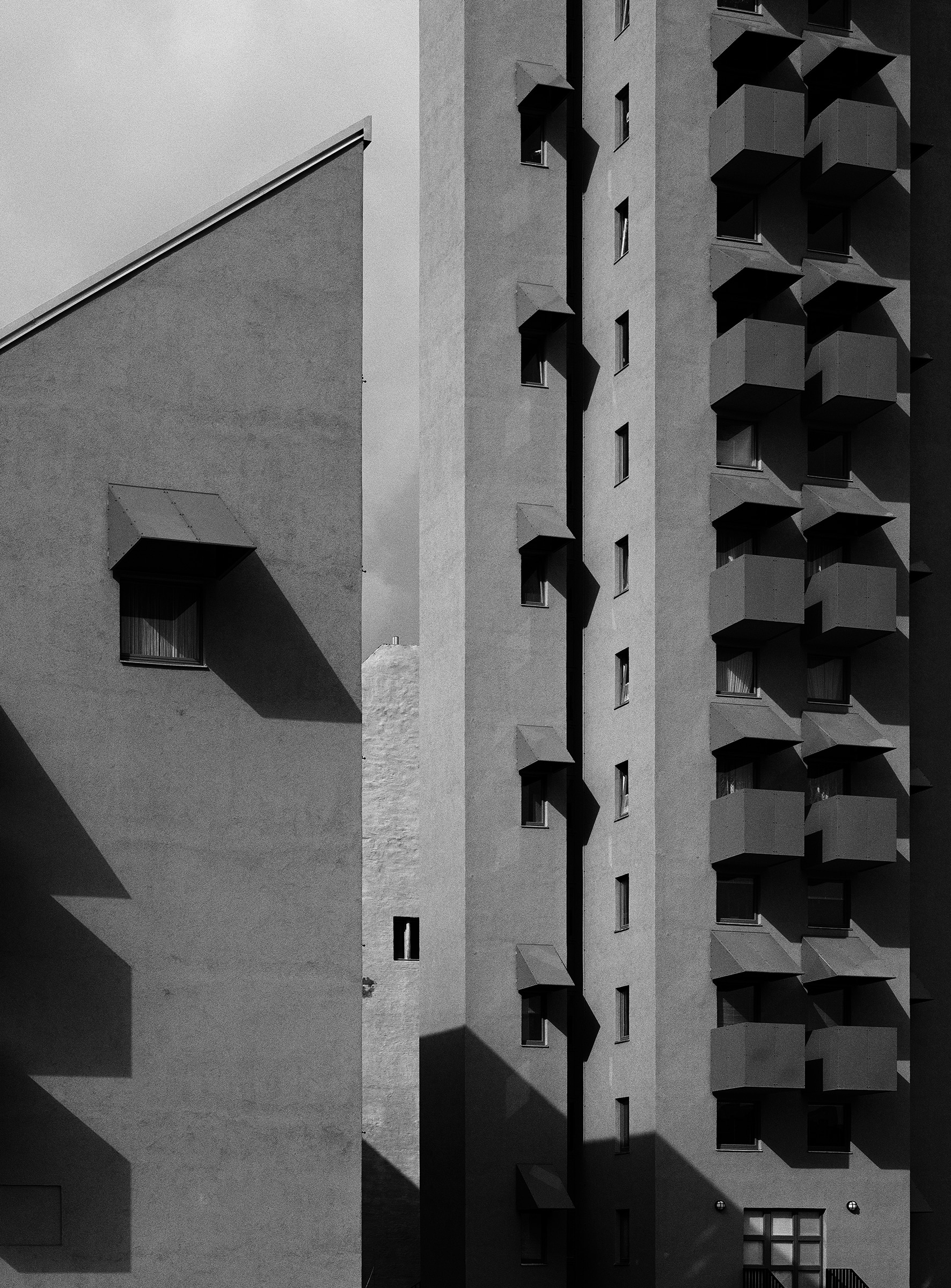
I began photographing John Hejduk’s work at the beginning of my interest in photography, when I knew little about his work and about architecture in general. Yet photographing John Hejduk came to me in a very natural way. His work, being so unique, had no visual references, and that gave me a great deal of freedom. The photographs were never meant as documentation, but as an interpretation, a new narrative.
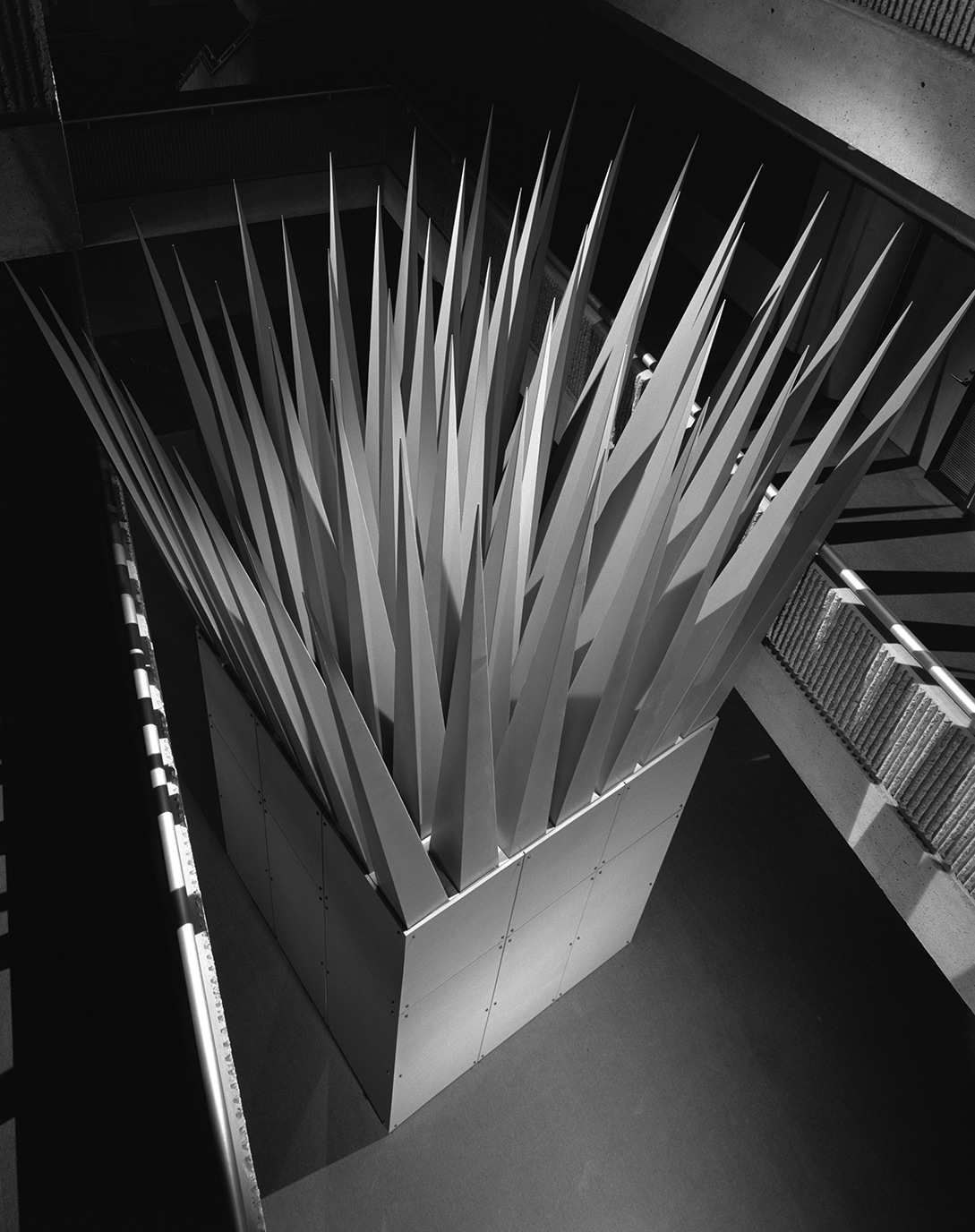
The Object/Subject Riga was built in 1987 by architecture students at the University of the Arts in Philadelphia, based on John Hejduk’s designs for the Riga project. The two buildings were both physical and spiritual shelters, intended to support our activity and to enrich our subconscious. As Meton R. Gadeiha wrote: ‘These two structures belong to the complementary side of the role of architecture, the one we always forget: to shelter our dreams and the mystery of our presence here.’
This role shaped my task. To tell a story with photography, I have only a few tools: framing, which creates composition and connection, and lighting, which creates distinctive light and shadow. I normally do not use artificial light, but in this context, I decided to do so, to extract the two pieces from their surroundings, the school courtyard, and to create a stronger dialogue between them through selective lighting.
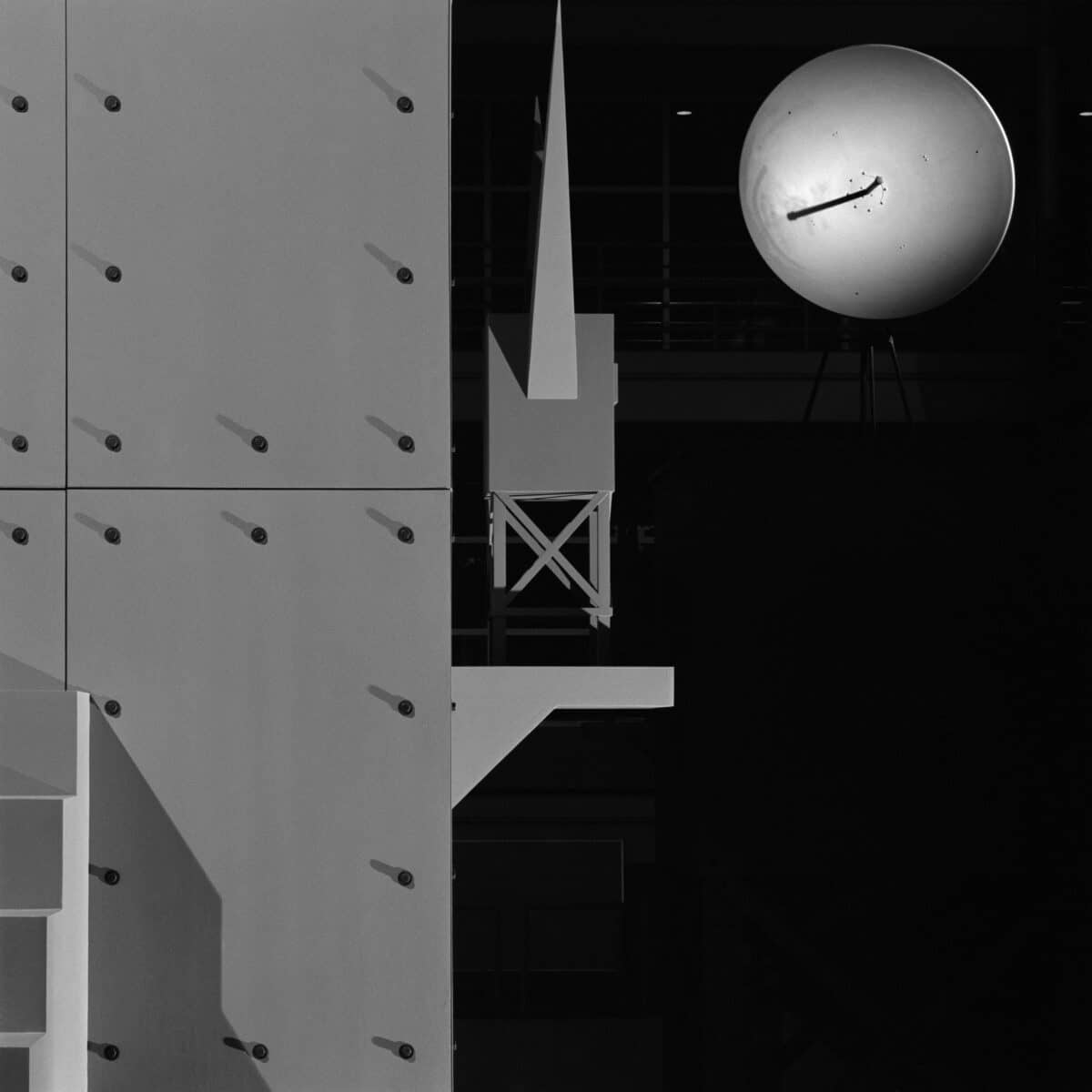
During the lighting process, something unexpected happened, partly through my own distraction and partly through constraint: the lighting produced two different shadows, each with a different direction. This might seem normal if there were two light sources; yet the shadows did not always double. They seemed to disappear into each other, creating a surreal atmosphere. Some appear to come from the underworld, others from a more zenithally source.
Light and shadow almost dressed the structures, giving them a new layer of meaning. In this photograph, sharp and very defined, they seem to be applied to the skin of the small architectures by a magical hand. They appear to come from another world, but at the same time have a very physical presence.
*
Hélène Binet is a Swiss and French internationally acclaimed photographer based in London. She studied photography at the Istituto Europeo di Design in Rome, the city in which she spent most of her formative years. Over a period of more than 35 years, Binet has captured both contemporary and historic architecture. She is a fervent advocate of analogue photography, working exclusively with film.
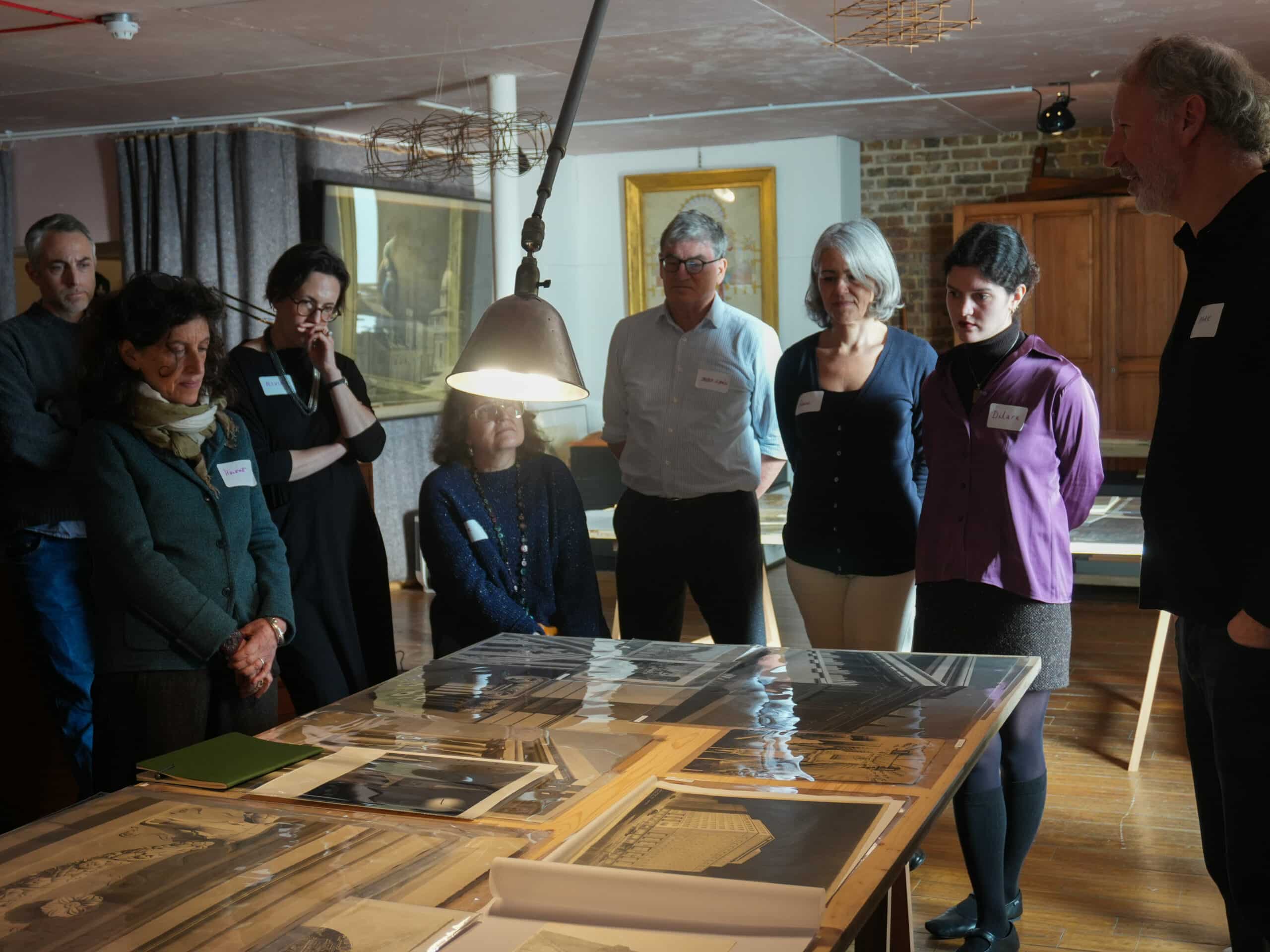
This short text offers an insight into Hélène Binet’s invited contribution in the third colloquium event ‘Tracing Shadows’ led by Professor Mark Dorrian in January 2026 and hosted by the RIBA, V&A Drawings Collections and Drawing Matter—a day of conversations, gathered around original drawings and photographs, in which participants examined the presence (and absence) of shadows in the representation of architecture.

– Mark Dorrian