Carlos Bedoya, PRODUCTORA: Thinking through Drawing
The first thing to be said about the drawings of Carlos Bedoya is that this is not an exercise in nostalgia, or a case for the lost art of drawing by hand. The architects of PRODUCTORA work in the present, with all the tools and techniques available to them. The computer is a fact of life in architectural offices today and PRODUCTORA are no different than any other practice of its generation in this regard. Those debates belong to another time.
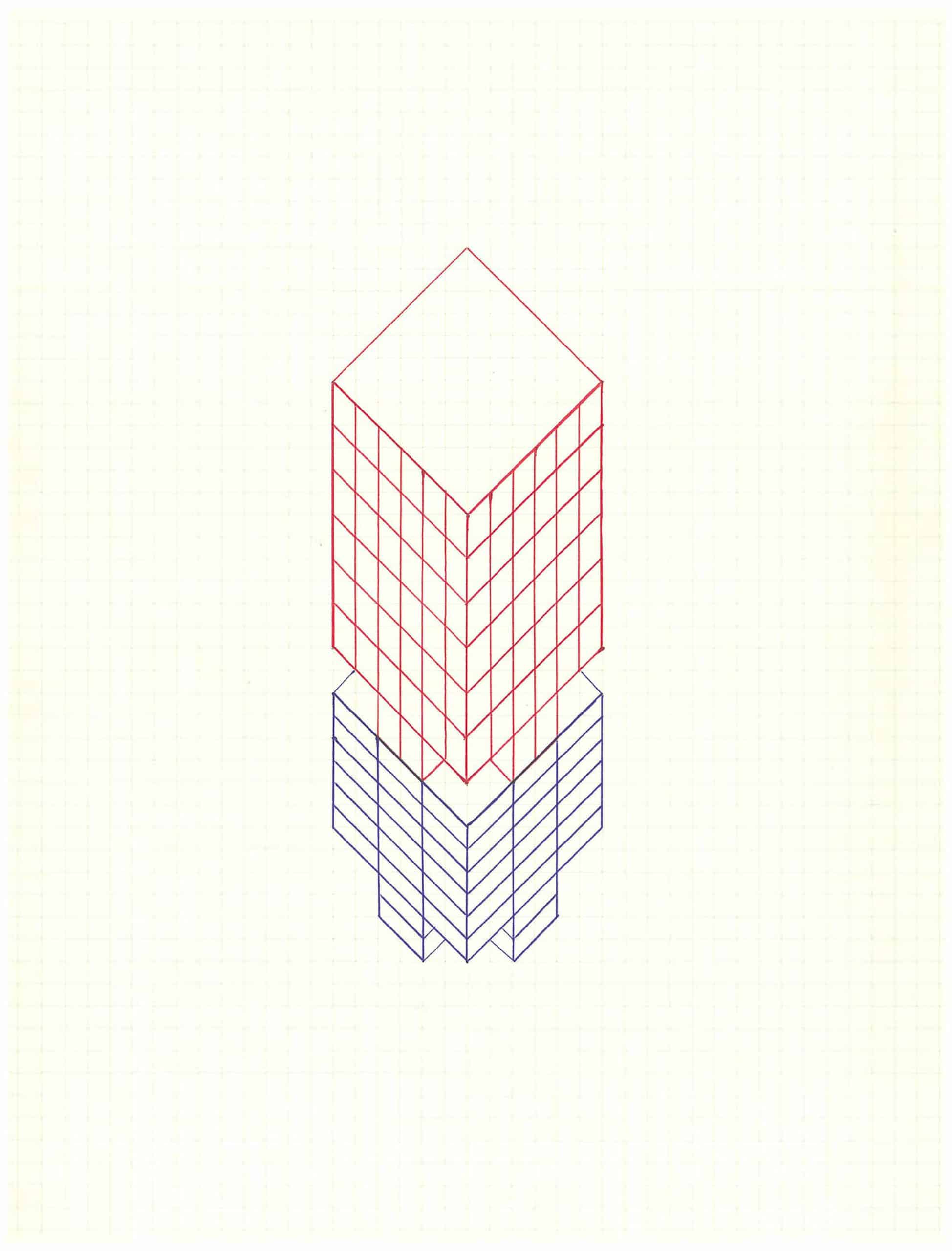
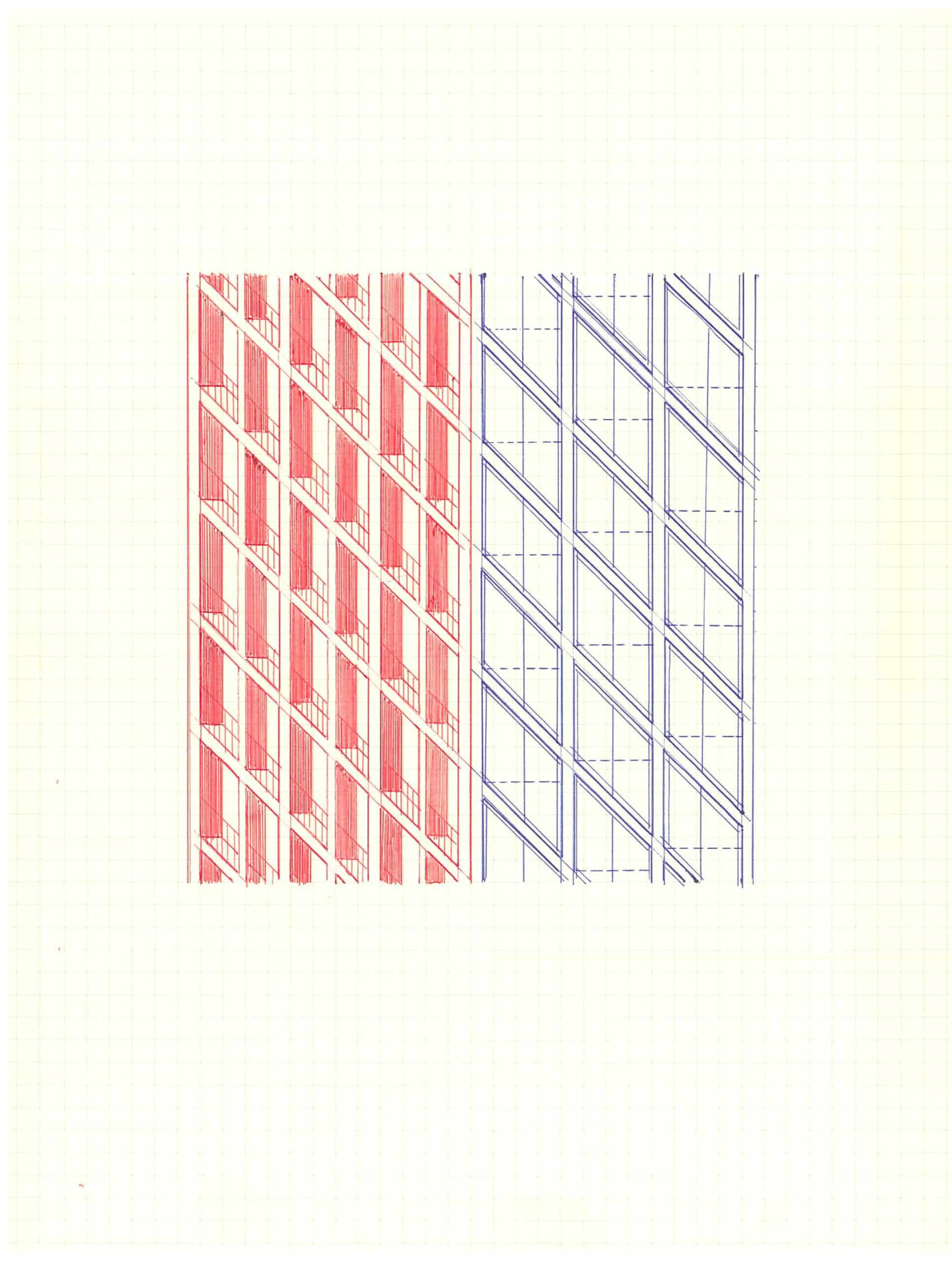
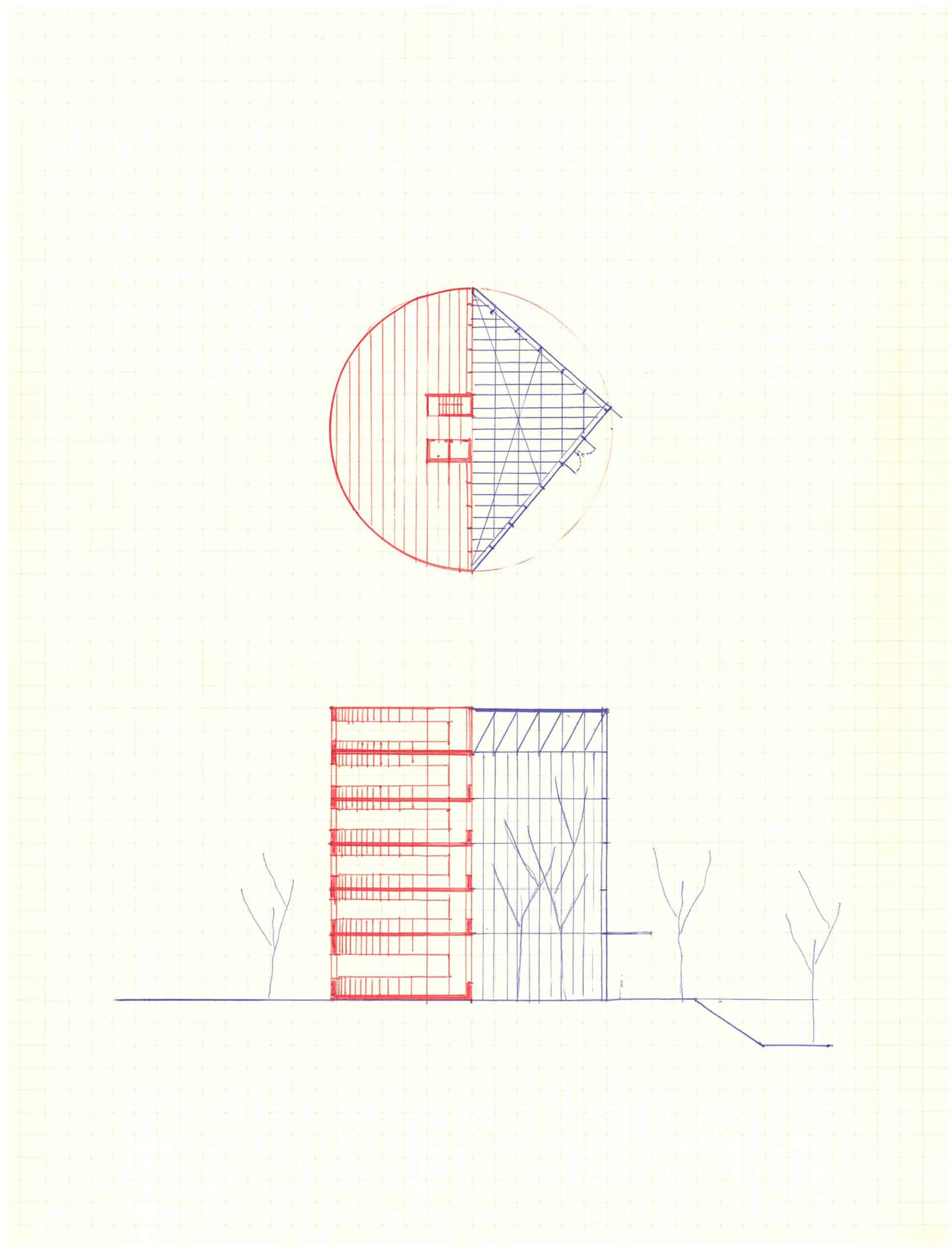
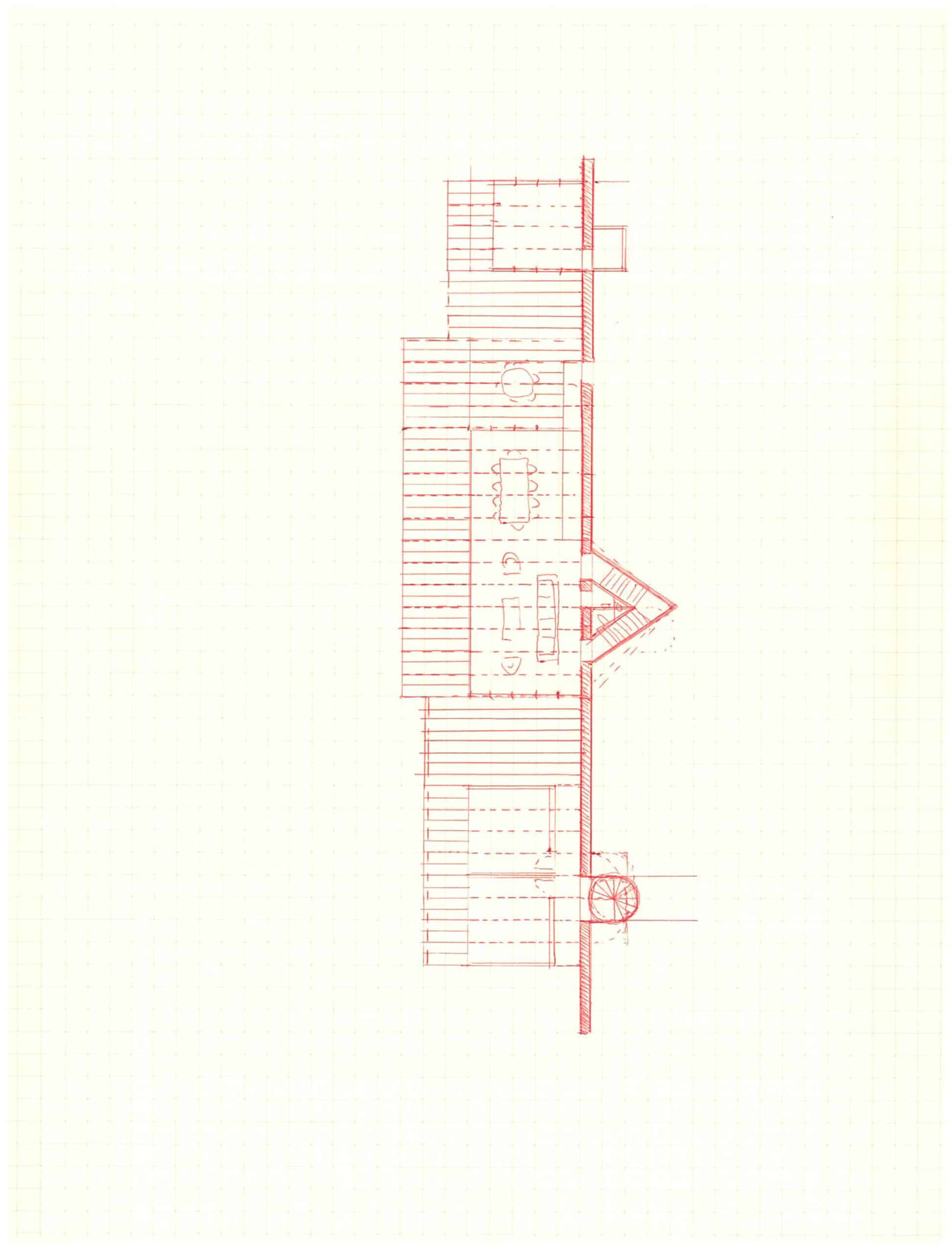
Bedoya draws on loose sheets, usually gridded, or in notebooks. Each drawing is scaled to the hand, each line a single gesture. For Bedoya, the drawing is a place where ideas are worked out and tested. Made with all the familiar conventions of an architectural drawing—ruled plans and sections, axonometrics, and a few perspectives—these drawings make use of that shared language, the everyday working language of architects, to communicate ideas clearly and quickly. They function at an intimate scale of thoughts, ideas, and propositions, made tangible and scaled to the page: thinking through drawing. The small scale discourages overelaboration—there is only so much information that can be conveyed in such a small space. Some drawings are spare, some are dense. These drawings do not delineate ideas or concepts worked out in the mind—the ideas emerge on the page, as they are drawn. Bedoya knows this very well: it is through the process of drawing itself that ideas are produced. One thing leads to another, and the ideas flow, sometimes ahead of the hand, other times following.
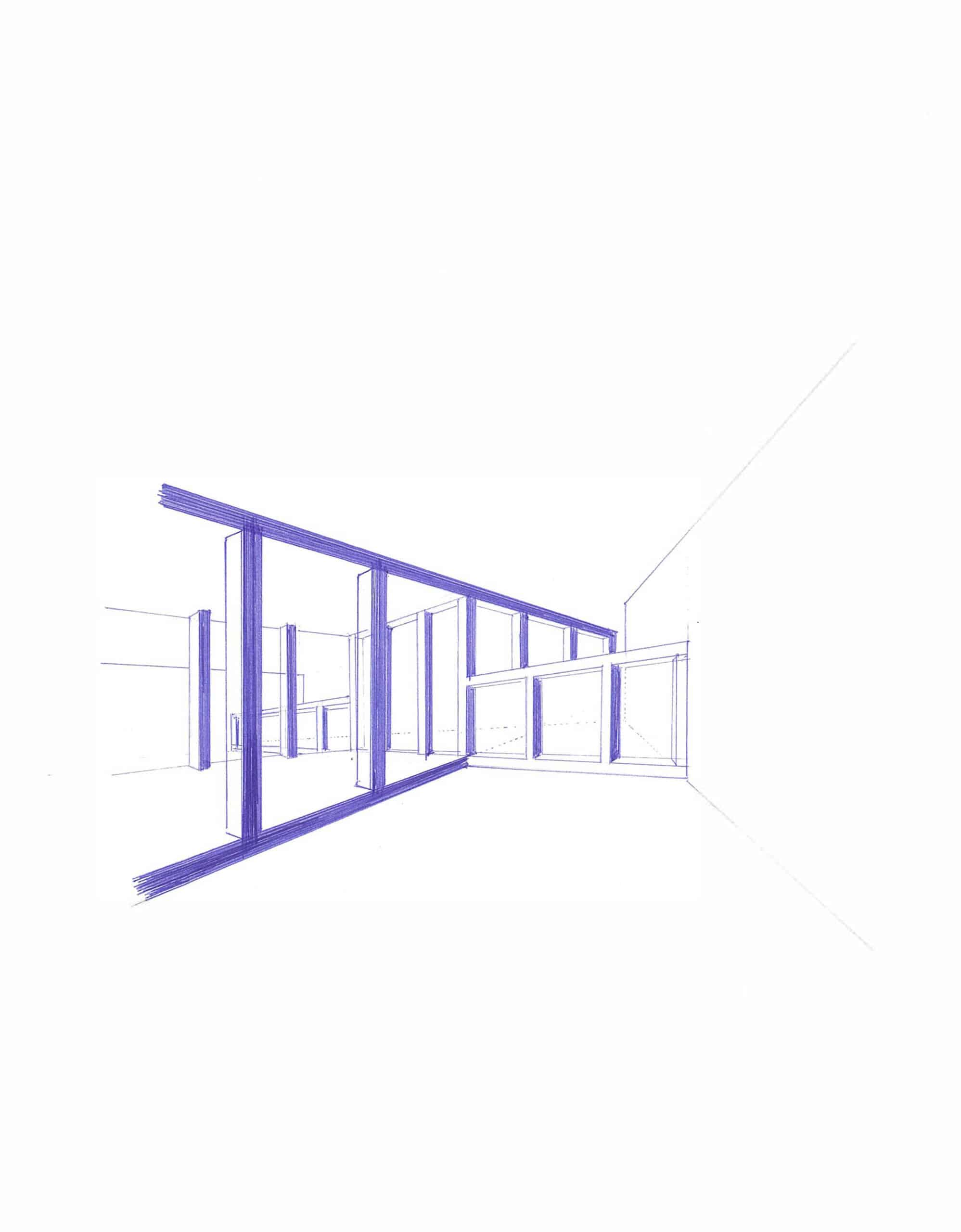
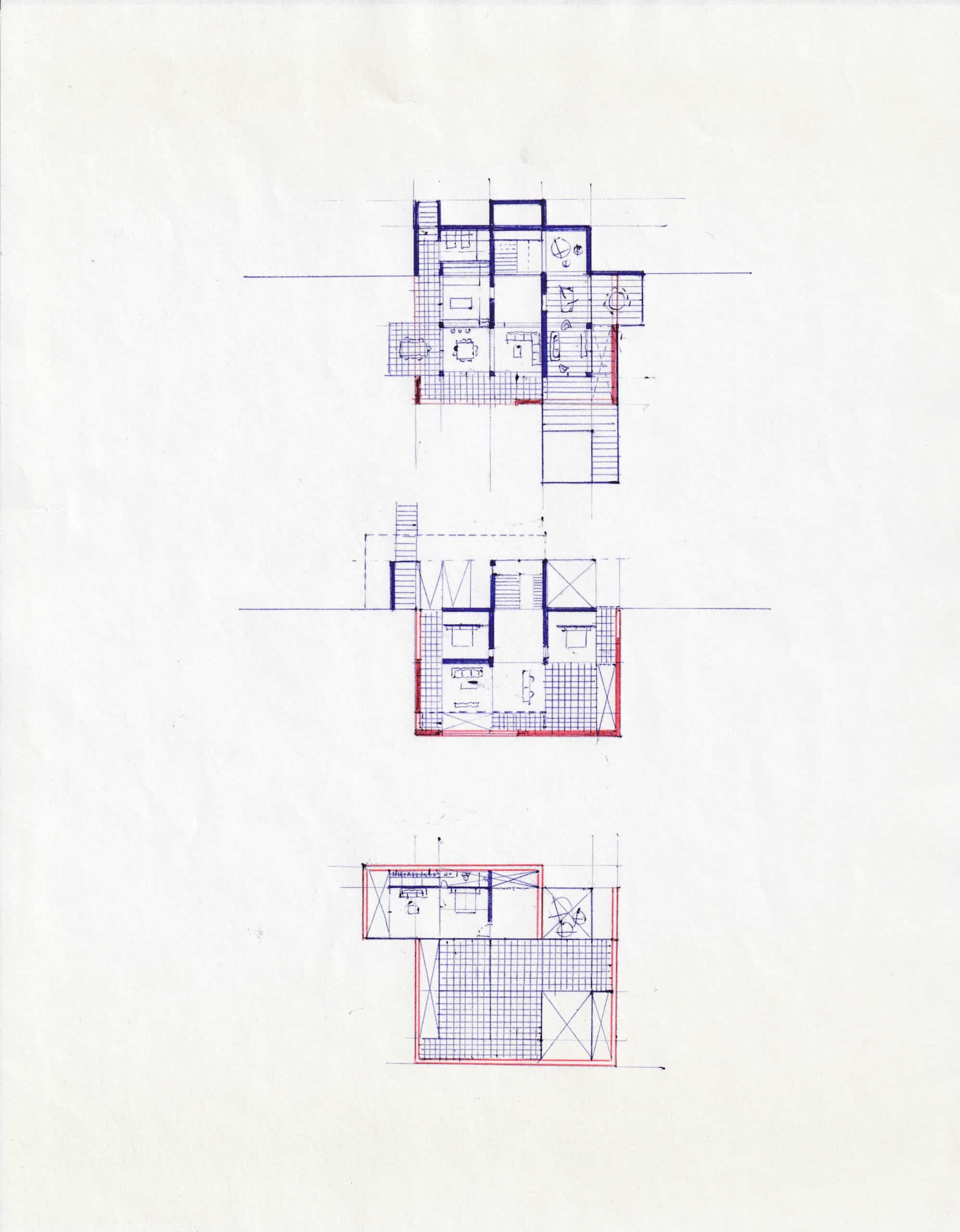
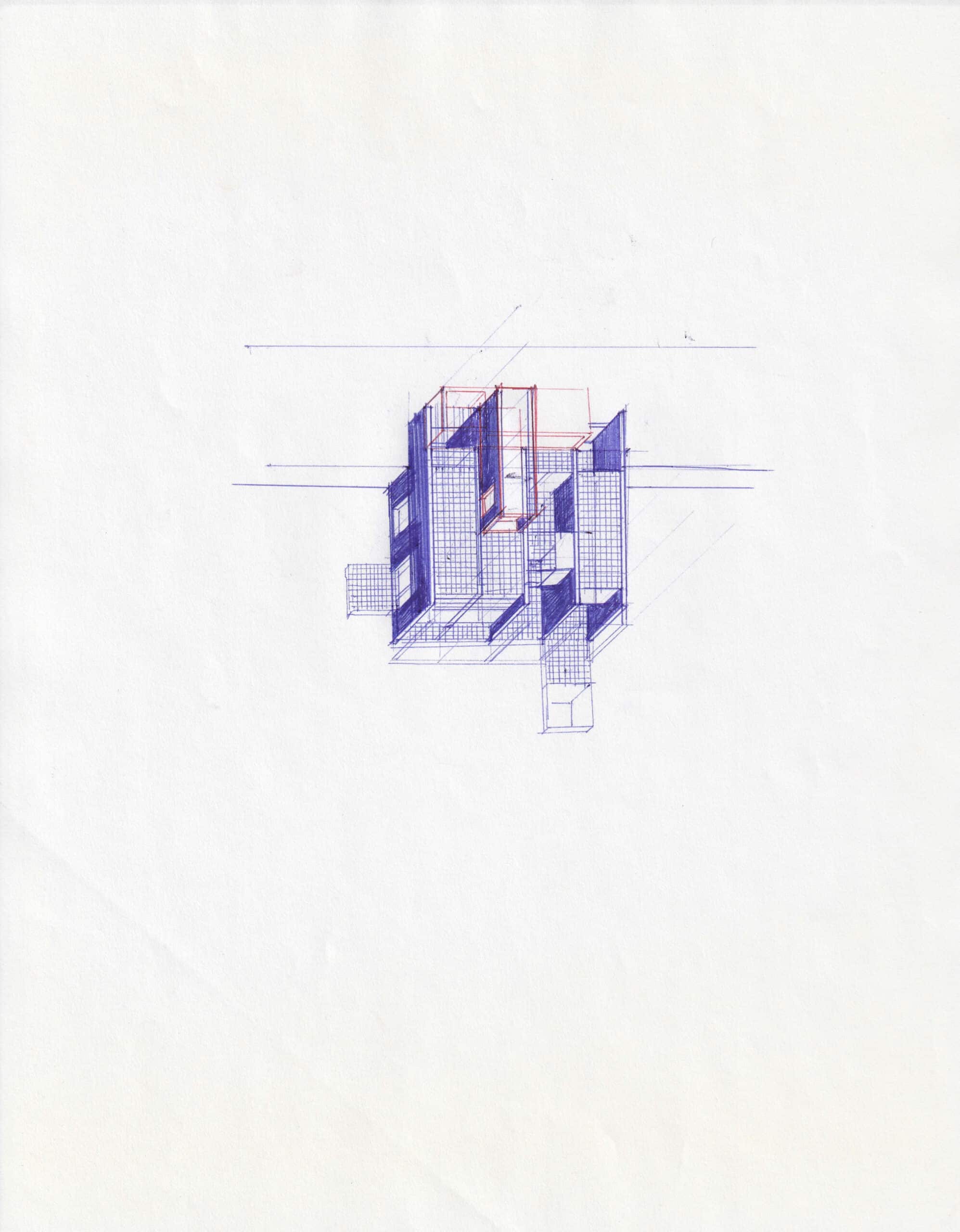
His preferred drawing instrument is the Bic pen—cheap and readily available in multiple colours. The reds and blues belong to the office or the schoolroom—not to the artist’s studio. Nothing esoteric, simply what is quick and to hand. A means for direct annotation of ideas and architectural possibilities. Colour is not about atmosphere or effect, it is notational—clarifying ideas and marking out differences.
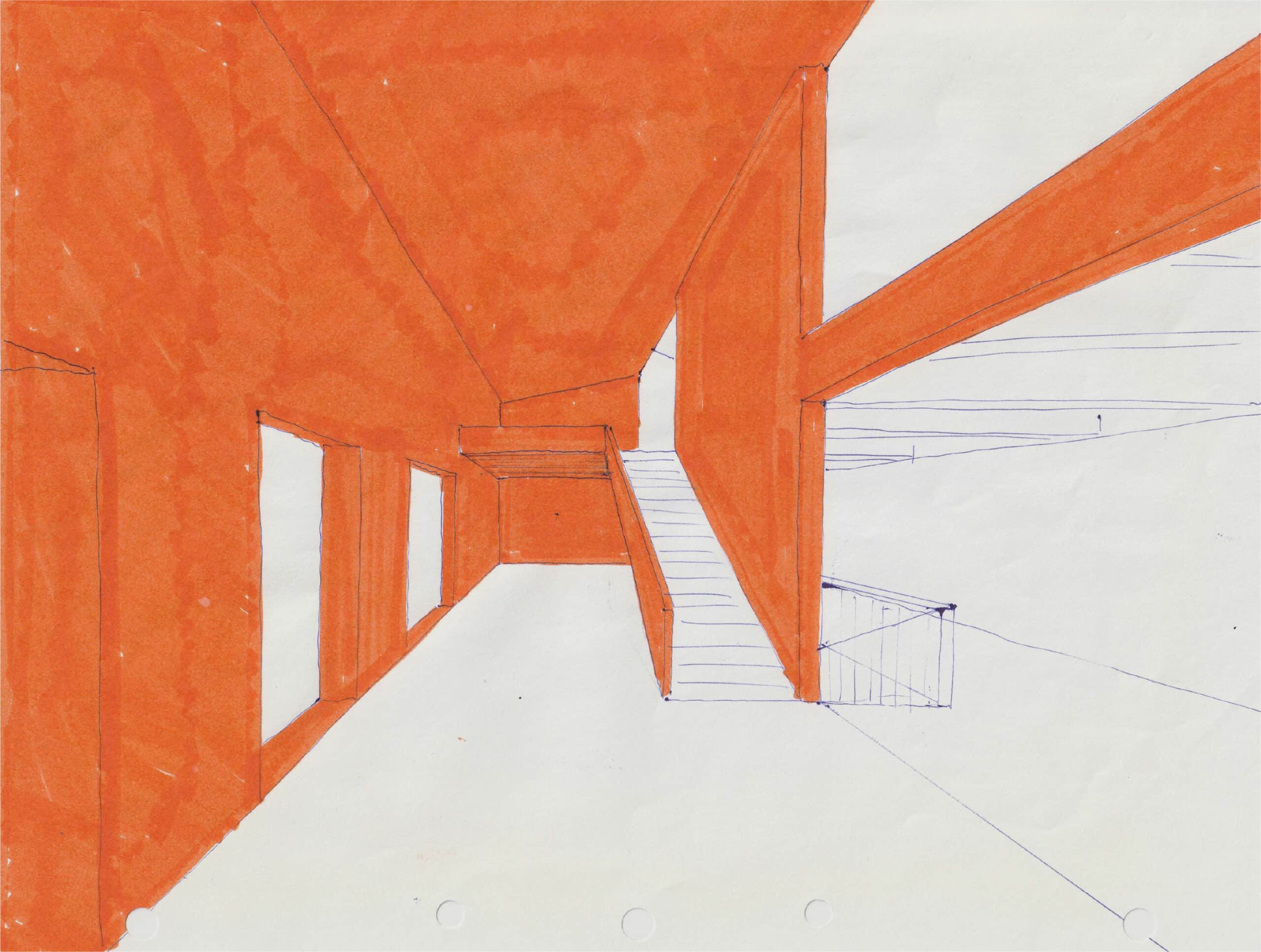
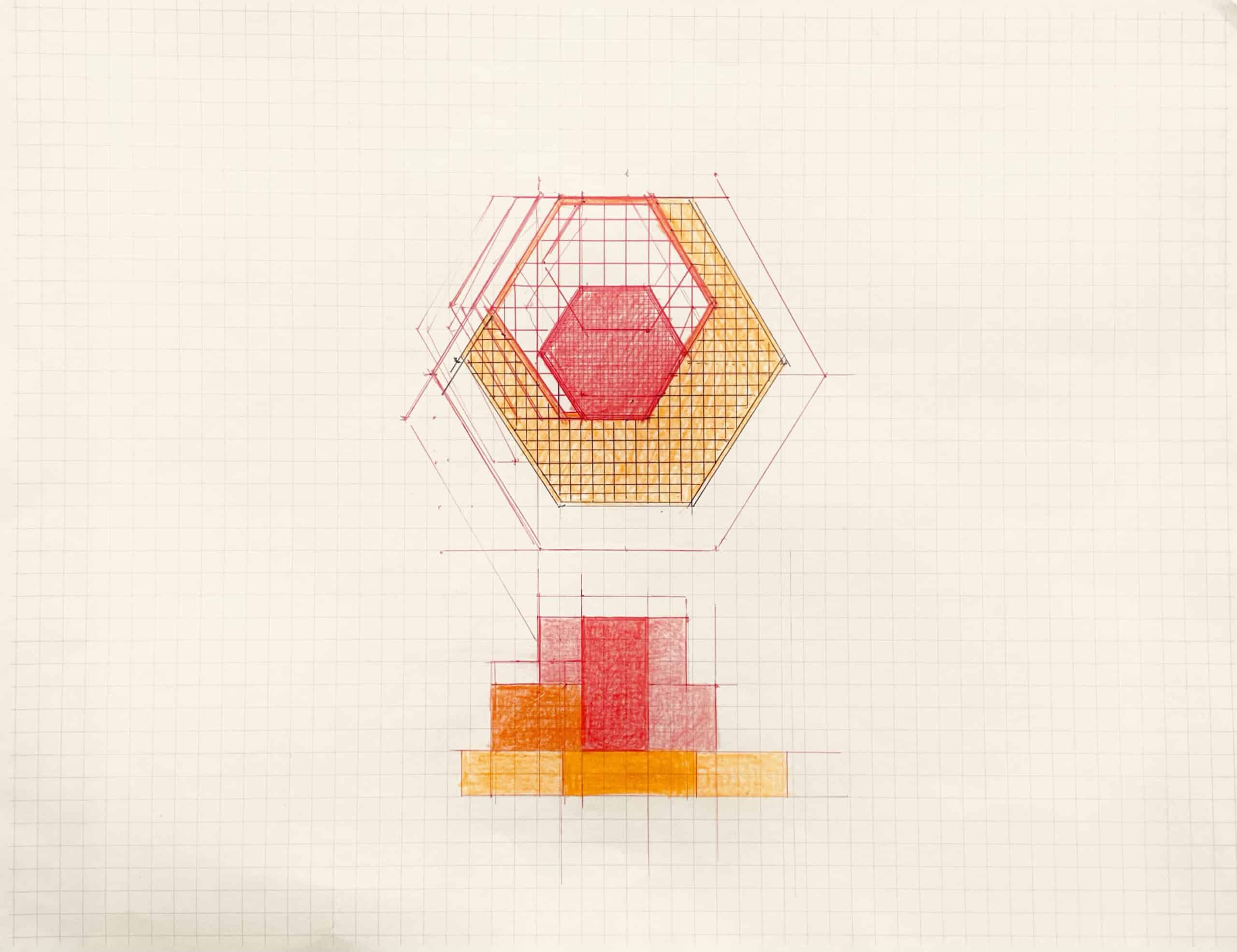
He calls them sketches (croquis), and that seems right—a quick shorthand to get ideas down on paper. The set-square and the triangle could be seen as a crutch, the apparatus of the finished drawing, but I suspect that for Bedoya, the technique has long ago been internalised. It serves as a way of imposing a certain geometric discipline on the sketch, maintaining the rectilinear organisation, and imposing a slight slowing down of the process, a kind of internal check. He can move with confidence from the modular space of the paper to the building, each one operating according to the same geometries. Each drawing a thought, then move on to another, the accumulation of ideas beginning to outline the building proposal.
*
Stan Allen is an architect, writer and educator. He served as Dean of the Princeton School of Architecture between 2002 and 2012, and is currently teaching at The Cooper Union and the Harvard GSD. His practice Stan Allen Architect has realised buildings and urban projects in the United States, South America and Asia, and more recently, a series of houses and artist studios in New York’s Hudson River Valley.
The text above is an extract from a longer essay by Stan Allen, published in the Spanish magazine EN BLANCO (Vol. 17, No. 39, 2025), dedicated to the work of PRODUCTORA.
