DMJ – Notes on Derek Boshier
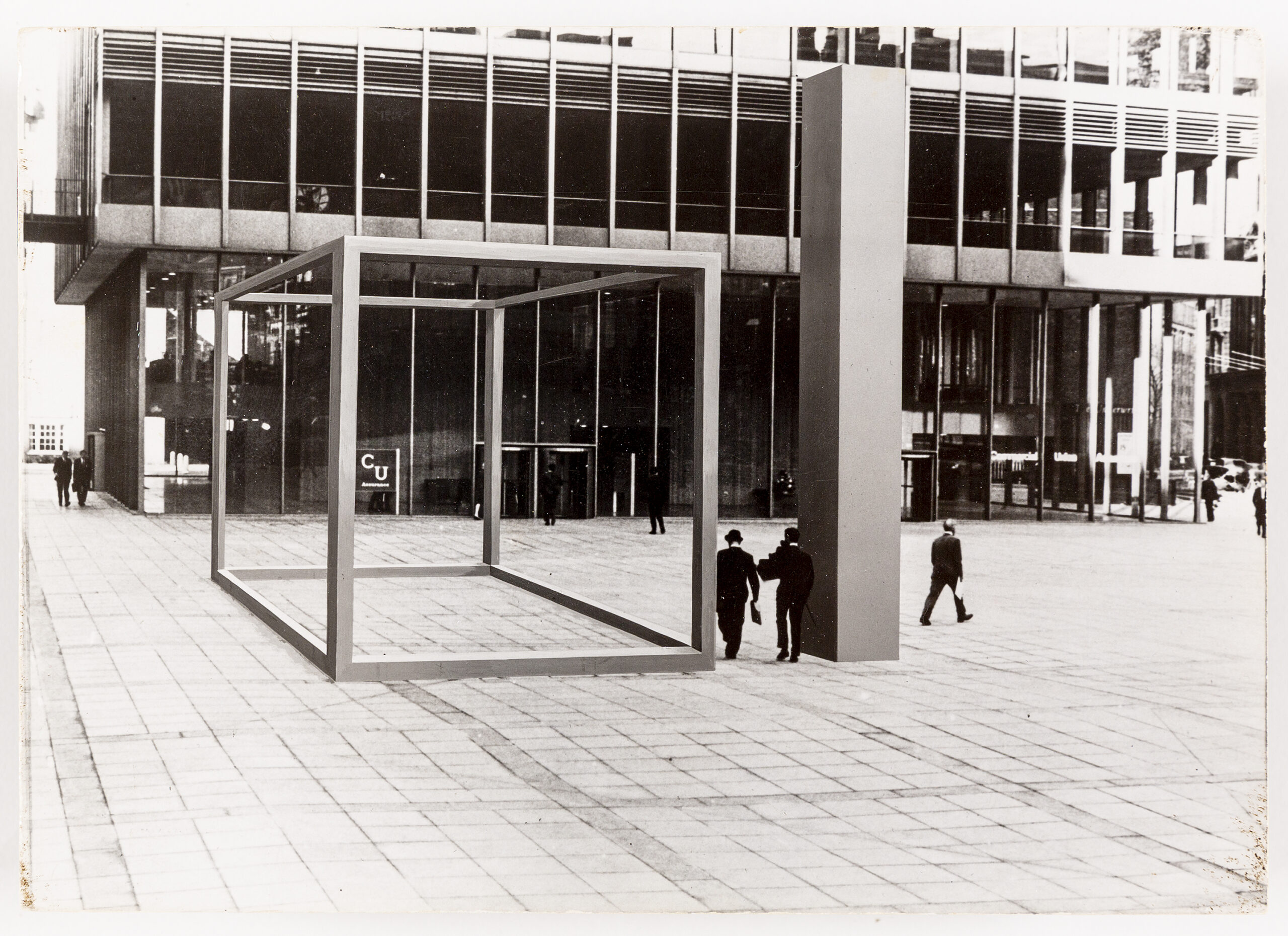
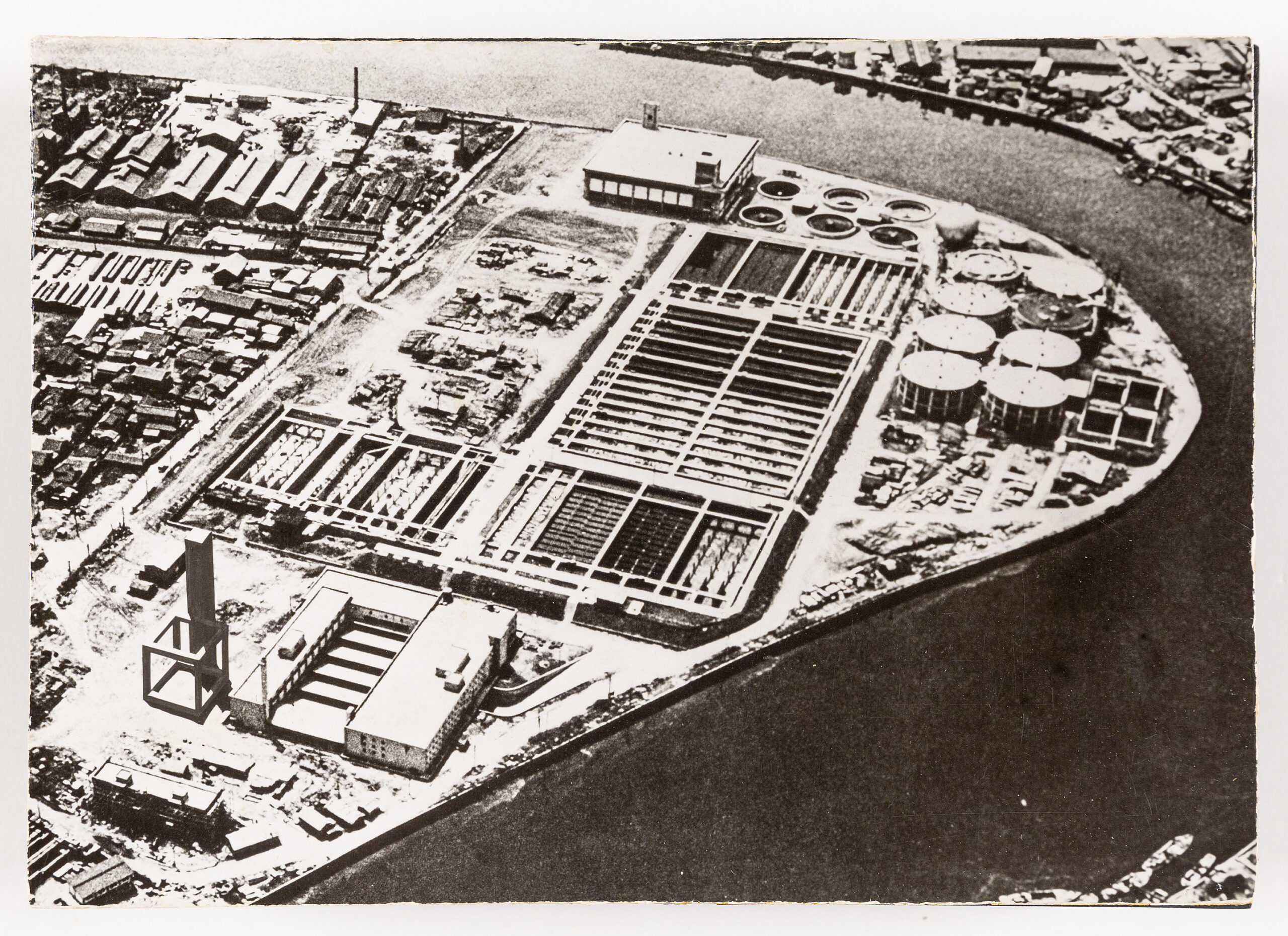
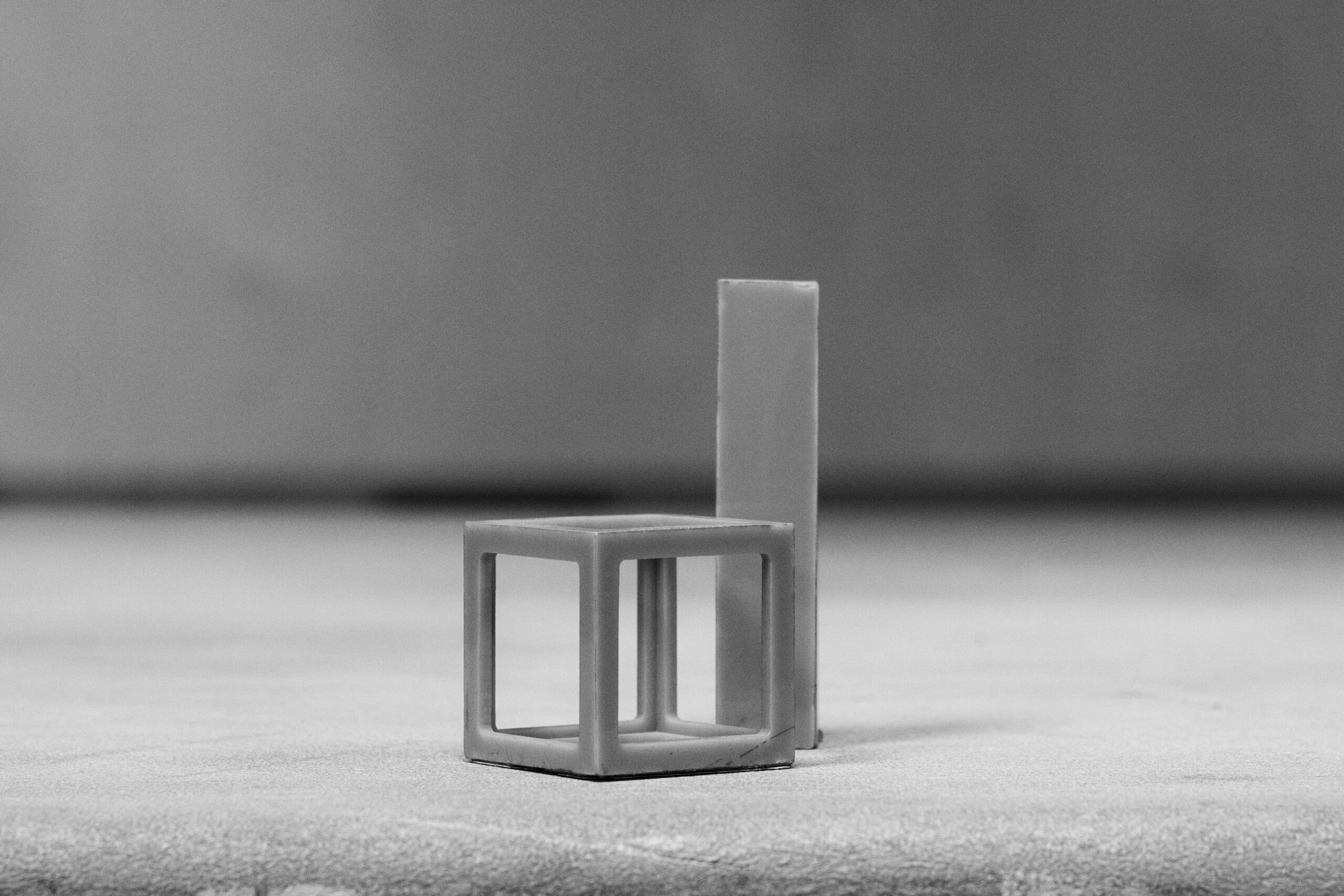
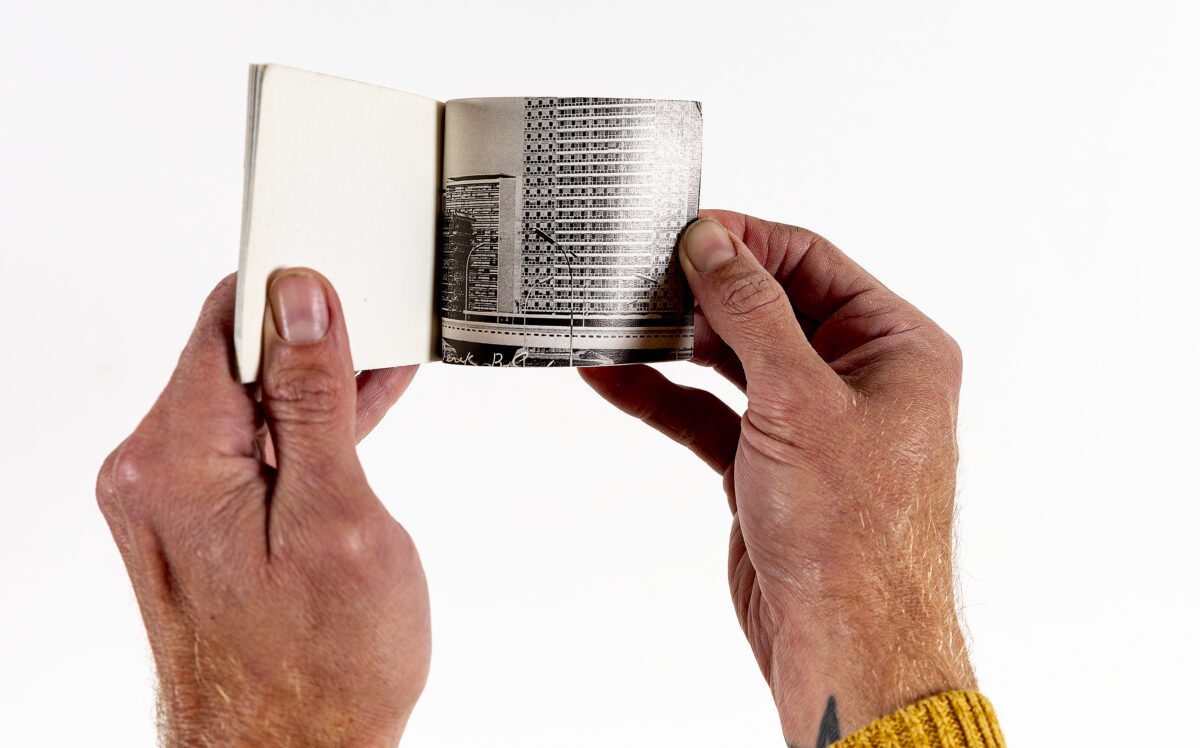
Derek Boshier’s 16 Situations (1971) could be experienced both in print and as an installation. The exhibition, which toured from early 1971 before being shown at the Whitechapel Gallery in September and October 1973, was simple in concept: the viewer followed a wall with 16 altered photographic images, each one with the same sculpture—an open cube and a column—inserted (Figs 1, 2, 3, 4). A little plastic model of the sculpture, meanwhile, was placed behind the viewer on a pedestal exactly 3 ½ ft high (Fig.5).[1] In addition, 16 Situations was printed as a book, a faithful and portable version of the exhibition itself. In it the 16 photographs are reproduced in the same sequence, with no accompanying text aside from collected notes at the end. The cover and each intervening page are an unobtrusive gallery-wall white.[2]
In Pop Goes the Easel (1962), an early BBC documentary by Ken Russell, a 24-year-old Boshier reflects in voiceover on the influence of American advertising, while in-shot the artist stares mutely at a bumper box of Special K. [3] He is surrounded by his early paintings, filled with references to American soft power, from the space race to Superman. Later, Boshier and three other young artists—Pauline Boty, Peter Blake and Peter Phillips—thumb through comics at a London market stall. In the documentary’s closing sequence, the group dance to Chubby Checker’s Let’s Twist Againat a party. Boshier’s twist is excellent; David Hockney, unnamed, hasn’t got the memo. This was, in many ways, the image of Boshier that stuck—a painter definitively situated within the British pop art scene of the early Sixties.
But by 1971, this was no longer an accurate portrayal. His hiatus from painting had begun in 1966, and he had since turned to the camera, using collage to disrupt the spatial assumptions embedded in photography. In King George V Avenue, Cardiff (1971), superimposed blocks of red and black, set against a grainy photograph of a street, crudely expose the mechanics of spatial perception. As the eye is drawn down the street towards the vanishing point, the apparent shadows of the red circles evolve into separate, floating shapes. A similar effect is at work in 16 Situations—as each scene invites the viewer into its own spatial world, the presence of the same superimposed sculpture simultaneously pushes them back out again.
The painted insertions in 16 Situations were executed with precision, and the resulting compositions display genuine fastidiousness in their staging. In each case the sculpture’s lighting is meticulously matched to its accompanying photograph. It tucks neatly behind the hairs of an arm in situation 3 and appears to sit behind a flock of birds taking flight in situation 5.
For Guy Brett, by surrendering to the space suggested by the photographs, ‘the open cube and column grow and shrink in scale according to their photographic background, travelling through the microcosm and macrocosm, corporate world, advertising world, art world.’[4] Viewed individually, the images maintain a spatial coherence, yet as they accumulate this begins to warp. For all that the open cube and column seem to ‘grow and shrink’, in the exhibition the plastic model sits small and unchanging over the viewers’ shoulders, pulling them out of each situation depicted.
The sculpture slips almost too comfortably into architectural settings. Placed alongside a corporate high-rise in the City of London (situation 6, Fig.1), its bare geometries fall into lockstep with the tiling, windows and footprint of the offices behind it. In the Japanese interior (situation 9), it resembles both a chair for sitting at the table and the cubic room itself. Seen from the air, it becomes another square building within a sewage treatment plant (situation 7, Fig.3), and a turret in a ruined Roman castle (situation 15). The sculpture evokes the trope of the ‘primitive hut’ set within real architectural photographs, a building viewed from outside and inside simultaneously.[5]
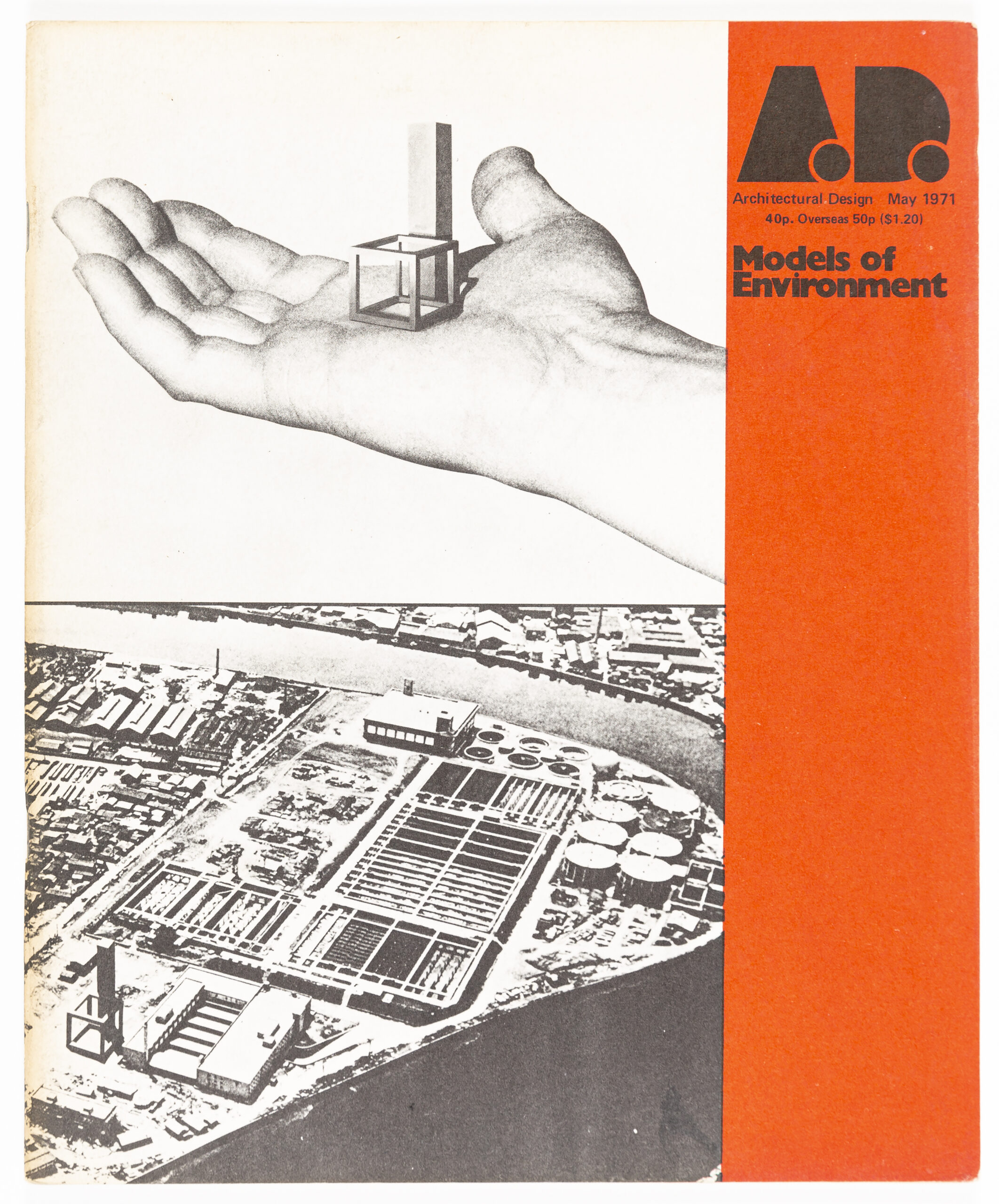
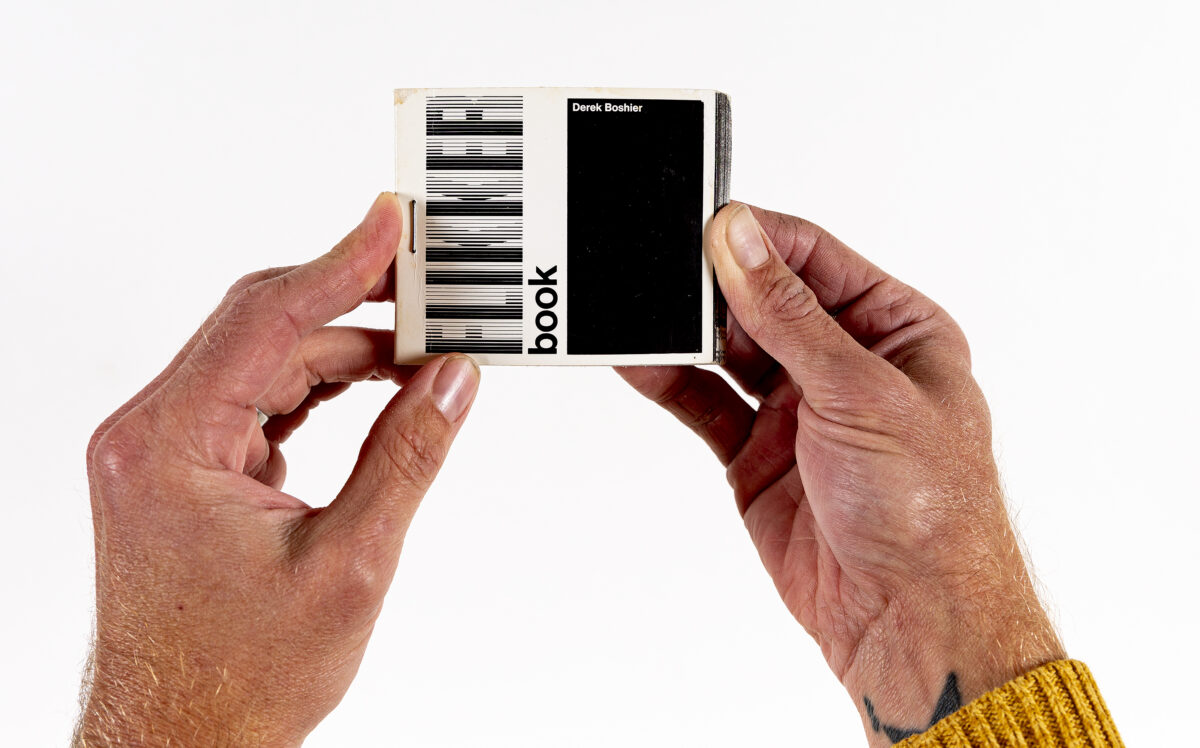
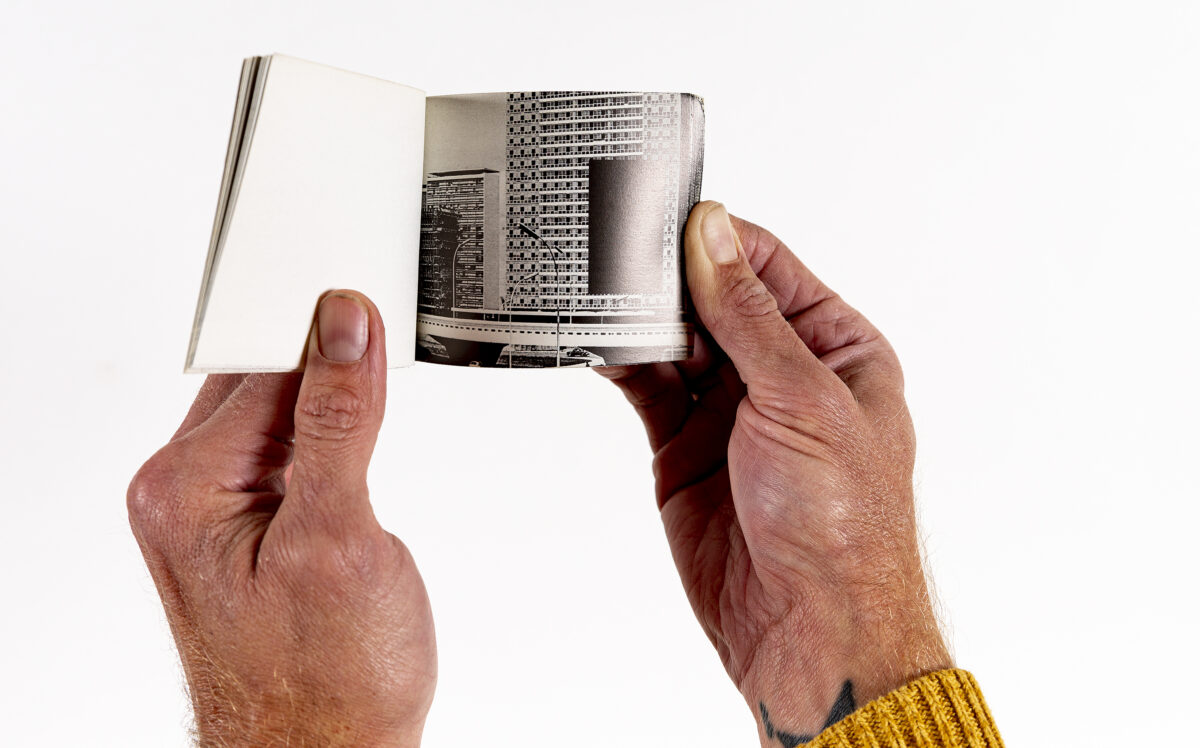
Three of 16 Situations appeared on the front and back covers of the May 1971 issue of Architectural Design (Fig.6), while another was reproduced in the photography magazine Camerawork’s eponymous anthology.[6] Yet Boshier himself saw his Situations as anything but stand-alone images. Rather, he hoped that his work with static imagery would be imbued with the ‘continuing image sense of cinema’.[7] In his contemporaneous Flikker book (1971), the black box occupying half of the front cover gradually shrinks as one flicks through the pages, revealing an apartment block behind it—like a version of King George V Avenue, Cardiff in stop motion (Figs 7, 8, 9). His exhibition Change (1972–73) featured 33 metres of consecutive images winding around the walls of the Whitechapel Gallery, in which objects in photographs morph into one another.[8] In each, it is the reader and viewer who generates the ‘continuing image’ as they turn the pages and walk.
16 Situations invokes a sort of motion too, though its direction feels more like telling a story – Guy Brett described the work as a ‘sardonic fairytale’. Flickers of thematic unity emerge across the sequence. Situations 3 and 4 present the sculpture at its smallest and largest, first dwarfed by an insect and then enlarged to galactic proportions. The cube and the column sit seamlessly into situations 9 and 10 within the clean right-angles of the Japanese interior and the Whitney Museum but feel less anchored when placed in the natural landscape outside a businessman’s window. In this the desk—angled directly towards the camera rather than parallel to the walls—appears more collage-like than the sculpture itself. These juxtapositions invite the viewer to read the series as a whole and to create order out of its variety.
Notes
- Derek Boshier, ‘16 Situations’: https://www.derekboshier.com/books1 [Accessed 13 June 2026].
- Boshier, 16 Situations (London: Idea Books, 1971).
- Monitor, Pop Goes the Easel, directed by Ken Russell, presented by Huw Wheldon, BBC Television, first broadcast 25 March 1962: https://www.bbc.co.uk/iplayer/episode/b00drs8y/monitor-pop-goes-the-easel [Accessed 19 June 2026].
- Guy Brett, ‘Alteration, Permutation, Transformation’, in Derek Boshier: Rethink / Re-entry, ed. Paul Gorman (London: Thames & Hudson, 2015), 96.
- Niall Hobhouse and Nicholas Olsberg, ‘Landscape Situations: Work on Paper, Part I’, Drawing Matter, 21 January 2011: https://drawingmatter.org/work-on-paper-part-i-landscape-situations/ [Accessed 15 June 2026].
- In The Camerawork Essays: Context and Meaning in Photography, ed. Jessica Evans (London: Rivers Oram Press, 1997).
- ‘Boshier has explained that even when he was employing static imagery he sought to evoke the “continuing image sense of cinema’’,’ John A. Walker, ‘Over View’, in Derek Boshier: Rethink/Re-entry, ed. Paul Gorman (London: Thames & Hudson, 2015), 18.
- Brett, op. cit., 96.
*
Lucas Zurdo is a writer and editor from London. He studied English at the University of Oxford, where he co-founded and wrote for a number of cultural publications.
*
The article is included in the third issue of DMJournal, Storytelling.

– Kieran Cremin