DMJ – Where to Find a Drawing of a Swiss Gold Vault
If you really want to learn where to find the mountain vaults of Swiss banks, and what they look like, the first thing you should know is that the archives vigilantly kept by almost all banks in Switzerland are not publicly accessible – and even when they are, the last thing you will find there are architectural drawings. Your best hope lies with barely legible scribbles in the margins or on the backs of papers, overlooked by archivists, like this yellowed piece of paper of approximately 15 x 21 cm (Fig.1). On top of its thin, blue-lined grid, there are five consecutively applied layers of information. The nine lines made with a sharpened graphite grey pencil are ruler-straight, not veering to left or right – clearly from the hand of a precise, fastidious person, but not necessarily an architect. They make up a rectangular space, which describes an underground cavern. Its protective wall, which is pierced by two access corridors, is graphically accentuated by hatching. Handwritten numbers made with a red pencil, presumably during a site visit, record the space’s internal dimensions of 8.5 x 7 m.
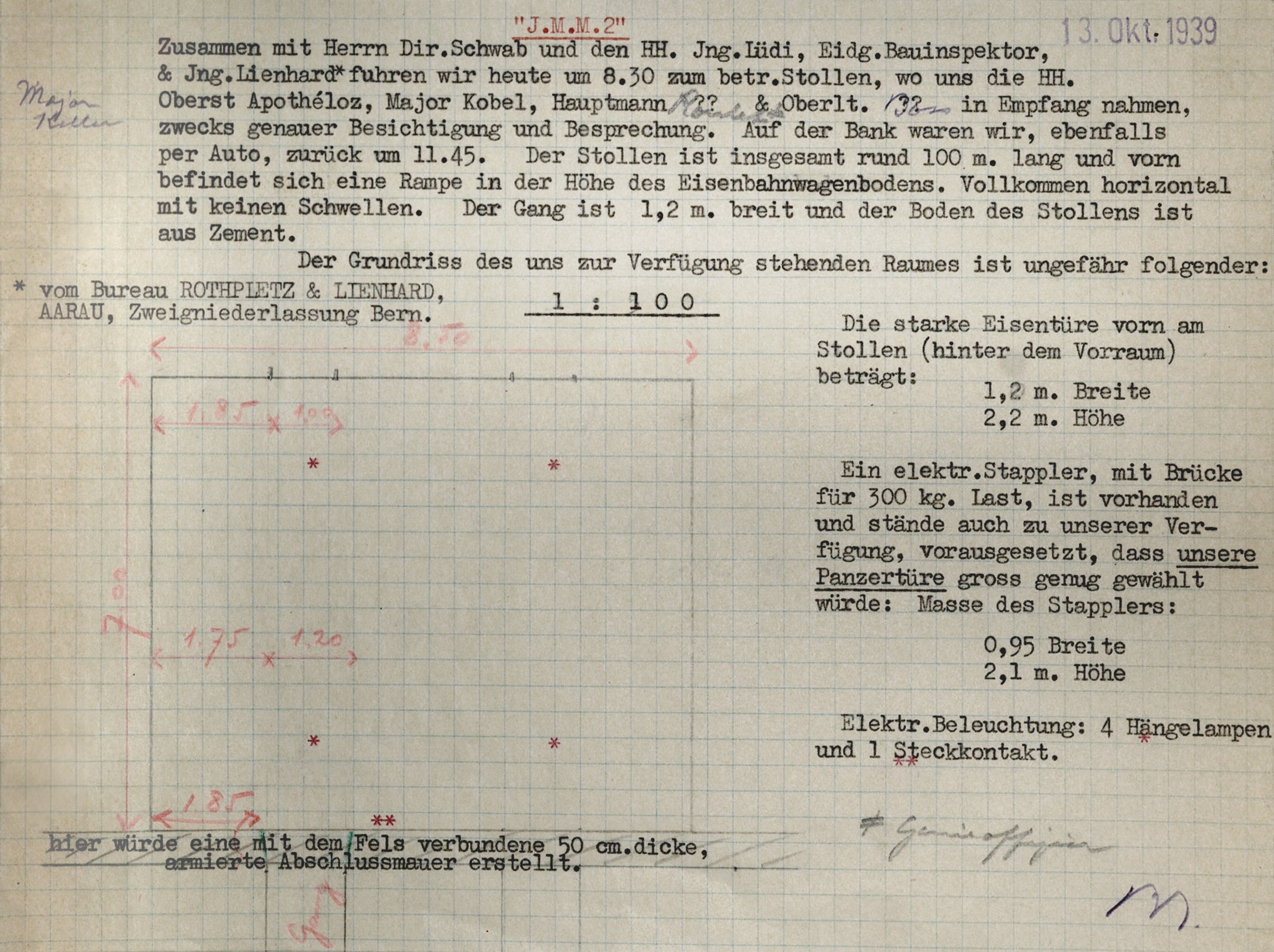
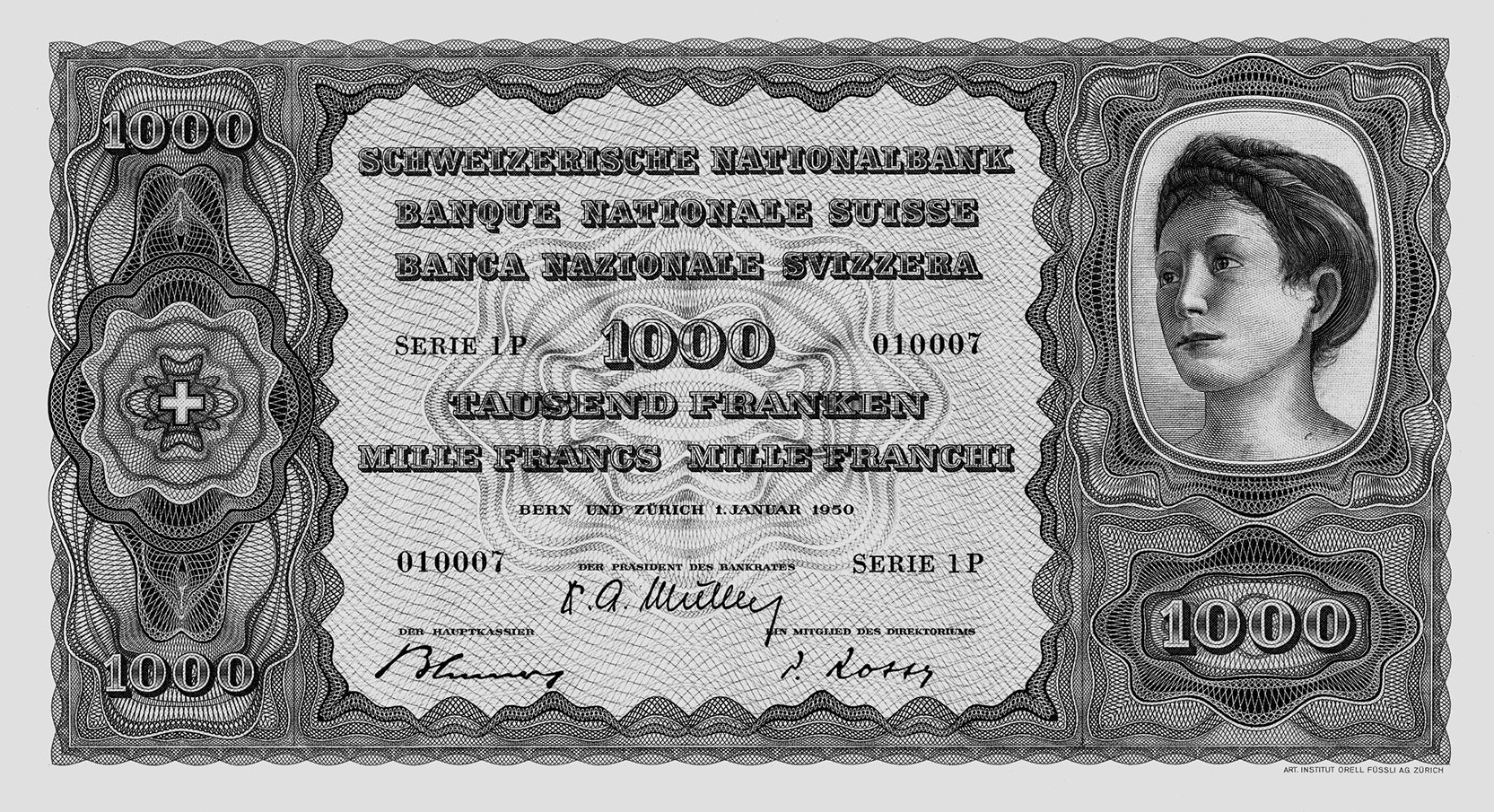
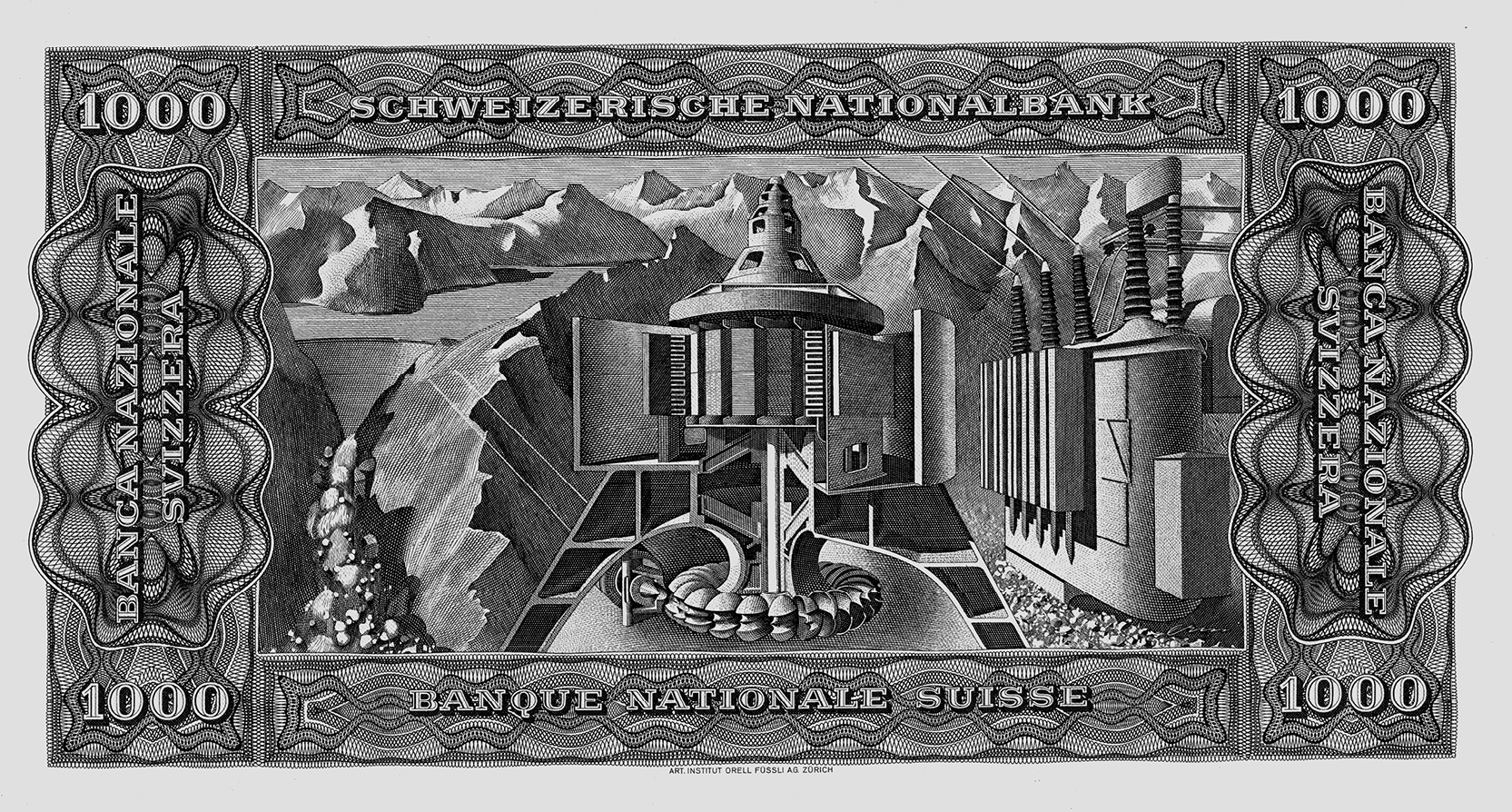
In the office, this piece of paper was inserted into the typewriter of one of the secretaries, dated 13 October 1939 (six weeks after the start of World War II), and annotated with a caption in German, which translates as ‘the layout of the space available to us is approximately as follows’. The document’s author signs his drawing with ‘Bl’ in blue pencil at the bottom right, like an architect signing a drawing. The same ‘Bl’ features on the banknotes that the National Bank issued at that time (Figs 2, 3) and identifies its Chief Treasurer Erich Blumer. On top of the memo, there is a red-typed cipher, JMM2. The moniker, an acronym for Interlaken Munition Magazine 2, is repeated in later correspondence concerning this ‘gallery intended for the storage of ammunition, the rear part of which was separated from the front part by a brick wall and made available to the National Bank after the beginning of the war in 1939’. Indeed, the sketch represents one of the highly secret Alpine bunkers where the National Bank hoarded its deposits of gold during the war. Among them, it turned out, were also freshly cast bars of Nazi gold that, upon arrival in Bern from Germany, were directly forwarded to the safe storage depots in the Alps.[1]
It was only after months of combing through metres of correspondence and minutes of meetings that, in the autumn of 2021, I first noticed this modest piece of paper. I had moved to Zurich to write a dissertation on the buildings operated by Swiss banks in the Alps associated with the transportation, trade and storing of gold. As I roamed among the monumental sandstone façades and gleaming doors of the city’s banking district, I ruminated on my role as an architectural historian prying into the field of economic and political history. How to write a history of institutions that derive their existence from discretion? Would studying architectural drawings, fundamentally different from the sources used by economic historians, lead to other conclusions than the ones at which they had arrived? And would my position as a wide-eyed and curious outsider help rather than hinder me in finding my way in these no-go areas of Swiss history?
Against my better judgment, I sent an email to the archivists of the Union Bank of Switzerland (UBS) and Credit Suisse (now also part of UBS) inquiring about the accessibility of any material in their non-public archives relating to the evacuation depots in the Alps that operated during World War II. The UBS-archivist replied: ‘For my understanding, can you explain to me why an architect is interested in the evacuation of the UBS during the Second World War? What does that have to do with architecture?’ That was precisely the crux of the matter. I tried to explain that the architectural history of banks had generally been described through studies such as Nikolaus Pevsner’s History of Building Types, presenting a chronological series of Western bank buildings structured as a logical formal evolution of façade and plan organisation. This discourse focused on what banks have to show rather than what they hide – their undergrounds, their underlying networks, the pragmatic infrastructures that supported them. With this message, the email exchange came to an abrupt end.
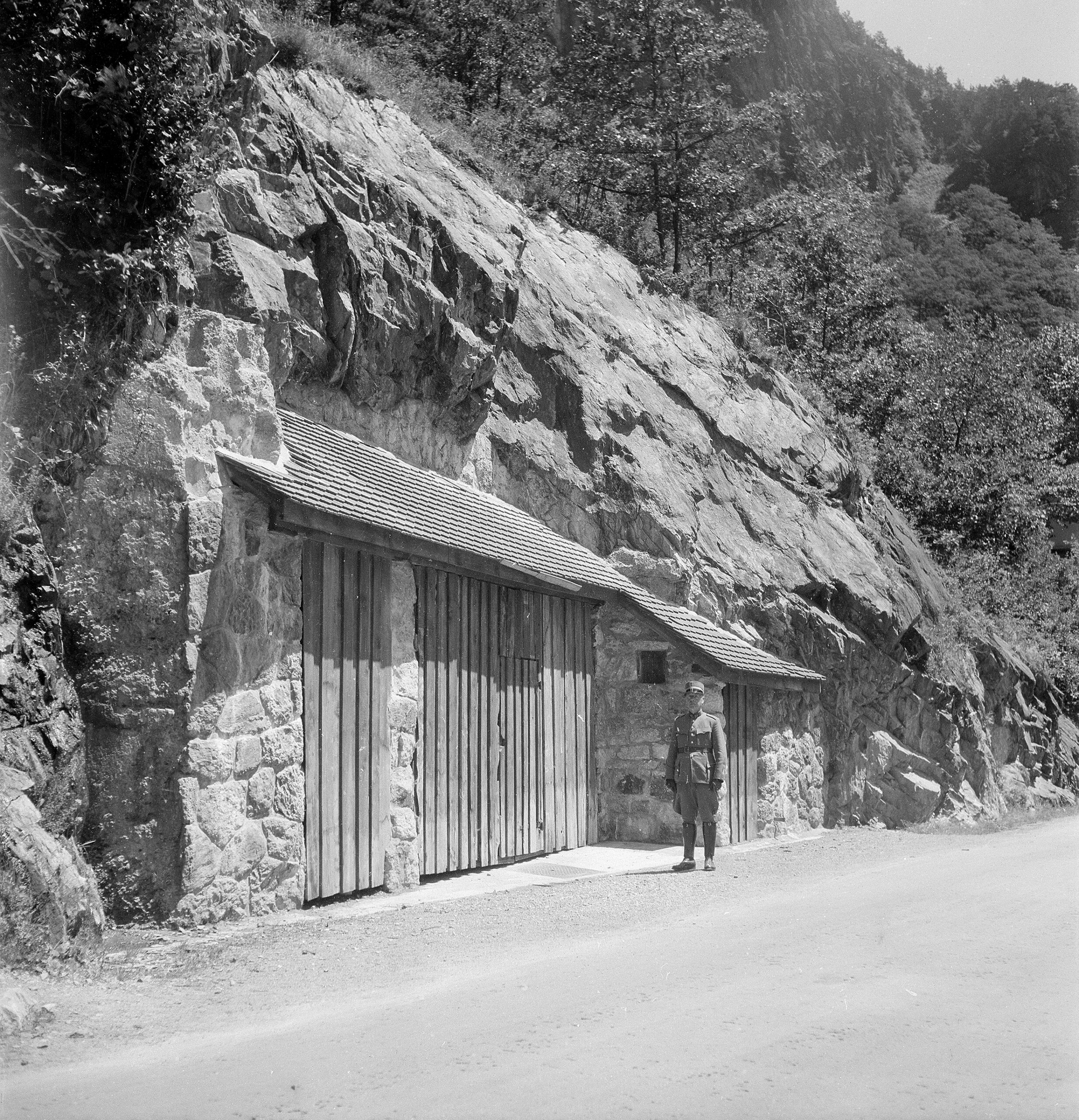
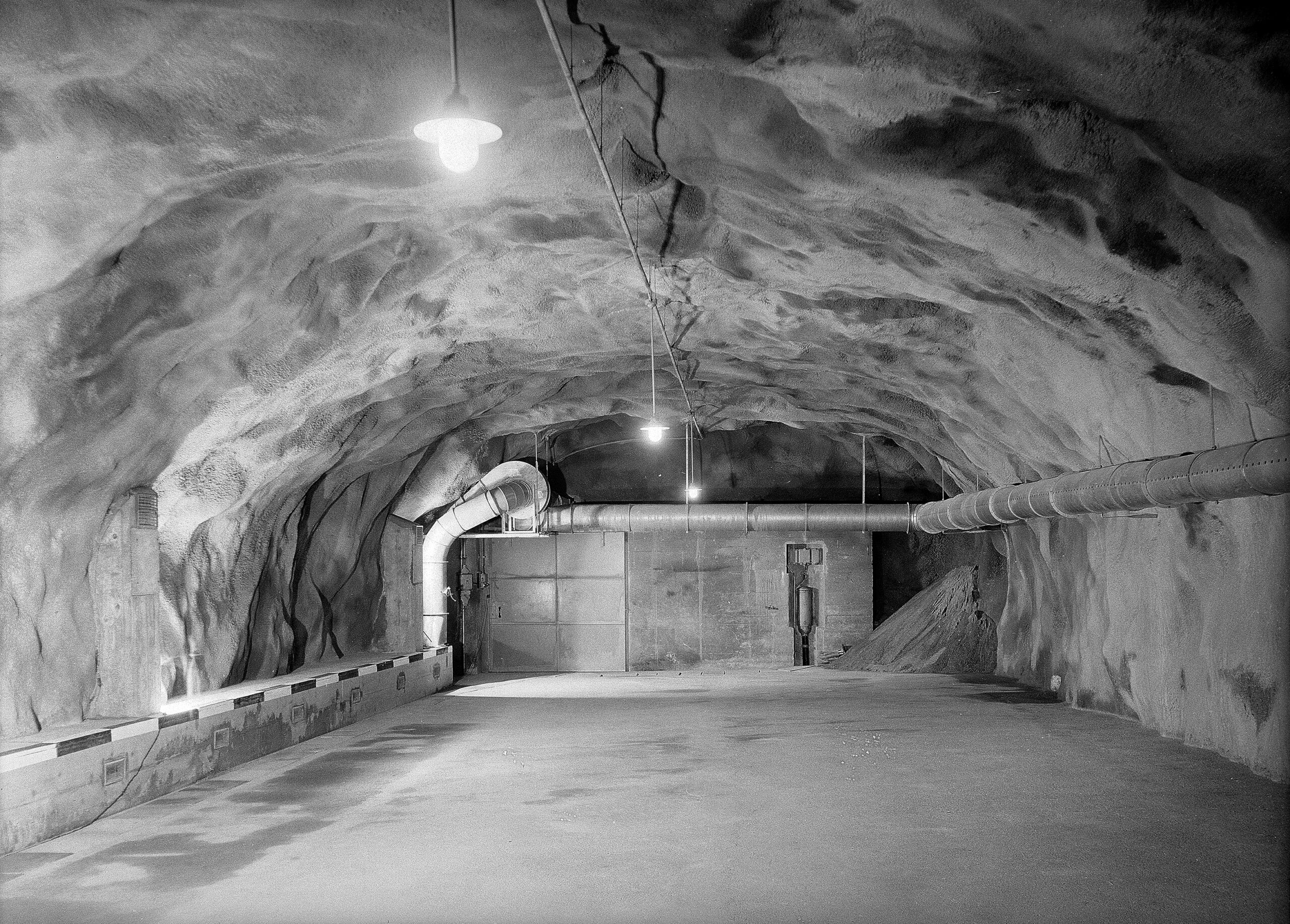
But perhaps there was some truth behind the UBS archivist’s question? When I had pitched my research to a world-renowned Dutch architect at a vernissage a few months earlier, he told me that it sounded like journalism to him. Still waiting for a positive answer from one of the banks’ archives, I decided to enroll in an online course at The Centre for Investigative Journalism (CIJ). Investigative journalism, like certain studies in architecture, stands or falls on finding inventive ways to obtain sources. I had come across a company advertising its services to secure gold for wealthy private individuals in a mountain bunker in the Alps built during World War II. Using the public register of the Chamber of Commerce, after a few clicks of the mouse I located their underground facility at the foot of the Gotthard Pass. Scrolling past the address on Google Street View, I took a screenshot of the concrete retaining wall facing the public road and uploaded it to a reverse image search engine. Instantly, the algorithm retrieved a black-and-white photograph of the same bunker entrance, taken during the war. The search also suggested similar images, including a dozen interior photographs of the same bunker. They were published on the open-source platform Wikimedia, which scraped them from the Swiss Federal Archives’ collection of military photographs (Figs 4, 5). I had previously searched the archive’s online index but had not come across these photographs because they were poorly labelled, making them impossible to track down without using an image recognition tool.
Armed with these tools, I turned my attention to public archives, hoping that smart algorithms would help me find needles in haystacks. The last historians who had worked on these archives in the early 2000s were limited to manually reading and photocopying around 500 files a day, while I would be able to search thousands of digitised copies every second. I contacted the Swiss National Bank and they replied within hours: ‘When would you like to come?’ The federal bank keeps its own archive, independent of the Federal Archives and without a public catalogue. A few days later, dressed in a three-piece suit and polished shoes, I pulled open the bank’s heavy cast-iron front door with high hopes. After successfully passing the reception desk, the identity check and the remote-controlled security interlock, I asked where to find the archive’s reading room. There was no such place here; instead, I was seated behind a computer in the office of the archive’s convivial vice-director and given access to the fully digitised minutes of the bank’s Governing Board, Bank Council and Bank Committee. The documents were bundled by year and converted into machine-encoded text using optical character recognition. Within minutes, I was cntrl-F-ing through the once top-secret minutes planning the construction of a handful of mountain depots like the one in Interlaken described above, confirming that the National Bank had indeed been storing gold bars, coins and banknotes in the Alps for most of the 20th century.
Surprised by the apparent ease with which I had stumbled upon this evidence, none of which had ever been published before, I asked the archivist whether these files had only recently been declassified, or whether they had been available for decades. They had been accessible since the late 1990s, when the Federal Act on Archiving guaranteed public access to them, albeit not in digital form. At the time, he recalled, only a journalist had shown interest in the files for a spy novel. Perhaps writing a page-turner rather than a dissertation was the thing to do. After all, histories are popularly remembered and retold via well-written stories rather than well-cited peer-reviewed articles. If I wanted to shake up the dominant narrative of hidden gold in the Swiss Alps, I would not only have to come up with more representative statistics, graphs and tables, but from them craft a better story.
This essay describes the author’s archival travels for the book Mountains of Gold: Uncovering the Architecture of Swiss Banking, published in 2026 by gta Verlag.
Notes
- For an elaboration on the contested gold transaction between the Swiss National Bank and Nazi Germany see: Ludo Groen, Mountains of Gold: Uncovering the Architecture of Swiss Banking (Zurich: gta Verlag, 2026), 55–76.
*
Ludo Groen is a post-doctoral researcher and lecturer at the chair of Laurent Stalder at ETH Zurich’s Institute for the History and Theory of Architecture (gta). He previously worked at The Berlage in Delft and the Nieuwe Instituut in Rotterdam.
*
The article is included in the third issue of DMJournal, Storytelling.

– Ludo Groen