Trevor Dannatt: St Mary’s Grove – La maison où j’ai grandi
This is the eighth and concluding part of Adrian Dannatt’s series of reflections on his family home, frequently remodelled and extended over 45 years from 1955, by his father, the architect Trevor Dannatt. Read the introduction to the series here.
*
Curtains
The newly restored house appeared, on the cover no less, of the November 1958 issue of House & Garden, the sort of thing my father found an amusing quirk, but of no real consequence whatsoever. It certainly did not launch his career as an interior designer as it did for David Hicks whose appearance in the same magazine a few years before, featuring his house for his mother, transformed his business. (Funnily enough my mother had worked with Hicks at J. Walter Thompson in Berkeley Square and was actually there when he was caught trying to ‘borrow’ the art department’s stock of paper, for which he was fired in 1952.)
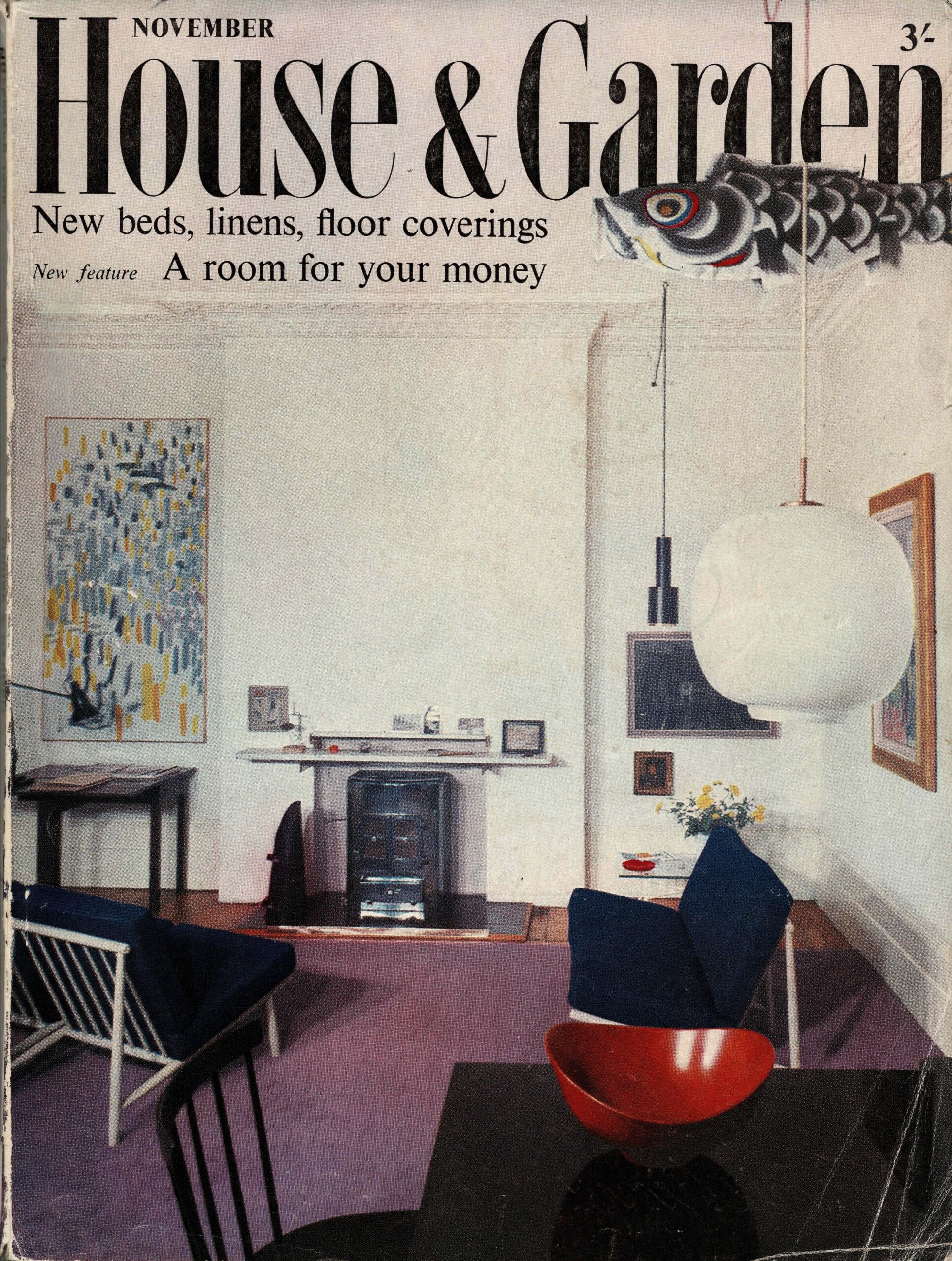
It is surprising how much of the house is still the same as in the magazine pages yet there are still elements worthy of further investigation, for surely architectural details are like anecdotes, things that call for re-use, refinement, eventual publication even.
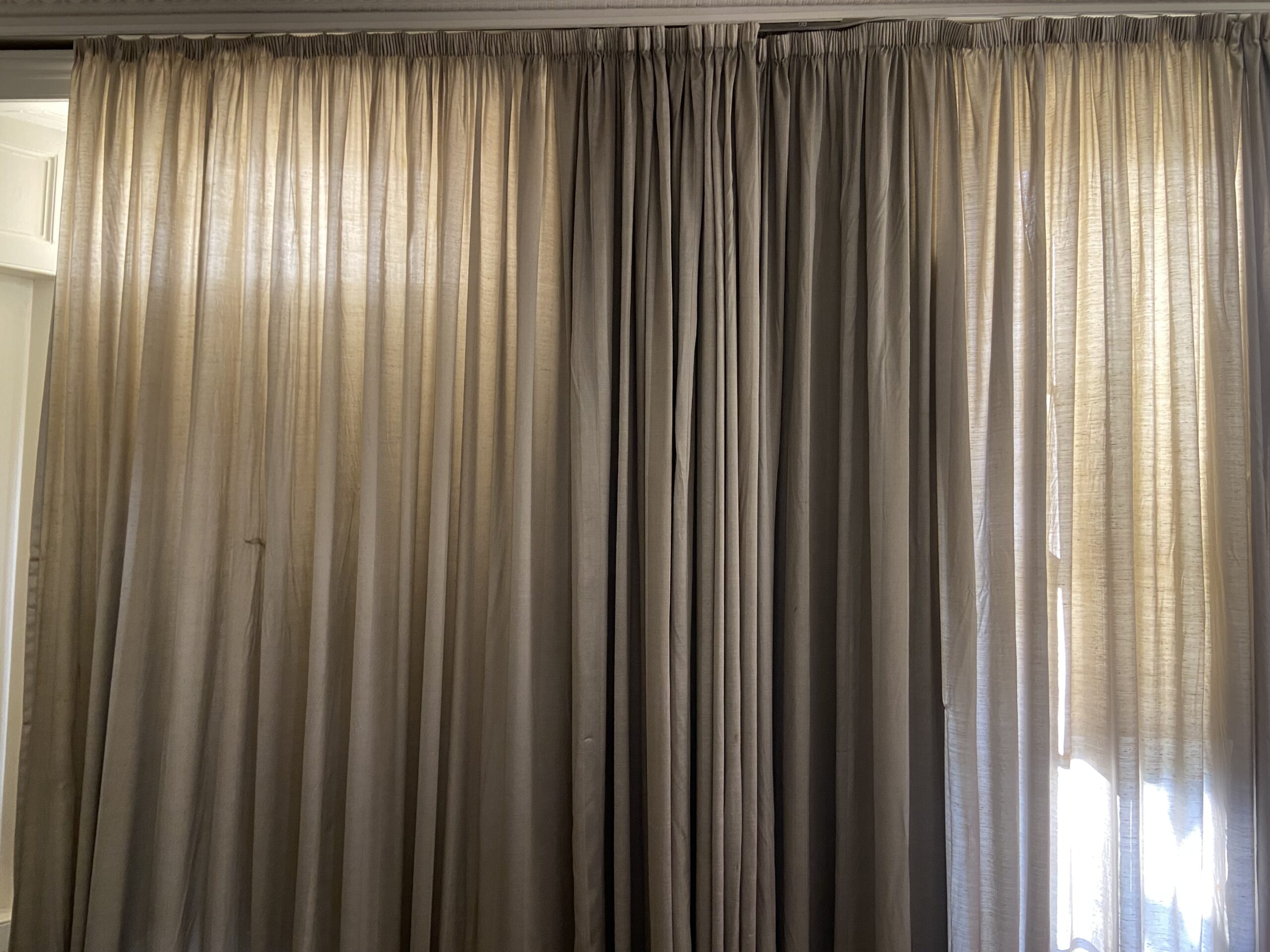
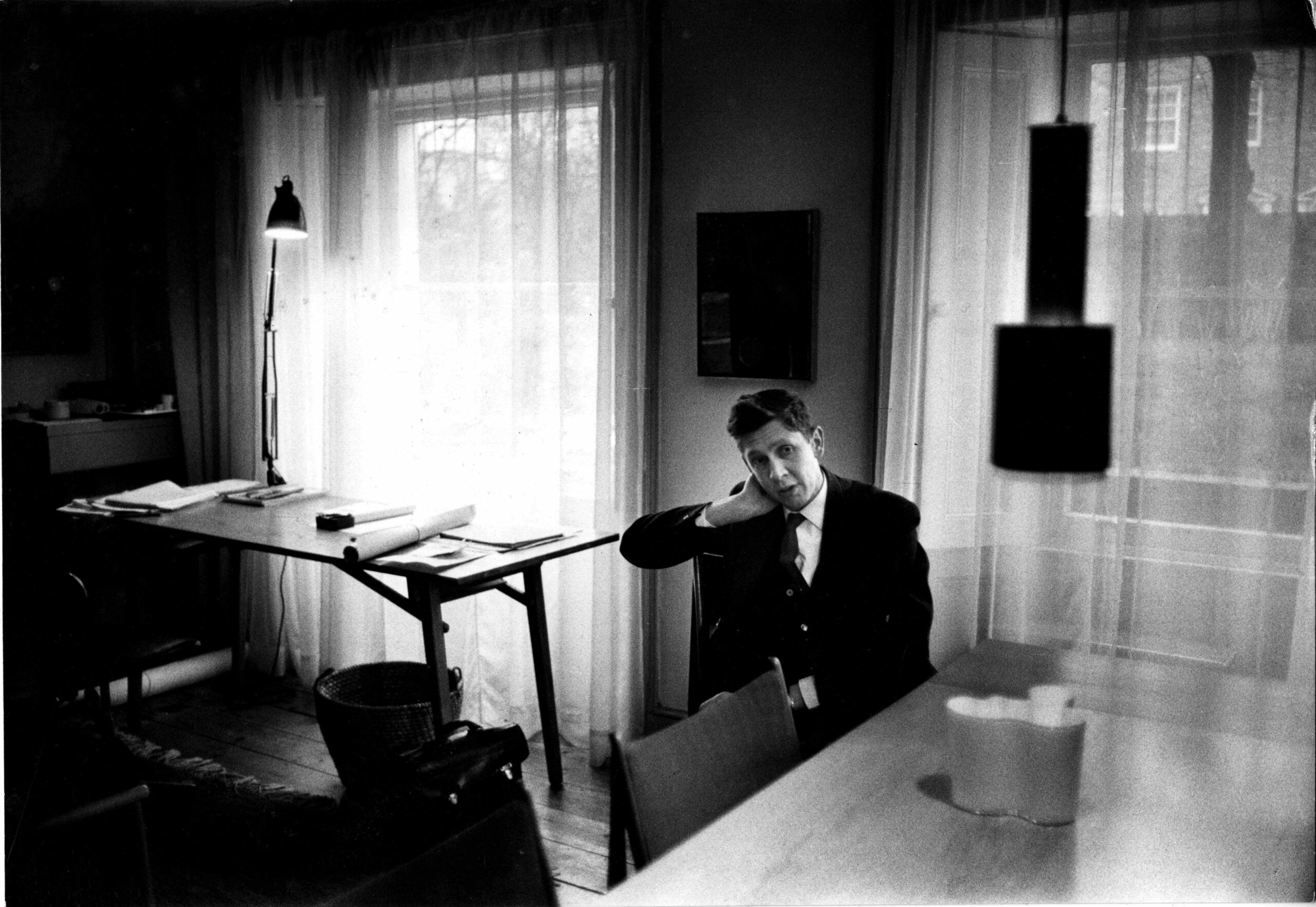
For example, the beautiful room-height silk curtains which when fully drawn can cover the entire sitting room wall. My mother bought the material from Liberty’s and had it made up by the local Mrs Baird, who memorably created little coats for myself and my sister with a bolt of tweed our parents had brought back from Ireland. My father had initially thought to design them with horizontal stripes until his friend, the architect Ian Lacey, vocally objected and they were changed to more suitable verticals. What I love about this is that Lacey worked with local councils as a town planner, most notoriously as borough planner at Southwark in the early 1970s where he co-authored their 1973 ‘Strategy plan for Southwark’s Thames-side’. As such Lacey helped create some of the biggest and most unwelcoming of housing blocks, those estates which even the most active lovers of Brutalism will admit are too large and too cruel. How pleasing that an architect responsible for such huge high-modernist urban schemes was also passionate about the direction of stripes within a curtain weave, somehow reminiscent of the De Menil decision to employ both Philip Johnson and the great couturier Charles James for their Houston house.
*
Lights
The House & Garden cover prominently features in the foreground the Radiohus ceiling lamp by Vilhelm Lauritzen, bought by my father on a trip to see Finn Juhl in Denmark, and behind it the Aalto pendant ‘Hand Grenade’ lamp he bought on his first visit to Helsinki at the Artek store. Trevor did produce several light designs himself, in fact the fabled modern furniture dealer-researcher-curator Simon Andrews thought he had discovered an unknown fixture by him; this seemed to be a version of the 1947 lamp designed by Trevor for the British Rayon Design Centre, of which nobody has seemingly ever seen an example. This one was for a hotel at Lusaka, Rhodesia and clearly very similar, but in the end it was probably by Dennis Lennon, a close colleague. When Trevor created the famous Blackheath Friend’s Meeting House in 1973, ‘the only Brutalist Quaker church’ there were special light fittings ‘designed by the architect which echo the shape of the room.’ These were originally made from offcuts of the zinc roof covering and somewhat reminiscent of the wall lights created by Jacques Le Chevalier and Rene Koechlin in 1928. Unfortunately, the originals were later thrown away and have now been reconstructed in stainless steel.
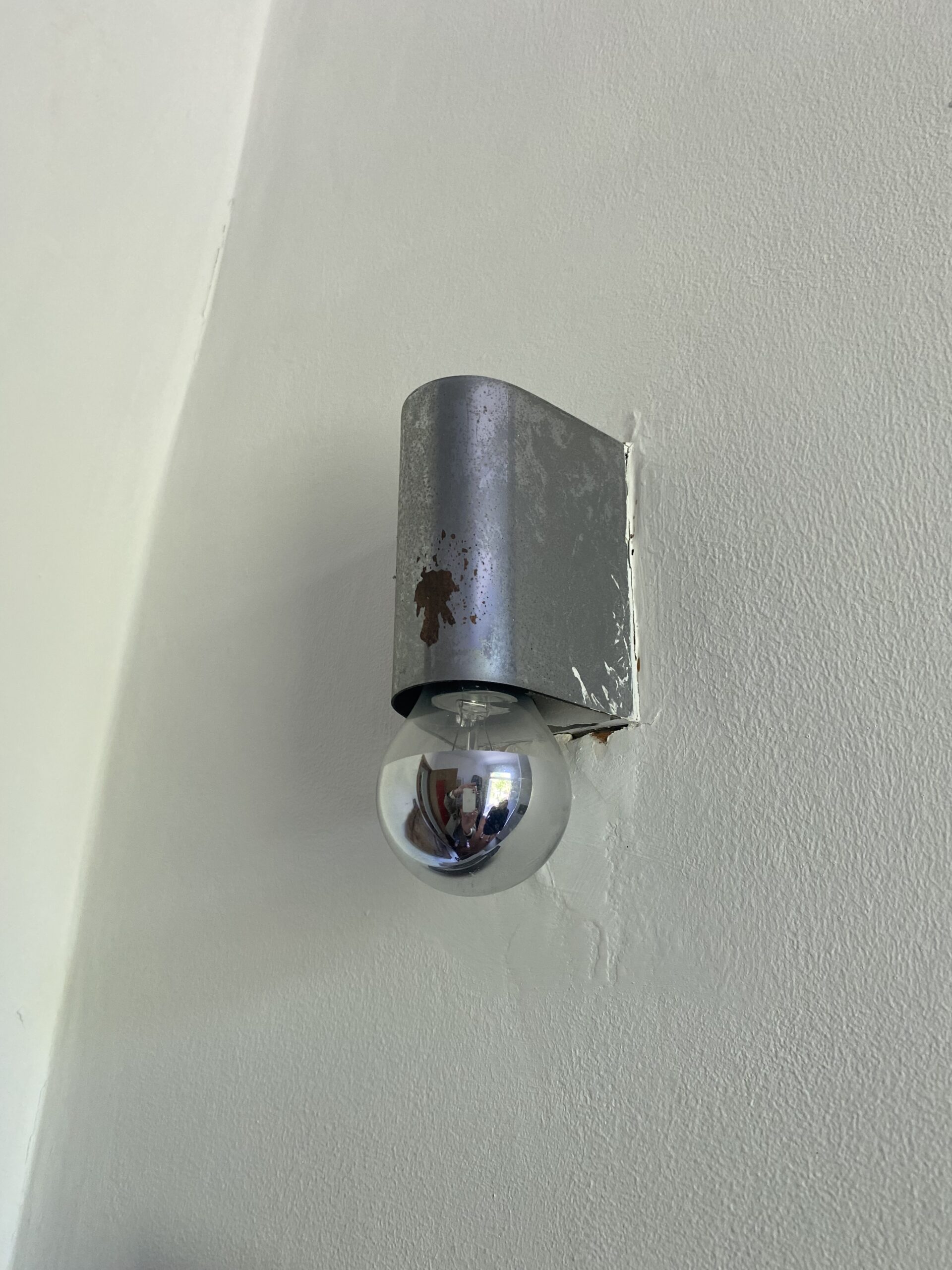
Thus I always assumed that Trevor himself had designed the light fixture that most intrigues me at the house, of which there are four, a plain metal socket mounted to the wall with a naked light bulb below. But then to my astonishment I spotted the same design online, credited as a set of chromed metal sconces by Franco Albini made in Italy circa 1940. According to the website of the Casati Gallery: ‘These sconces were designed by Albini circa 1940 specifically as part of the furnishings for Villa Neuffer, a house that Albini designed in 1940, in the town of Ispra in Lago Maggiore.’ Could this be true? Trevor might well have bought these on one of his regular trips to the Milan Triennale in the 1950s where indeed he purchased the metal horse by Gio Ponti which sits on his bookcase in the entrance hall. Any further leads would be gratefully received.
*
Bookcases
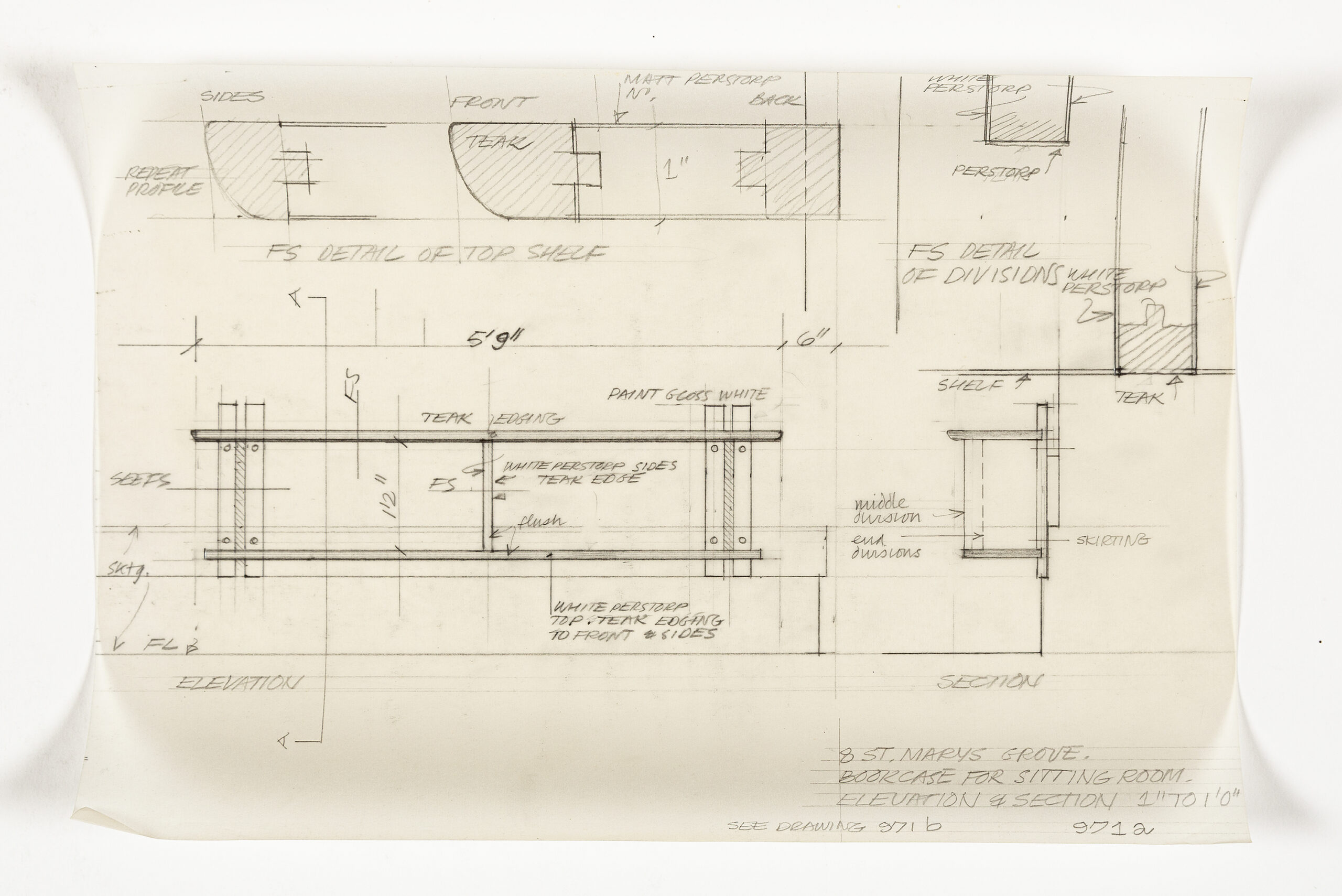
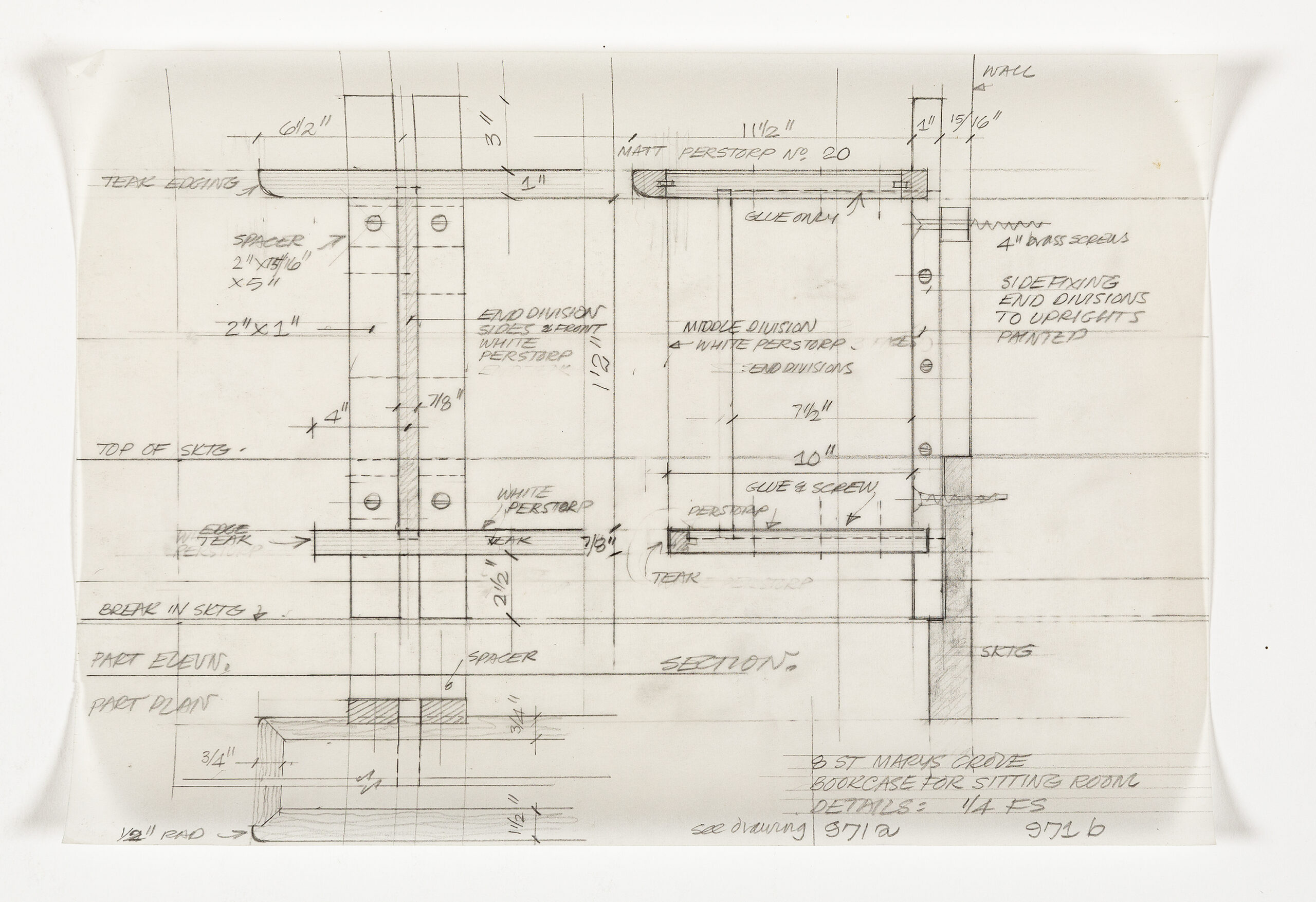
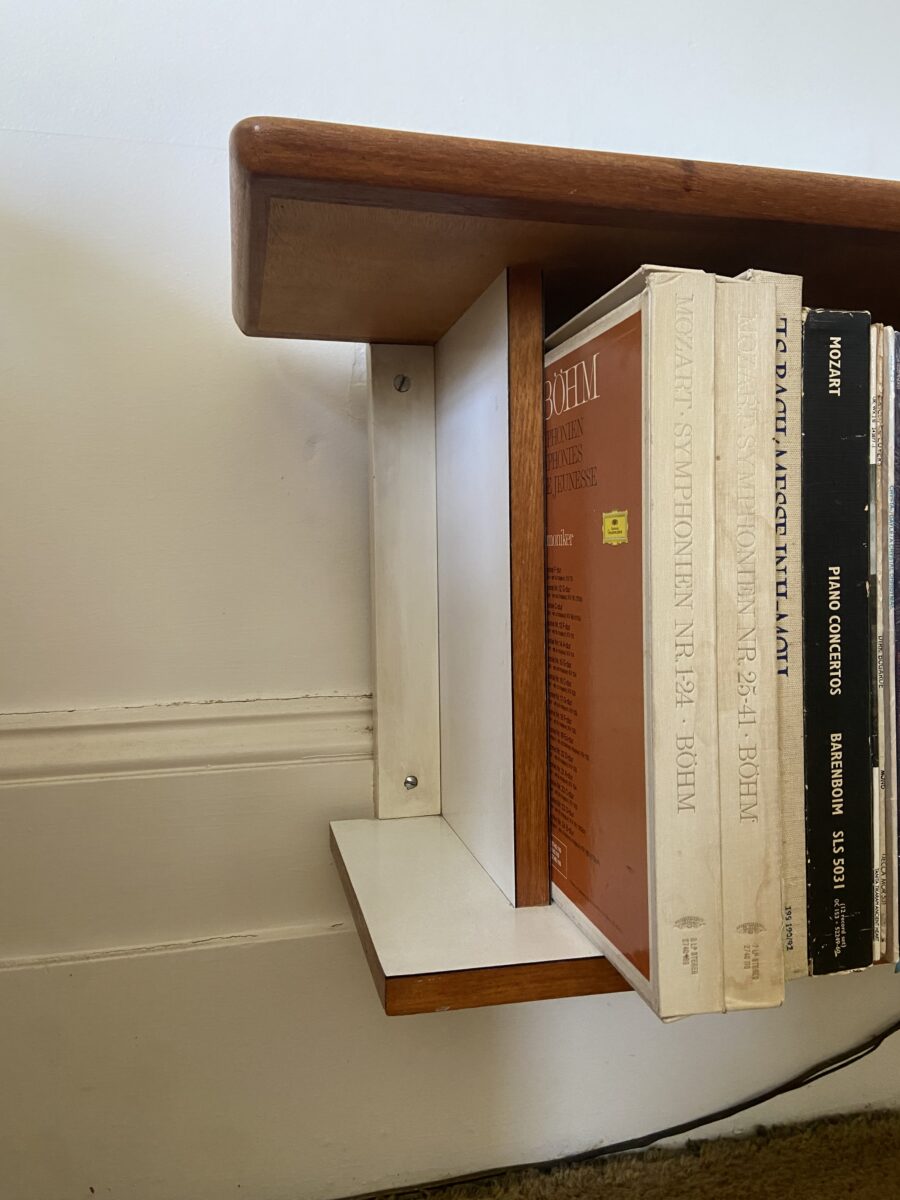
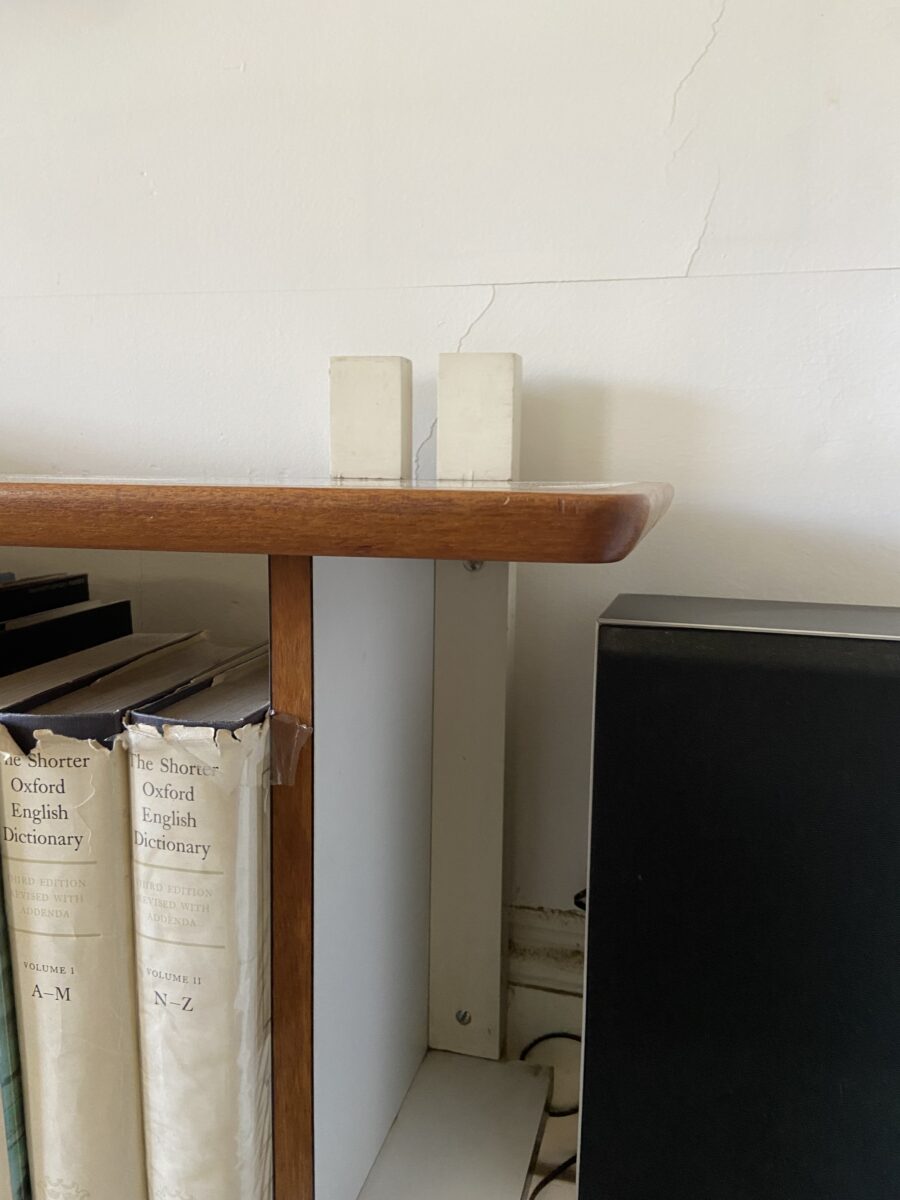
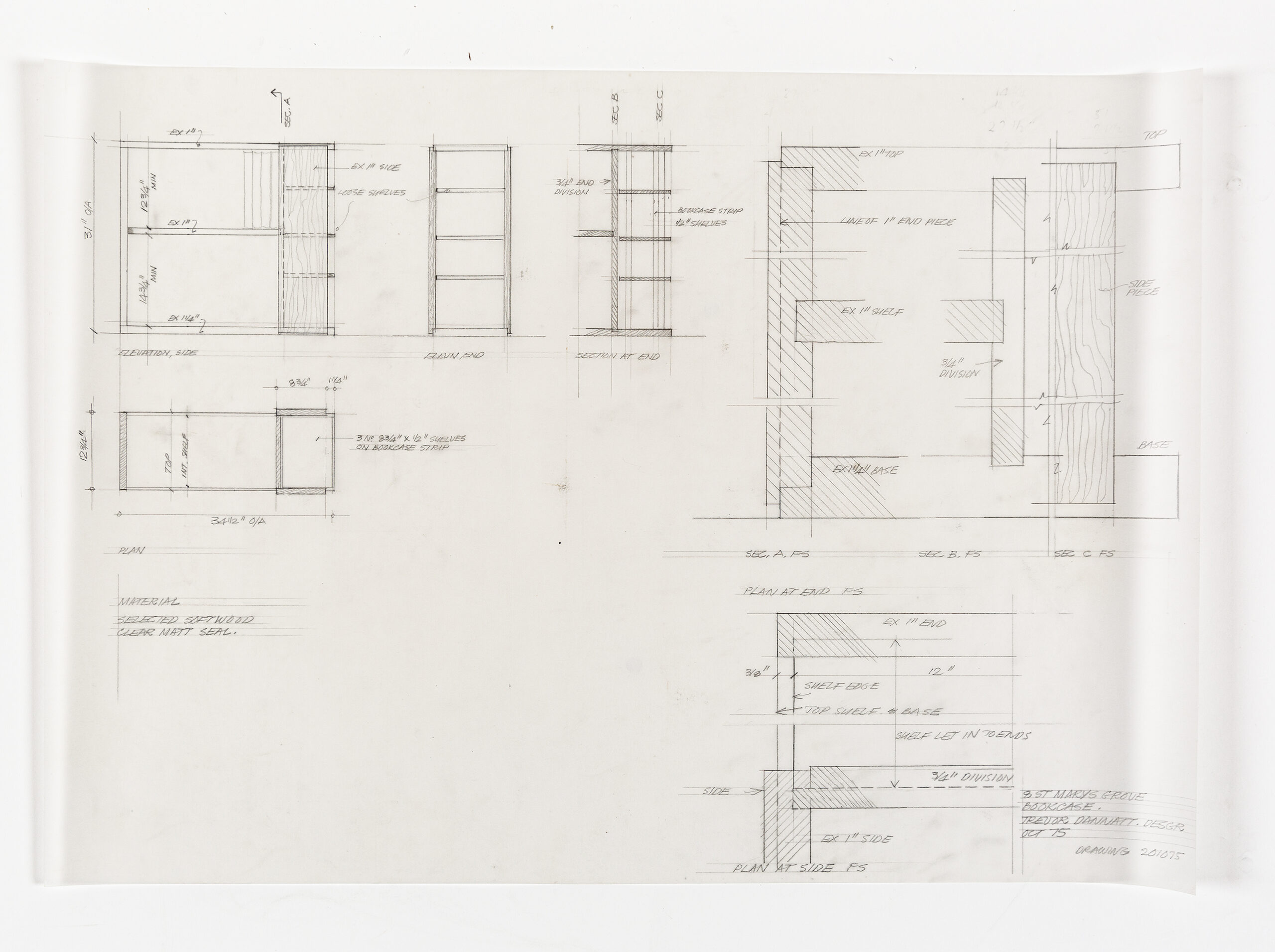
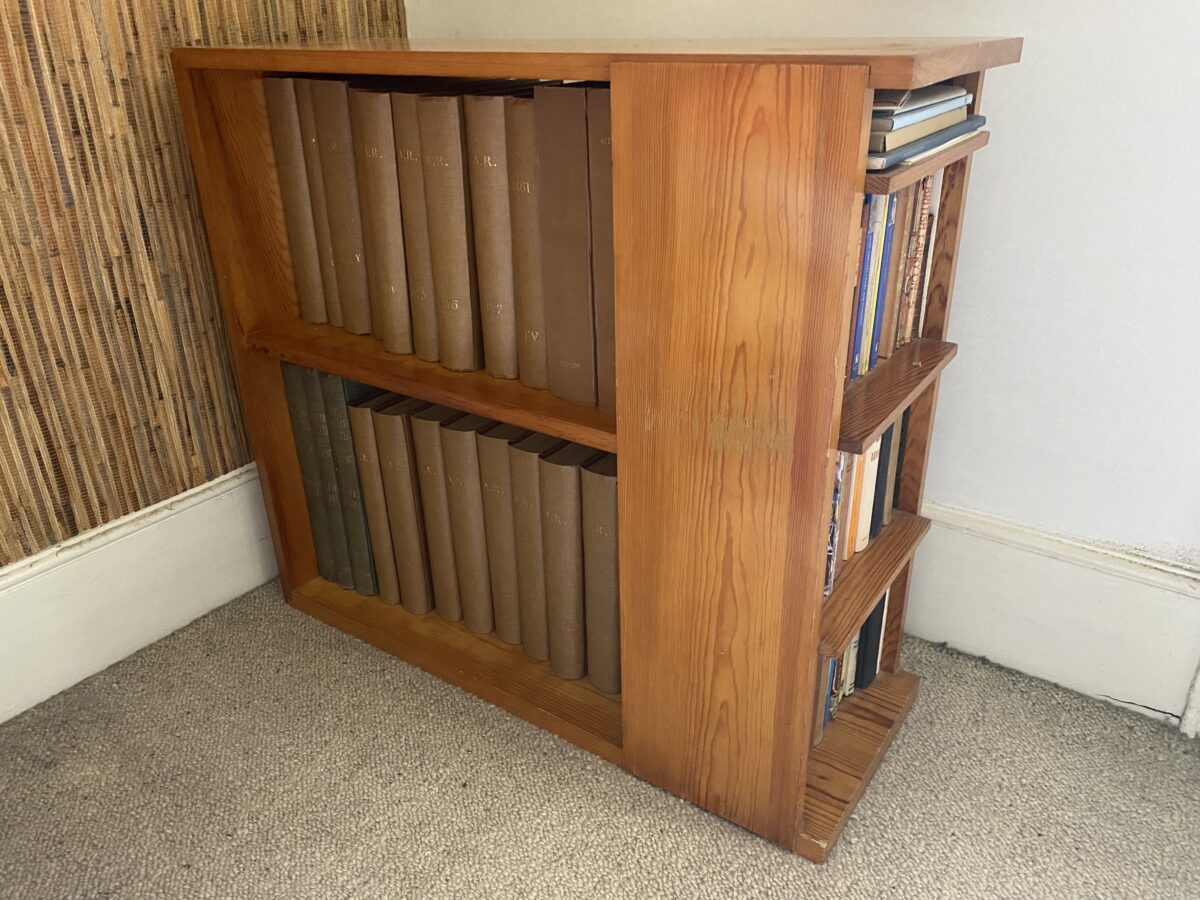
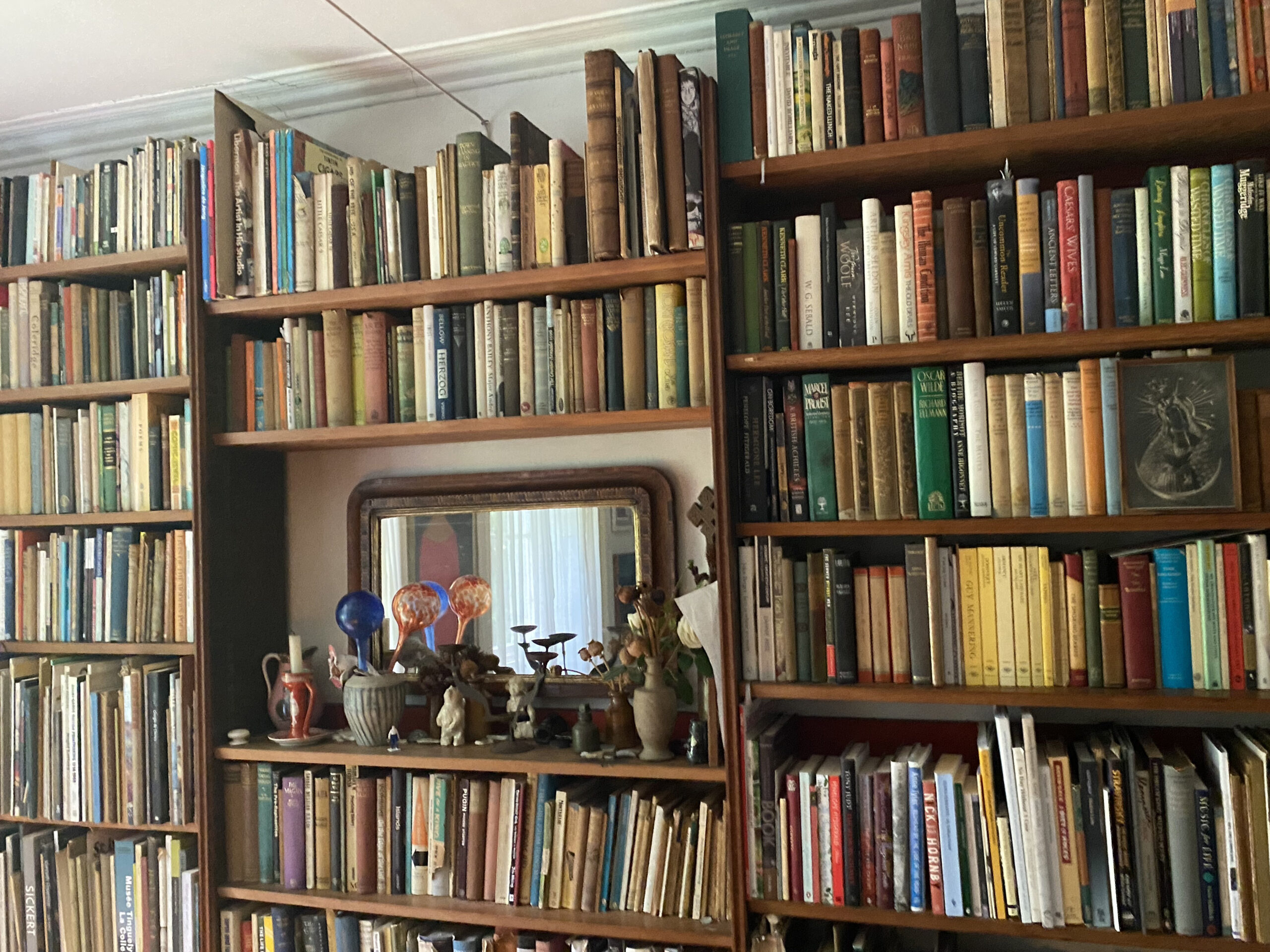
My father loved books; he was both a voracious reader, over the widest possible range of authors and subjects, and a collector, assembling a fine architectural library now largely at the RIBA and sporting his distinctive Ex Libris designed by his old friend Dennis Bailey. He was certainly the best-read person I knew. Naturally he also enjoyed designing bookcases; a recessed wall of them at the house of writer Richard Church, an elegant set in the celebrated 1958 Cambridge house of historian Peter Laslett and a striking library for Vaughan College in Leicester, recently sensitively retrofitted by Levitate and adapted into the museum shop. He created several bookcases for our house, still very much in use today, including a free-standing sculptural wooden one specifically designed to hold his bound copies of the Architectural Review, as it still does. The most impressive of the bookcases is a full wall in the dining room library. Trevor had rules, as moral as aesthetic, for many things not least bookcases, notably that you should be able to physically reach and take down any book from the top shelf, he was a tall man, rather than having to use library steps; he was particularly opposed to those vast walls of books where the high upper sections are clearly never used, deeming them braggingly pretentious and clearly not the shelves of anyone who ‘really read’. Likewise he believed a bookcase should have breathing-room within it, with ornaments (Saudi Arabian antiquities in his case) rather than books on the top shelf, and with a central recess to give a break from the repetition of surrounding shelves, it should never look as if one was desperate to cram in as many books as possible by overloading the shelves. Sadly, since his demise, the sheer number of recent volumes has fatally compromised this elegant ideal.
*
Fireplaces
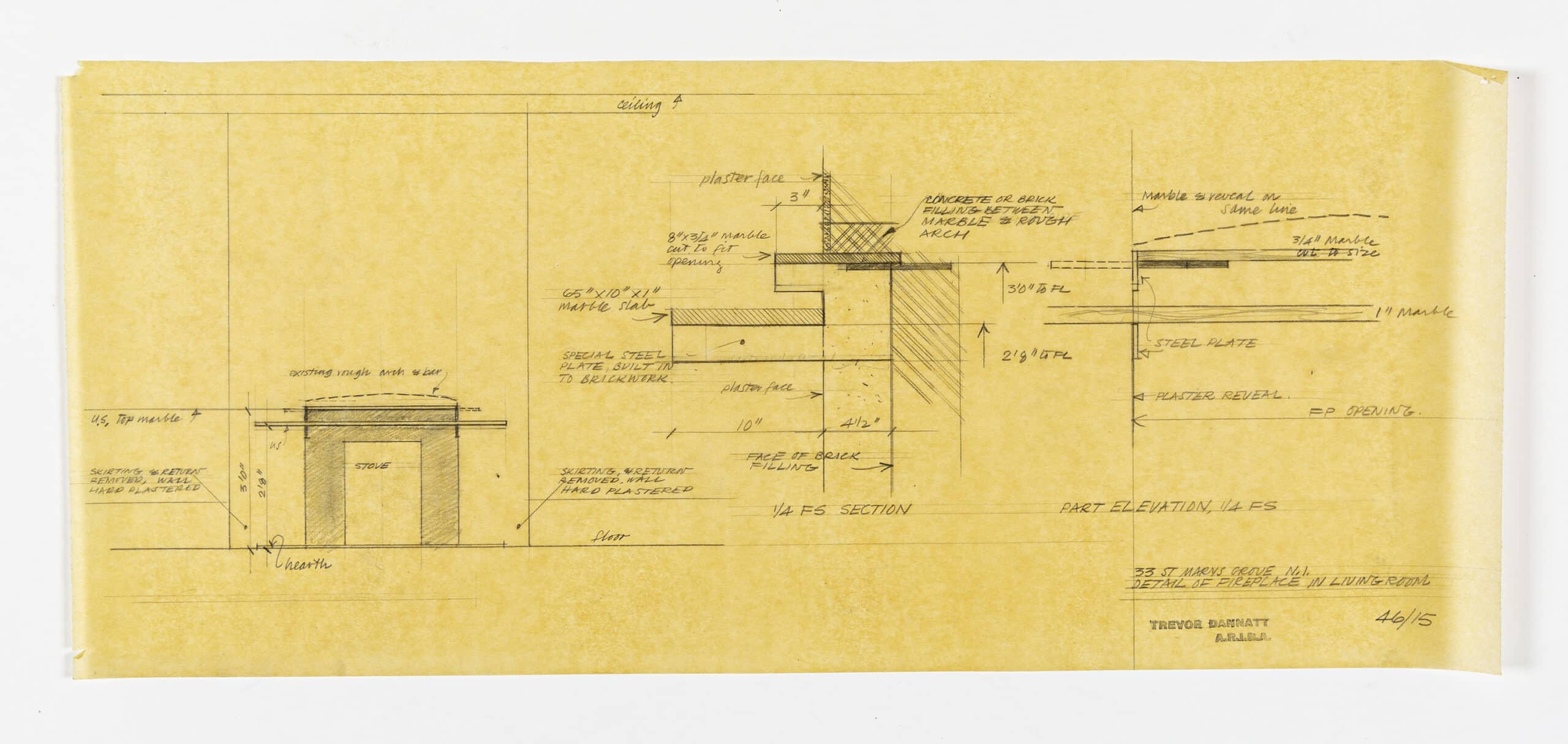
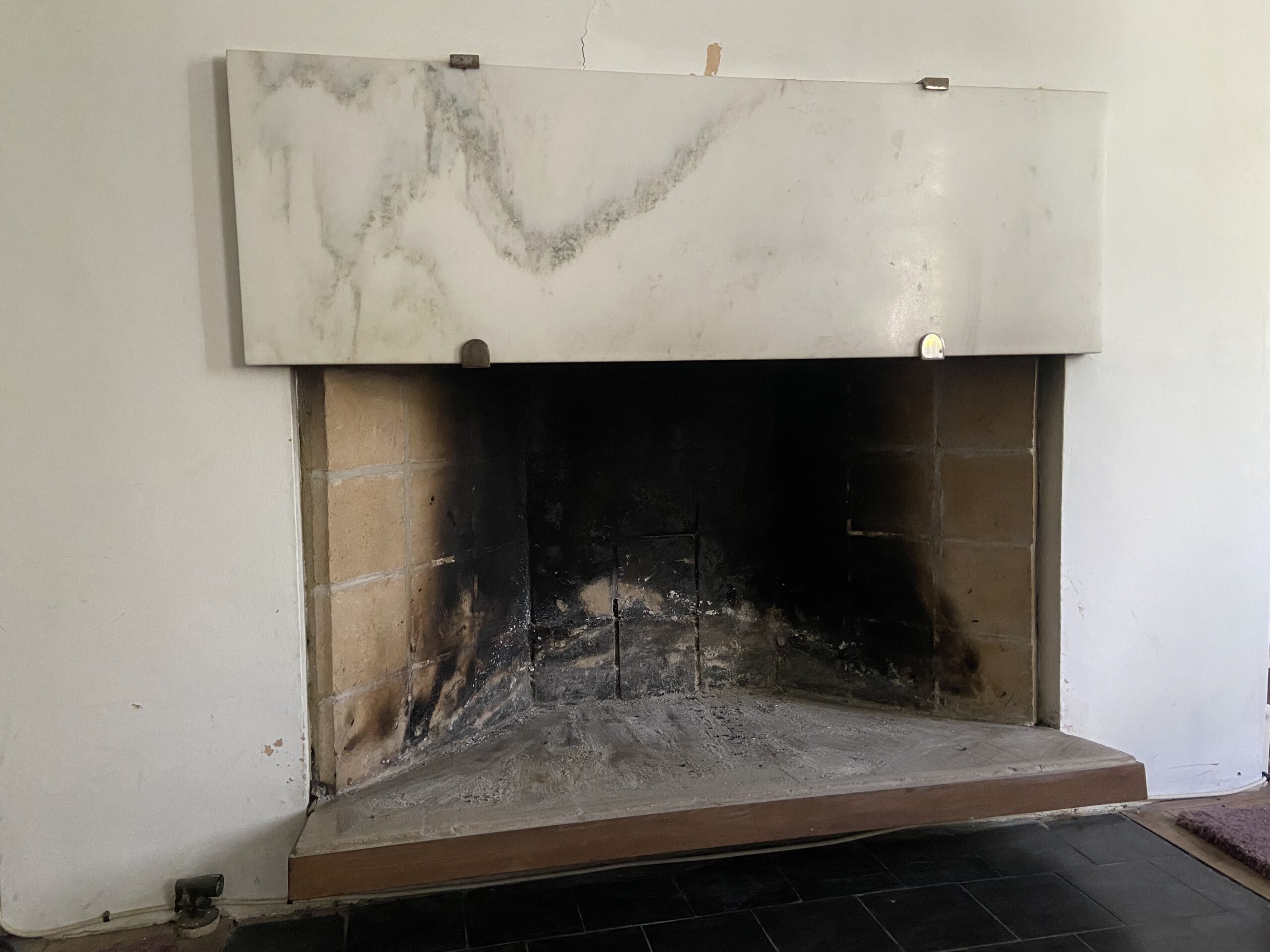
Trevor particularly loved designing fireplaces or chimney pieces or fire mantles or mantlepieces, whatever the correct ‘U’ or ‘non-U’ term may be. He was fond of citing the Smithsons’ dictum, ‘Since the late Middle Ages the best architects have been able to deal with fire, the fireplace, as idea.’ Indeed the entire opening section of the monograph on his work is devoted to this subject, under the title ‘Hearth’. To quote the author Roger Stonehouse, ‘[f]or Dannatt, the fireplace is never a mere incident in the room, it is always a focus (though not necessarily symmetrically positioned) and always an integral part of the room’s language of forms.’
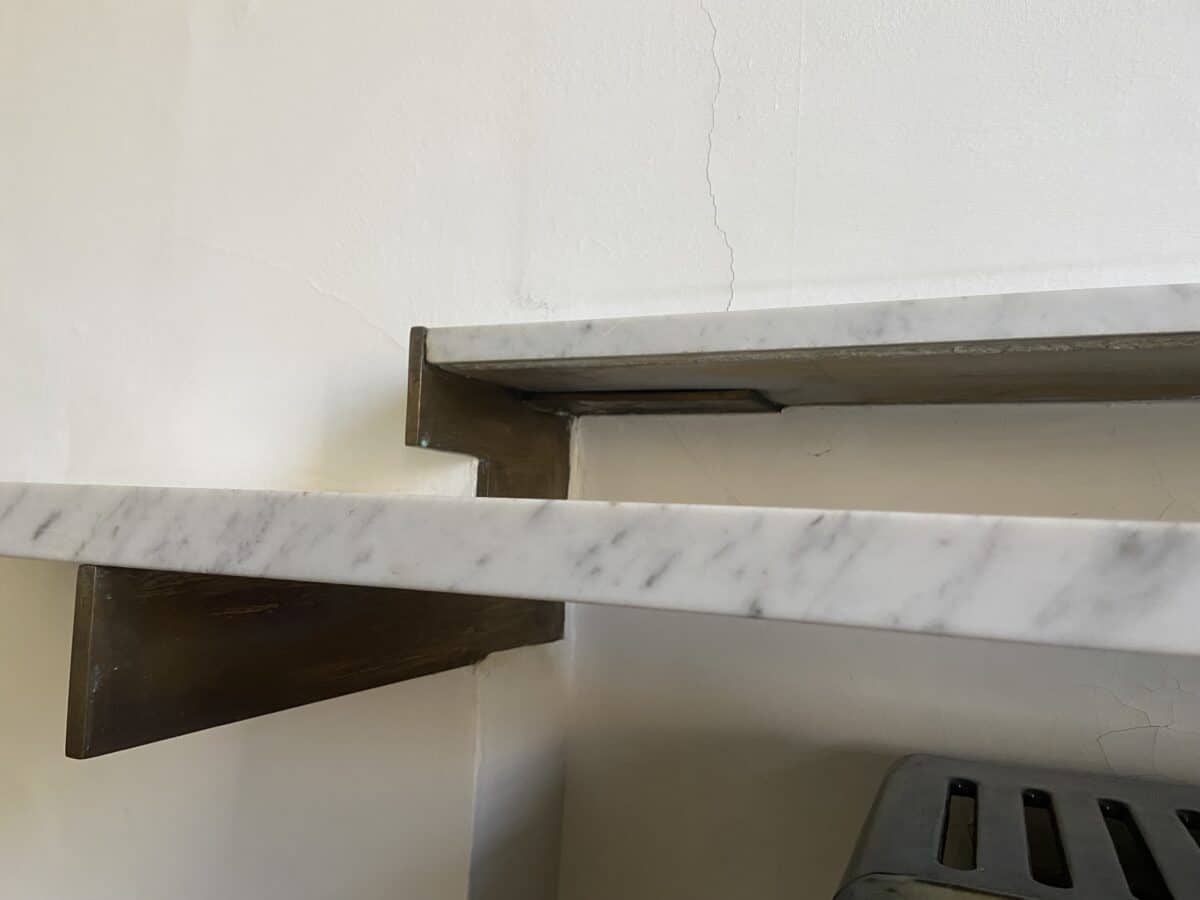
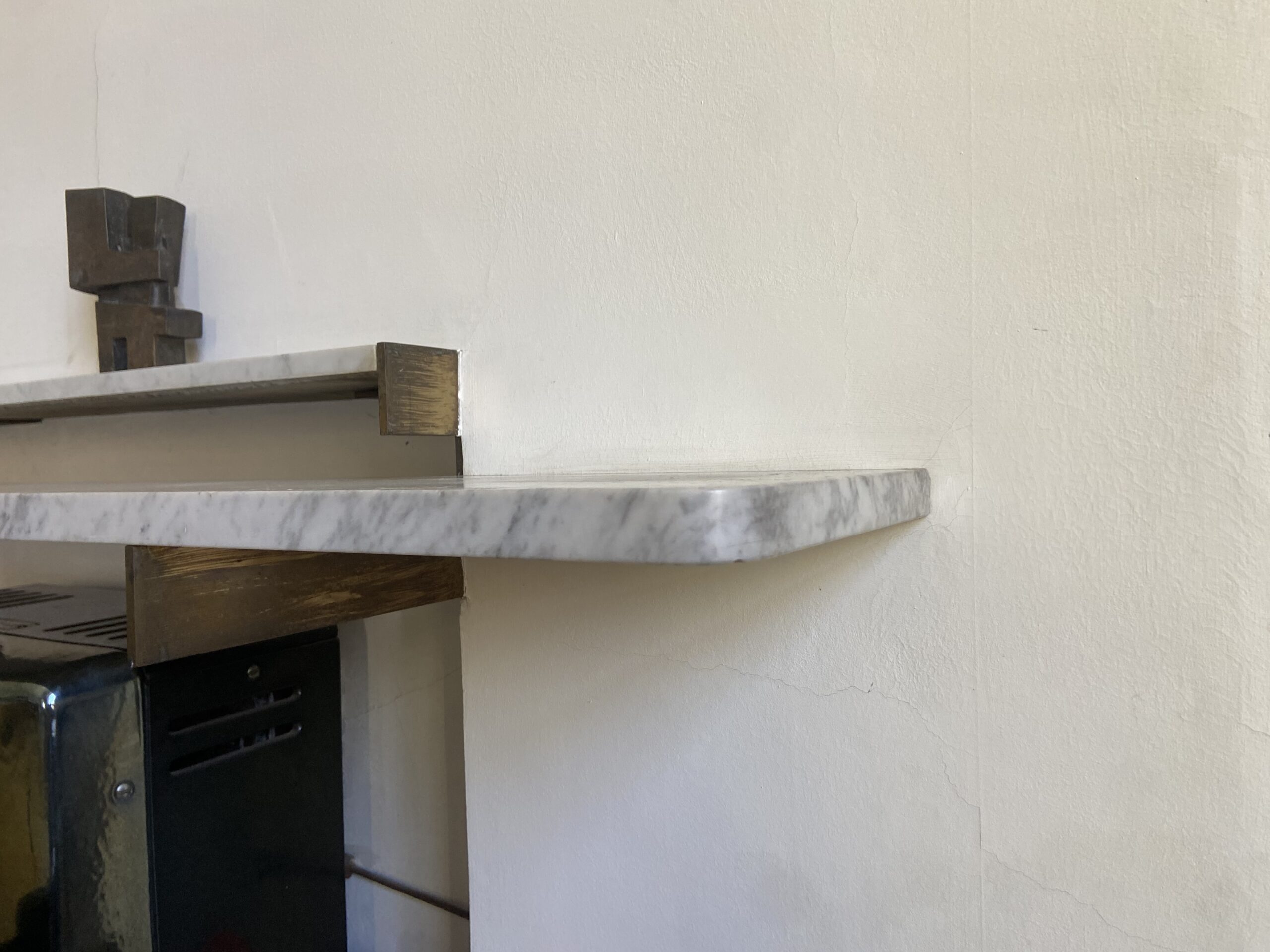
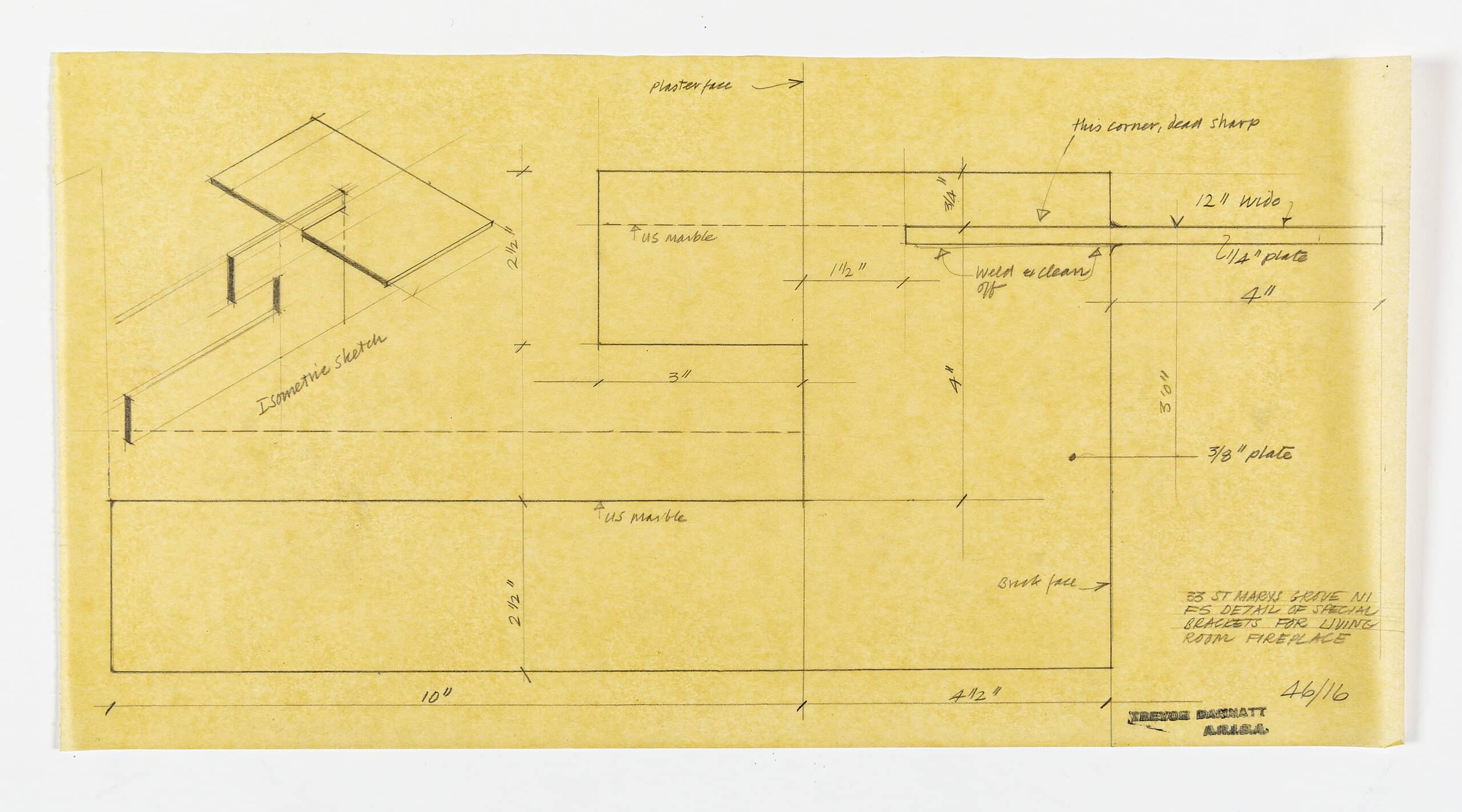
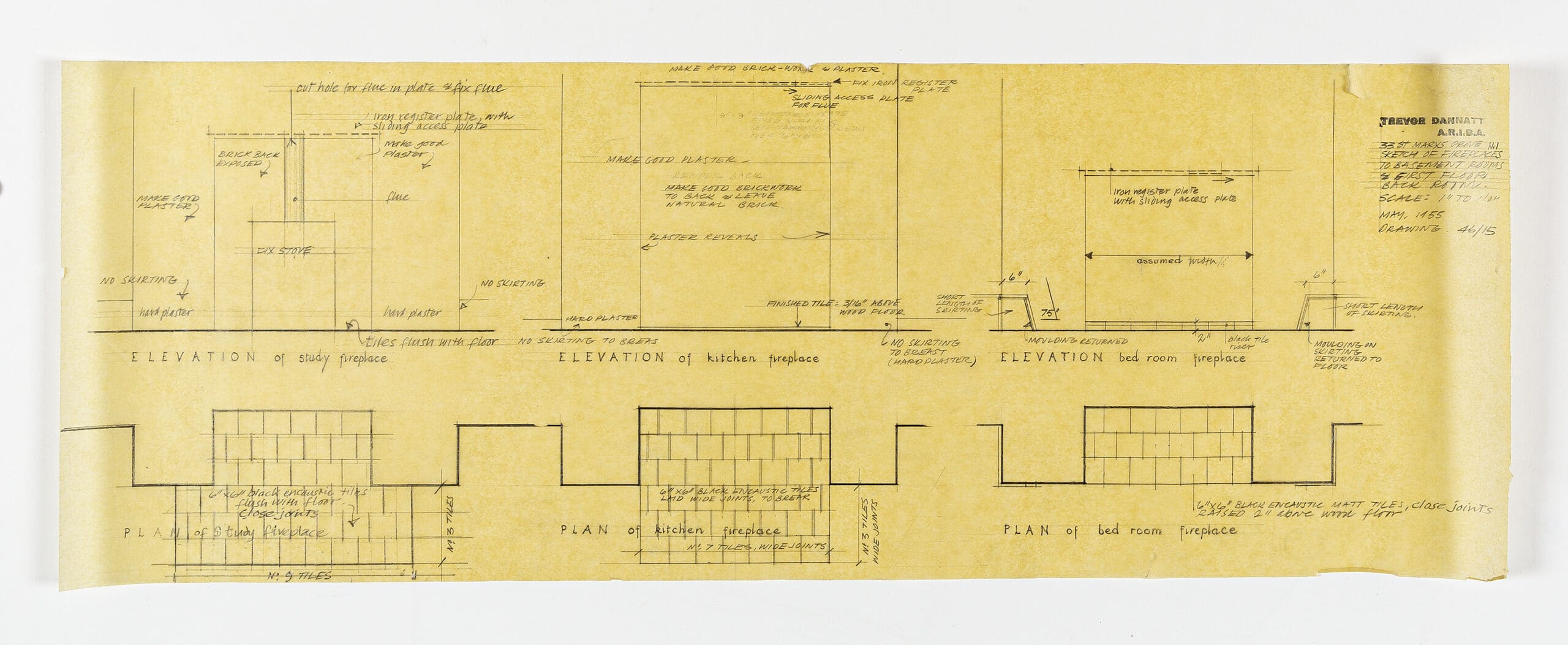
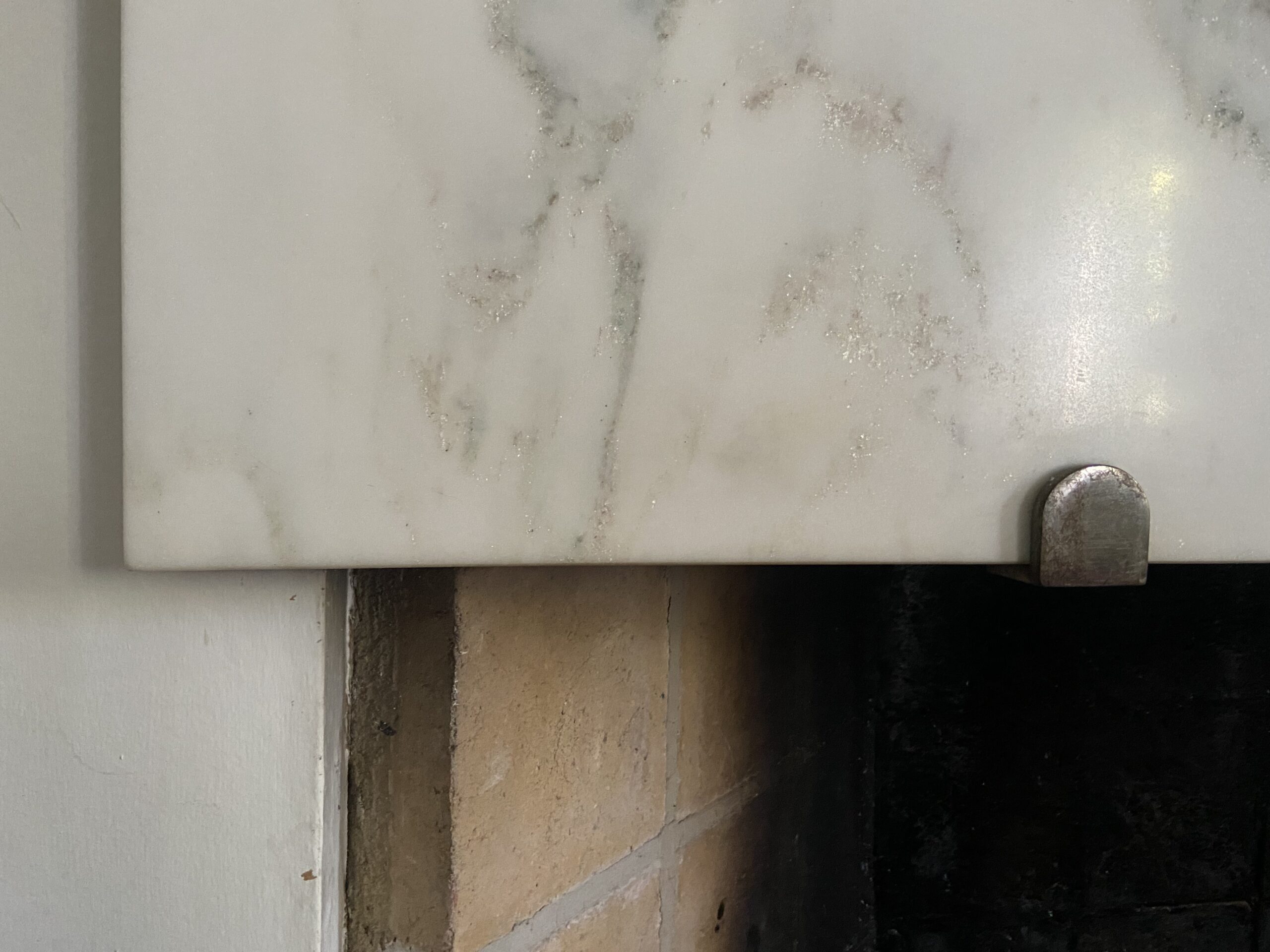
There are two notably fine examples at the Canonbury house, though only recently, for the first time, did it occur to me that traditional early Victorian fireplaces were probably removed to be replaced by these, a loss I now ponder. Jane Drew, my father’s employer and whose daughters lived in the area, visited not only our house but several local friends and insisted all the old fireplaces be taken out, as an elderly neighbour recounted the other day with vivid regret. My father was particularly proud that in both our fireplaces he had been able to use slabs of marble directly from the century-old gravestone company on the nearby Holloway Road, still run by Italians at the time. The detailing of the metal fixtures is notably elegant, a spatial geometry, a brass gleam, which surely suggests Scarpa.
*
Cabinetry
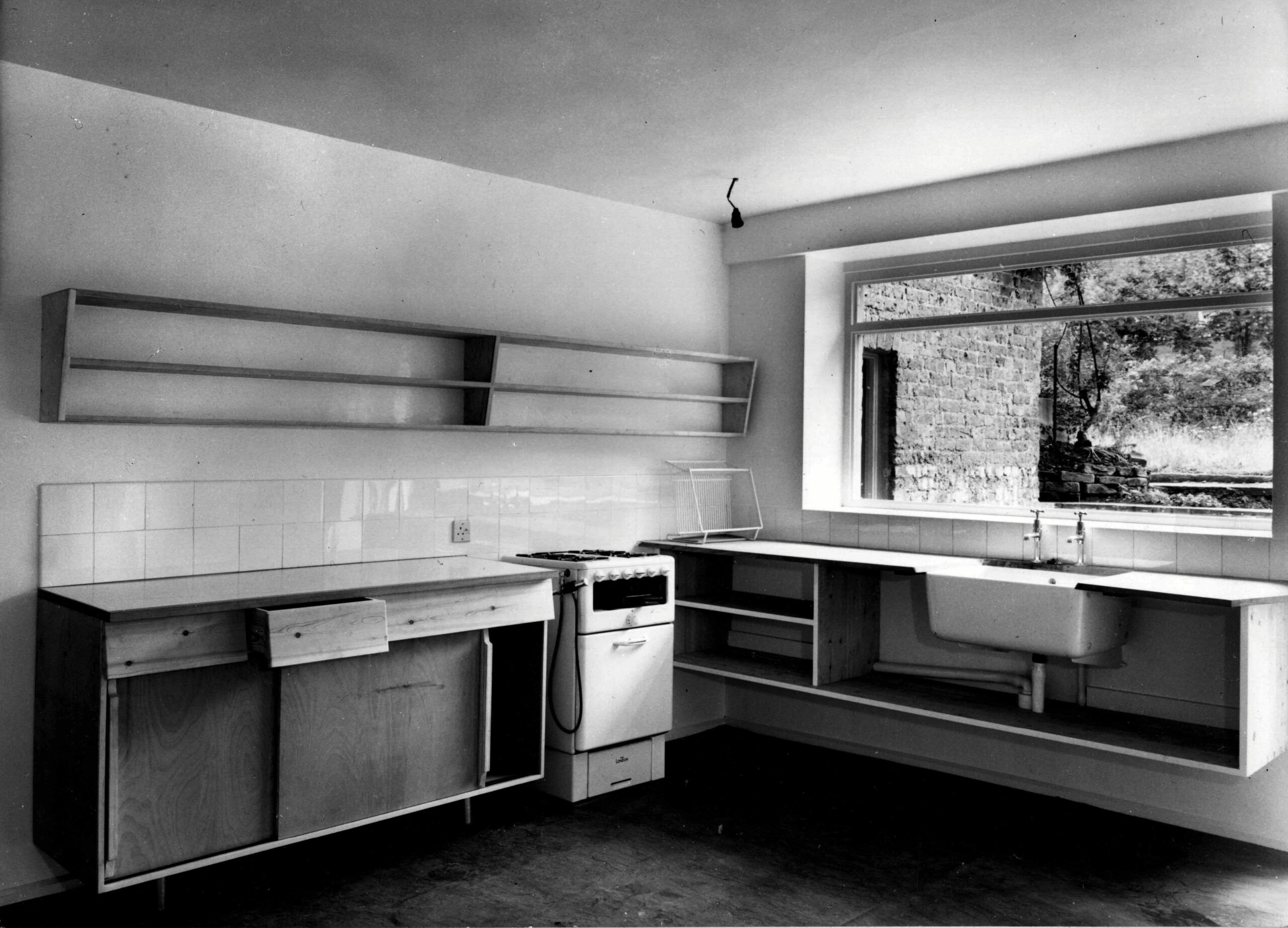
My father designed the kitchen cabinetry on first moving into the house in 1955 and initially refused to allow any sort of doors, he believed that the objects inside should all be on display, even if they were detergents and washing powders, saucepans and casseroles.
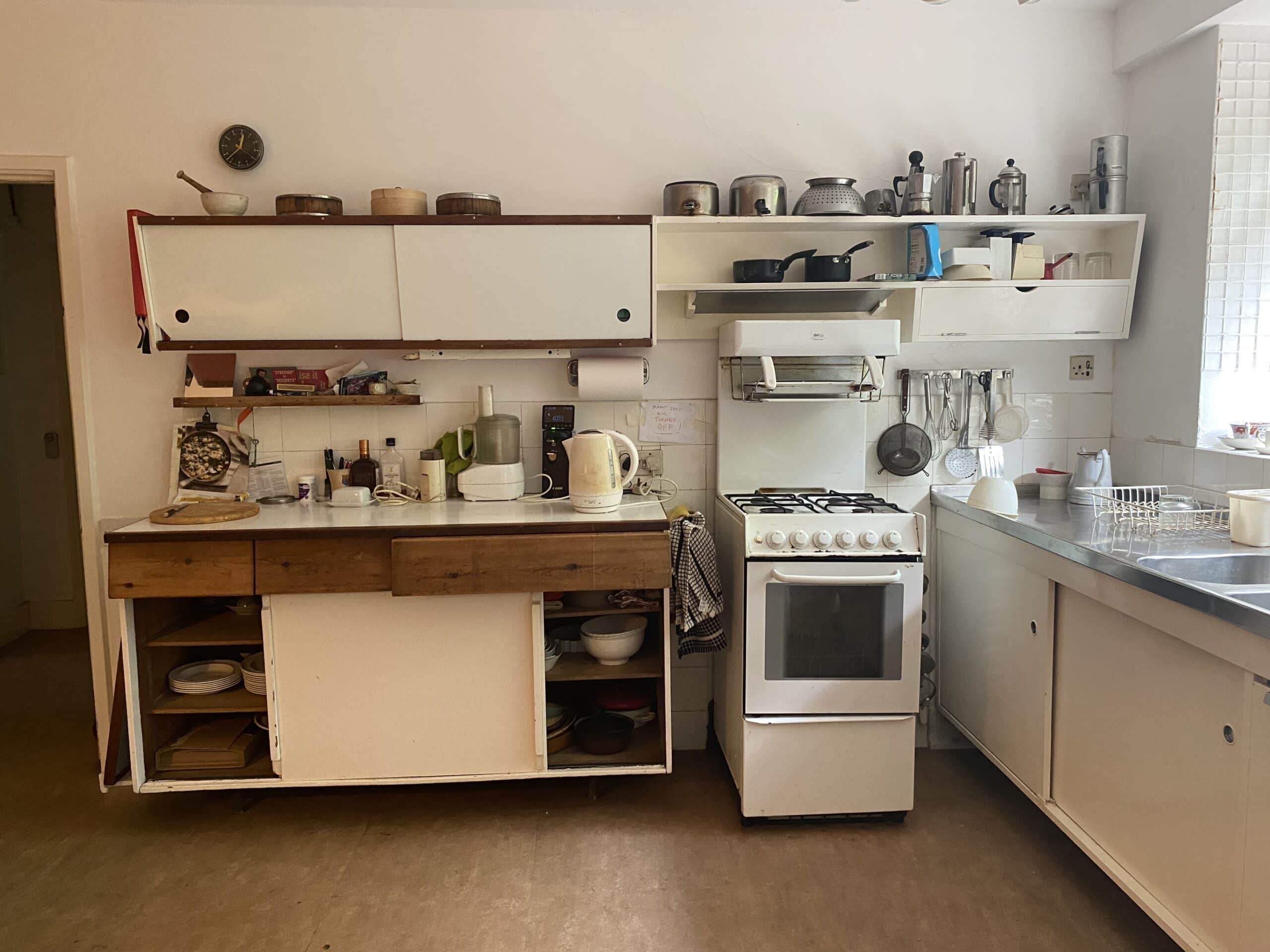
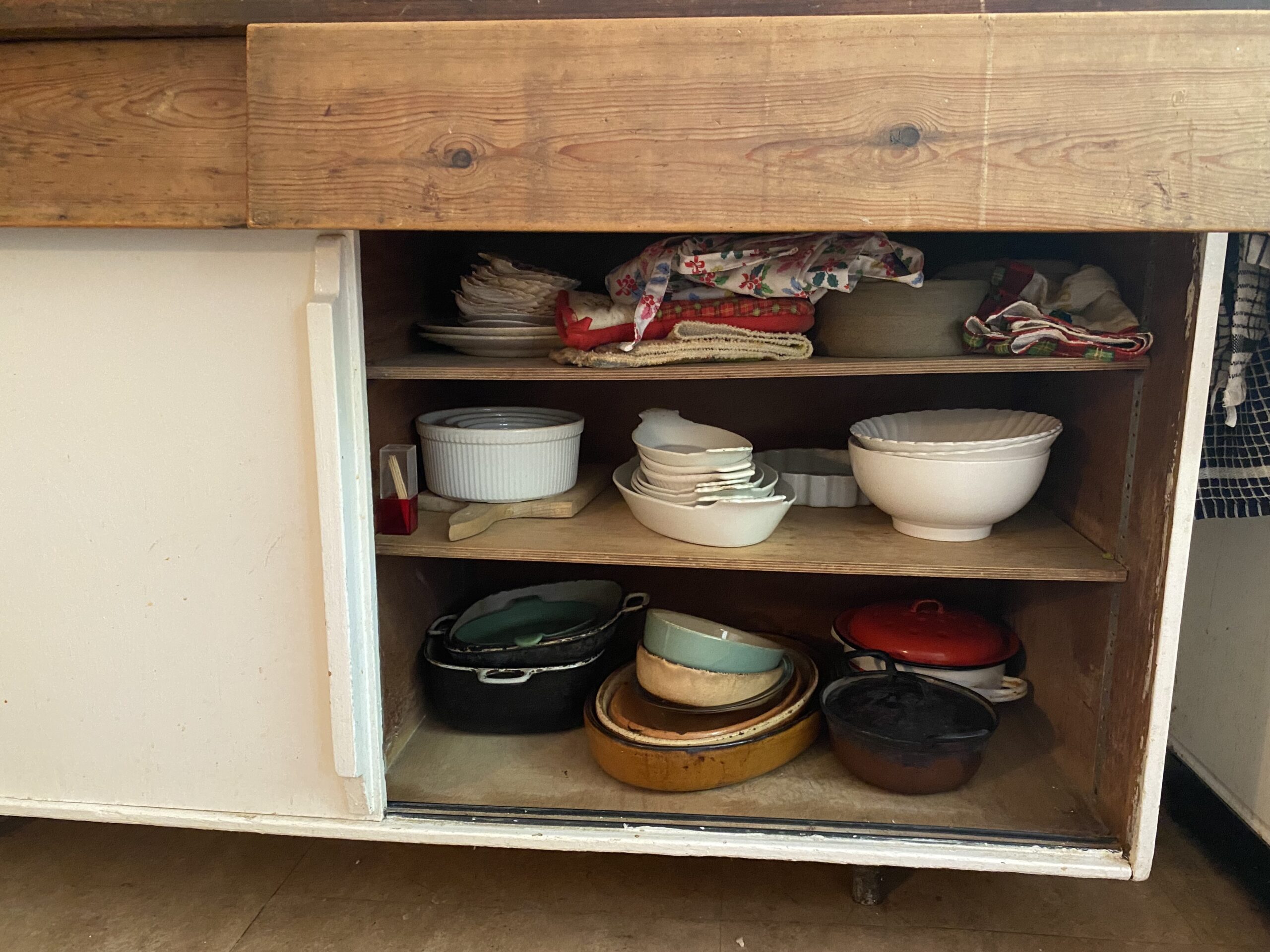
There was something perhaps compromised, un-modern in concealing anything, some subversion of form following function or honesty to materials; curiously enough my friend Sam Hodgkin inherited a similar dictum from his own father Howard, that shelves should always be left open with everything to be seen. Edgar Kaufmann Jr, the director of the Industrial Design Department at MoMA and a proper aesthete who inspired his parents to commission Wright to build them Fallingwater and later did the same with Neutra and their Kaufmann House, came for an early visit to our house and was shocked by all the domestic detritus on view in the kitchen and insisted that cupboard doors should be installed, as they soon were.
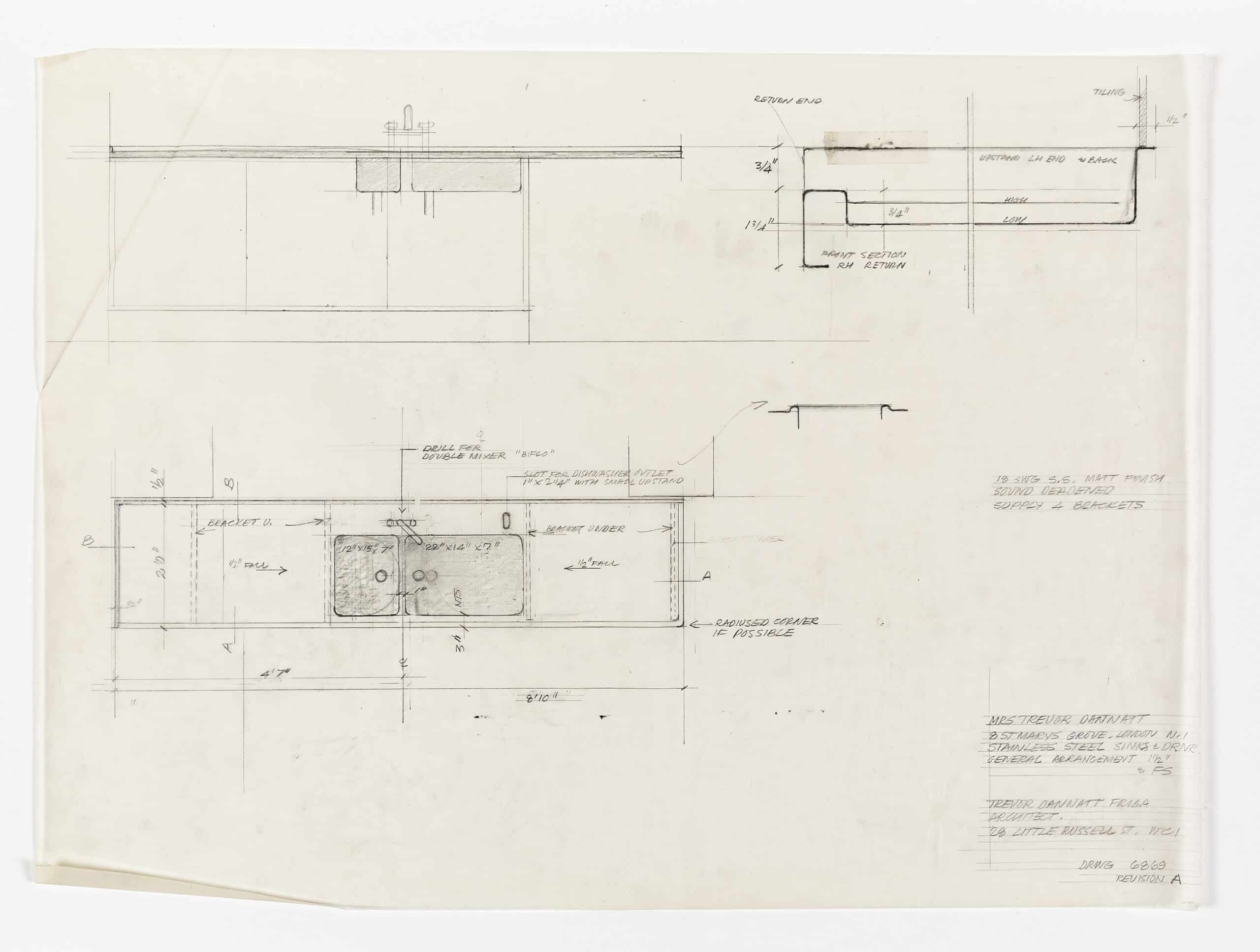
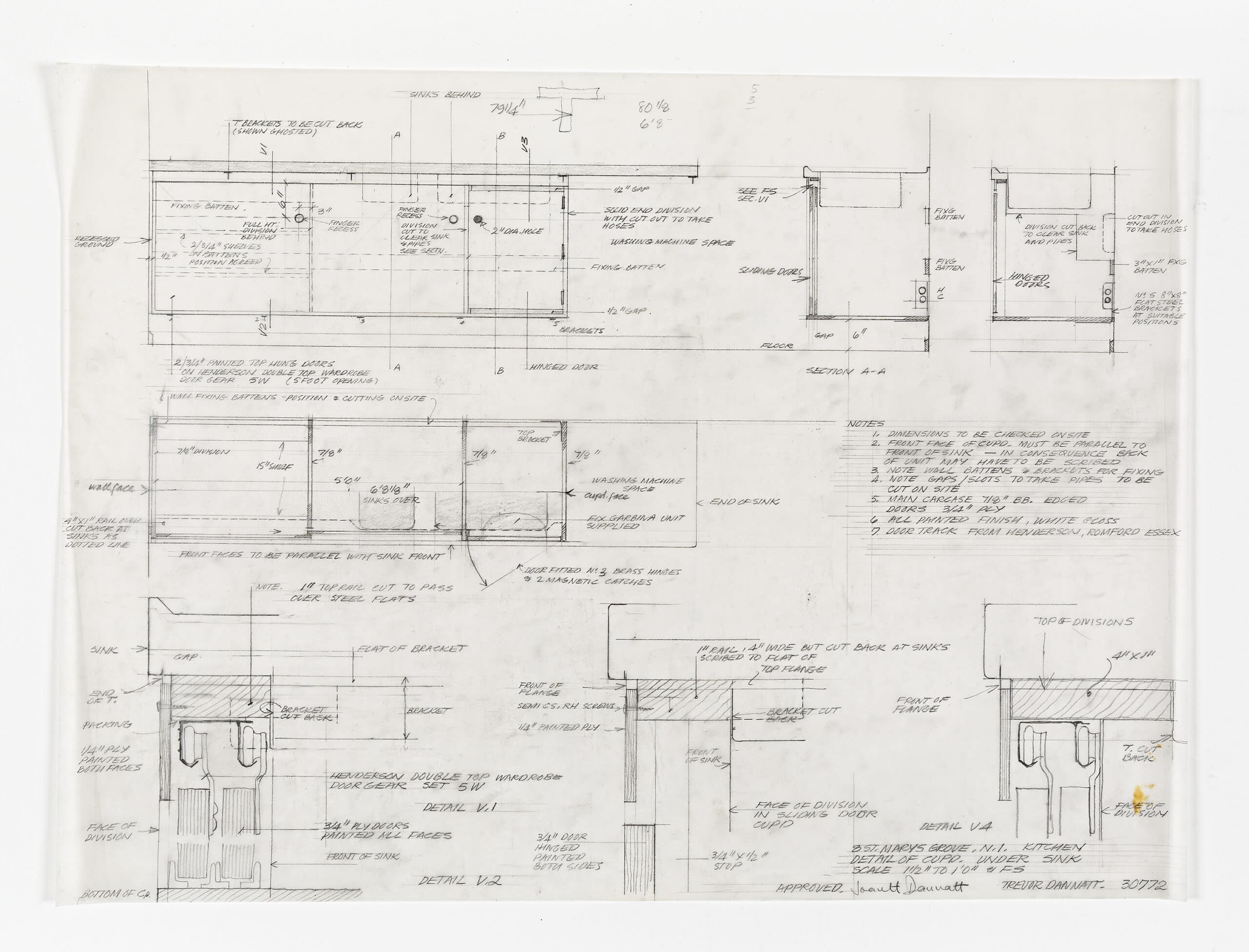
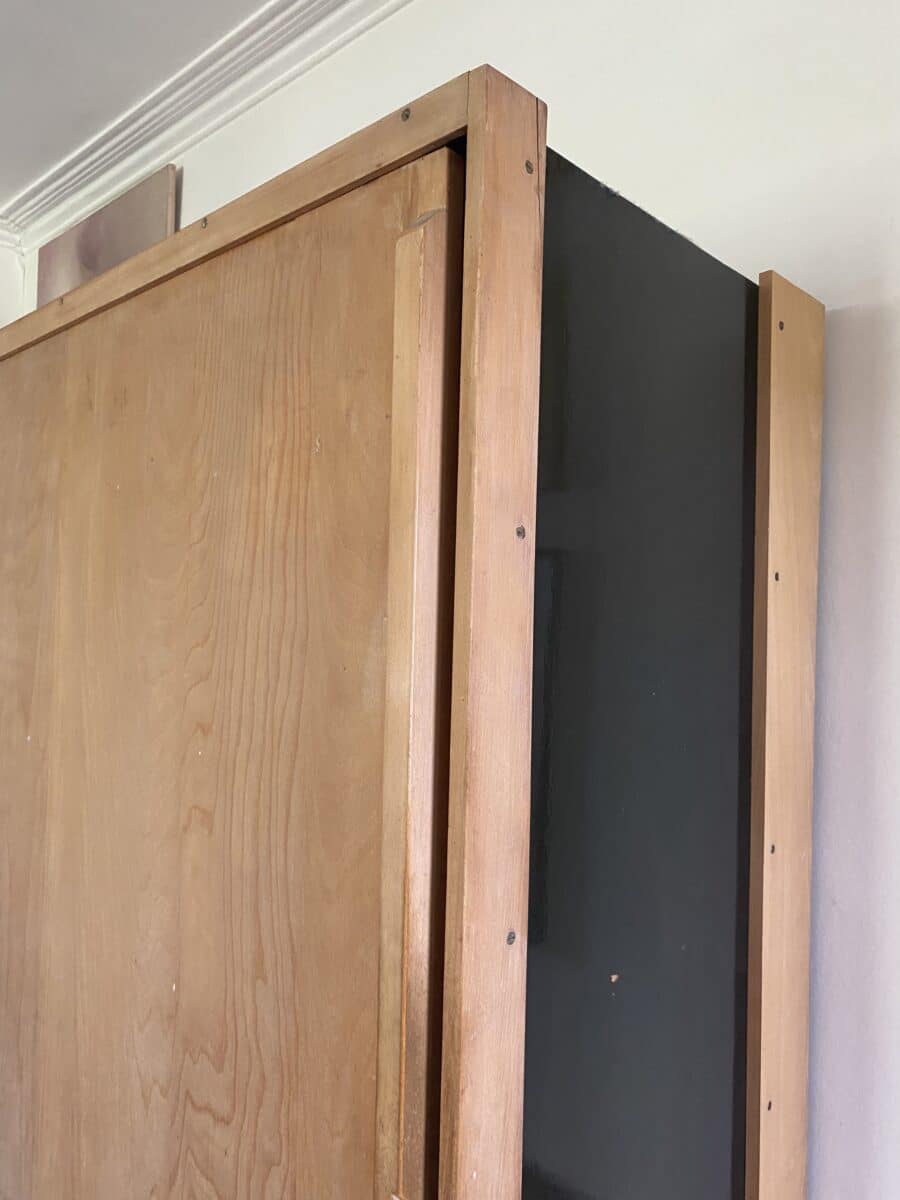
My father loved having things built for him and would quote Corbusier that ‘in addition to seats and tables, furniture is mainly cabinetwork.’ He was particularly proud of the wooden wardrobes he had made, with their outsize sliding doors and gloss black end section like a monochrome painting. There were two others built to this design, one for his brother the artist and collector George Dannatt at East Hatch, and the other now installed in the house of the architect Liza Fior.
*
Basement Kitchen
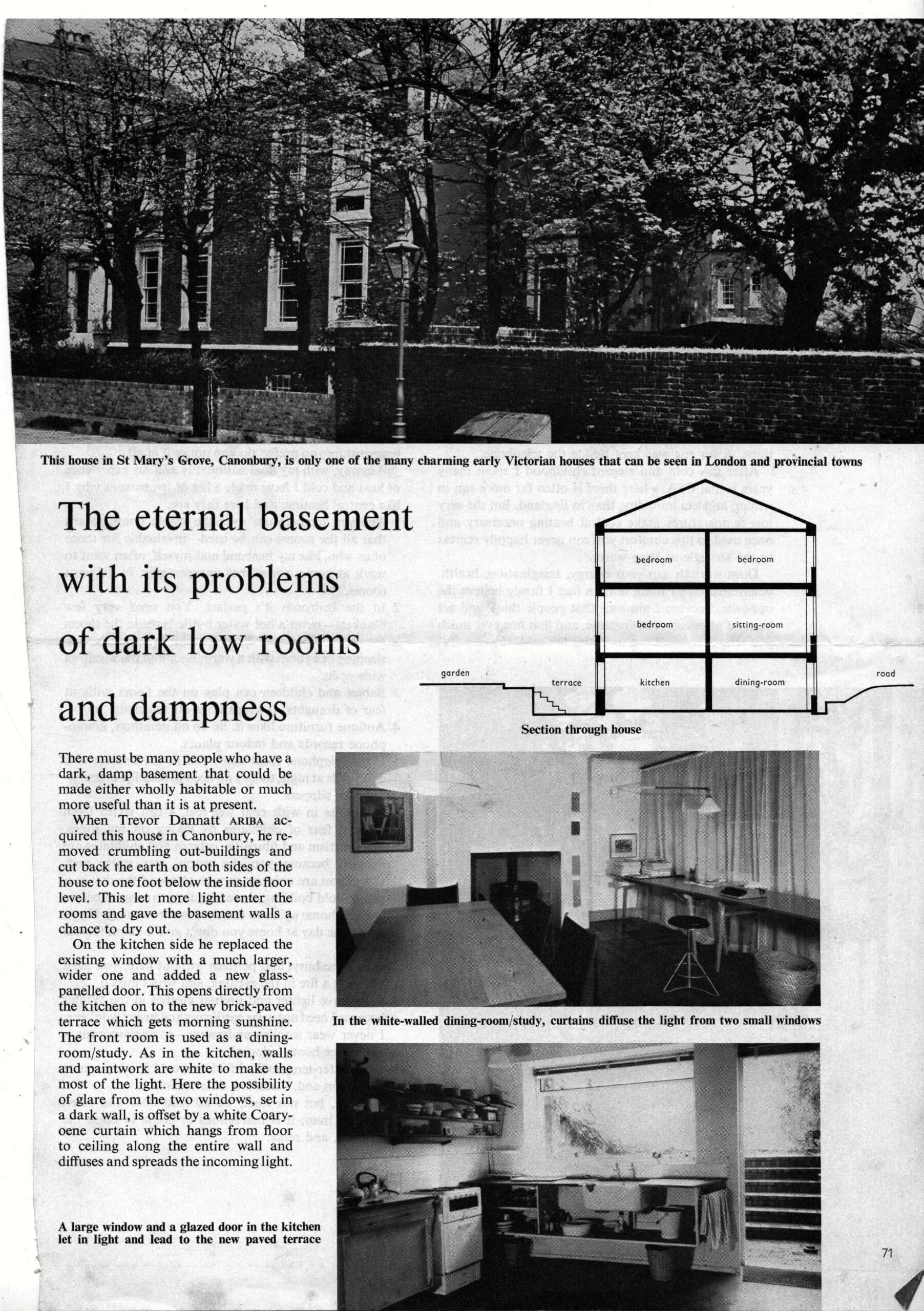
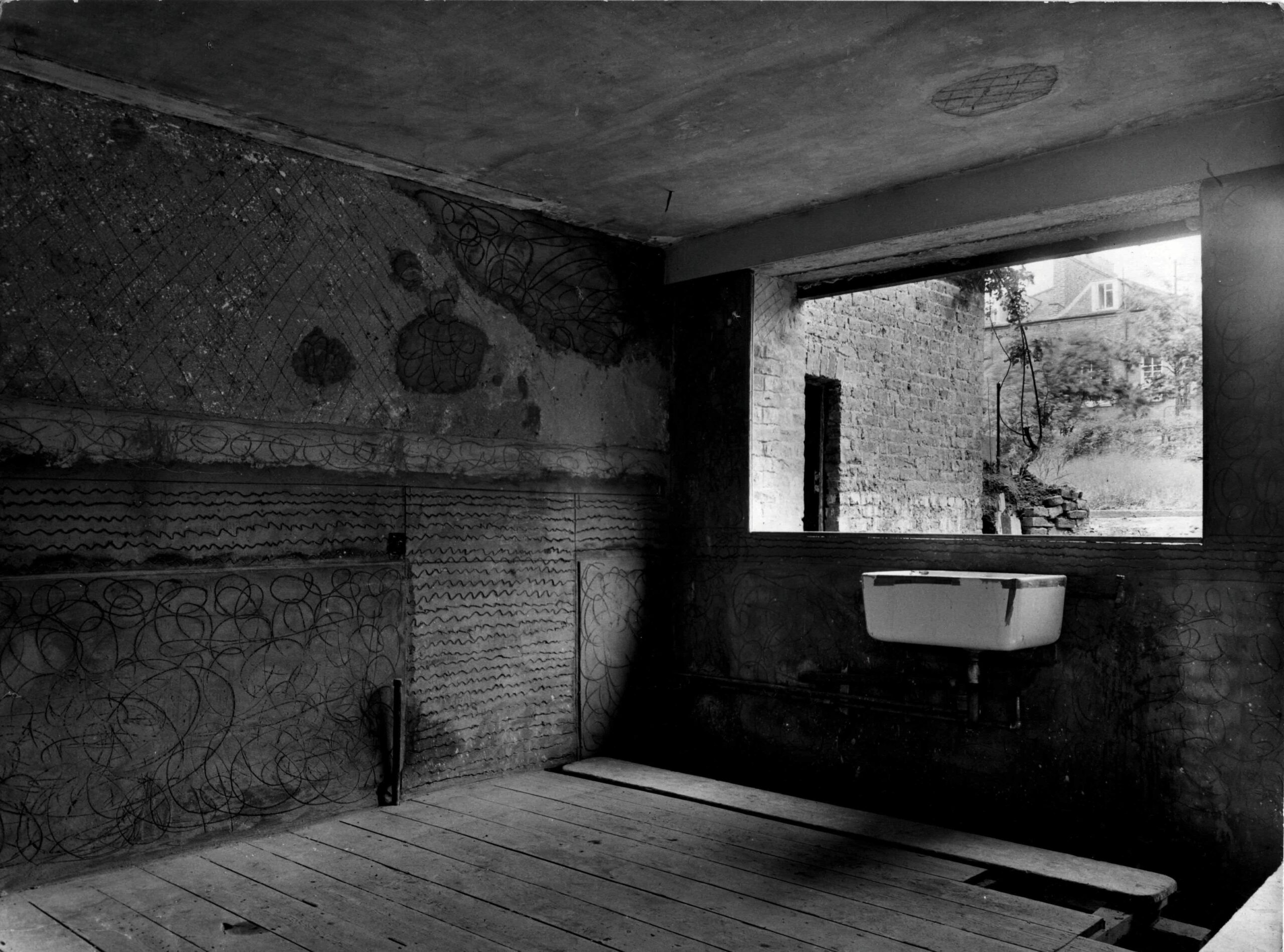
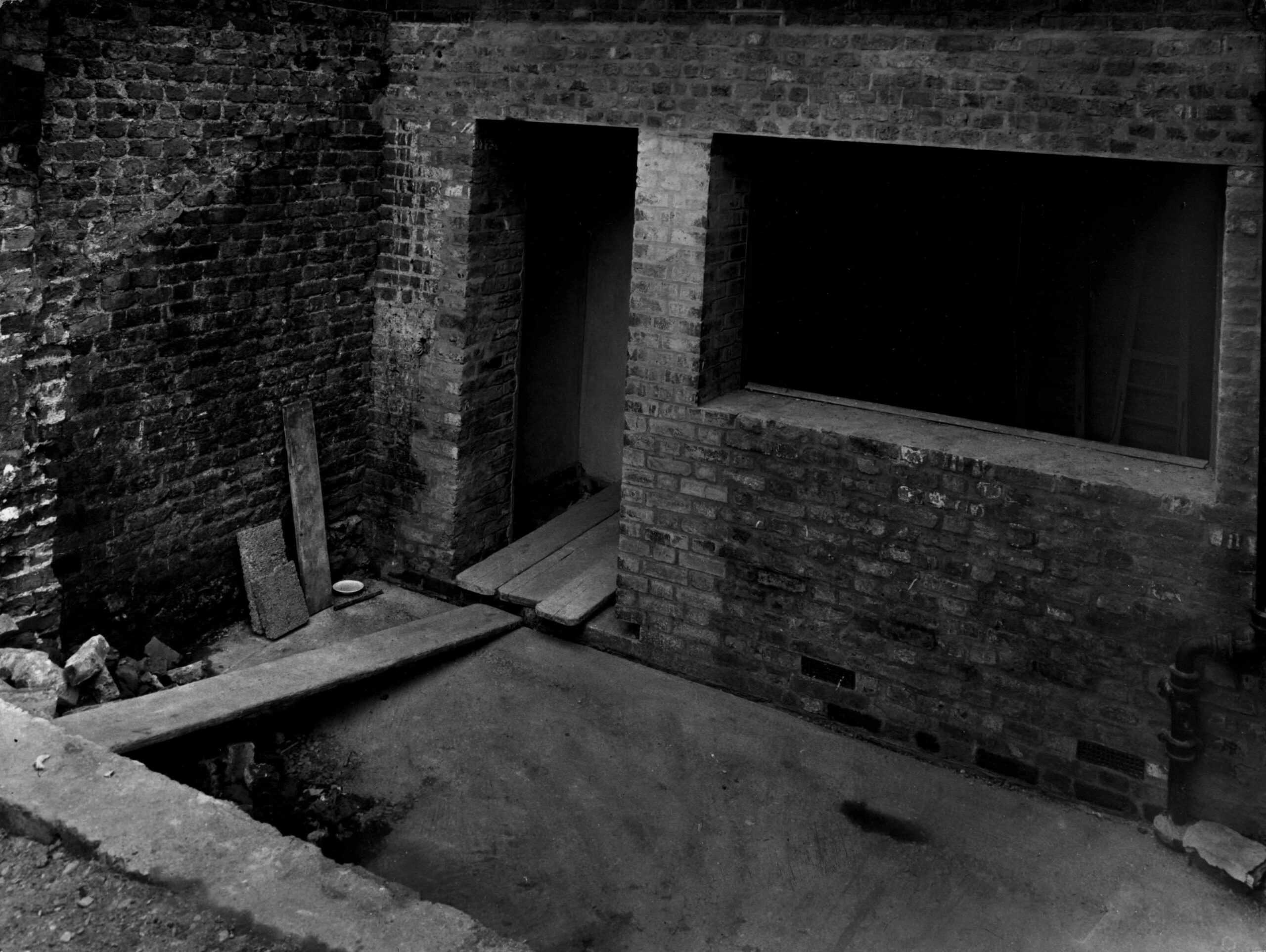
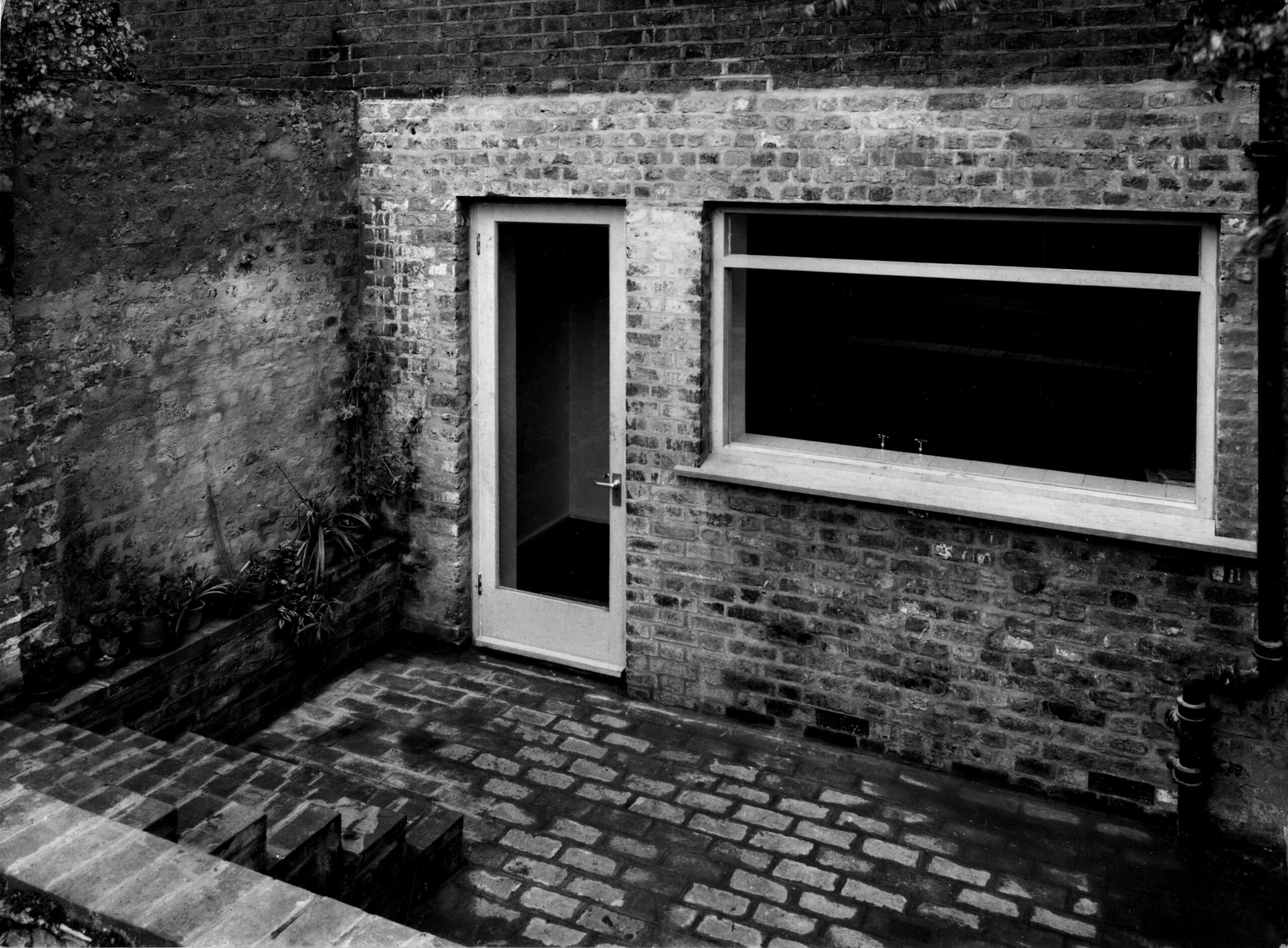
Soon after they moved into the house in 1955, my father completely rebuilt the basement kitchen, installing a large horizontal window and a glass door, and then constructing a brick patio outside. This remains unchanged, though its purpose—aesthetic and practical—is now questionable; being myself entirely ignorant of how the solar system works, I wonder if it is possible the sun has shifted its trajectory in the last 70 years? As it is, we only receive direct sun within this courtyard during the late summer mornings where it makes a pleasant heat-trap to sit out with a coffee, though it does seem perverse to be in a basement-level enclave with no view of the blazing garden above.
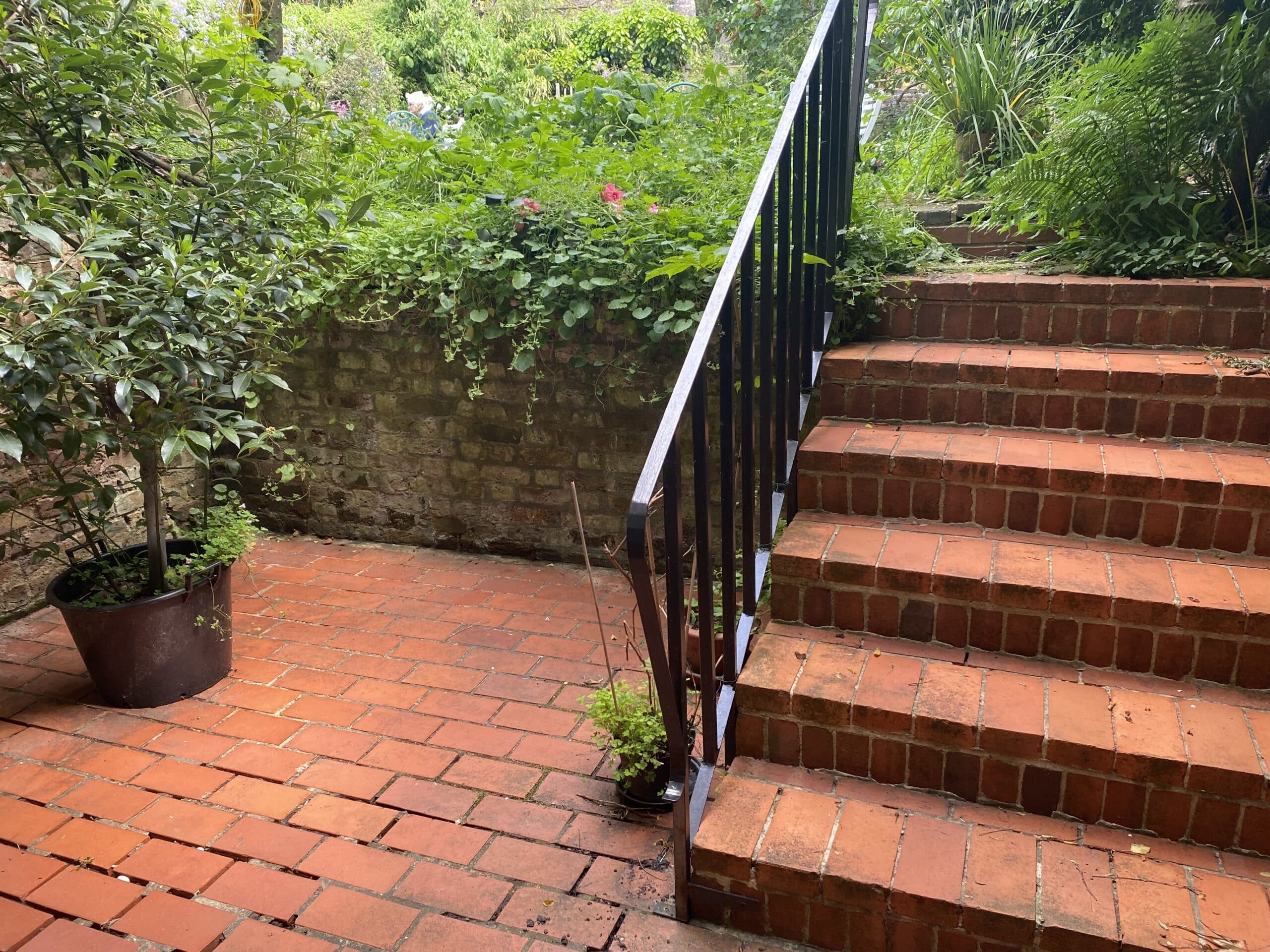
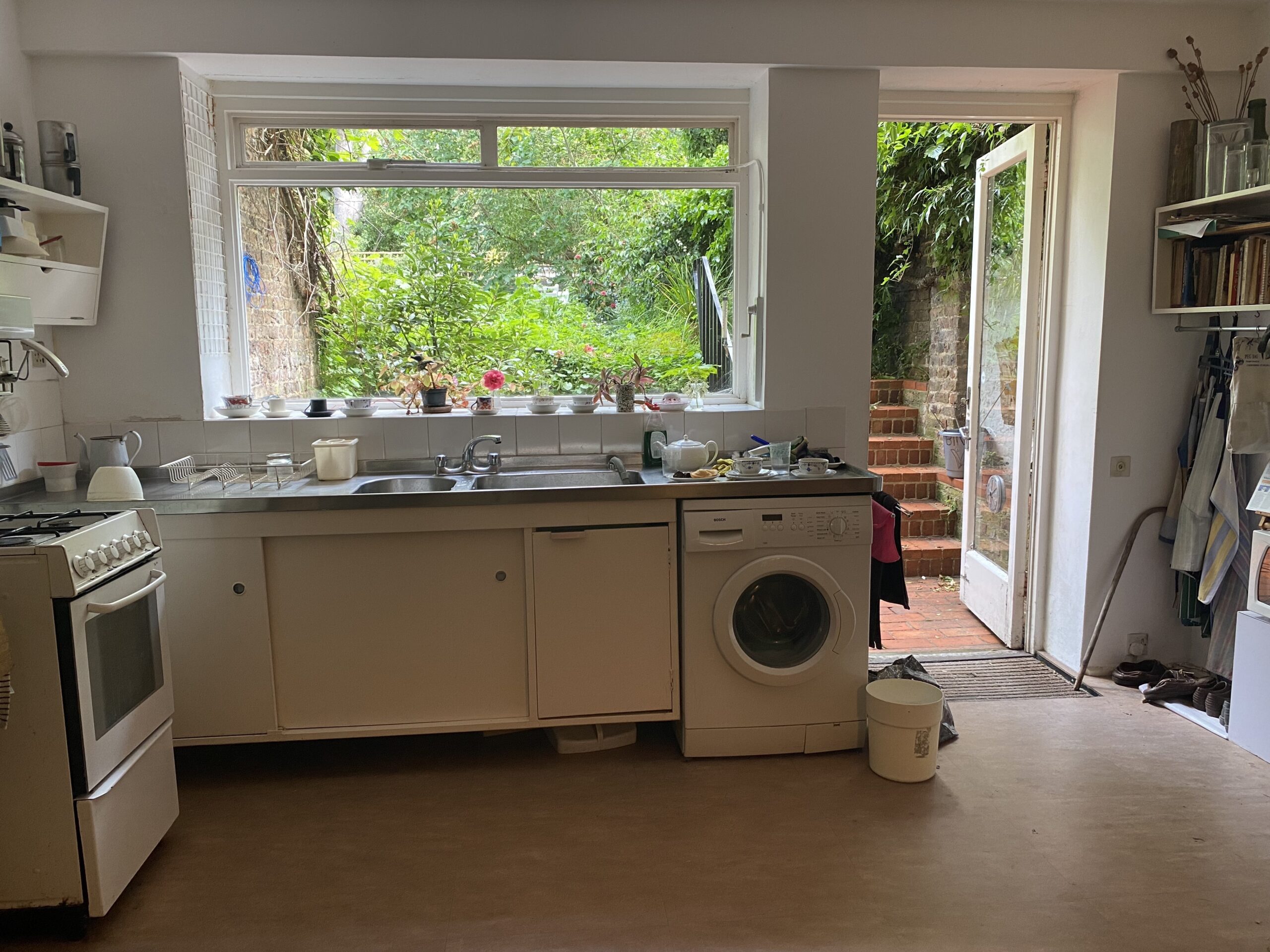
I associate this distinctive red brick with its use by my father’s ‘master’, Aalto, especially his summer residence, The Muuratsalo Experimental House (1952–4), which had just recently been completed; there is also its late iteration by another Aalto disciple and close friend of my father, Sandy Wilson’s British Library. There is also surely some connection here to Trevor’s love of the paintings of Pieter de Hooch with his red brick domestic courtyards, the artist’s own father having been a master bricklayer. The most notable thing about it today is that it is not an extension; indeed, we must be the only Victorian house in all of London which does not have any sort of late 20th-century kitchen addition at the back. Sometimes termed the ‘Kevin McCloud effect’, these ubiquitous extensions have proved a mixed blessing as climate change now makes such skylit glass additions unliveable for a chunk of the year, whereas our own basement rooms remain blissfully cool in even the worst heatwave.
*
These memory-texts around 8 St Mary’s Grove are intended to link to the drawings by my father in the collection of Drawing Matter, albeit a relatively informal match-up after the event without too much precise correlation. But of course I am also writing about the place where I was actually born, in the front sitting room, and where with any luck my 101-year-old mother will die, likewise at home. To conclude this series I am naturally lured to citation, not least that favourite poet of both my parents, T.S. Eliot and his Burnt Norton which celebrates a notion of the house as ‘a small enclave in time where gracious and lovely and stirring things have happened—love and birth and death.’
Or, more pretentiously, to lapse into French and Jean-Baptiste Chassignet’s 1594 Le Méspris de la vie et consolation de la mort:
Bref, naturellement chacun aime et desire
Le lieu original d’où sa naissance il tire
Auquel mesmes il doit resider longuement
Which in John Ashbery’s translation reads:
In short, each one naturally loves and desires
The original place from whence he issues at birth
Wherein he is to reside for a long time.
I have indeed ‘resided a long time’ in this place from ‘whence I was issued at birth’, over sixty years, and I might end with that ballad of Françoise Hardy, La Maison où j’ai Grandi; for whilst she plaintively sings ‘Je ne sais pas où est ma maison…la maison où j’ai grandi’, I myself know exactly where to find the house in which I grew up, as I am still living in it even now.

– Adrian Dannatt