Promenade
*
Leave Buenos Aires in the midday heat. Bring a coat. Eleven and a half hours and a single mental landscape: the depth of the ocean and the immediacy of the firmament. Perhaps sleep in snatches under the blue light of the cabin. Barajas, Satellite Terminal, 05:40. Three buildings, an underground train and a bus that changes frequency at six sharp. The accent, different. The oculi in the roof, black with sky. Take off and land in another language. Reach Zurich before 11:05 to catch the Treno Gottardo, the old mountain line that climbs in spirals around Wassen and the bell tower of St. Gallus.
Zürich HB, Arth-Goldau, (Imagine the bells ringing), Göschenen…
In the summit tunnel, at 1,150 m, eleven minutes inside the mountain; the white light of the cabin and the immediacy of the rock. From German to Italian.
Airolo, Ambrì-Piotta, Faido, Lavorgo, Bodio TI…
13:39, down in the depths of the Ticino. Another train, a modern one, emerges from the mouth of the Gotthard Base Tunnel. (Imagine its machine sound, too. Leave it behind.)
A narrow, steep valley, its walls rising more than two thousand metres. In December, the sun disappears at one—the white peaks, grey. Walk fifty minutes to the Osteria. Beside the cantonal road, a mountain path with frost at every step. Listen until you see the river. Cross it to enter the comune of Giornico: two medieval arched bridges resting on the boulders of the Sassi Grossi. San Nicolao, to one side. A mountain village of three- and four-storey buildings, all with pitched roofs. On the main street: the bar. A red-striped awning. Television, coffee machine and pane ticinese. A man and a woman playing cards. At the counter, you have to ask for the key. Large. Cold. Of iron. Of stone.
Then return it.
Via Stazione Vecchia no.2. Beside the road (between the railway, the river and the vines), three, five, one concrete nave—covered in moss, alone on the grass. A granite stair takes up the slope of the ground. On one side, a sliding gate through which the local farmers reach the basement. The door, on the reverse. Walk around the building to its north face, where the entrance is: on a narrow, unornamented façade, a metal door and a step like a tongue of concrete. Turn the key.
*
La Congiunta. The one that was joined.
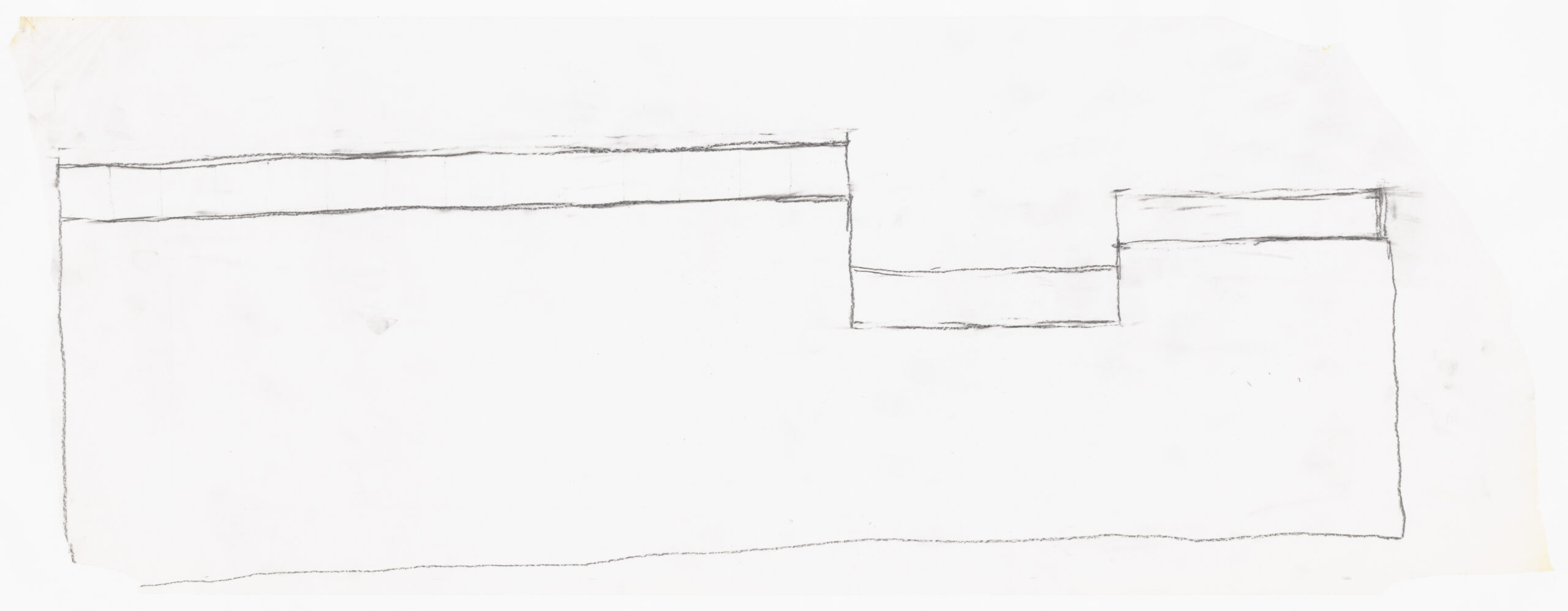
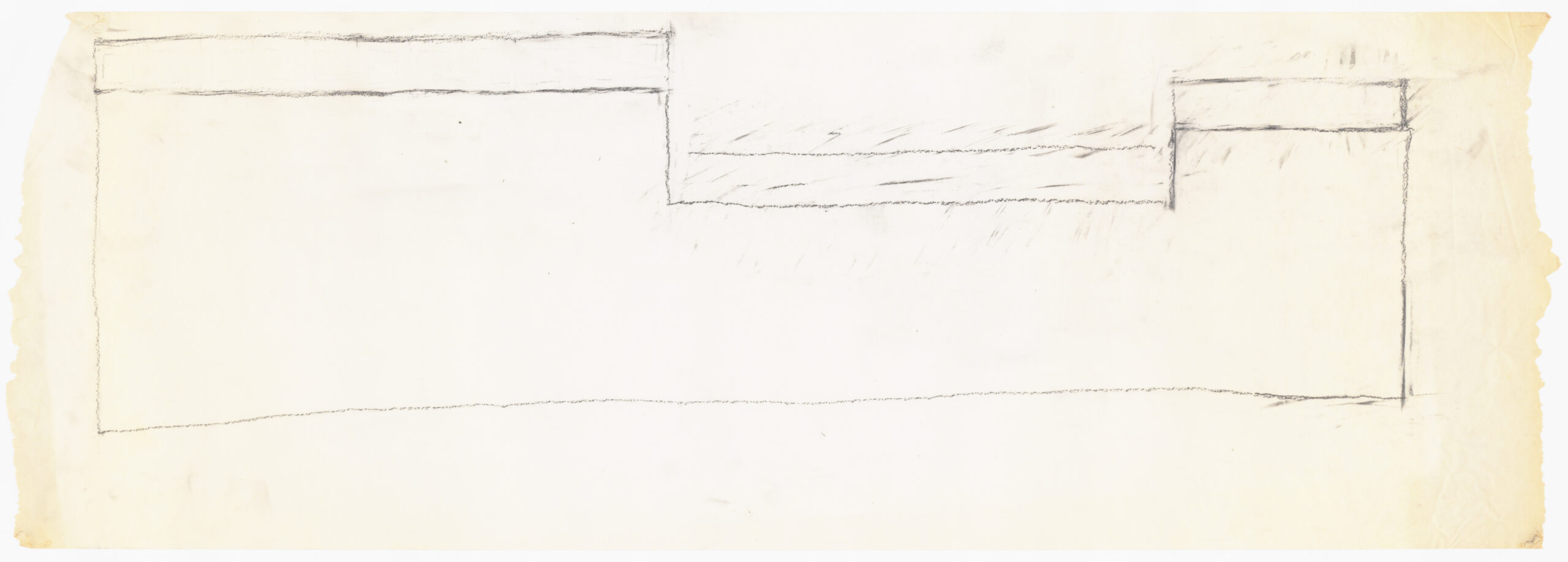
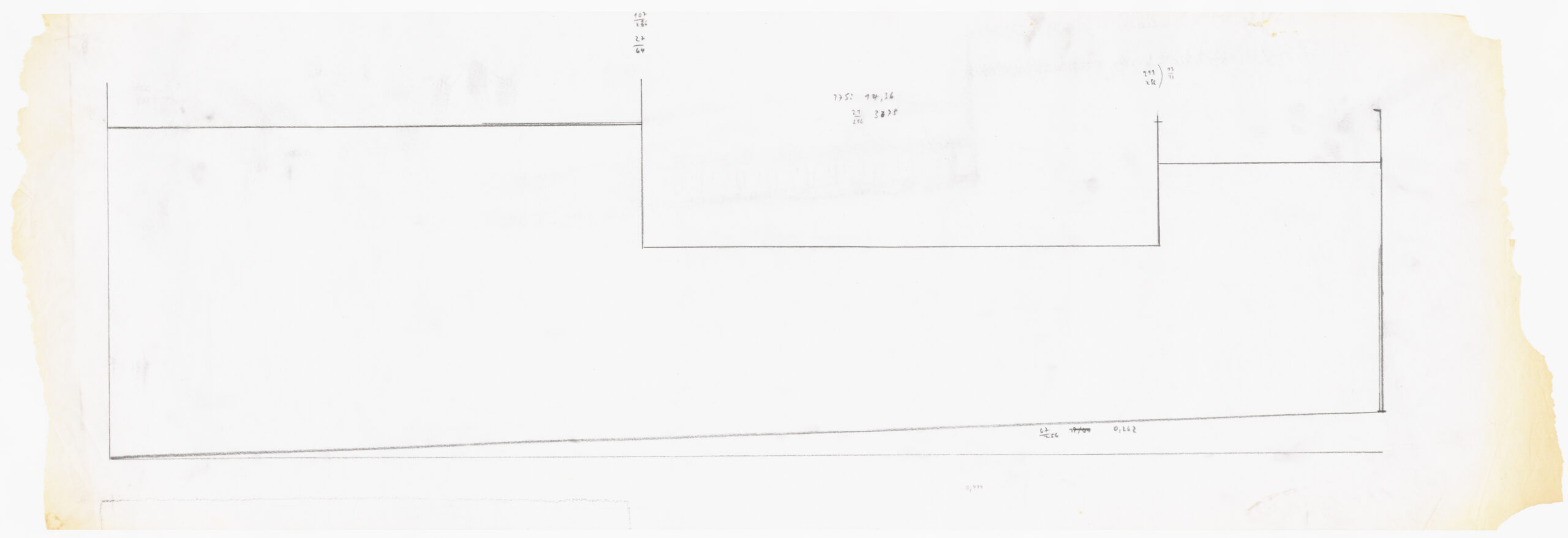
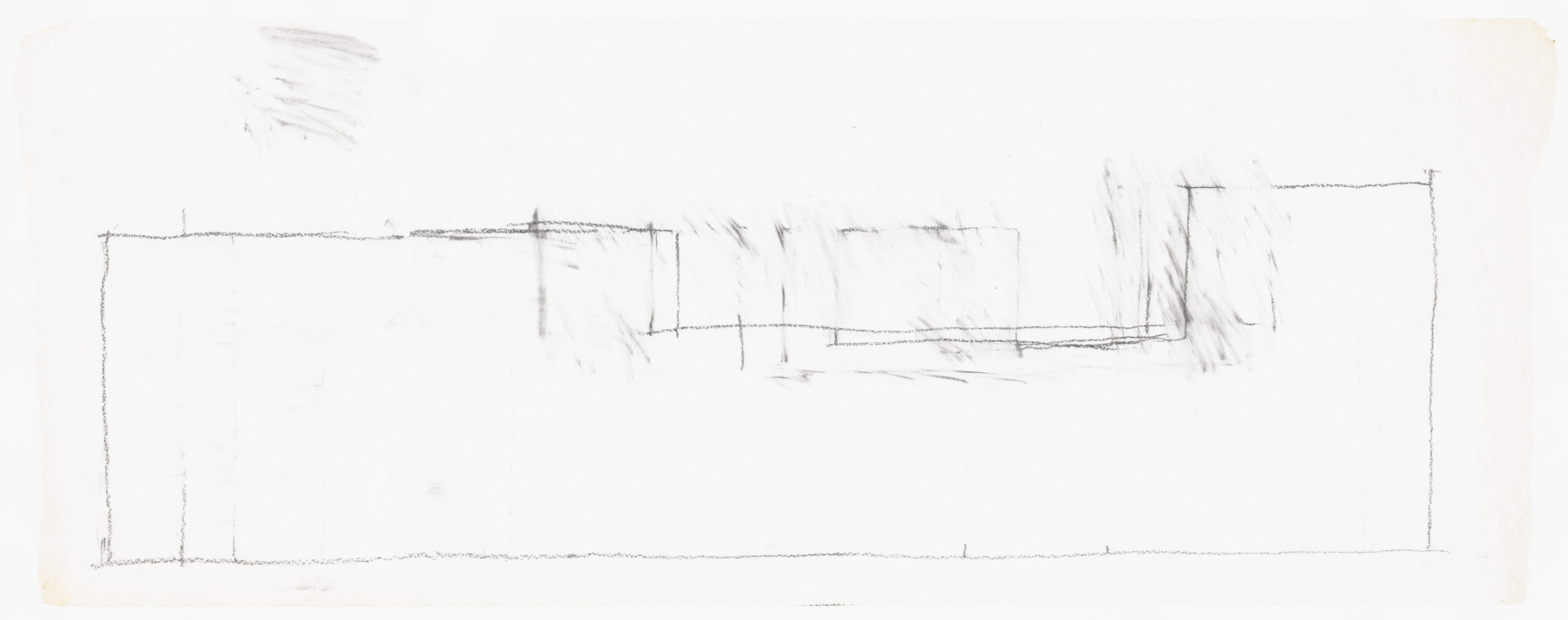
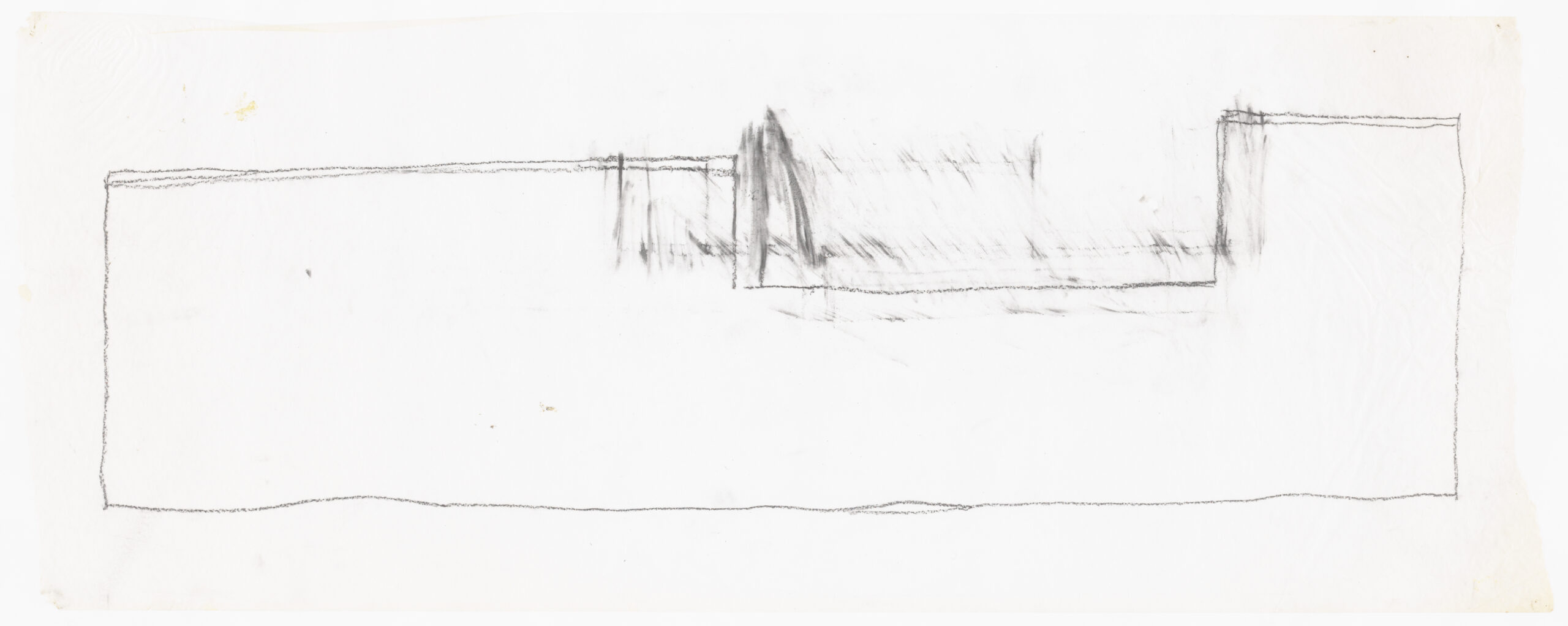
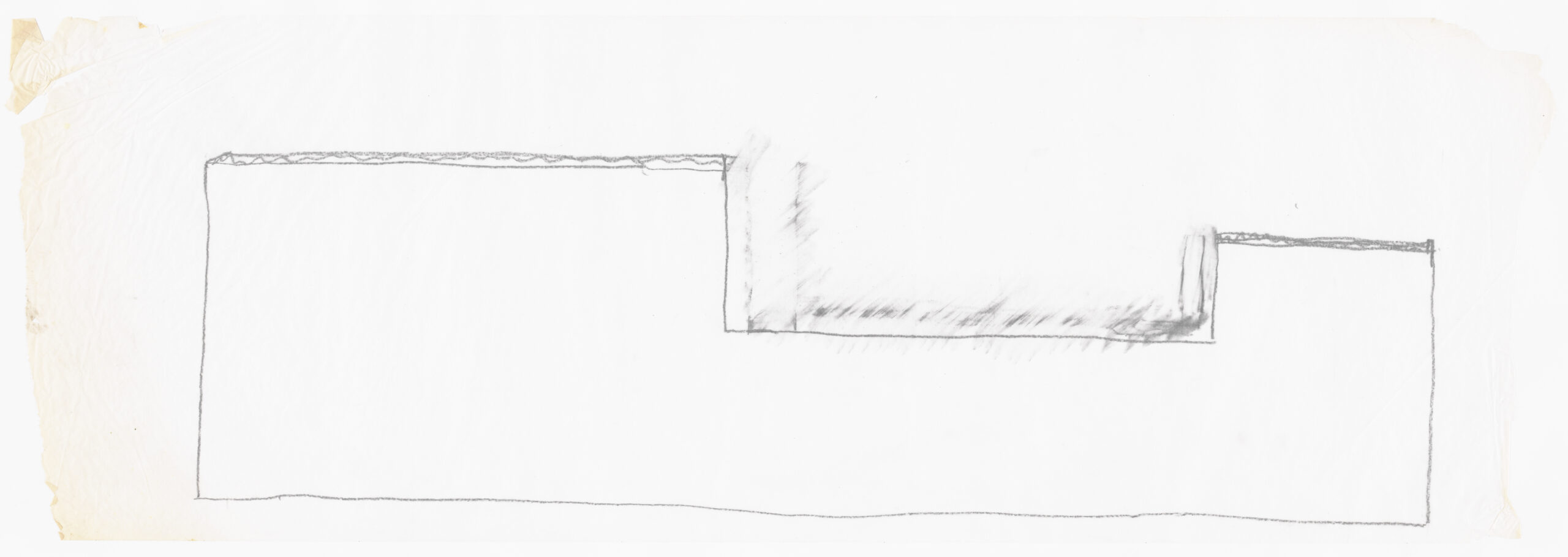
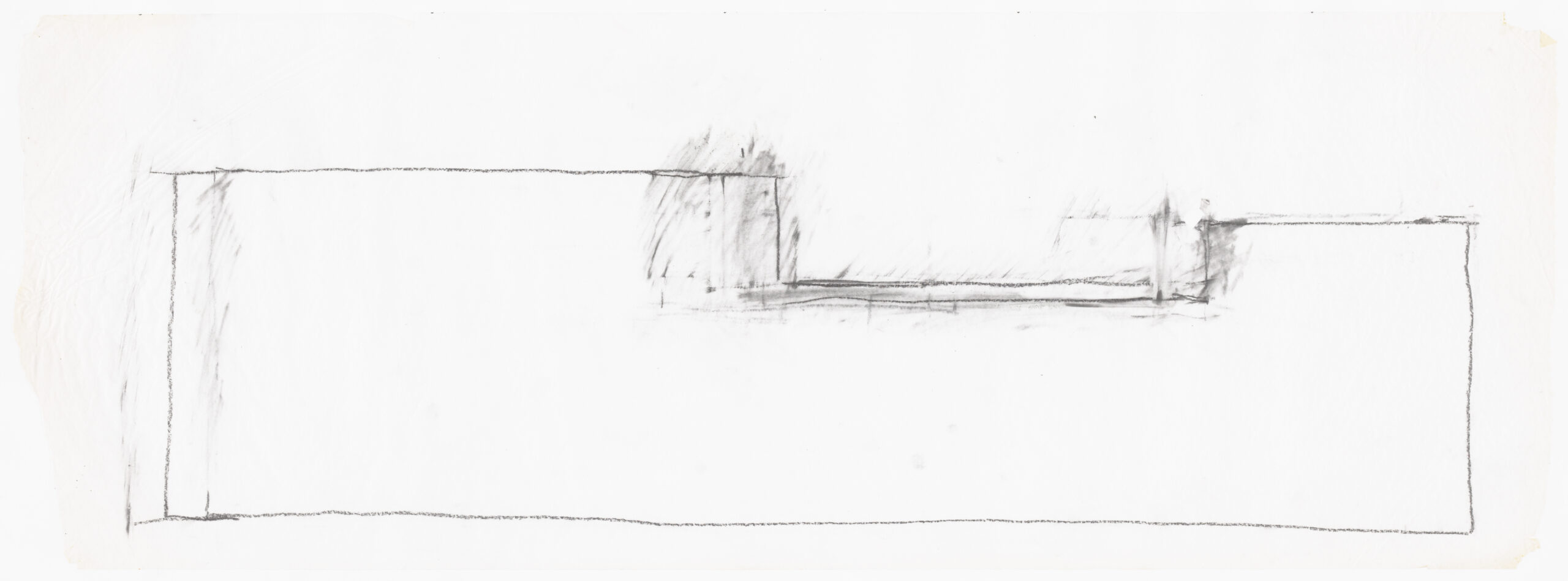
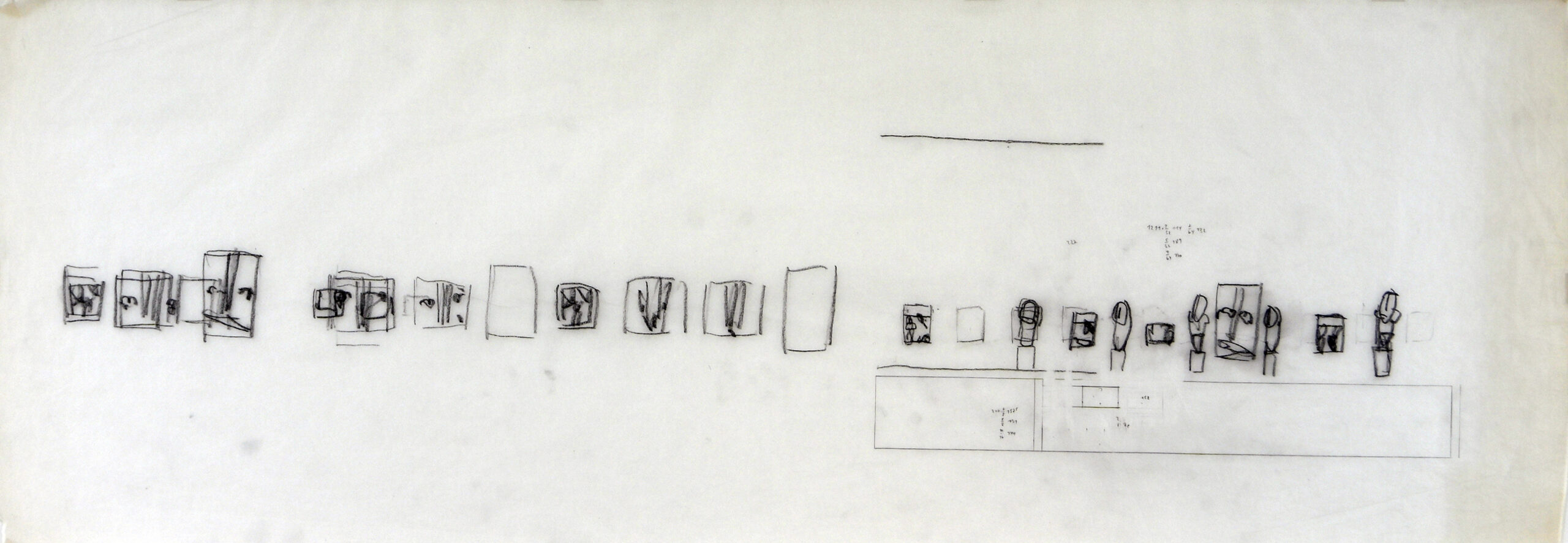
Sixty centimetres above the ground outside, the interior floor. Grey, blue, white. Like a crest, a skylight: the sole source of light and the sole source of penumbra. Coats still on. Slowly, the eyes begin to see. Almost human, a row of brass figures seems always to have been part of the place. As if pencil on tracing paper. Some are reliefs in the walls; others wait on a pedestal. All of them carry the certainty of gravity. Counted underfoot, the thresholds are six, each forcing a short stride from room to room. The floor gives off a faint scrape of dust and snow; the void returns it larger. Off the main nave, four small side chambers, each with its own skylight. The thick walls are shelter and witness: their striations recall the waiting between one pour of concrete and the next; a thread of water: the traces of the thaw. The wind whistles, mental passage. The interior goes dark with the valley. The clerestories, like a curtain of milk, blur the edges of the shadows; at night the roof, black with sky, on the verge of not existing. The noise of the flash. In a corner: cigar butts and scraps of pâté. A bat. Another key. Almost scars, thirty-three brass figures[1] and a space that seems always to have been part of them.
When the pupil grows used to it, it can see the grass, the earth, the stair and the asphalt.
When one grows used to it, everything one invents is true.[2]
*
Notes
- Hans Josephsohn (Königsberg, 1920 – Zürich, 2012).
- See Everything One Invents Is True: The Architecture of Peter Märkli, ed. by Pamela Johnston (Lucerne: Quart Verlag, 2017). The title translates a sentence from Flaubert’s letter to Louise Colet of 14 August 1853. Days earlier, in the forest of Touques, Flaubert had come upon cigar butts and scraps of pâté beside a spring: someone had eaten there. Eleven years before, he had written that very scene in Novembre, imagined. ‘Then it was pure invention, and the other day it was confirmed: tout ce qu’on invente est vrai, sois-en sûre.’
*
Roberto Cides, architect, lives and works in Buenos Aires.
