Sam Jacob: On Collage (Talk, Workshop + Exhibition)
– Editors
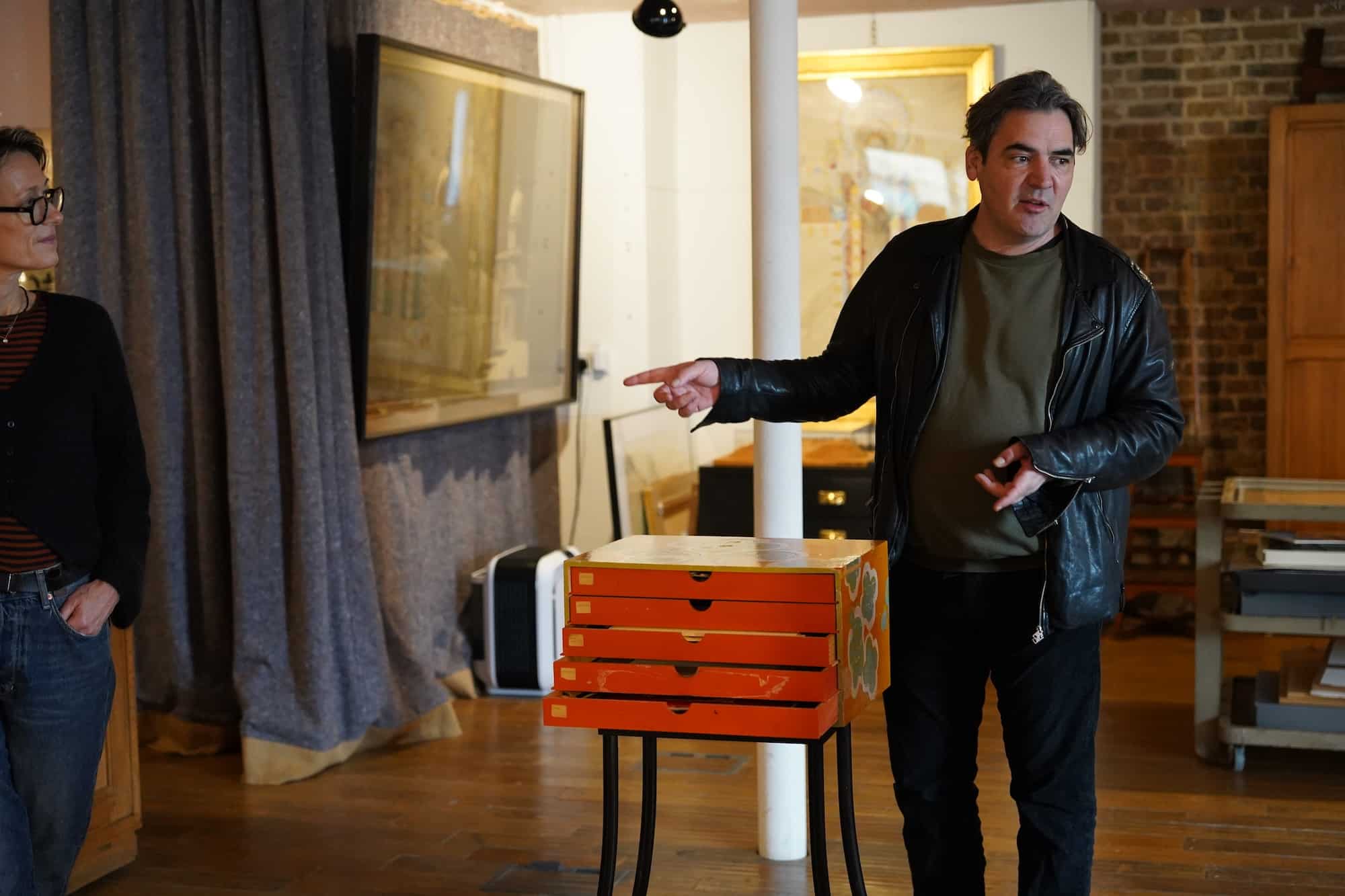
In early February, Drawing Matter organised a series of public events with the architect Sam Jacob exploring the uses of collage in architectural representations. On the Friday (6 February), Sam gave a talk on his personal interests in collage, weaving a narrative from Richard Hamilton’s Just what is it that makes today’s homes so different, so appealing? (1956) and Linder’s cover for the Buzzcocks’ single Orgasm Addict (1977) through to his projects with FAT (Fashion, Architecture, Taste) and his uses of collage as a tool for Sam Jacob Studio’s research and design.
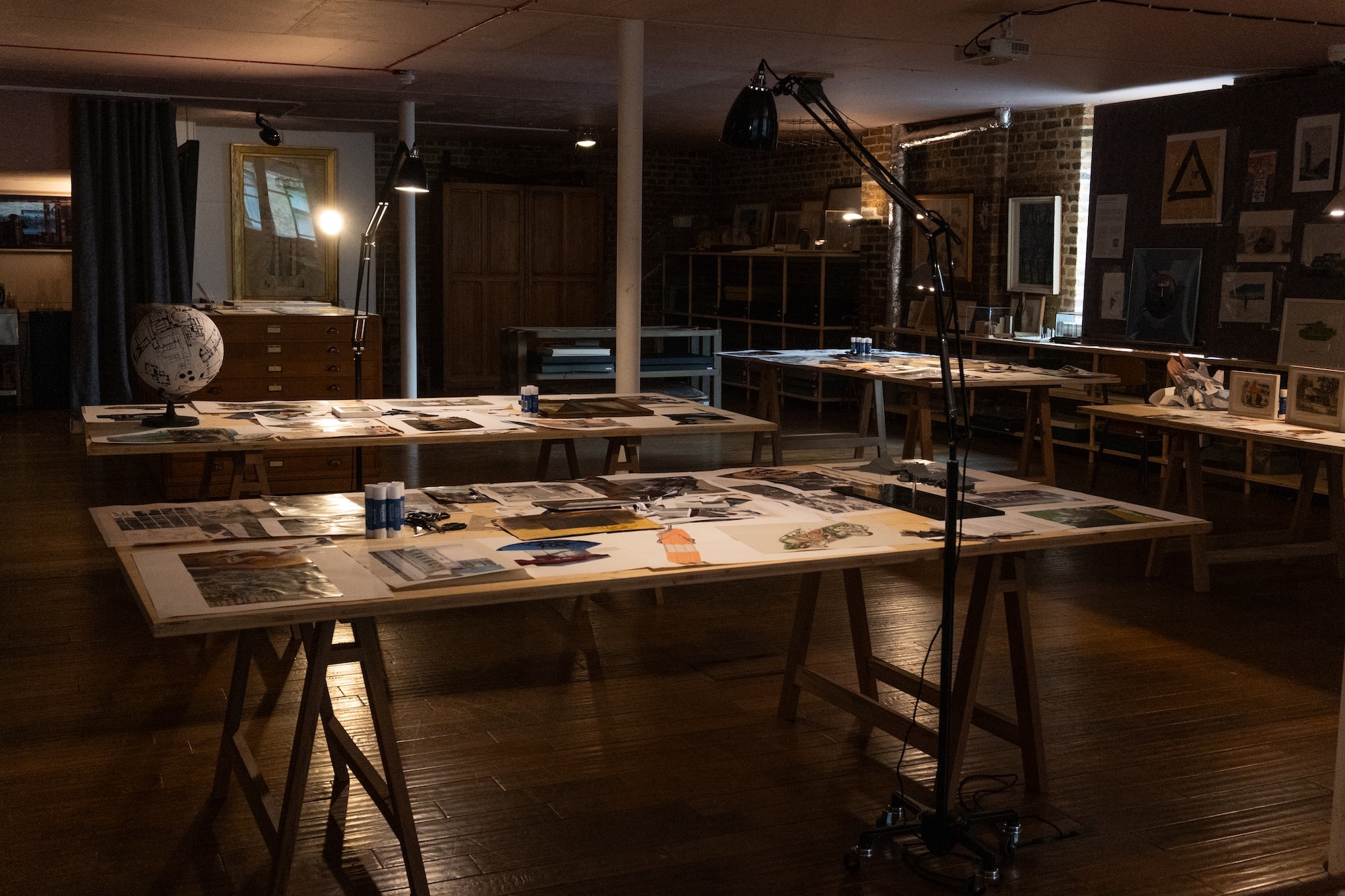
On the Saturday (7 February), Sam led a workshop using reproductions of newspaper and magazine cuttings from Superstudio’s collage chest, which was used by the radical architects from the mid-1960s to the early 1970s and is now part of Drawing Matter’s collection. During the workshop, participants were invited to cut, stick, and compose their own collages, in the process inhabiting the media landscape that Superstudio were co-opting and contesting, bringing their own narratives and creative interpretations to the material.
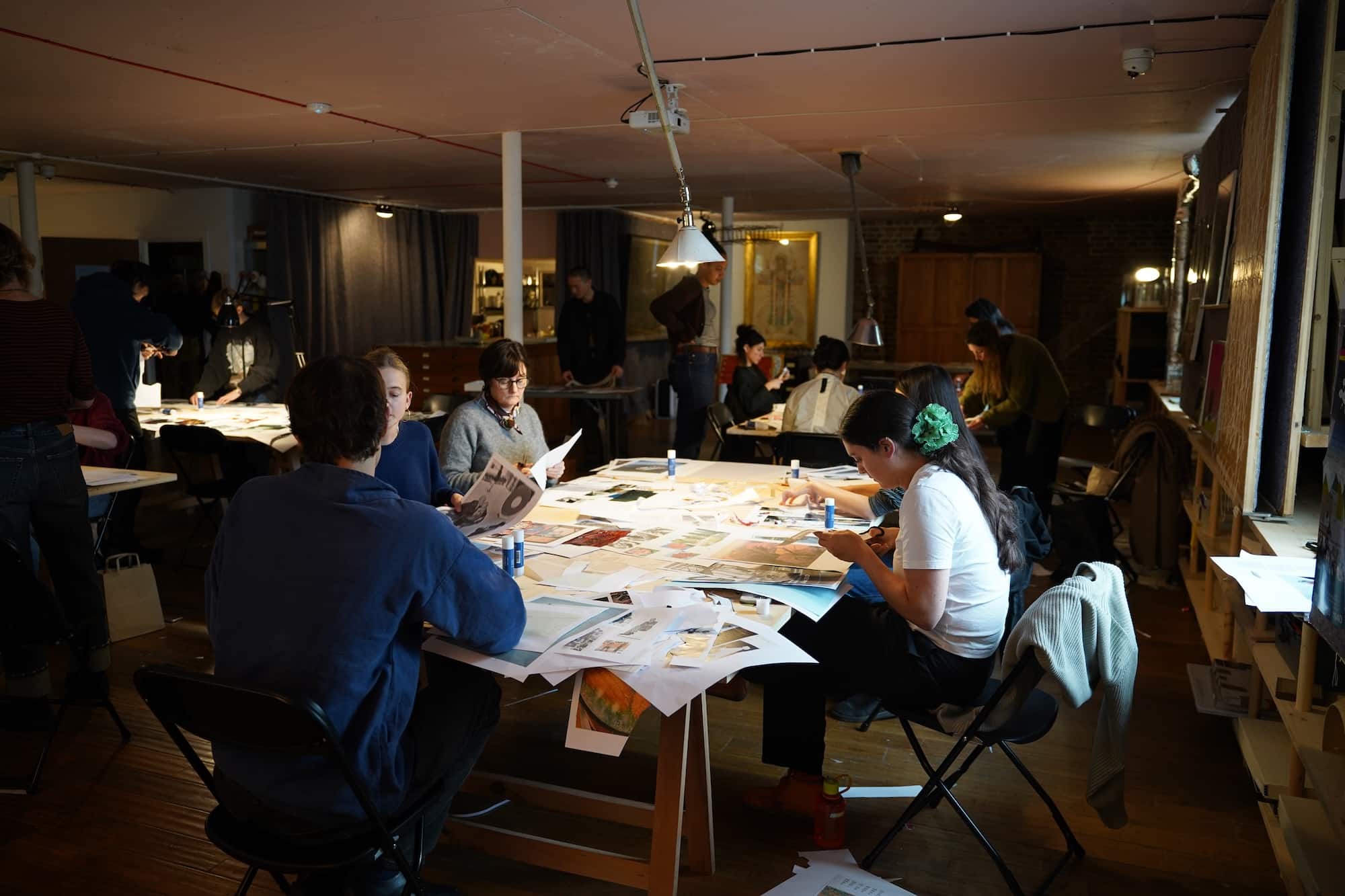
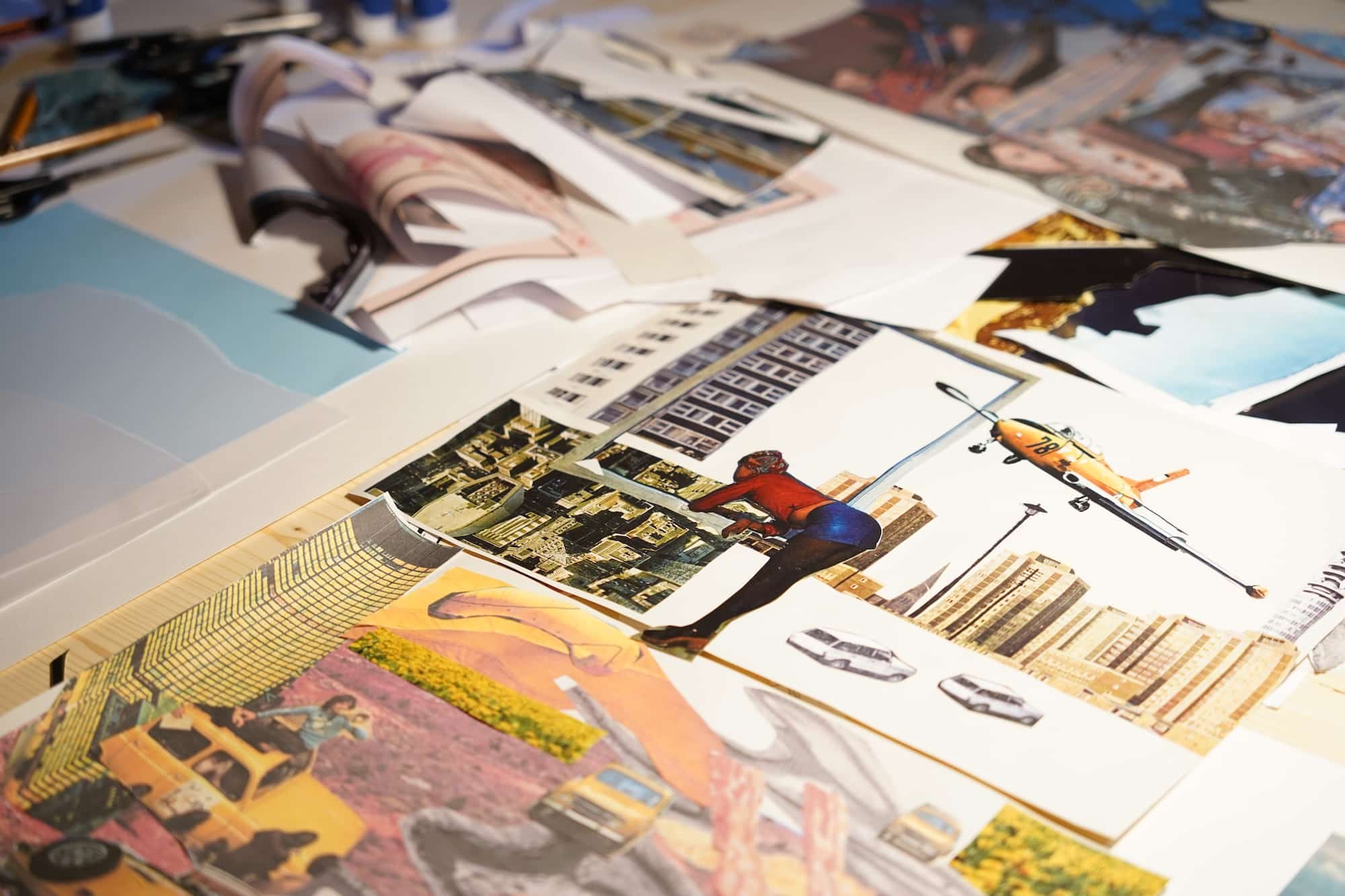
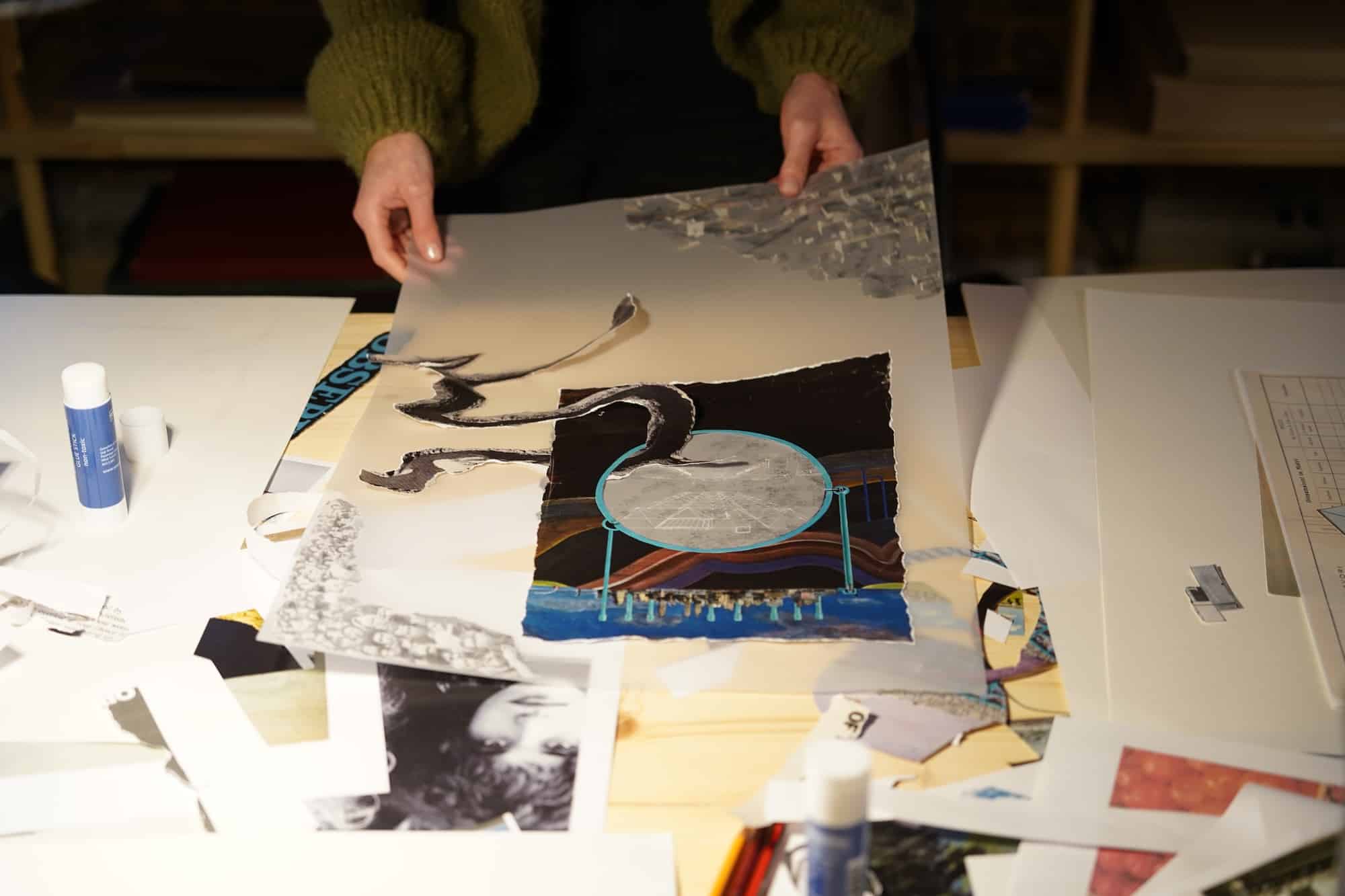
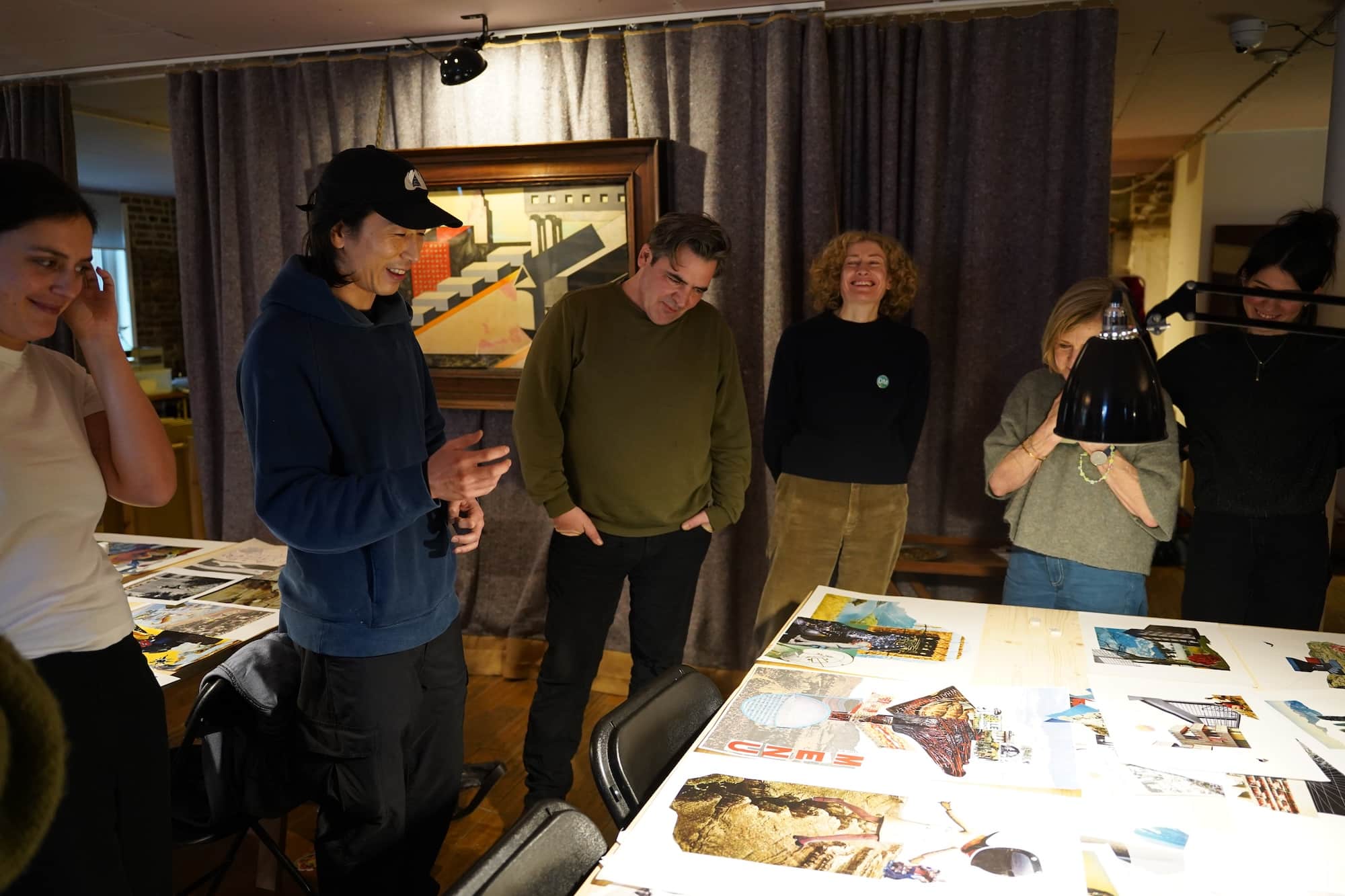
The collages made during the workshop were presented on four tables in the middle of the archive along with Sam’s own works lent for an exhibition in the archive on Sunday (8 Feburary). On the wall panels and plan chest tops were a selection of collages from the Drawing Matter collection showing the manifold ways that collage has been used by architects, designers and artists as a tool to express and generate ideas. Spanning from the 1920s to the 2010s, the selection brought together fantastical and rhetorical propositions—both unbuilt and unbuildable—with more realisable projects.
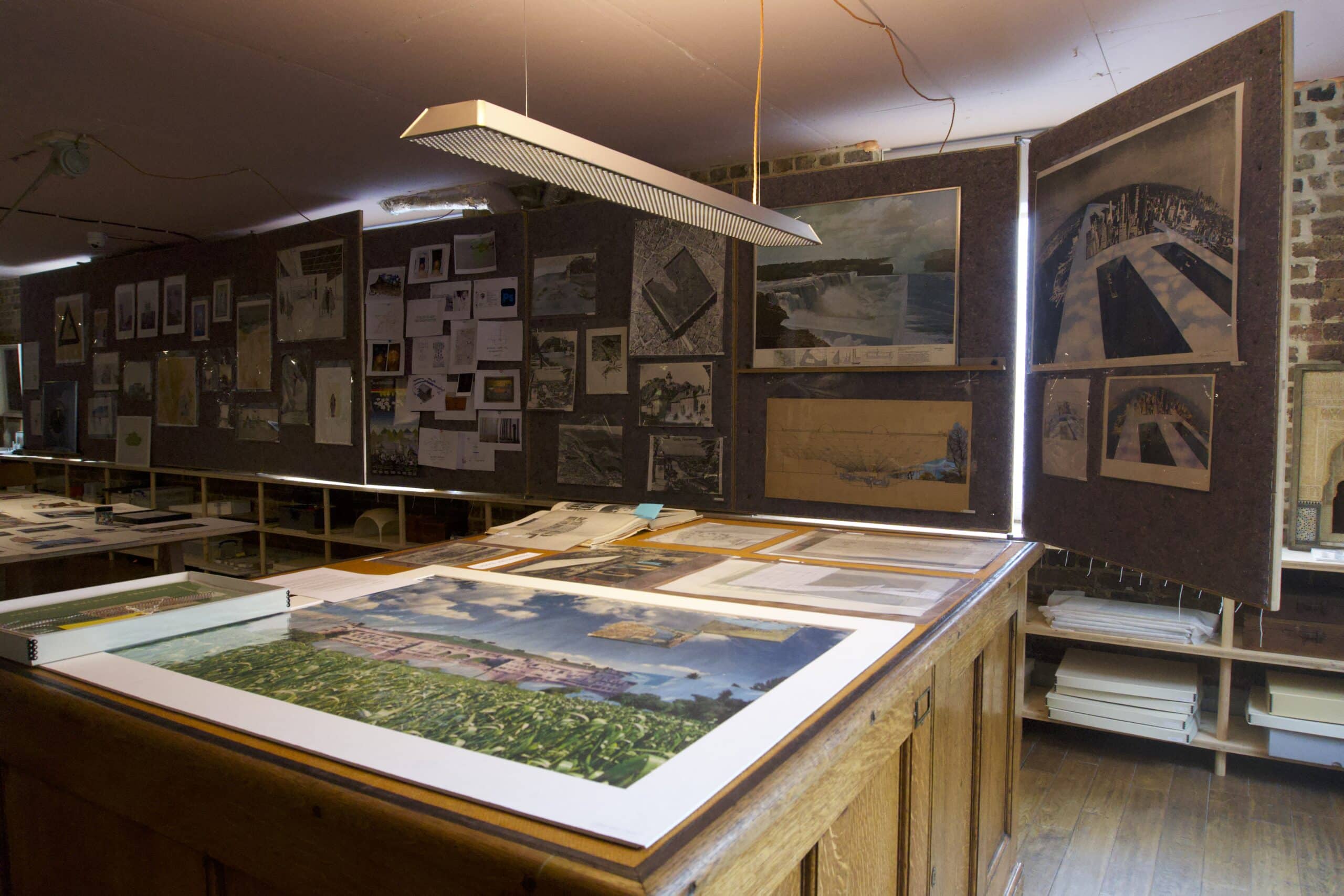
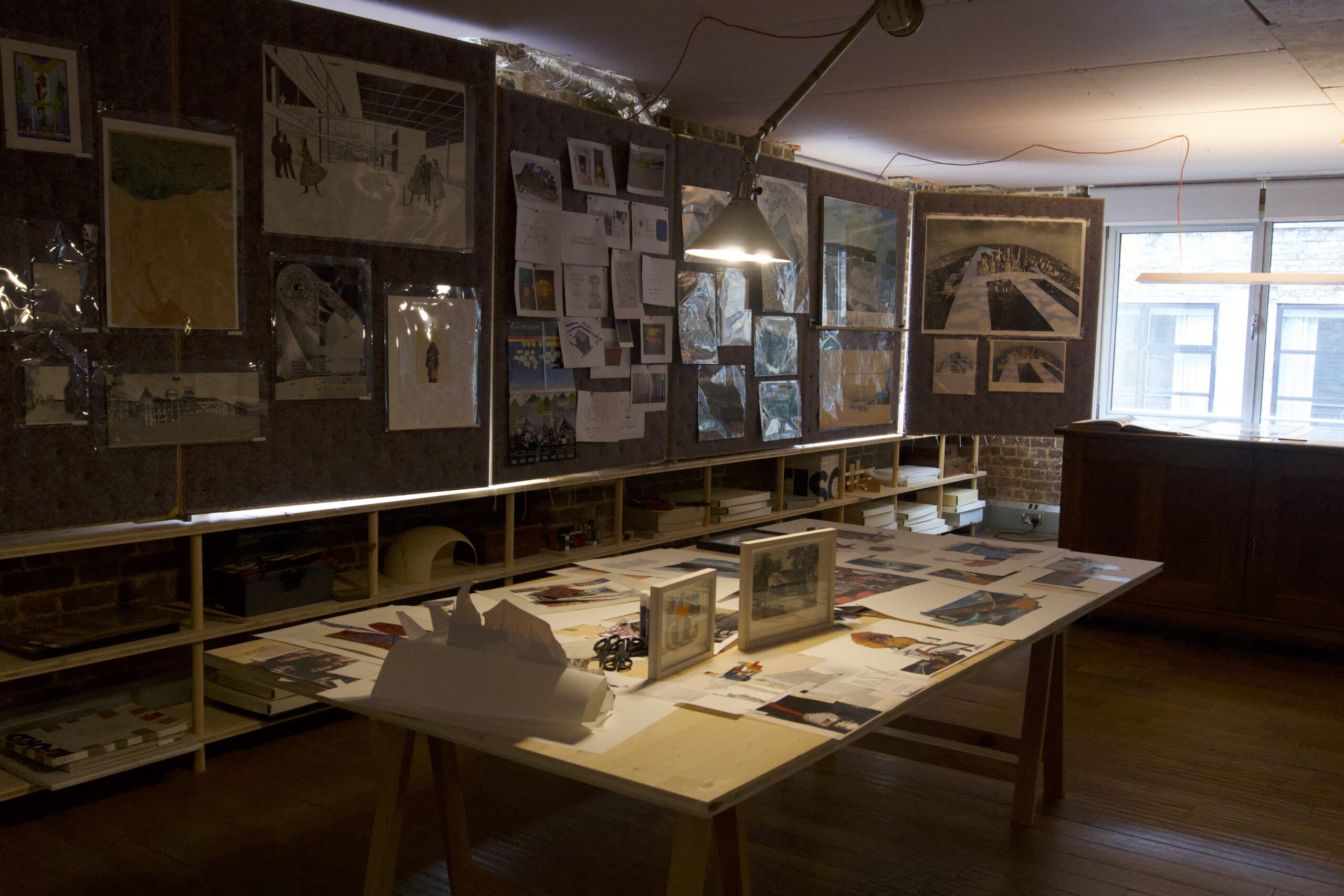
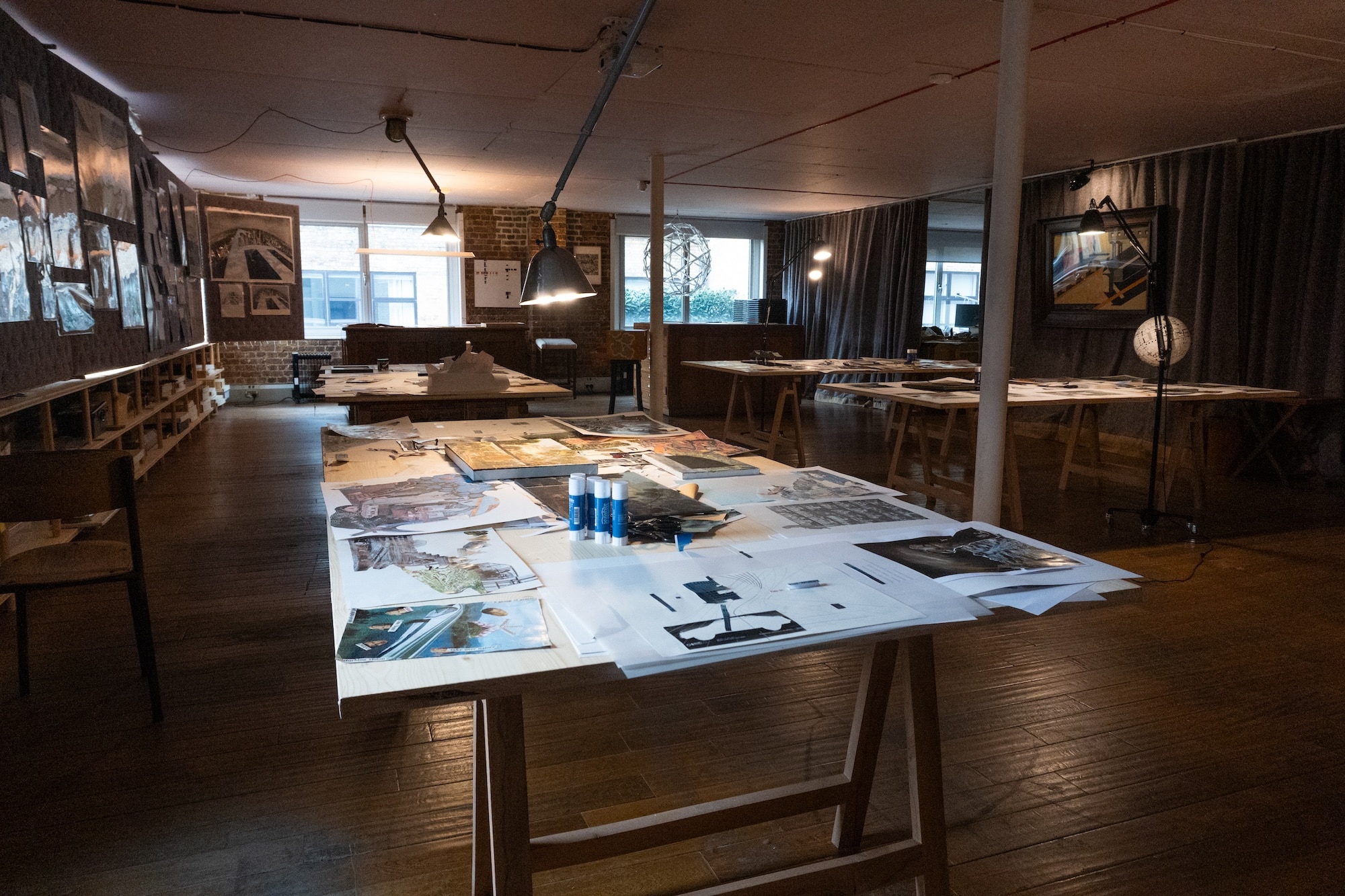
Drawing Matter’s public programme offers the public opportunities to experience our drawings collection, which is usually only open to researchers by appointment and for student/practice workshops. Events take the form of talks at the archive, workshops by practitioners and weekend exhibitions.
To be notified of future events, subscribe to our newsletter and follow us on Instagram.
