This is Tomorrow
The following text is excerpted from the catalogue of the exhibition Theo Crosby: One Hundred Lives, which is on view at Osh Gallery London until the 11th December 2025.
Curated by Pentagram’s Michael Bierut and researcher Tess McCann, the exhibition focuses on the life and work of Theo Crosby, one of the founding partners of Pentagram Design, and an architect, sculptor, curator, writer, editor, and educator, active in London from the late 1940s until his death in 1994. The exhibition features previously unseen objects from the personal collection of Dido Crosby, rare sketchbooks from the Theo Crosby Archive at the University of Brighton, and the original model of Shakespeare’s Globe. The latest Pentagram Papers 51 on Theo’s life and work also serves as the exhibition guide.
*
The idea for the This is Tomorrow exhibition, the groundbreaking 1956 show at the Whitechapel Gallery, came about during an evening at the pub with friends. Theo Crosby had been invited, with the artist Victor Pasmore and the architect Colin St John Wilson, to meet the painter Paule Vézeley, who was in London pitching an idea for a British extension of the Parisian artist collective, ‘Groupe Espace.’ The three young men were not won over by that proposal, but, Theo recalled later, ‘the idea of an exhibition about the integration of the arts was very acceptable.’ They put a call out to their friends to meet at Adrian Heath’s painting studio to develop the idea further. Over the course of several meetings of the so-called Independent Group, the exhibition emerged.
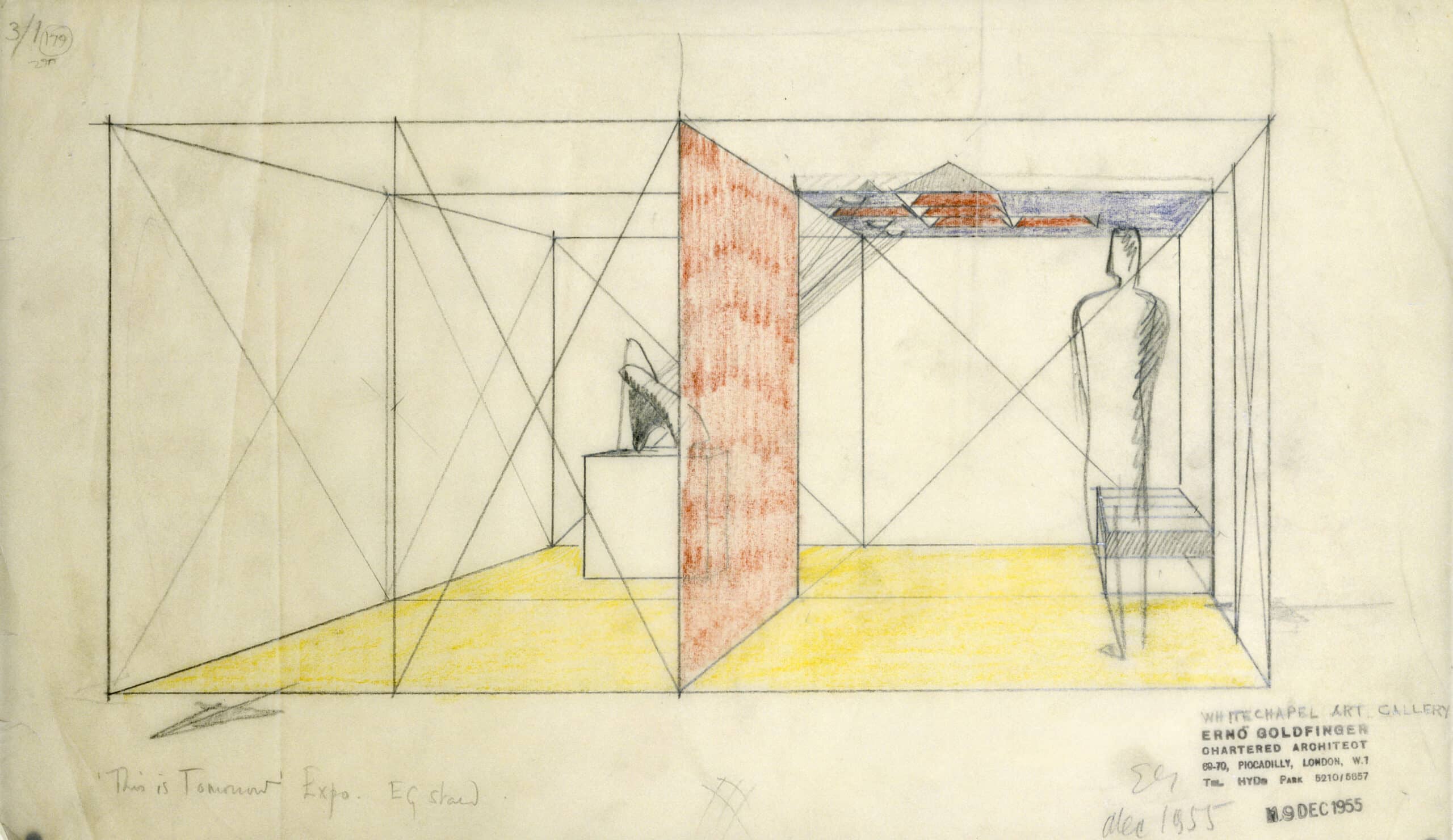

The show was comprised of 12 independent exhibits, each developed collaboratively by a group of cross-disciplinary artists and architects. Each group was assigned a distinct area within the exhibition space, as indicated on this plan. A reviewer at the time summarised the collaborative nature of the show, noting that the artists and architects are ‘not only striving to create something new in their own particular fields, but to work together to the same end.’ Each group developed something entirely distinctive, mixing graphic and fine arts, sculpture, and architectural works. The show was a phenomenal success at the time, and was a watershed moment in British art and curatorial history, ushering in a new era of popular art and public awareness of architectural practice. It helped launch the careers of Richard Hamilton, Eduardo Paolozzi, James Stirling, and Theo’s friends Peter and Alison Smithson.
Theo was captivated by the promise of bringing art and architecture closer together. As a reviewer noted, ‘Just where do painting and sculpture end and the architecture begins, it’s difficult to say, but after all, that’s the whole idea.’ This idea would remain with Theo throughout the rest of his career. ‘The principle behind the exhibition is one that I have tried to follow ever since,’ Theo wrote. ‘The collaboration of equals.’
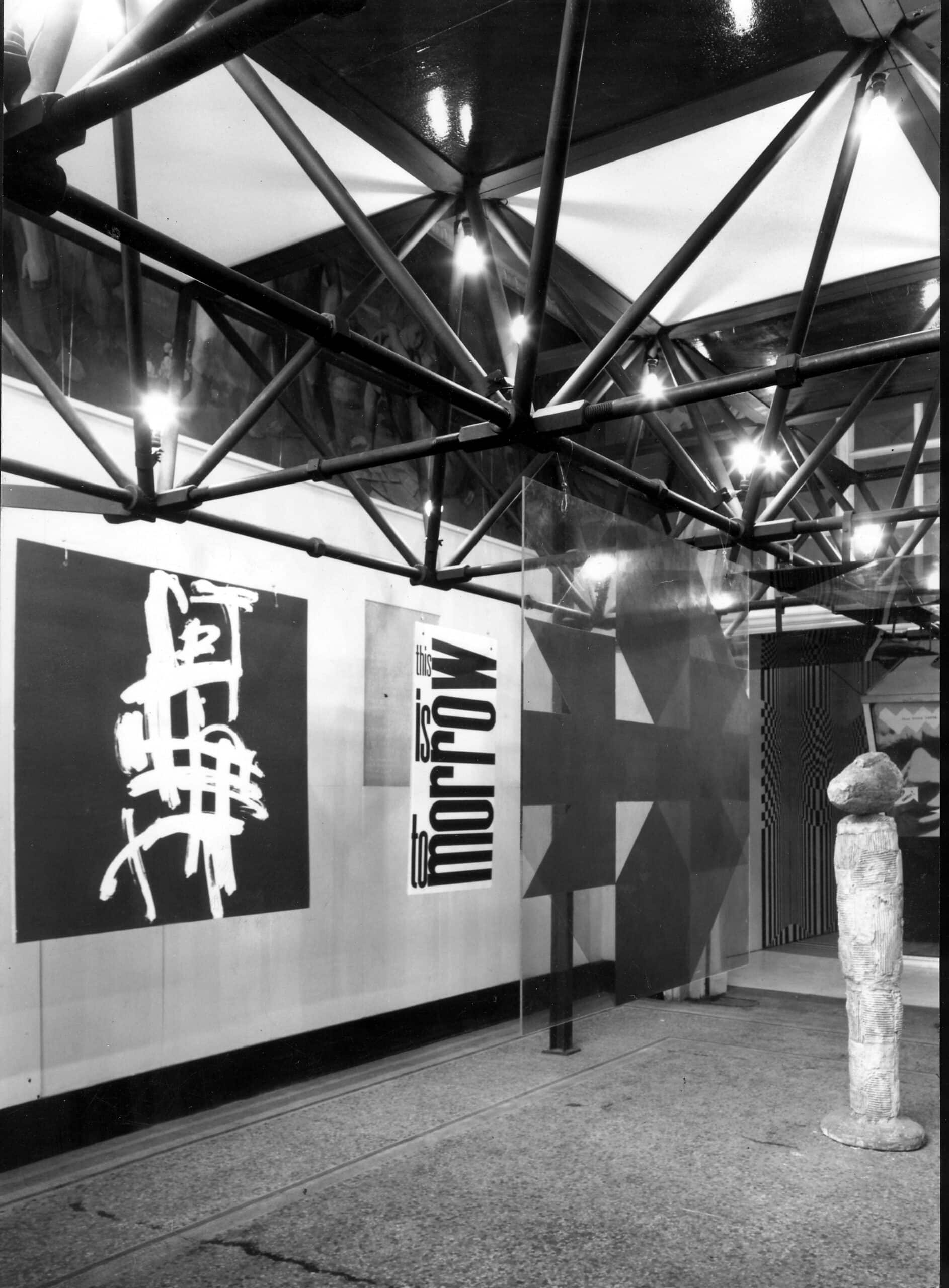
Theo’s own contribution to the exhibit was a space frame steel structure, which was lent to him by a steel manufacturing company, and which framed the ceiling of the Group 1 space. Other groups and architects, faced with tight budgets, got similarly creative, using either found materials or securing backers or funders for their work.
*
Tess McCann is an urban designer, researcher and an Associate at Publica. In addition to taking on independent research, she leads large-scale urban strategy and design projects across Greater London. She holds a Master’s in City Planning from the Massachusetts Institute of Technology and a Bachelor’s in History from Yale University.

– Mark Dorrian and Peter Wilson