Reading Las Vegas: An Oral History of Drawing
– Denise Scott Brown and Ariel Koltun-Fromm
The following interview is excerpted from a longer conversation between Ariel Koltun-Fromm and Denise Scott Brown which took place in April 2024 at her home in Philadelphia. It is part of a larger research project by Ariel investigating drawing as a means of interrogating existing places.
*
Ariel Koltun-Fromm (AKF): You were talking earlier about pedagogy and teaching. I want to go back to that a little bit. Former students have described you as a teacher who does a practice of observation. I have here my own copy of the Learning from Las Vegas reprint…
Denise Scott Brown (DSB): We had a great deal of trouble with the graphic design of that. The graphic designer says: ‘they asked for a duck, so I gave them a duck’, and she said much worse as well. But the point was, this is not our design. It’s not the way we would’ve designed it, but they did give me the chance to design the cheaper version. What I was trying to do was not show beautiful white space. They make themselves the kings and queens of white space. What I do is I make things comparable so that if you’ve got two buildings and you’re comparing the scale of the stairway in each, the scale of the stairway would be the same. You can then see how much structure the one gave and how little structure the other needed, and how much space it could give, which I think is a better thing. So that’s what I try to do with the graphics.
[Points to a drawing in the book]. And you see this kind of drawing is mapping the things that seem to be important. You see, they [the students] did that beautifully. And sometimes I’m trying to show the effect of electricity, so I show the lights, but this over here, what does it say?
AKF: ‘Communication by building type’.
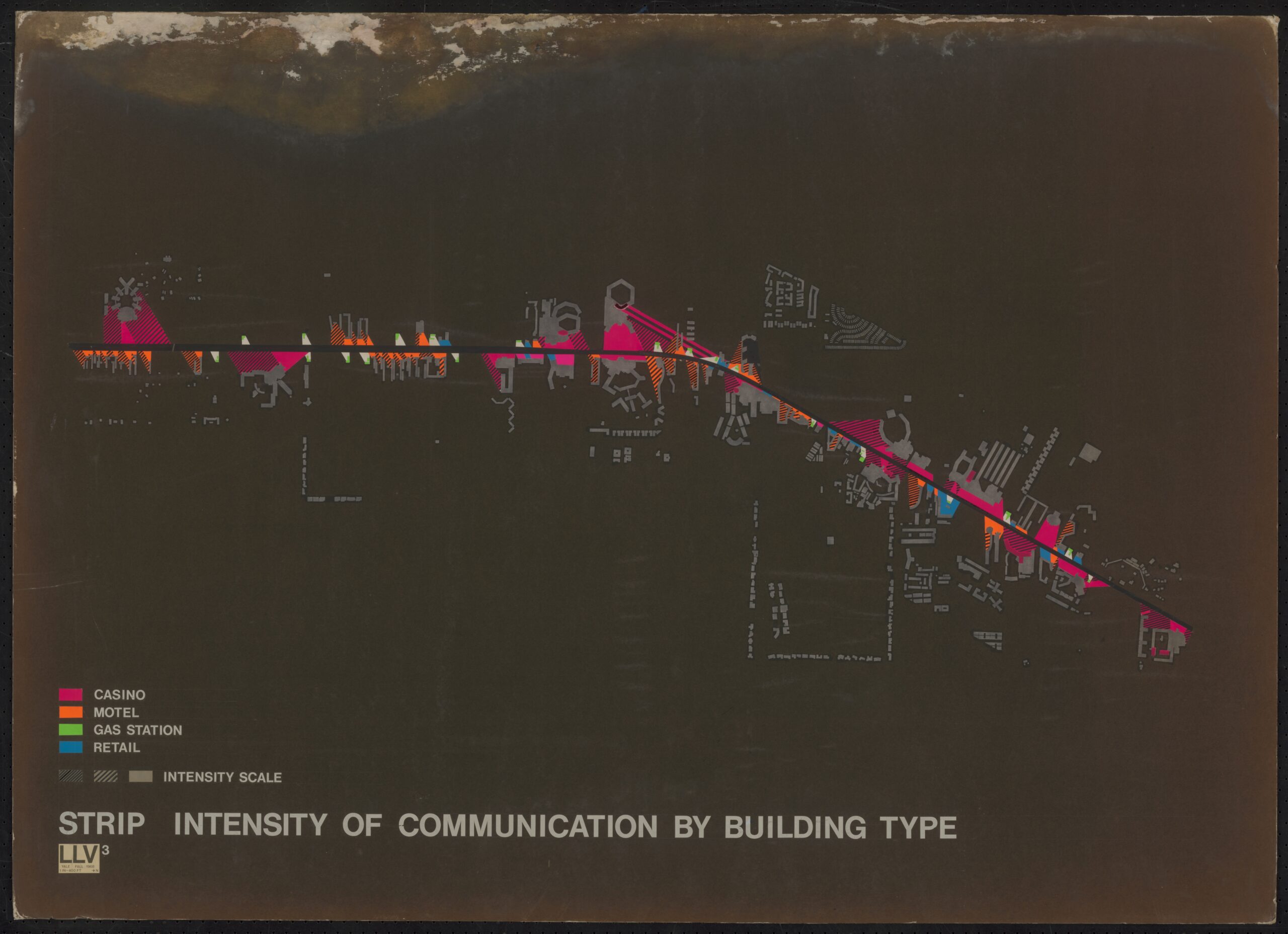
DSB: Yes, it’s a casino area and then the motel, and then the gas station, and the retail, and you can see how the casino areas are. And then I point out that as you fly in here, you see the signs from the sky.
AKF: With these kinds of drawings, does this emerge from the work with the students, or is it more like this is what you want from the outset, you have an idea about how these drawings, these representations, should come about?
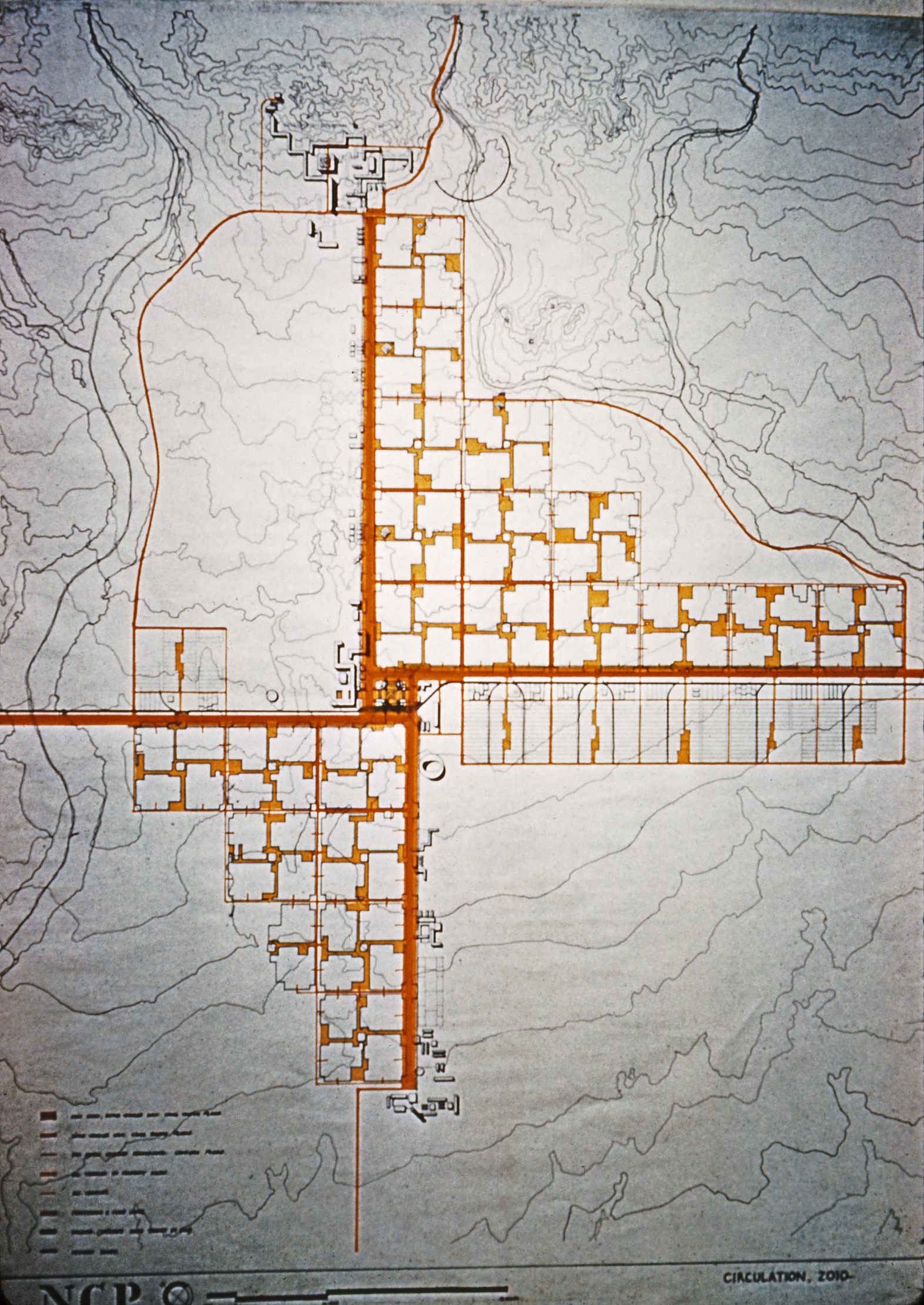
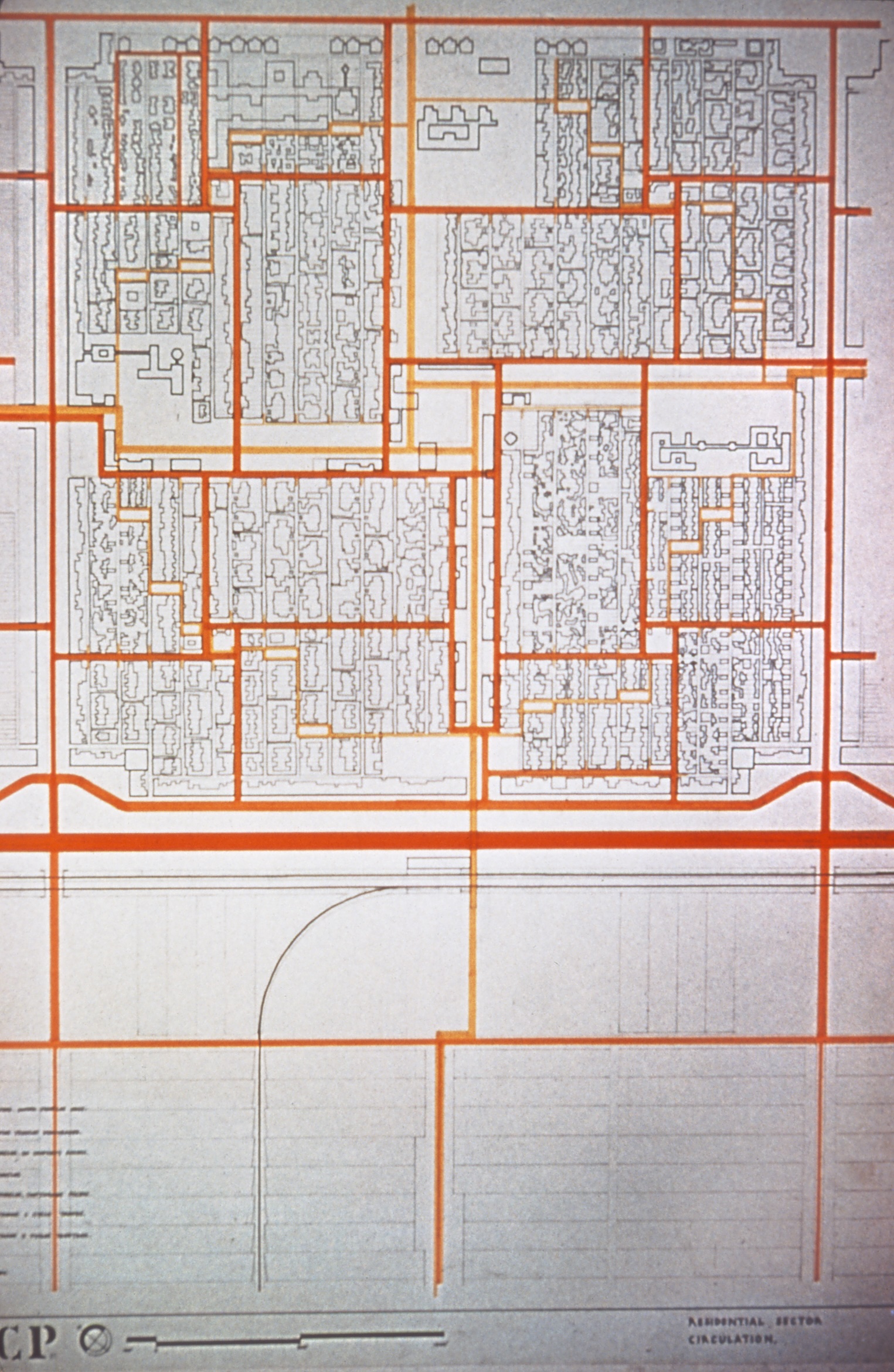
DSB: The other one you were looking at of Chandigarh, that shows you how we managed to get very geometric streets and everything but emerging from a very big centre and then growing out and up. These over here are streets in an area where there’ll be no tar and where there will be monsoons. So those are streets and gutters at the same time. And then the houses are self-built houses by the natives, in this case, Chandigarh was Indian. Dave Crane had lived in Nigeria, and his parents were missionaries, and he very much took to the whole thing of self-help and how you can support so many more houses if you were aware of minimum adequate standards of living and where the help is really needed. For instance, they can produce the mud walls, but they really do need someone to help them with the roofs, you see. So, you put the money where it’s greatest needed—it was all based on that.
AKF: Then, when you become the teacher and you bring students to Las Vegas, what do you tell them? Go observe?
DSB: No. First of all, I have all sorts of psychological tricks with students because they were freedom of speech students: they were in revolt against everything. The first thing is you choose a terrible project, like commercial things that adults hate, you see? So, that’s good in the first place. And then you go on and you say: ‘everyone will get a chance to get their first or second choice, and only once will you have to have your third choice. I’m giving a choice in these research projects’. And so I say: ‘you’re going to be spending three months of your life doing this. Read the introduction very carefully to be sure you make the choice that’s going to suit you’. Now they’re doing the reading! Otherwise, I’ve had people come to me and say: ‘I refuse to do any reading for this class. The only reading I’ll do is the thing you liked best’. So again, ‘I love this, I love that’. I’m tricking them, but for their own good.
What I do is I make the students an introductory book. That’s the thing I want them to read. And they look at it and they say ‘it’s too thick’. They get there to Las Vegas, they say ‘it’s too thin’, and I have a nice time laughing at them.
We had marvellous help in Las Vegas. We had Vaughan Cannon, the head of the Young Electric Sign Company. He was a real Western gentleman. He is described as one of those tall men with pale blue eyes, those who built the West. Well, Vaughan Cannon took us in hand. I had to go out with the students without Bob because he got the flu, and so he was a week late.

Vaughan Cannon really helped me. They were having the opening of one of the casinos and there were no tickets so our students couldn’t go there. But our students went to a thrift shop and they bought fancy dress. They came out looking like a group of gangsters. So, they had their gangster clothes on and Vaughan says: ‘I have one ticket available’. So, I start looking; who of these students would be the one who really needs to go? And they say, the students go and say: ‘Denise, are you crazy? You are the one going with Vaughan’. So I get dressed in my party dress and I go and they come in their gangsters’ clothes. And the whole thing is a big drunken squall where the Mayor of Las Vegas got to the top of the escape column, which was in the middle of it. You went down a long steel column as if there was fire. And so, the Mayor rides down the long steel column and then falls asleep. And then Vaughan Cannon goes around behind the back and we talk to the people giving the tickets. He takes out a whole pile of tickets with his long western hands and gives them all to the students. They all got to go.
They could draw those things beautifully. And I said, think of the area where the casinos are as a main street and it’s a great big thing that you walk on. After that, think of how the patios relate to the main street and the rooms relate to that and show land use colours which are related and map these things to show how they relate to each other. That’s what we did in here.
AKF: It must have been unusual introducing a research studio like that at a place like Yale, where studios are usually about designing new projects. What does it mean to do a studio where we’re not building something in Las Vegas. We’re observing Las Vegas and we’re learning from Las Vegas, and that’s the studio?
DSB: Well, that was another very funny part of it. Dave Crane used to say to me: ‘when you get back from your visit, now you must give them a sketch design because they’re architects, they want to do a sketch design. It’ll help them bring things together’. So, straight after the Las Vegas thing, we came back with hosts of maps to be done, and I said, you’re now going to do a big four-day sketch design. And then: ‘Denise is giving us all that busy work’—now they’re defining design as busy work! ‘We want to go and get on with our maps, please’. I get a lot of joy and amusement from this. What you can make exciting is what they’ll bring their creativity to.
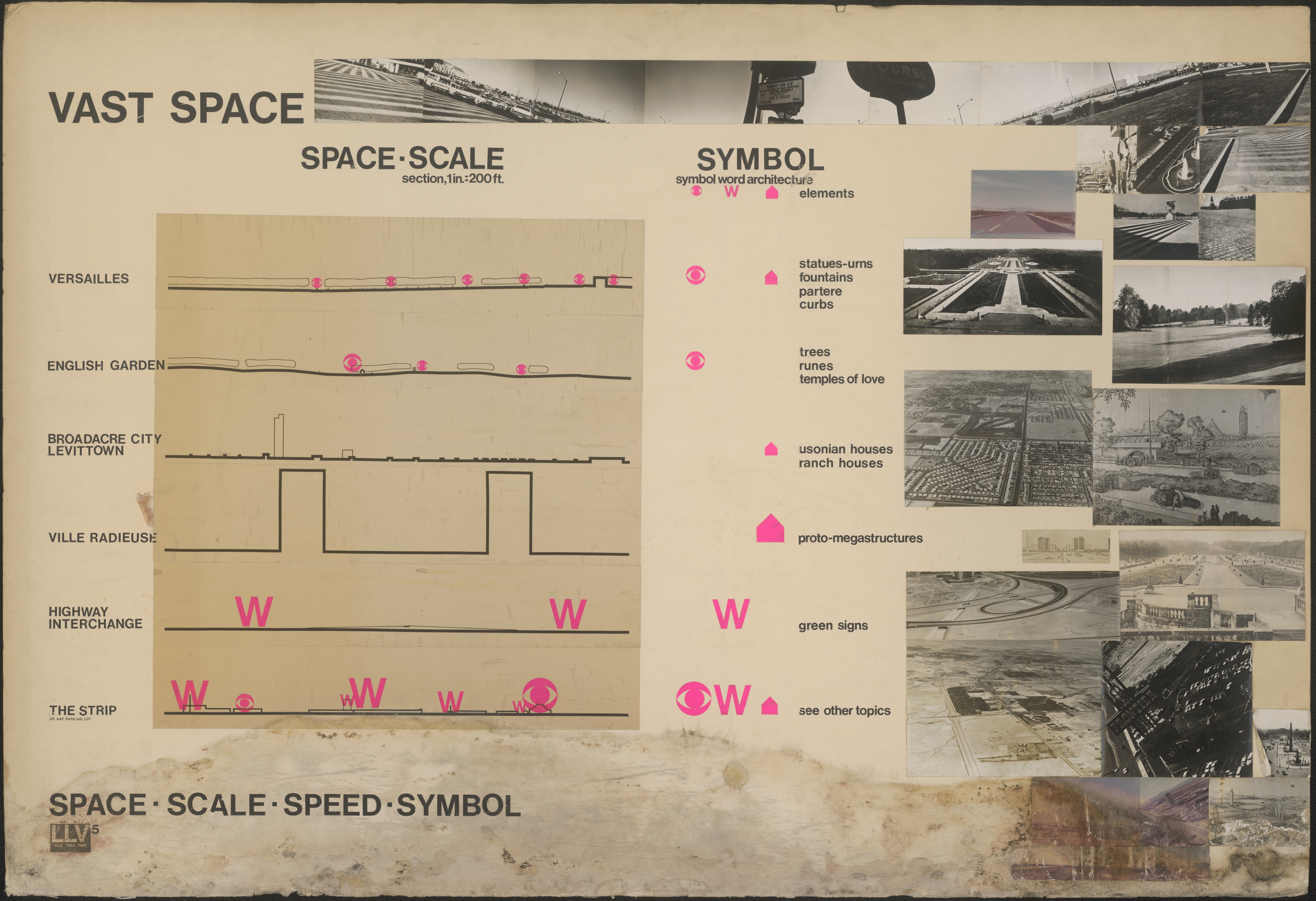
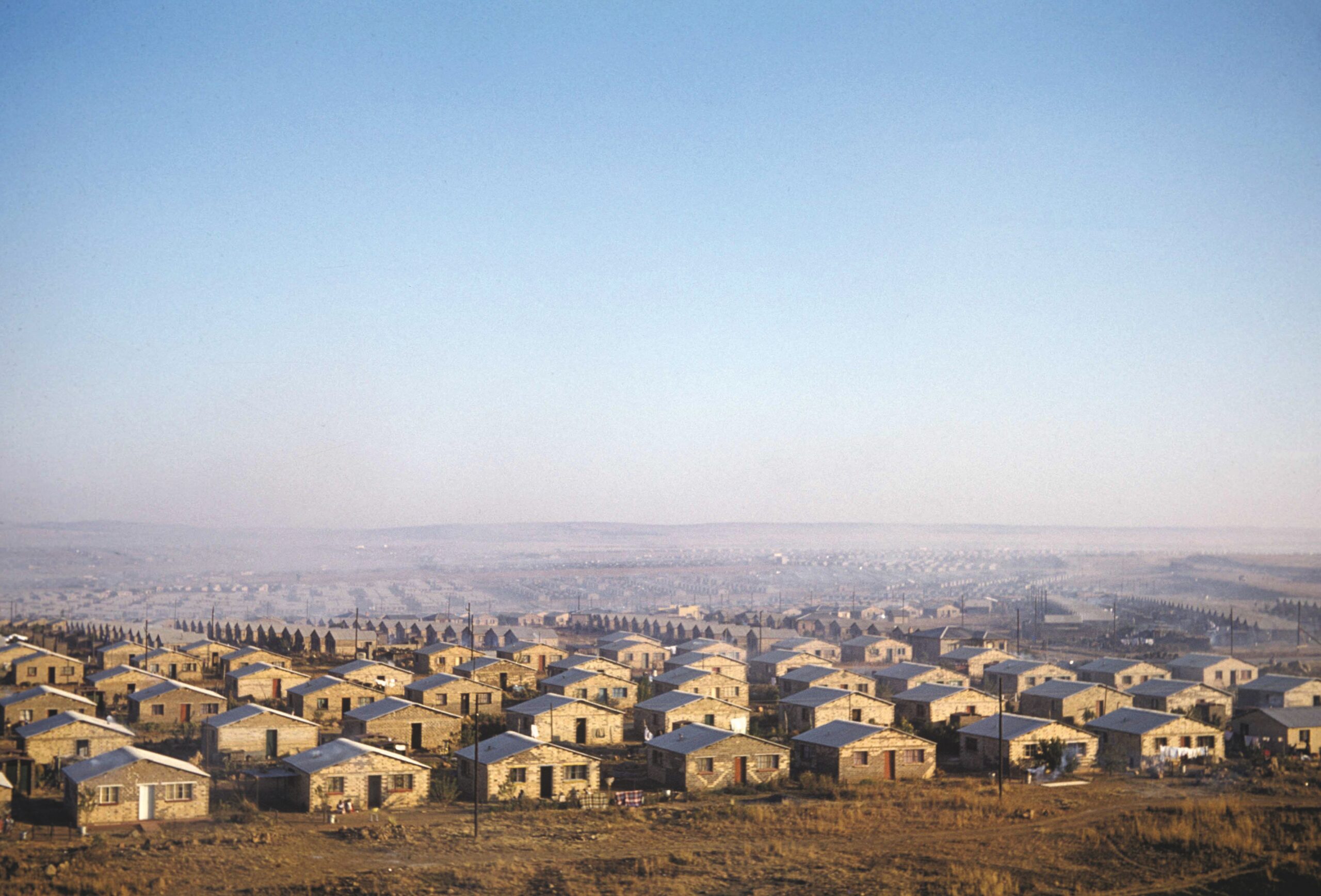
What I always say is: ‘Look, this is difficult. You come and tell me what you worked out to do for this drawing’. But one time I said: ‘I want you to find out all the property tax statuses’. So, this property is being priced at that level and this is one of that and that one and that. And I said: ‘go out and talk with the tax people in Las Vegas and find how they’re all priced’. I came back and they had huge smiles on their faces. ‘These people told us that if you knew all that, you would be the most powerful person in Las Vegas!’ They couldn’t get any of it.
AKF:Why was it important for you that architecture students, design students, be doing this kind of work and not, say, sociology students or economics students?
DSB: Well, look, I did have a few planners in there and they had a hard time. The architects were much more used to charetting. They were more used to getting things done. The architects knew how to approach it, but the others, they did try. But there weren’t very many of them. There were some who got out of it and just sort of didn’t do anything. And I wouldn’t give them full credit for that because architects need to be able to do that sort of thing. But planners need to as well.
AKF: But then what is the role of the designer, the architect, the planner or anyone who deals with designing engagement when you’re not actually doing design, when it’s just observation or community work?
DSB: The architects were thinking carefully about that. The planners, they were also, sort of, I can’t remember now why it didn’t happen quite as well. But other places I have given planners that kind of work and that kind of studio and it’s gone well. I had to do ‘Introduction to Urban Design’ for urban planners. I gave them a lot of ways of thinking about it, which they could manage. They had to learn about colour. You see, they’re going to be working with colour even if they’re going to be planners. So, I’d give them a set of thoughts about colour. I remember one of them was going to be a political scientist and I see him in the studio. He is being told to design an interior space, which is painted in such a way, out of card. He’s working up ‘til midnight on this thing. They all took it as a challenge to do it. And some of them were very good. And I said: ‘out of card, and it must be a space which if you sat in it for 30 seconds it would drive you dippy’. So, we tried to make the worst, jamming colours together like that. And he’s sitting there at midnight and he says: ‘I’m going to be a political scientist!’ but he’s still working away like this. And I think that experience is a good one because they’re going to have to nevertheless in planning learn how to deal with things like that and talk with other people who do deal with them. They had a semester of that.
AKF: And is it important for these people to be coming into contact with each other as well?
DSB: Yes, but first of all, the Dean tried to run studio collectives and it just didn’t work. The planners hated the architects. The architects hated the planners and blah like that. So I said, we have to find other ways to make that happen. But Louis Kahn’s studio, he too had a bad problem. He had French students there and they were all very sophisticated. They knew what Louis did. Then there was Terry Farrell now, Sir Terry Farrell, and he was a rebel. He was an urban designer, but he was wanting to do things the way he did them. And there were Algerian students who spoke French, and then there was a Texan student whose wife had been to a finishing school in France. Those French-speaking students, they just became snobs. They put all the desks together and then they put sheets around them and they spoke French only and they said rude things about the Texans. I had a friend who was a Texan and he told me a lot of this. And in the end, the Frenchman challenged the Texan to a duel. And my friend, the quiet Texan, just pulled them all apart. But Louis said: ‘you know, I think the things that Terry is doing are more interesting than the things the French students are doing.’
AKF: And as a teacher then you assemble these studios, you have these reviews with these boards of drawings, you can get a book out of it or a few books out of it. How does it come back to you as a practitioner, the work of these studios?
DSB: The first thing I did was when I was teaching at Los Angeles, I gave this kind of studio and I was going to teach it at Los Angeles. And then I had Bob [Robert Venturi] come along and give crits, and Bob got crazy about all of this stuff. He hadn’t had that experience I’d had of Africans who make wonderful things, they call them skatool, which are sandals out of old tires and things like that [Scott Brown was born in Northern Rhodesia and raised in South Africa]. But he was very taken with all that. And so, he came and he gave very good crits there and they loved that. And so, you see, we started at UCLA with a class for lots of foreign students and lots of them were architects and some of them were planners and they were all doing megastructures, great big built-up things like that. The Germans said to me: ‘we left Germany to stop designing a little housing that they were all doing. And here you are doing that little housing’. I don’t know if I ever convinced them, but I came across two German students in a corner speaking German, and I said: ‘what did the Sputnik astronaut say to the Apollo astronaut? Now that we’re alone, can we speak German?’ So their ideas all came from Germany, those students, and they laughed a lot at that.

AKF: There is one drawing here from the Las Vegas work that I find among the most interesting. It’s this one, with all the signs on the strip mapped out as text with a graphic figure of the illuminated strip in the corner.
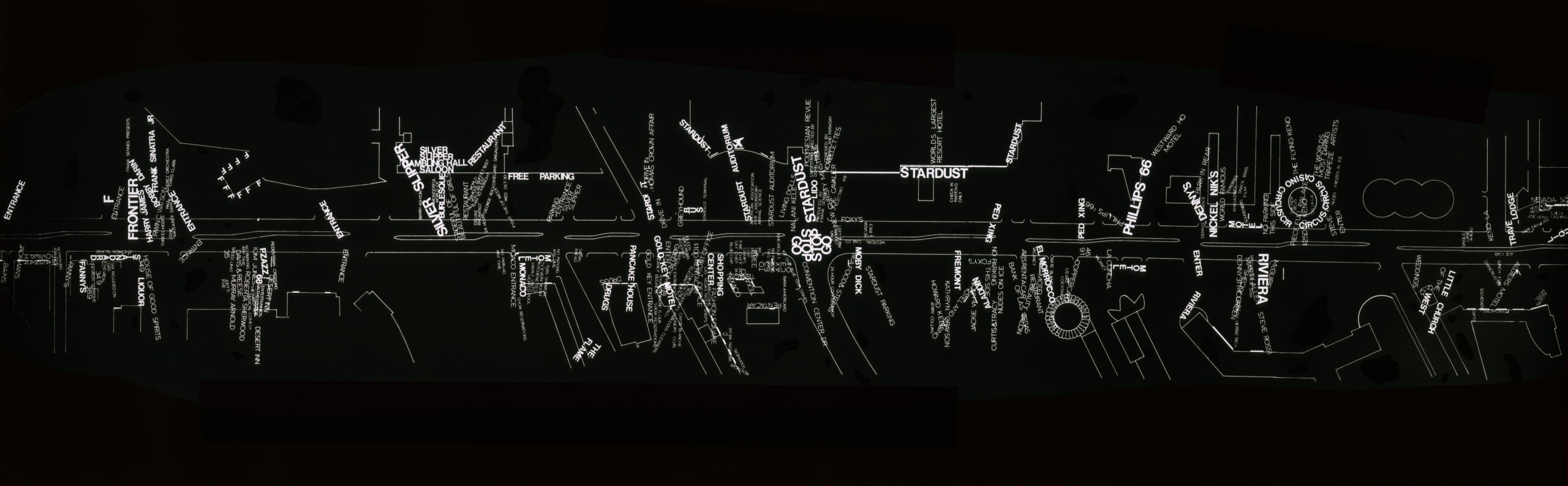
DSB: Yes. This you could think of as representing lumens. And then over here, the names of all the signs. And people began to have their own good ideas about all of that. And then I went much later to Las Vegas and everything was changing. We made a good friend of the man called Steven Wynn, now he’s in disgrace. And they took his name off the plaza that we designed at Penn. It’s sad, he was a good guy in many ways, but he got rid of all the neon. And I knew why he did that. As an economist, I knew why to have a city that thrives, you have to have a diversified economy. If you have only neon and only casinos, the city won’t grow.
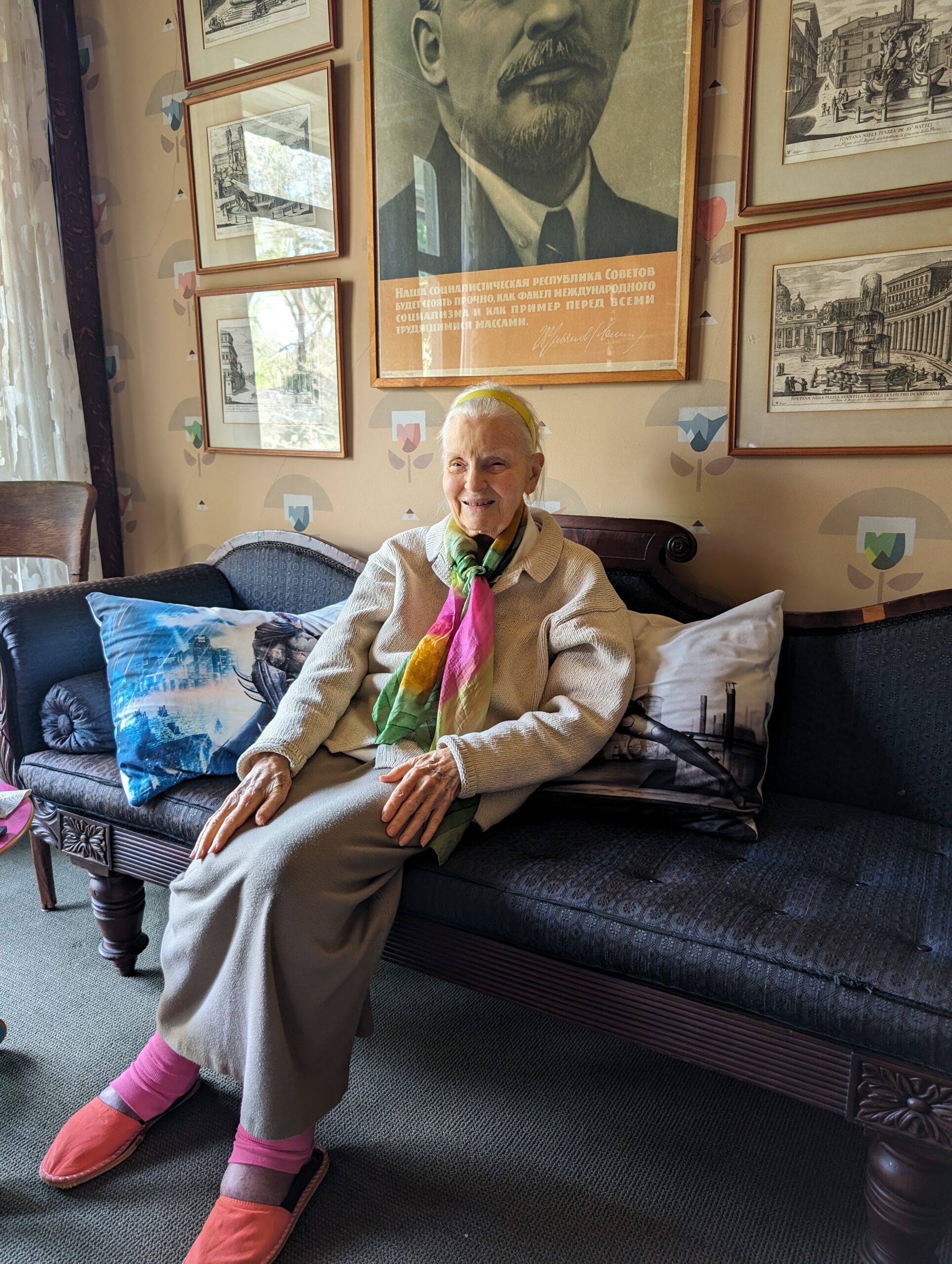
Denise Scott Brown in her home in Mount Airy, Philadelphia. Photo by Ariel Koltun-Fromm.
This text has been lightly edited for length and clarity.
*
Denise Scott Brown is an architect, urban planner, writer, teacher, activist, and former director of the highly influential Philadelphia practice Venturi, Scott Brown and Associates. Her buildings, city plans, and writing have had a lasting impact on the design profession and her Yale studio ‘Learning from Las Vegas’ generated the seminal book of the same name in collaboration with Robert Venturi and Steven Izenour. A recent retrospective of her creative life and practice, Denise Scott Brown. City. Street. House., was exhibited at Bilbao Museoa. Scott Brown’s photography, documenting her life across three continents, informed a recent book and exhibition at Yale, Encounters: Denise Scott Brown Photographs, edited and curated in collaboration with Izzy Kornblatt. She has been awarded the Soane Medal, the AIA Gold Medal, and the Jane Drew Prize, among many other accolades that document her major contribution to the profession.
Ariel Koltun-Fromm worked as a research assistant for Denise Scott Brown over the span of a year, during which he recorded this conversation. He studied maths at Williams College and Architecture and Urban Studies at the University of Cambridge, and earned his professional architecture master’s at the University of Pennsylvania, where he was awarded the Kanter Tritsch Prize, Penn’s highest design award. He has published in ARQ on the narrative politics of synagogue reconstruction in Germany and taught English as a Fulbright Fellow in Germany. He is currently an Architectural Assistant at David Kohn Architects.

– Emily Dan