Collection Guide: Álvaro Siza
– Editors
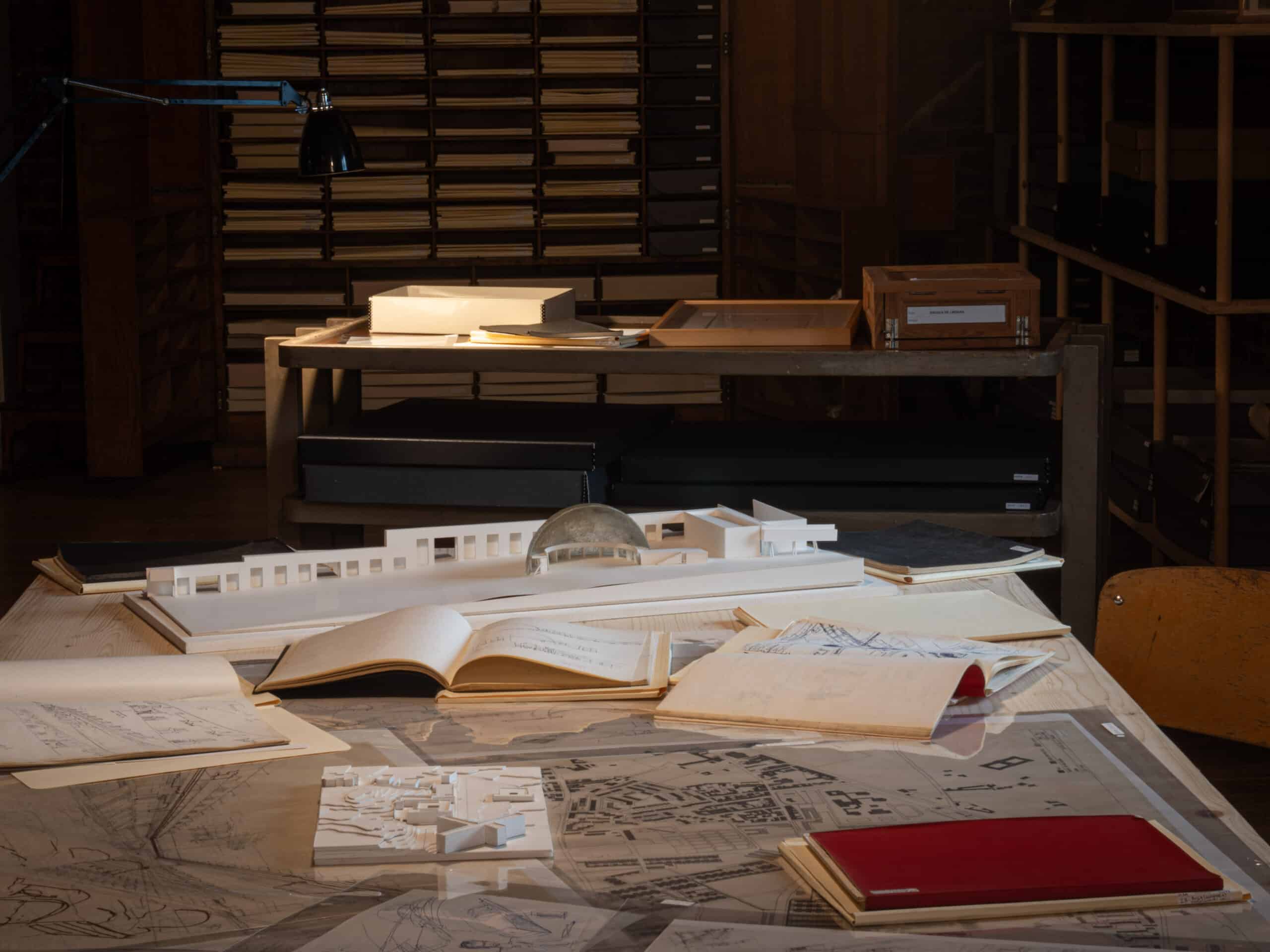
At Drawing Matter, I had long hoped that we could play some part in the transition of the Álvaro Siza archive from his personal holdings to the public realm. Ten years ago, over many meetings with Siza, Nicholas Olsberg and I had agreed that the collection at Drawing Matter might acquire a body of material that would offer significant insight into Siza’s work process, but always without compromising the integrity of his archive when considered as a whole. We felt that both the early Portuguese projects and the international commissions from the 1980s onwards had been extensively published, and should remain an integral part of the historical understanding of his career.
In contrast, the sequence of housing schemes developed around the time of the democratic revolution—São Victor, Bouça, Malagueira, Vila Viçosa, and Aviz—together represented an important, largely autonomous body of built and unbuilt work that deserved more attention. Arguably, these were the projects that cemented Siza’s reputation in the international discourse and the ones in which his design strategy matured. Besides this, their memory had been partly obscured; the question of housing, and the idea of the social role of architecture, diminished as the starchitects and their token-building emerged. They seemed to offer simple proof of our belief that the best architecture is the product of the ideological clarity and conviction of its designer.
In the public discourse, the complexity of ideas and debates involved in designing such large-scale housing operations and city expansions, directed by an architect with a strong social commitment, had barely been touched upon. We saw an opportunity to address a fascinating time in Siza’s career development—and a critical dimension of Architecture, then as now. The fact that the act of drawing was key to the way in which these ideas were developed and matured—and the sheer number of pieces of paper that the process demanded—would also offer rich insight into the intricate process of giving proper form to an urgent problem.
The scale of the Malagueira undertaking (large and complex programme, short amount of time) had also encouraged Siza to rethink his design methods and tools. From March 1977 the numbered sketchbooks become his permanent companions and the principal repository of his architectural thinking—in fact, fundamental instruments in the development and management of a complex office, involving parallel designs in different contexts. Seen together, and in strict sequence, the interplay between the development of Malagueira with other contemporaneous projects, with Siza’s encounters, visits, and travels, and his teaching or personal reflections, provide a very rich account of how architecture is created. Such documents are deeply personal instruments for an architect; Siza needed to assure himself that the sketchbooks and other material would be moving to a good home, and rendered easily accessible to visitors, researchers, or friends who might otherwise never get to see them.
After the fate of the remaining archive had been largely resolved, we started to work intensively with the material he had entrusted to us. Siza intimated that he would like to see some of the material from the key projects for Porto find its way to the Serralves—thus providing the museum with a fuller portrait of his work in the north of the country. We were happy to agree that a key part of the material we held for São Victor and Bouça should, instead, have its home in Portugal, as very modest repayment of the immense trust that Álvaro Siza placed in Drawing Matter—in a private charity, in a far-off land where he had never been asked to design a building.
—Niall Hobhouse, 2024.
This text was originally written for the catalogue of ‘C.A.S.A. Collection, Álvaro Siza Archive’, an exhibition at the Serralves Foundation in 2024.
See also Niall Hobhouse’s interview with Andrew Clancy for more on Drawing Matter’s acquisition of Siza’s drawings and subsequent exhibition and publication projects, here.
READ ALL TEXTS ON ÁLVARO SIZA.
DMC OVERVIEW
Álvaro Siza’s archive is principally divided between four organisations: The Canadian Centre for Architecture, The Serralves Foundation, The Gulbenkian Art Library, and Drawing Matter. The Museum of Modern Art, NY, holds material for São Victor housing that complements Drawing Matter’s, as well as material for the Banco Pinto & Sotto Mayor (1971–4).
The following is an overview of Álvaro Siza’s work in the Drawing Matter Collection. View all the DMC material here (requires registration).
Quinta da Malagueira, Évora, 1977–2000
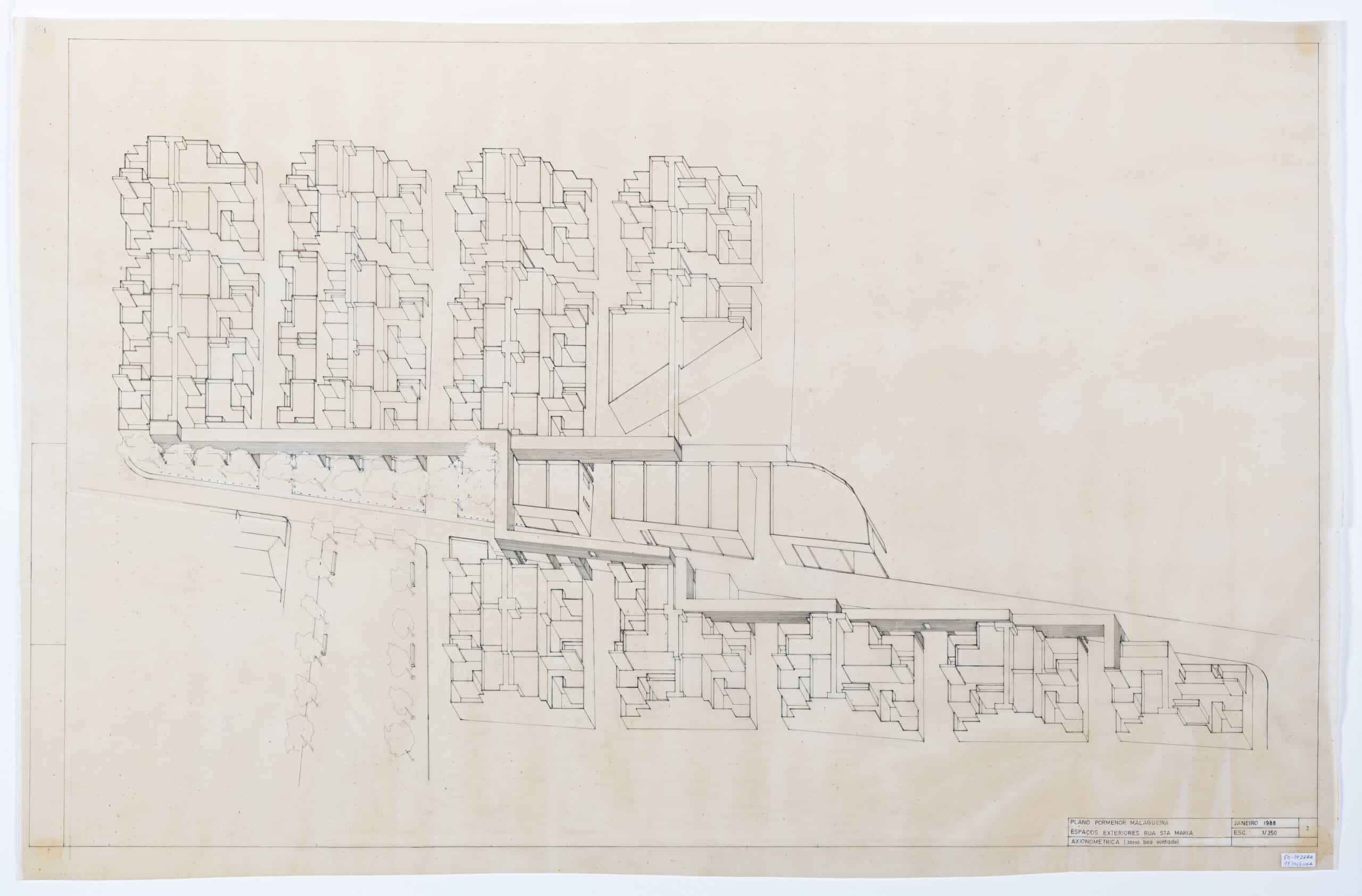
Low-rise housing comprising 1200 units built outside the medieval city of Évora. The services are provided above ground via a ‘conduit’ that weaves through the housing blocks. DMC contains a number of drawings for the unbuilt ‘cupula‘, a half-dome structure conceived as part of the public space.
Site Plans: 1977–83
Housing: 1978–2000
Infrastructure (Including Conduit/[Conduta]): 1982–83
Public Buildings: 1979–97
Outdoor spaces (Including garages and gardens): 1982–89
Studies (Siza): c.1979–83
1299 items
The University of Évora has recent published two books on Siza’s work at Malagueira. Read them online here: Olhares (a survey of photographs) and A minha casa (on Siza’s own house at Malagueira).
Barrio da Bouça I, 1972–73
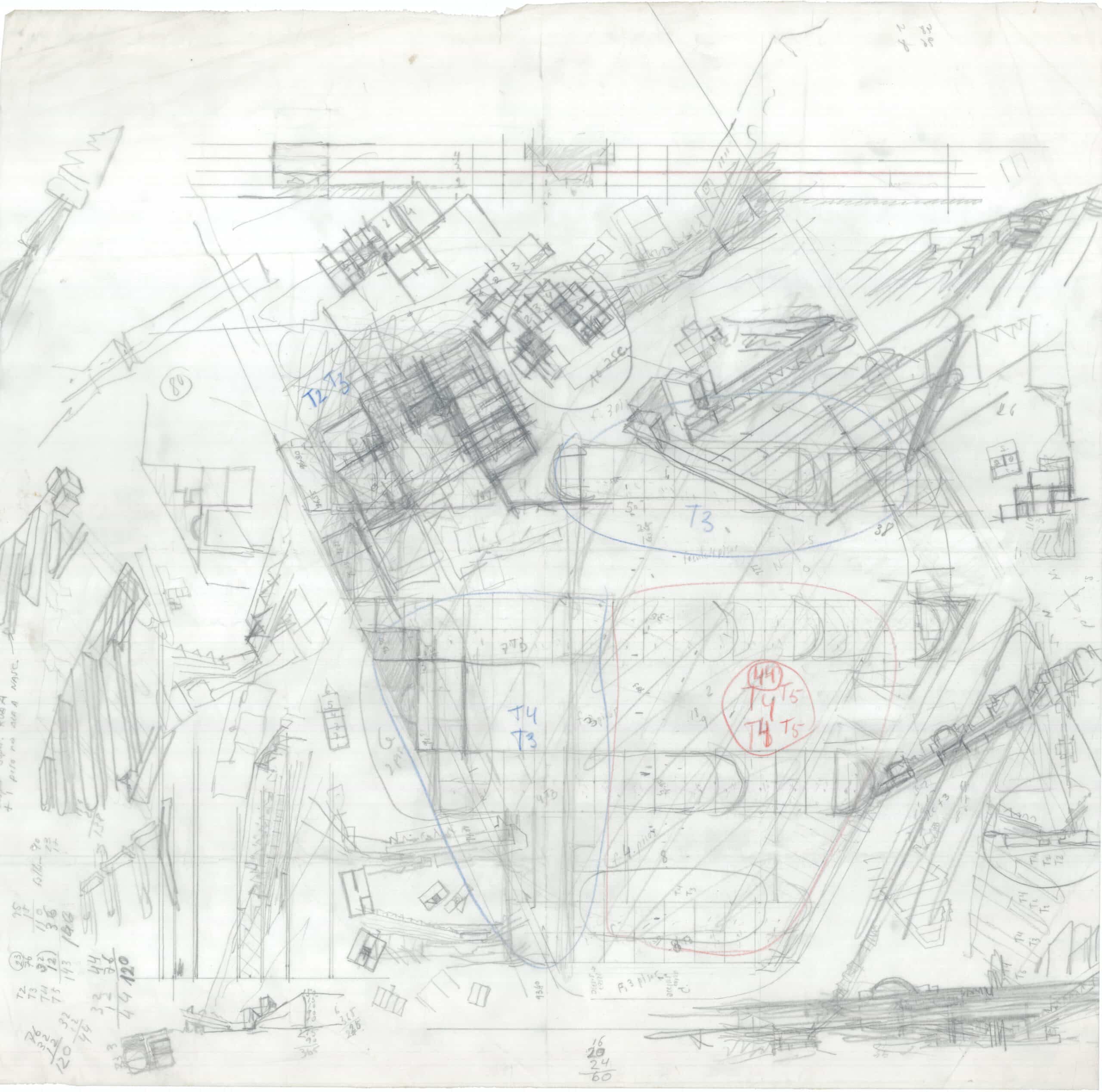
Housing on a site in central Porto perpendicular to the railway line. The first commission for the site was for low-cost housing for lower-middle class residents. Following the Revolution in 1974, the second commission was for social housing for the working classes, supported by the Serviço de Apoio Ambulatorio Local (SAAL). The SAAL programme ended in 1976 leaving two thirds of the project incomplete. Construction was resumed in 1998 and completed in 2006.
Find a short history of the project here.
Drawings: 1973
Prints and studies (office)
Studies (Siza)
47 items
Barrio da Bouça II, 1976–78
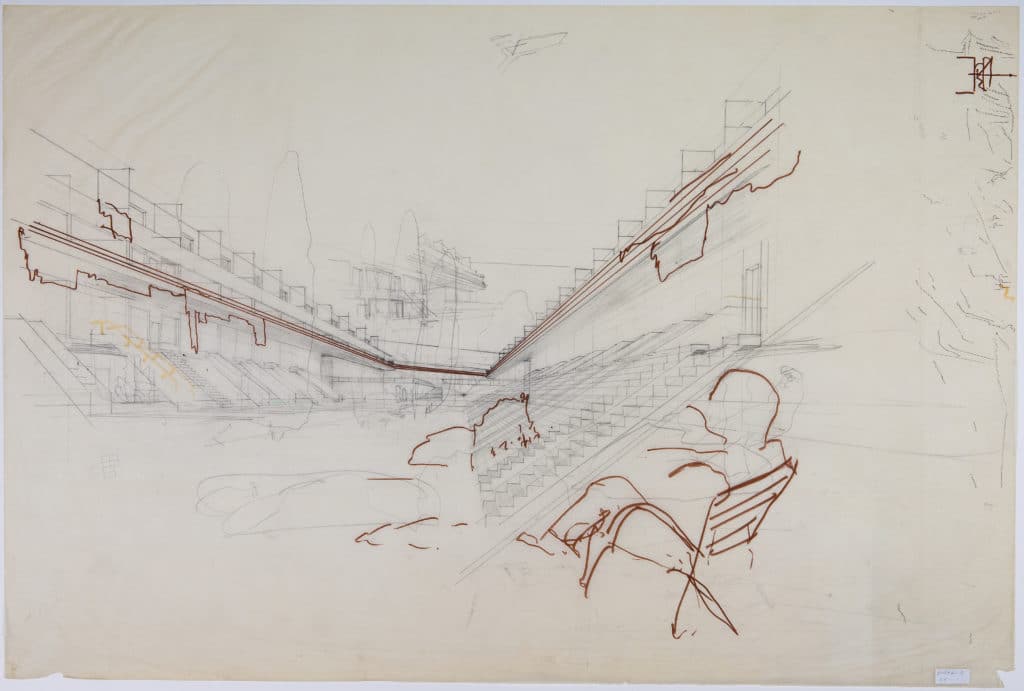
Drawings: 1976 and 1977
Drawings: 1978
Prints and studies (office)
Prints and studies (office) with annotations by Siza
Studies (Siza)
168 items
São Victor Housing, Porto, 1974–76
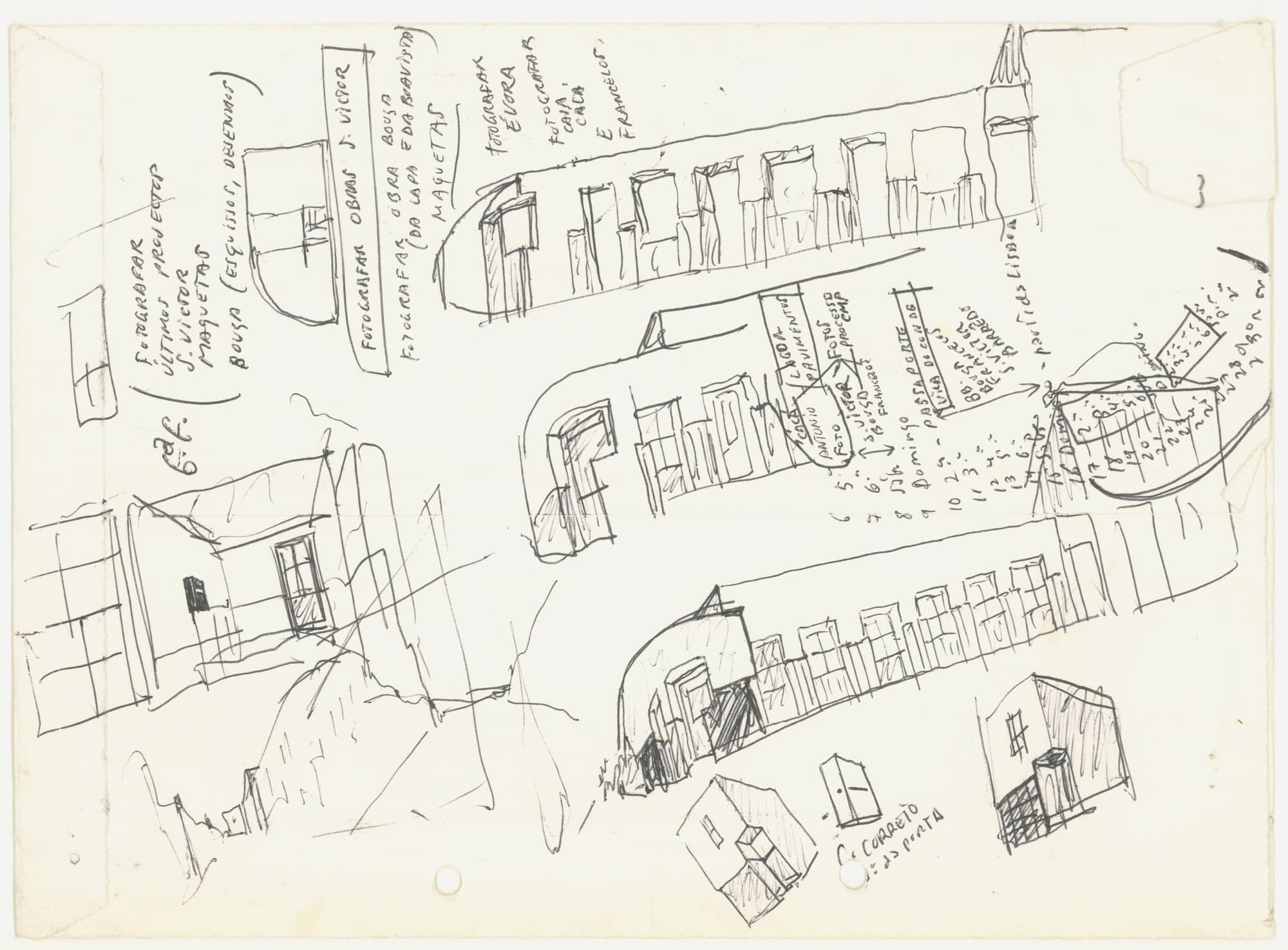
Project for a block of twelve houses on a small urban site, commissioned by the Serviço de Apoio Ambulatório Local (SAAL). Read more on the history of this project, including it origins as a larger scale development, here.
Studies (Siza): 1974–76
110 items
Cooperativa ‘A Reconquista’, Aviz, 1979
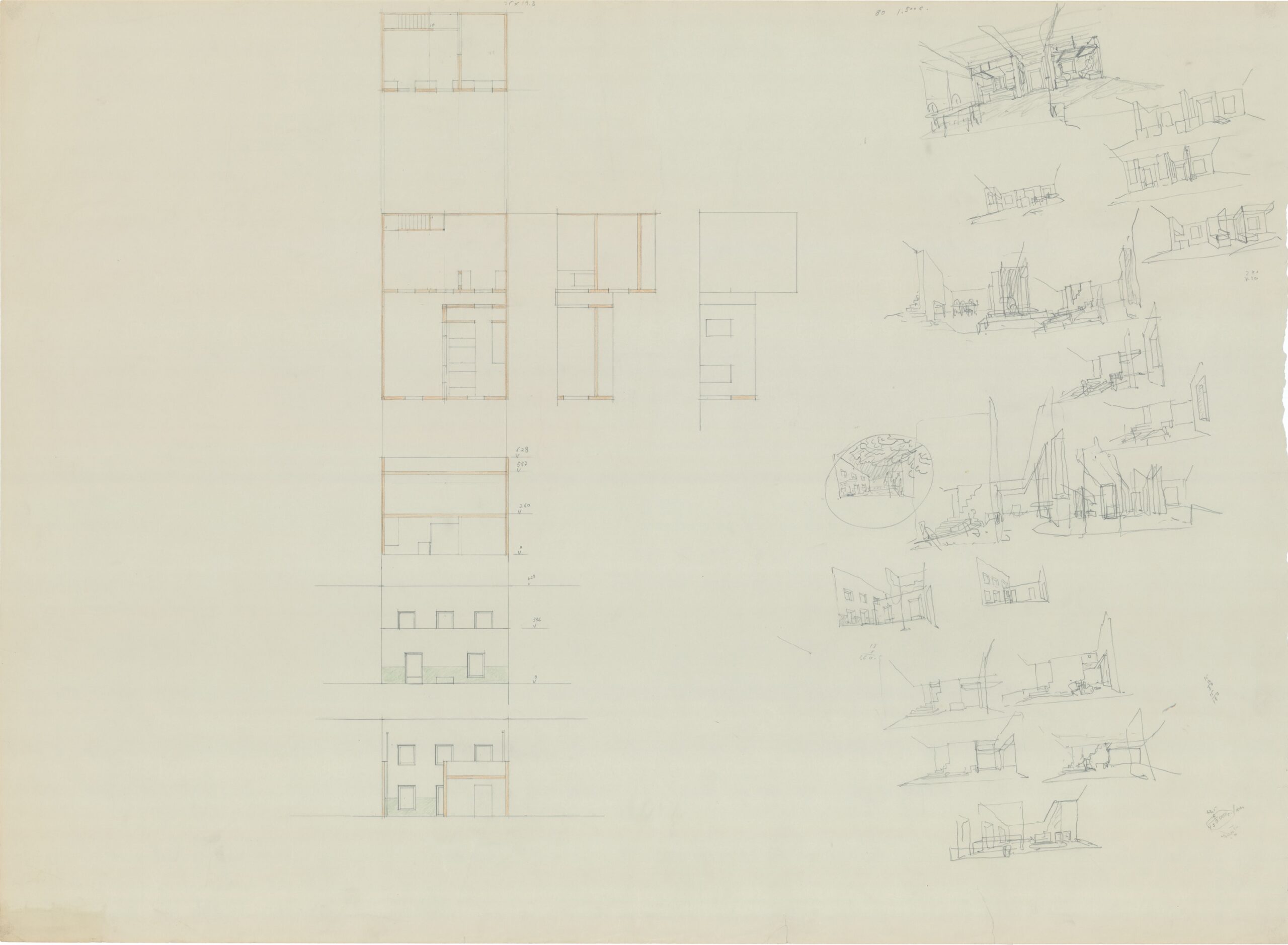
Unbuilt project for 100 dwellings; 86 were to be built in an initial phase of construction.
Drawings: 1979
Prints and studies (office)
Studies (Siza)
54 items
Cooperativa ‘Florbela Espanca’, Vila Viçosa, 1978–81
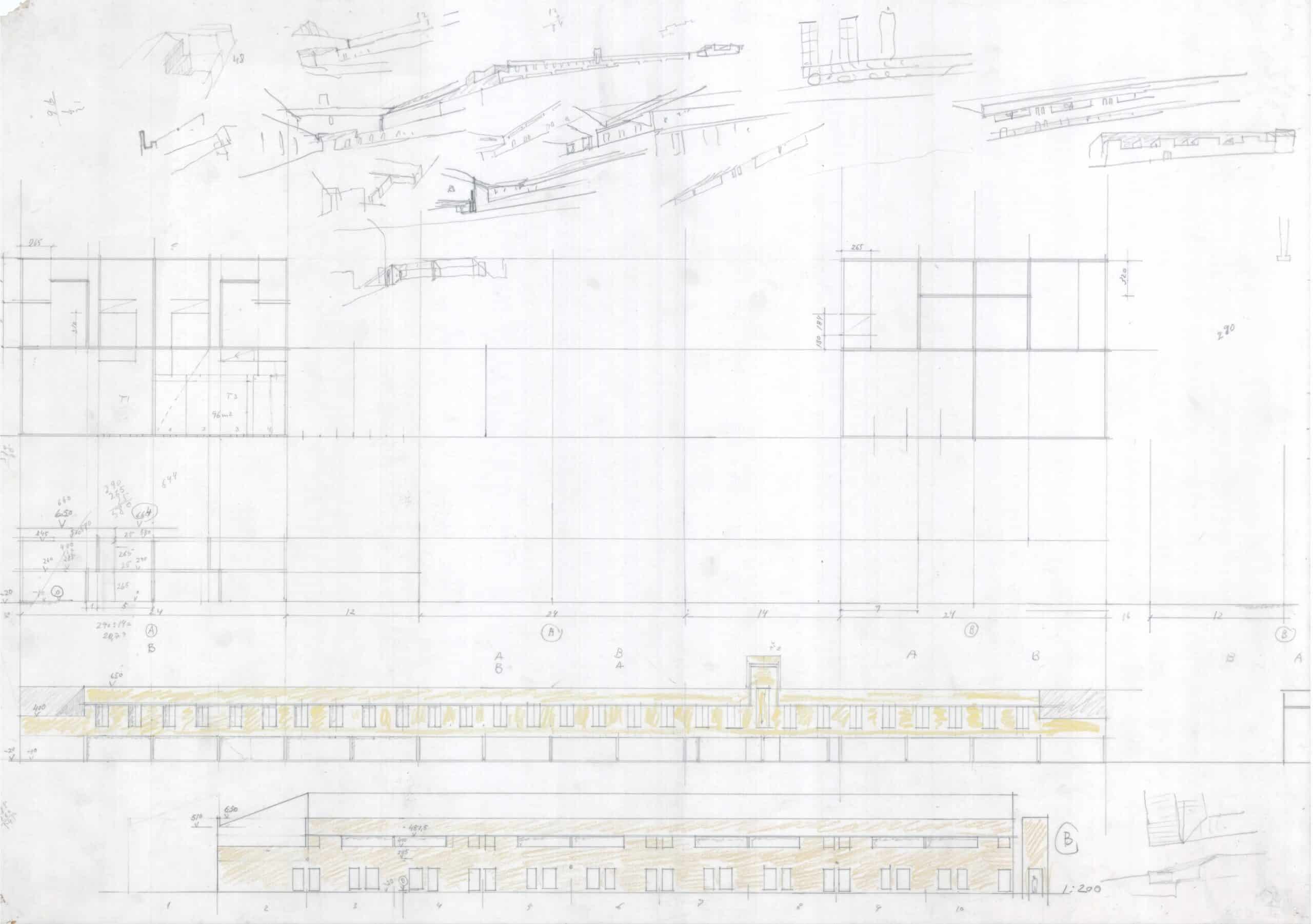
Unbuilt project for 72 dwellings in Vila Viçosa.
Drawings: 1979
Drawings: 1981
Prints and studies (office)
Studies (Siza)
95 items
Cadernos (Sketchbooks), March 1977–March 1999
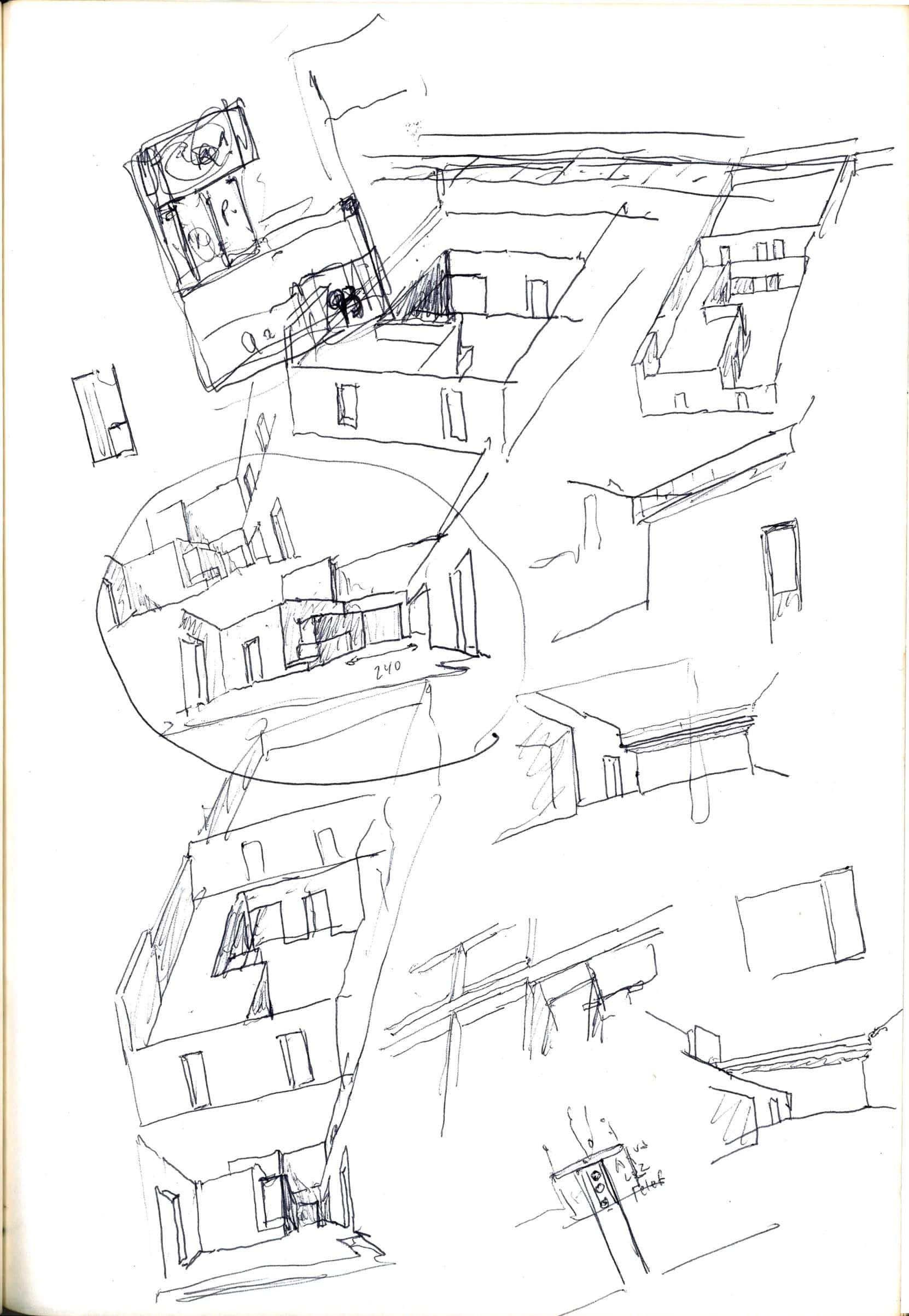
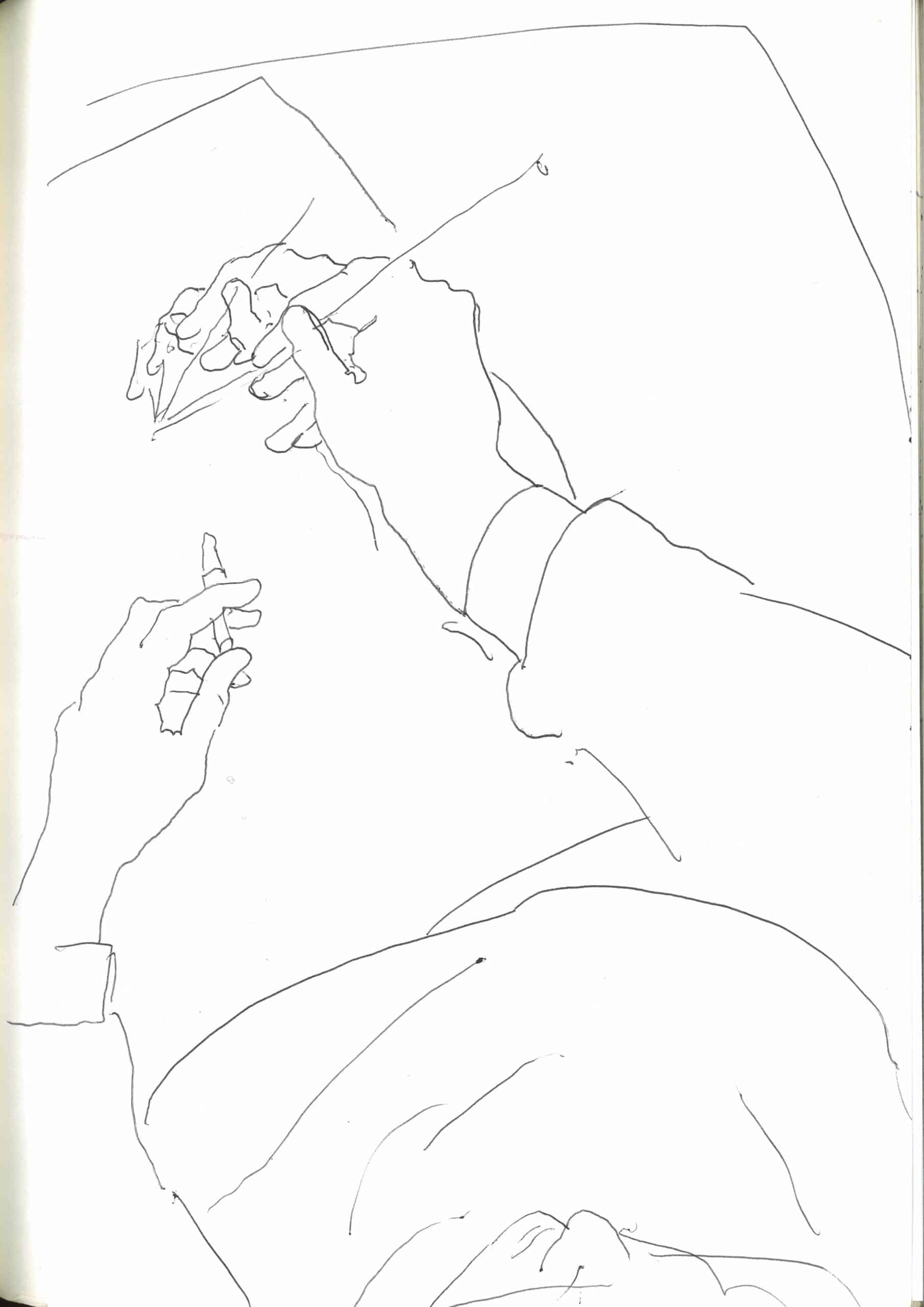
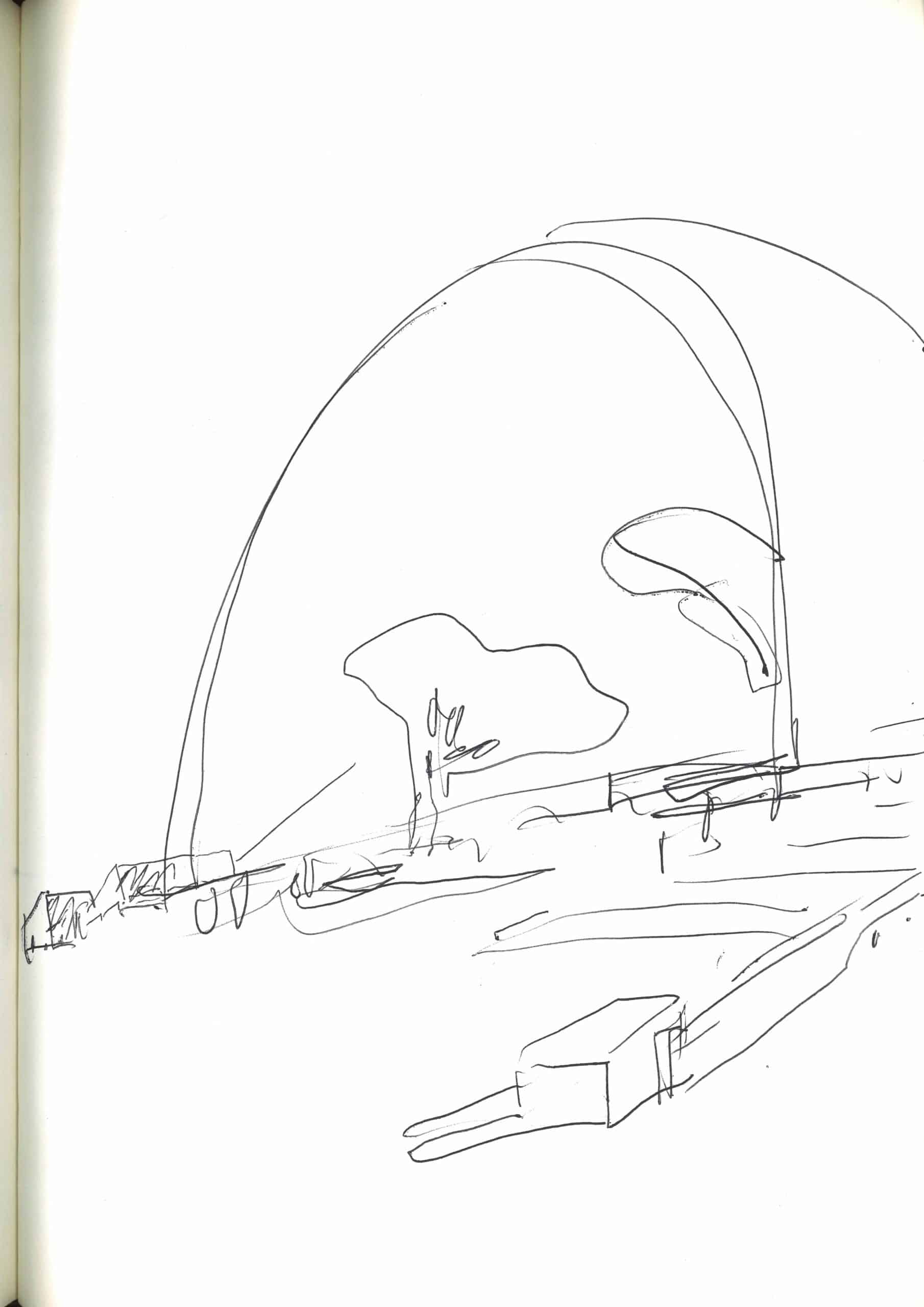
Sketchbooks used by Siza primarily dating to the late 1970s.
No. 1–5, 7–16, 18–23, 25–28, 31–35, 39–42, 48, 51, 54, 56, 77, 79, 100, 111, 128, 202, 206, 218, 277, 460. 4 sketchbooks for the Barrio da Bouça (c. 1973–74).
52 items
Royal Academy Columns, 2013
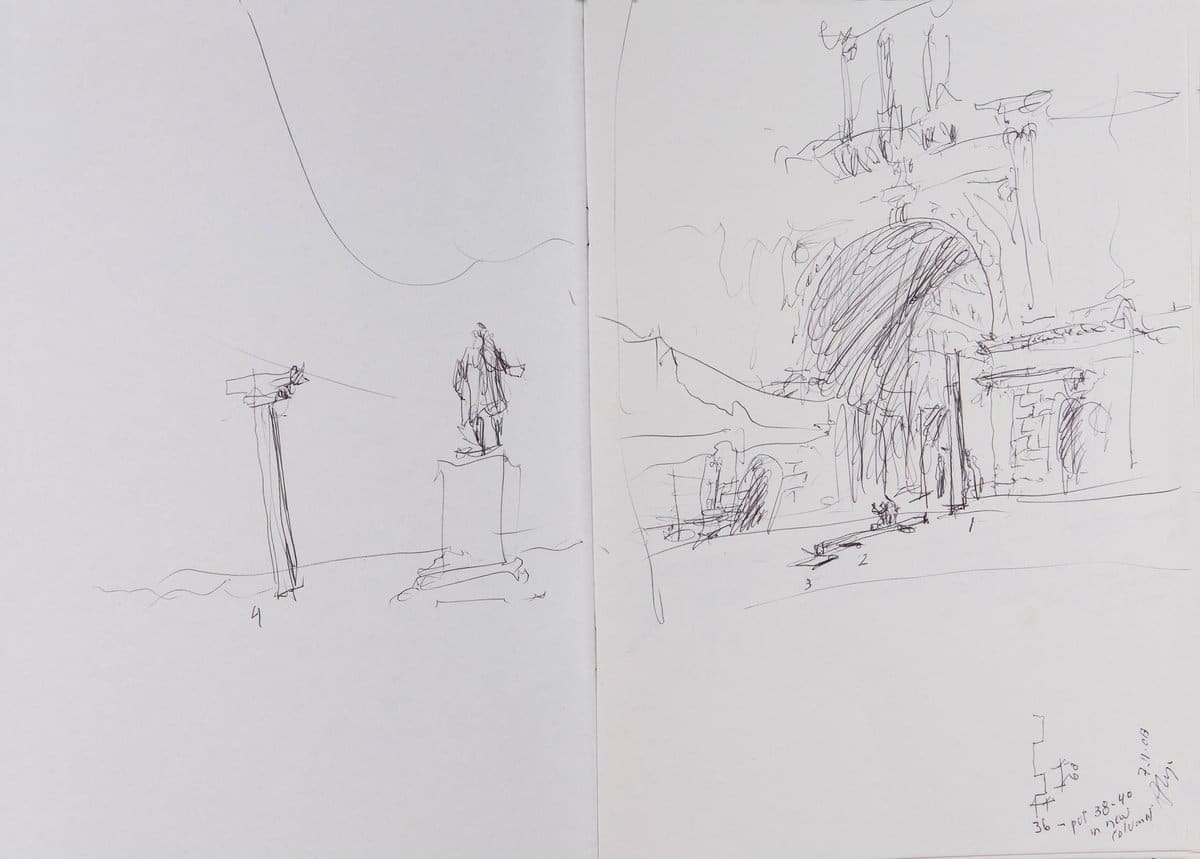
Commissioned as part of Sensing Spaces at the Royal Academy, London, Siza designed three yellow pigmented concrete columns. After the exhibition, the columns were relocated to Shatwell Farm until Drawing Matter’s move to London in 2024. The collection contains a sketchbook with studies of the columns in the Royal Academy courtyard and at Shatwell Farm, and a model of the RA installation.
Siza on Paper 27–29 March 2026
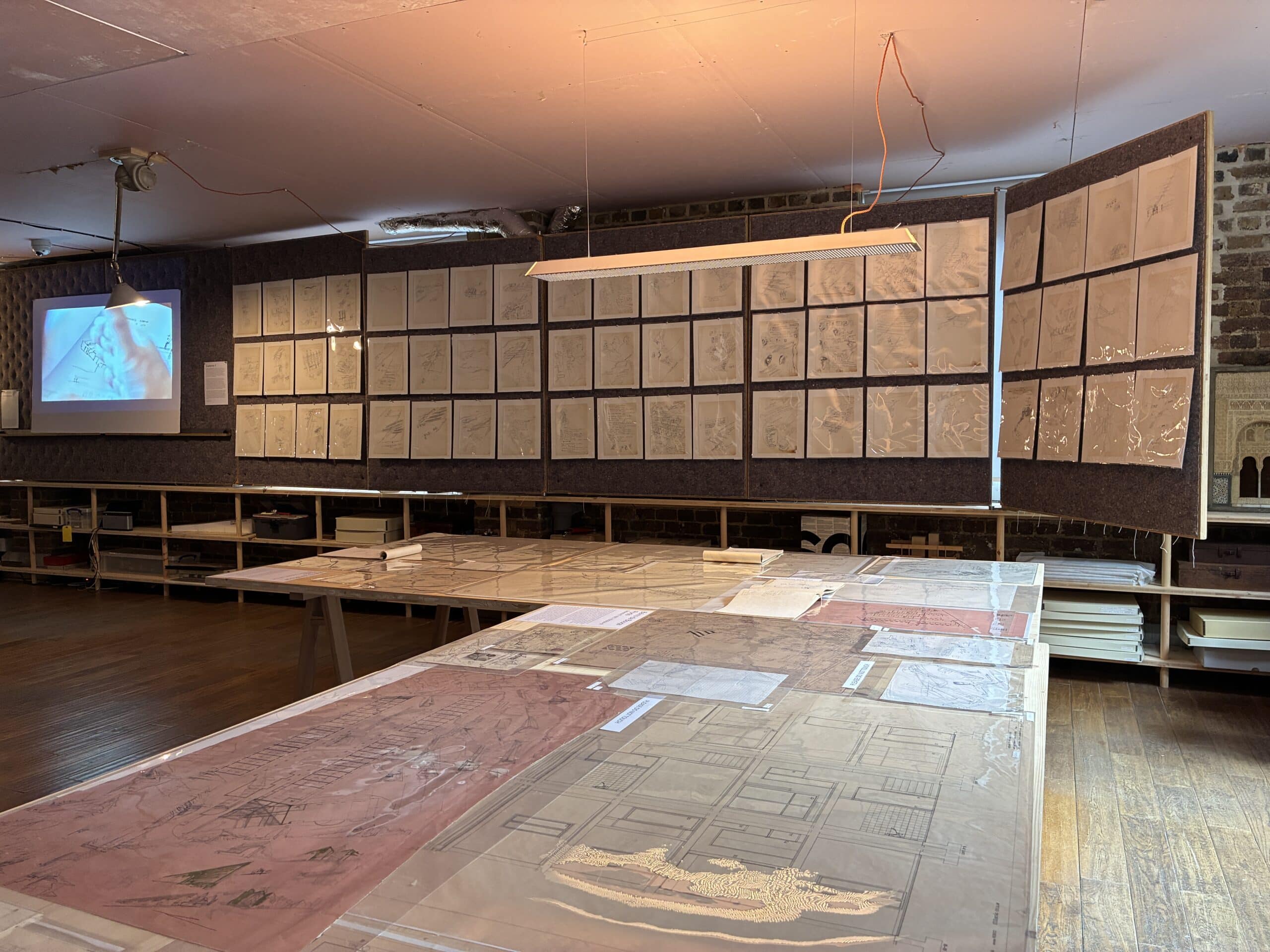
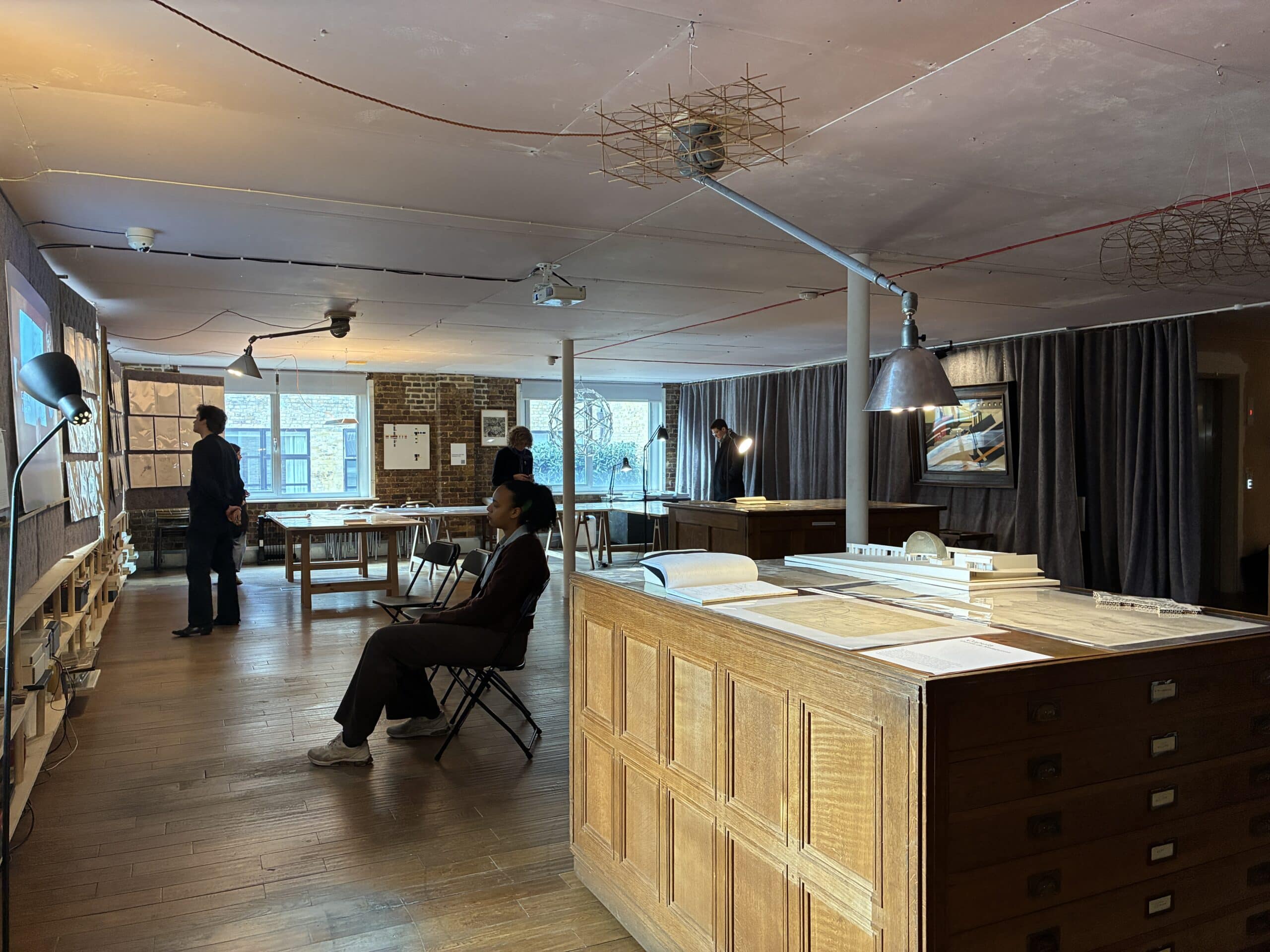
In March 2026, Drawing Matter hosted a weekend exhibition of Siza’s work from the collection. More information about the exhibition can be found here. The exhibition texts can be read here.
Additions and amendments are welcomed at editors@drawingmatter.org.
