Atlases: Drawings on Newspaper
My drawings are done on an unusual medium: newspapers. Around 2016, I began to draw on news–paper to try to counteract that inescapable status of newspapers themselves: conveying daily words that are often forgotten the next day, a condition reflected in an idiom of the English language—yesterday’s paper—used to refer to something that has lost its original purpose.
The drawings and two atlases presented here are included in the author’s recent publication Ombre del tempo che viene (2024).
*
MMXXII: A time within time
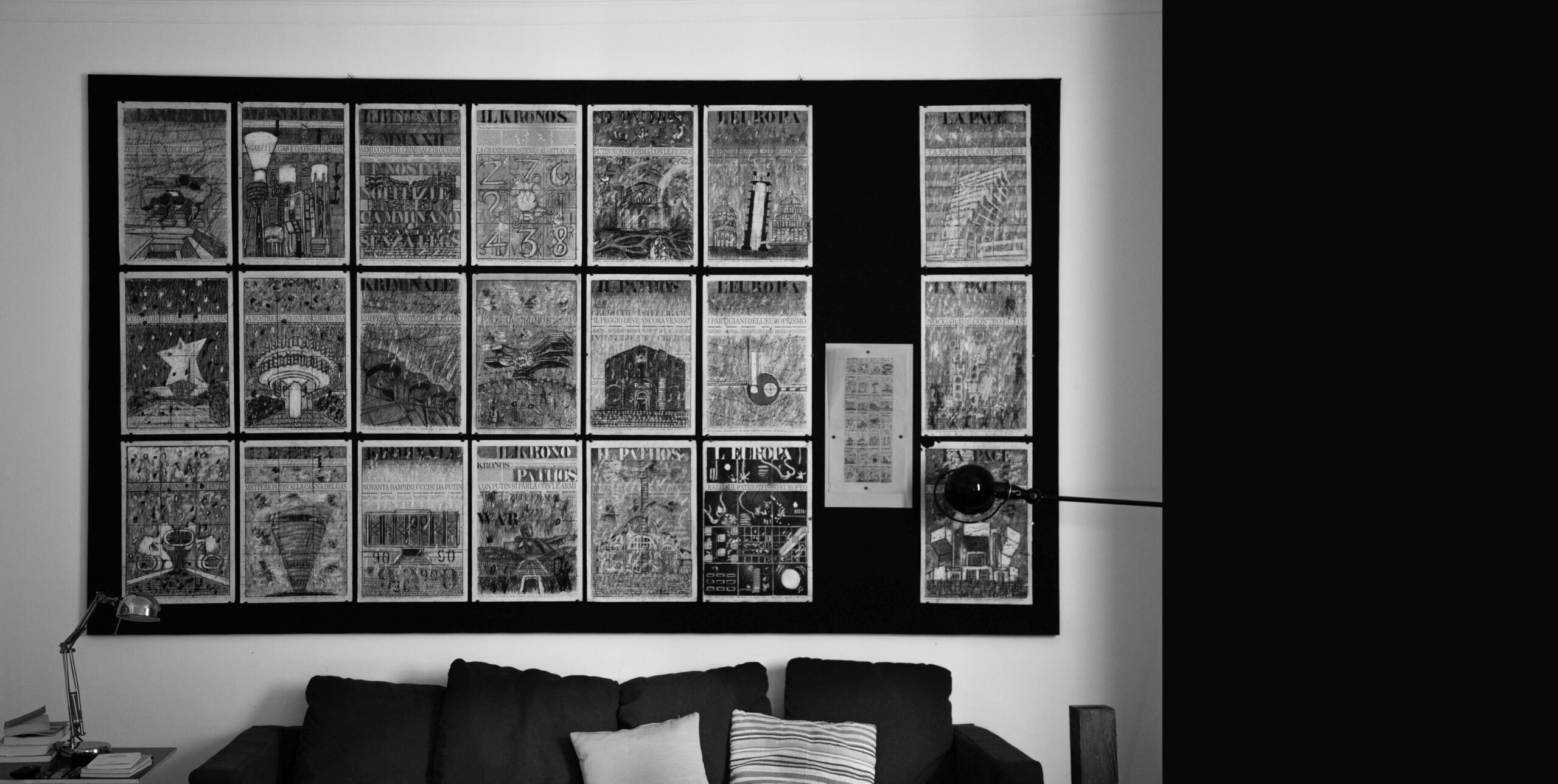
In March 2022, Il Foglio Quotidiano published full-page headlines daily in red ink. They conveyed, without any ifs or buts, a very clear position on the War that erupted in Ukraine in late February 2022. Going beyond my admiration of the courage found in the cultural operation with vaguely Dadaist traits, or perhaps because of it, I began to collect those headlines that eventually ended in early April. Then I organised them by category, as if the headlines themselves had given directives. Or, as if someone had entrusted me with the task of inventing a kind of aesthetic atlas, something I have been doing ‘unintentionally’ (without much thought, that is) with some frequency lately.
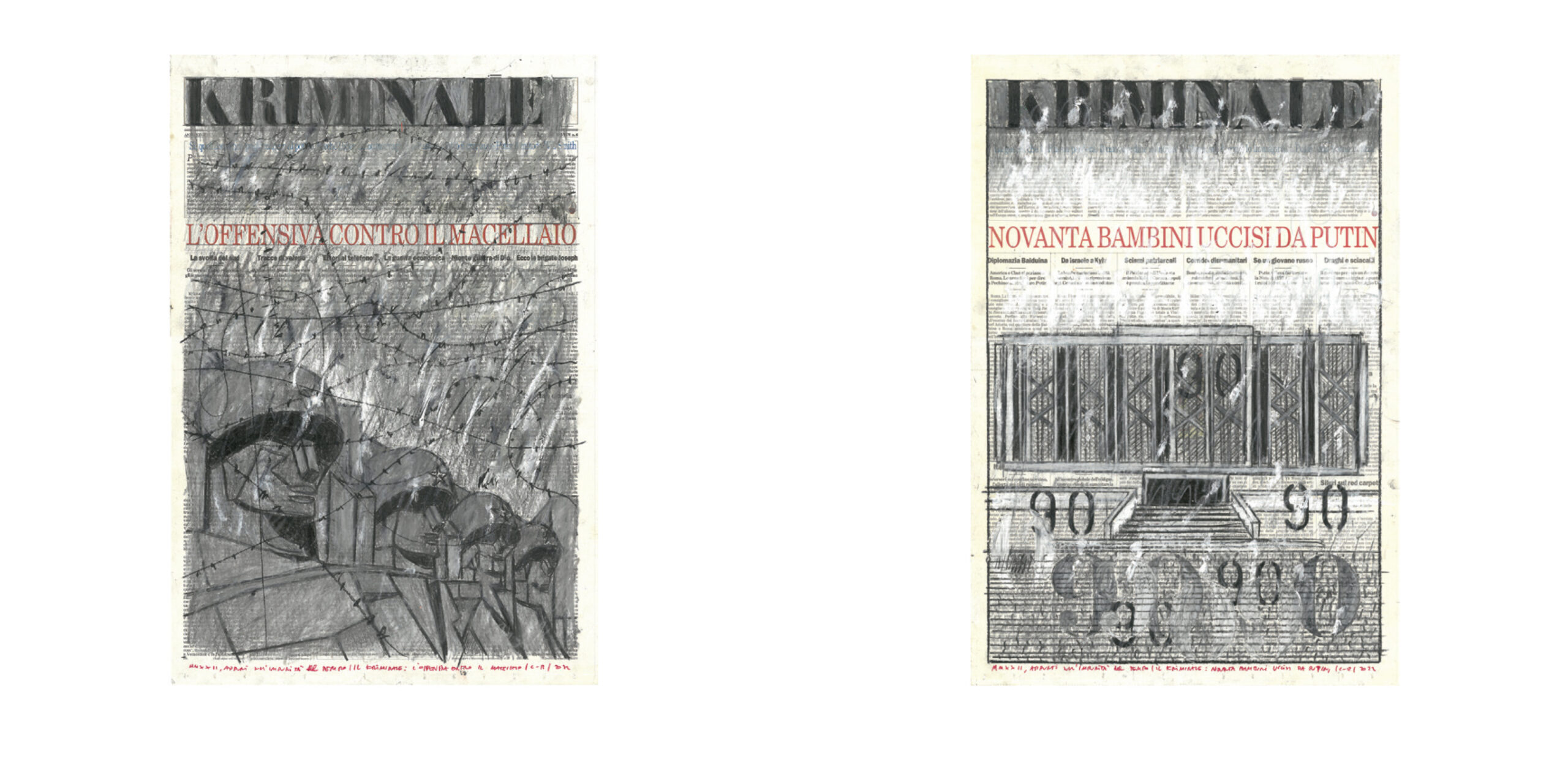
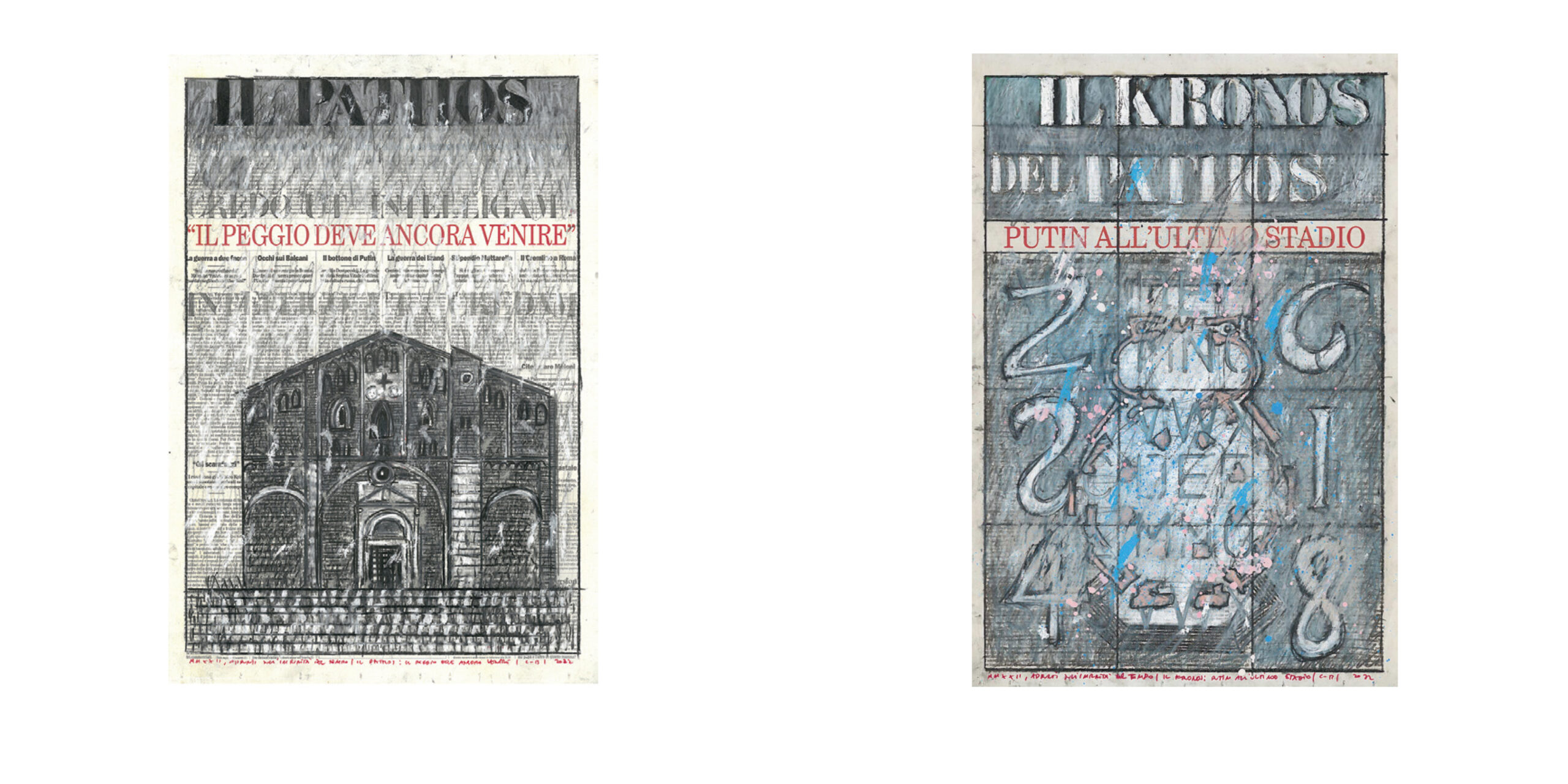
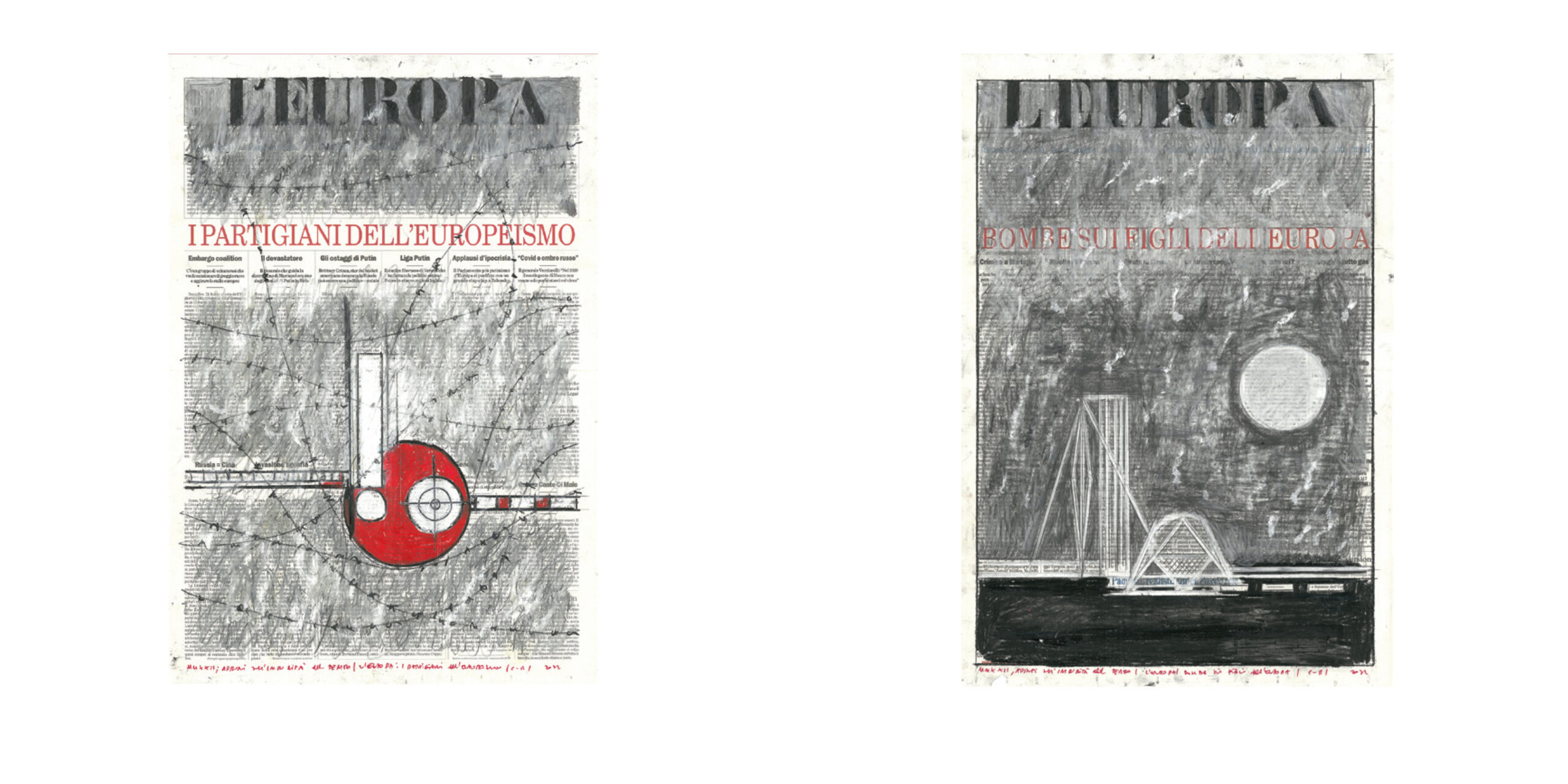
The activity revealed 7 categories with a Tolstoyan flavour, ranging from the categories of War to Peace. It was as if they were bookends framing different kinds of Pathos, specifically the Energy of a Kronos deprived of Kairos as a result of the negative energy of a Kriminal who thought that it was the only possible way to put several geopolitical issues on the world government’s table. The atlas is seen as a device that plays on multiple levels: on the level of art, on the level of politics, on the level of geopolitics, on the level of information, on the level of current events, and, of course, on the level of architecture.
*
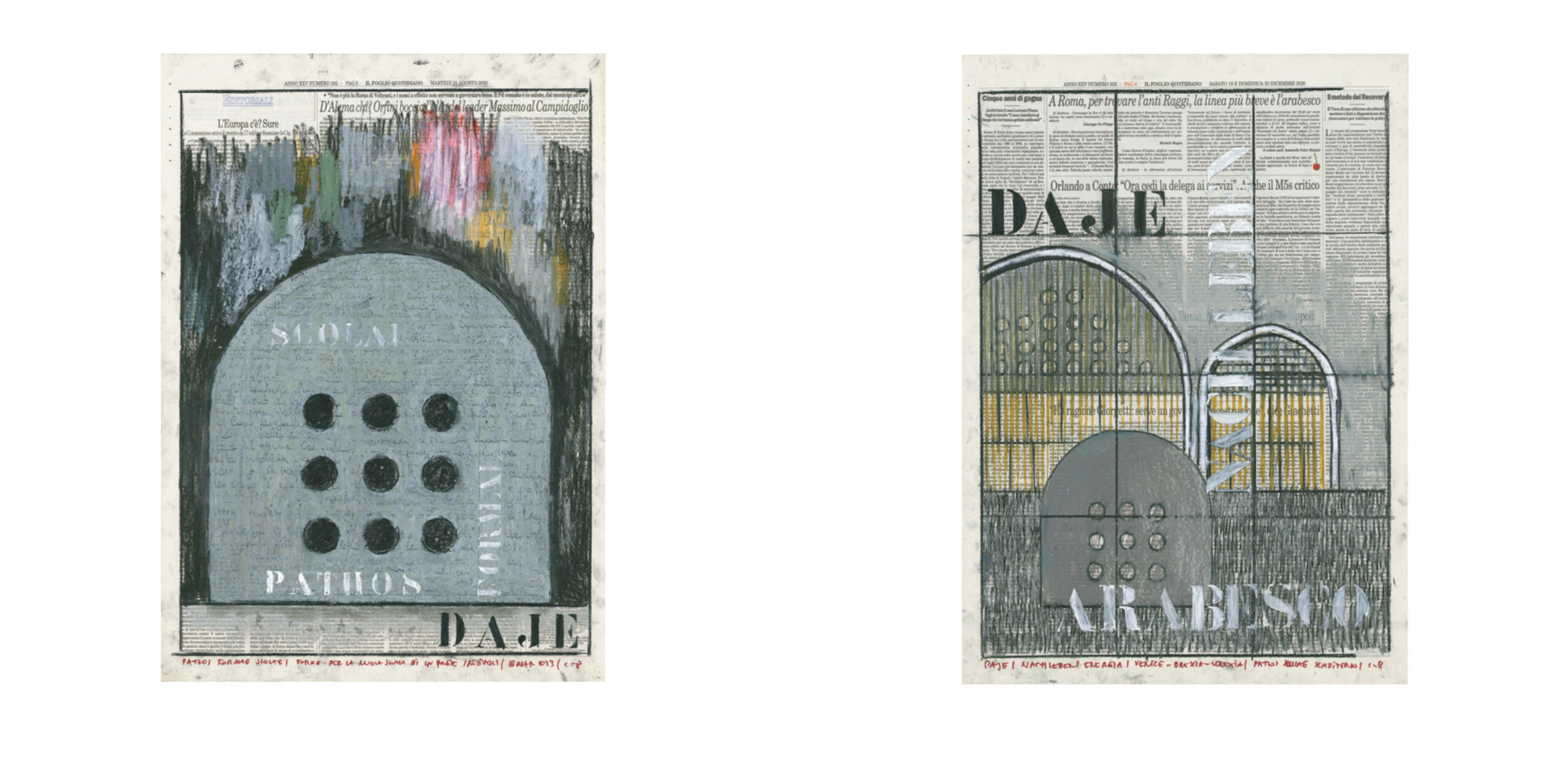
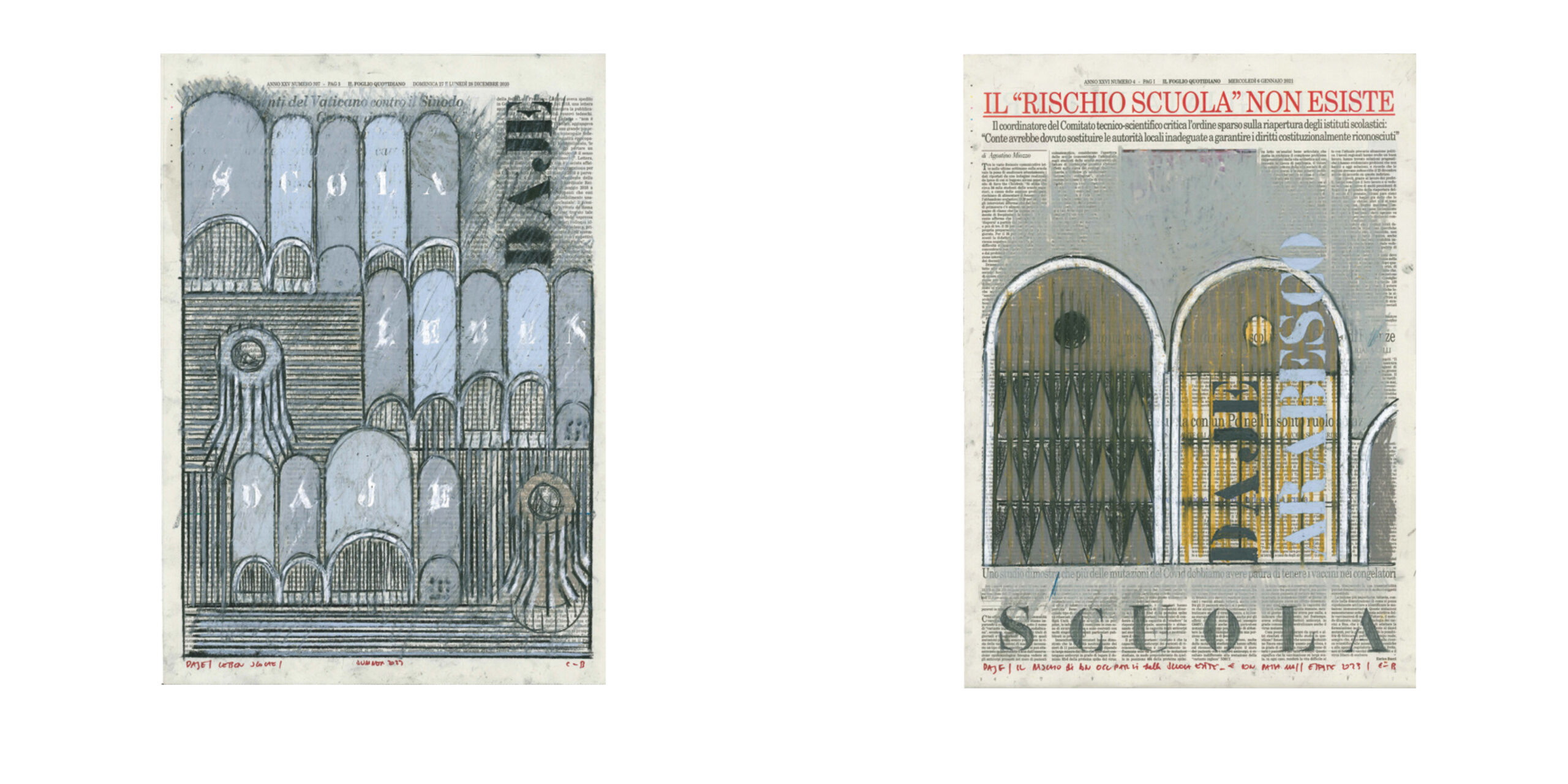
DAJE
The drawings in this atlas are diversified in nature and lie along that strange intersection between research and competition, or professional activity. The atlas brings together projects for competitions, ongoing projects, and architectural forms. One could perhaps speak of forms that are the object of unplanned unconscious investigations and therefore cannot be explained in rational terms. Investigations that seem to elude not only to the meta-verse but also to its mysterious secrets, assuming they really exist. Authoritative investigations of those who do not really trust the help of the meta-verse itself because they do not believe that it has any chance of ever being able to be considered an ‘author.’ This is thought at least by all the remaining critical happy few who are endowed with a ‘critical’ sensibility toward the power of the form of architecture. A particular Roman expression—Daje—accumulates this heterogeneous group of signs. It is an expression not to be underestimated and of which I personally find greatly helpful: it is a kind of self-encouragement, which is necessary to resort to more and more often. It must be done to try to forget, if only for a few moments, what no one seems to want to talk about: the endless plethora of rules, forms, documents, certificates, passwords and whatever else is, at supersonic speed, preventing them from establishing any possibility of intelligent discourse with anyone. Buried in a growing mountain of problem-solvers, ‘experts’ and micromanaging bureaucrats, the few ‘authorial’ architects active today should be safeguarded like pandas, protected by high, impenetrable walls only to be accessed by those with the required passport. This atlas intends to pay homage to these heroic figures with the grand presence (fisico bestiale) of authorial architects.
paolo conrad-bercah is the founding director of c-ba, an architectural design office that has developed a variety of projects in Europe for public and private clients. His professional activity merges with the complementary activities of drawing and writing. His drawings have been exhibited in Venice, Berlin, Florence, Rome and Milan. The architectural drawing series Anticity that is coming (2020) won the 2021 competition ‘La città come cultura’ held by the Triennale di Milano and the MAXXI museum in Rome.
