Levers Long Enough to Move the World
Sketches in Contemporary Architecture
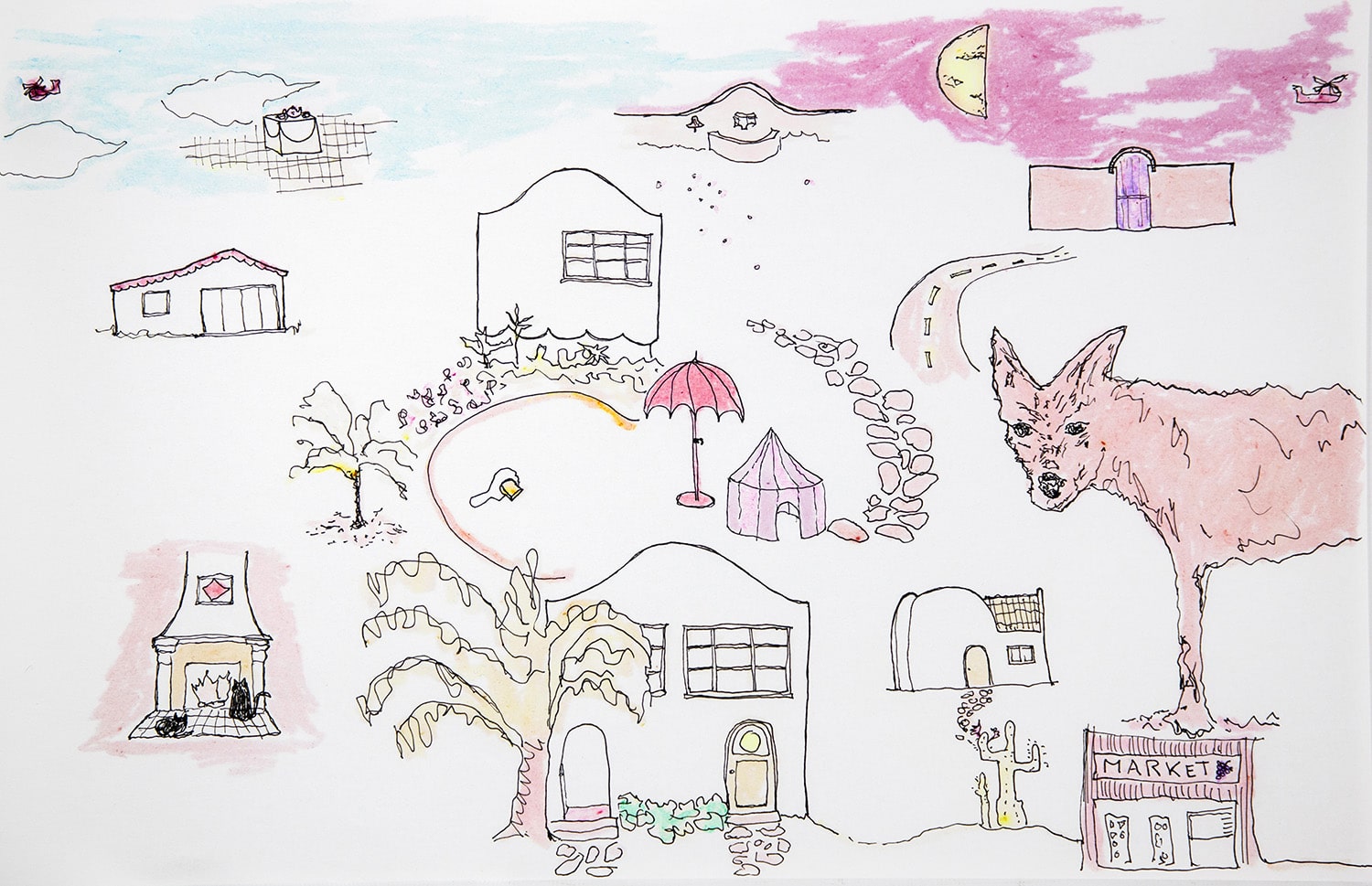
‘Give me a lever long enough and a fulcrum on which to place it, and I shall move the world’
— Archimedes
Levers Long Enough to Move the World is an exhibition of architectural sketches curated by Andrew Holder at the Pratt School of Architecture, featuring the work of 62 contemporary practices. It is organised around a question and a theory. First, what is the sketch today? Second, as a proposed response, that sketches are levers. They are a way of asserting architecture’s physicality in an ever-less material world and of exerting the force of this physicality entirely out of proportion to their smallness, quickness, and humility.
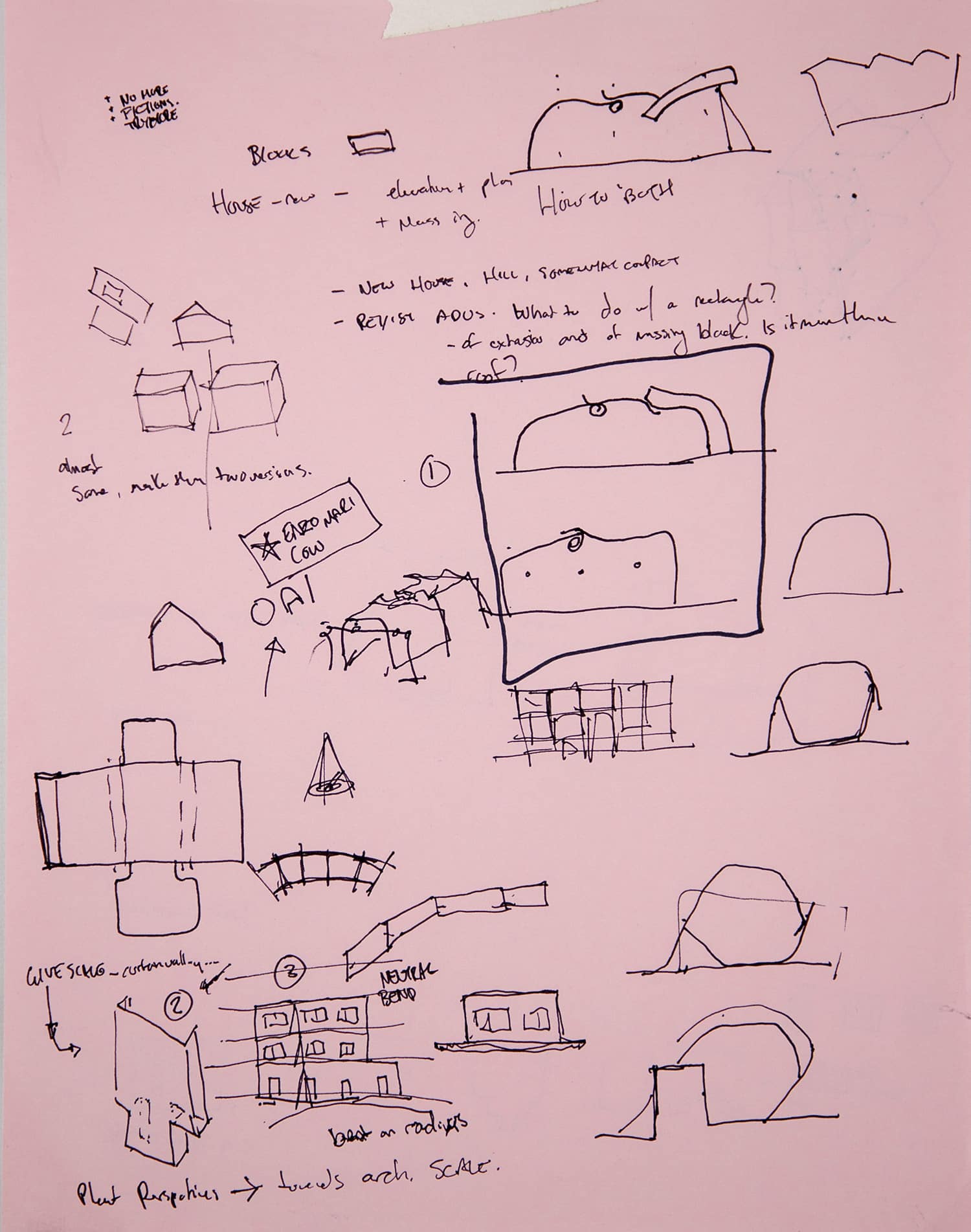
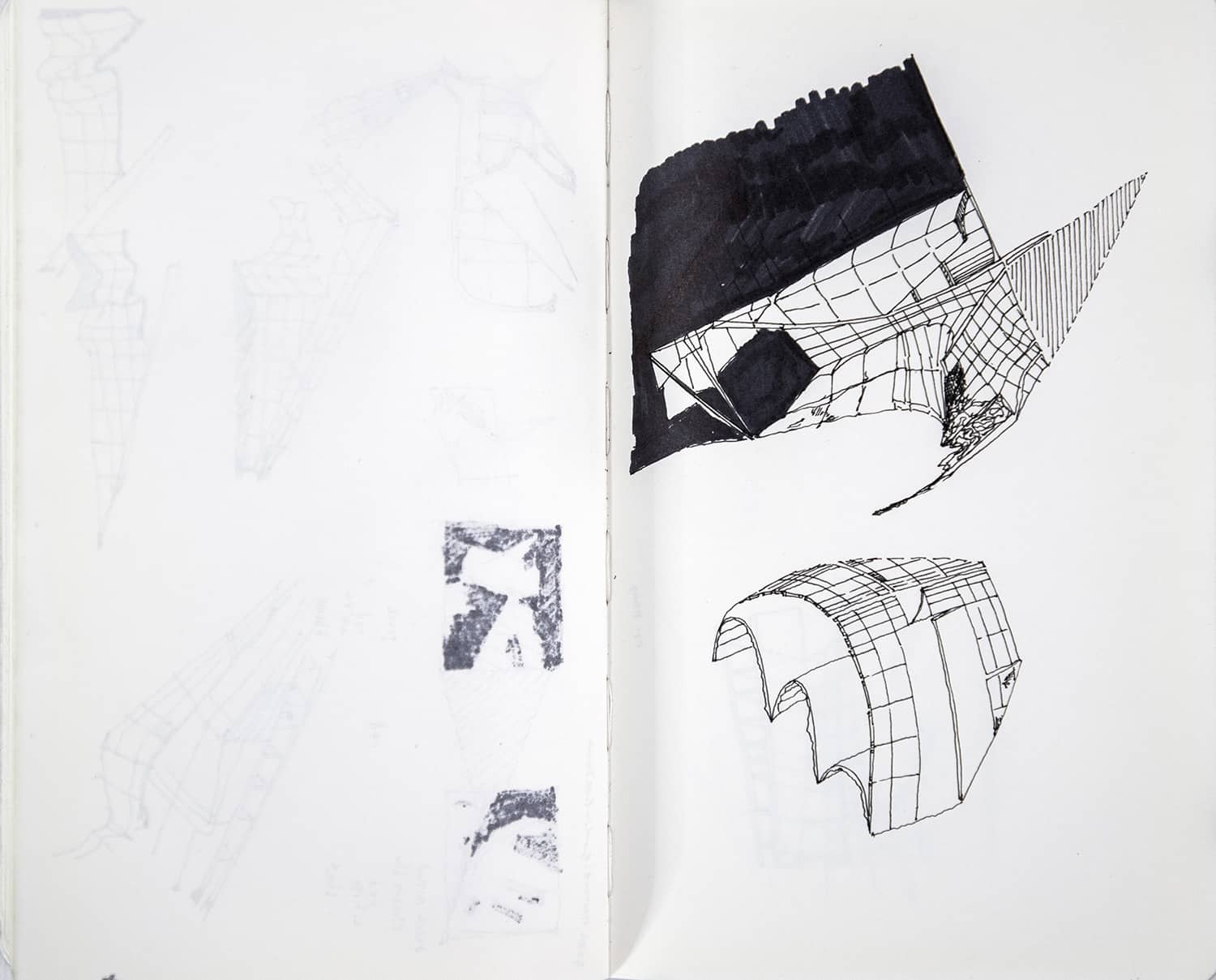
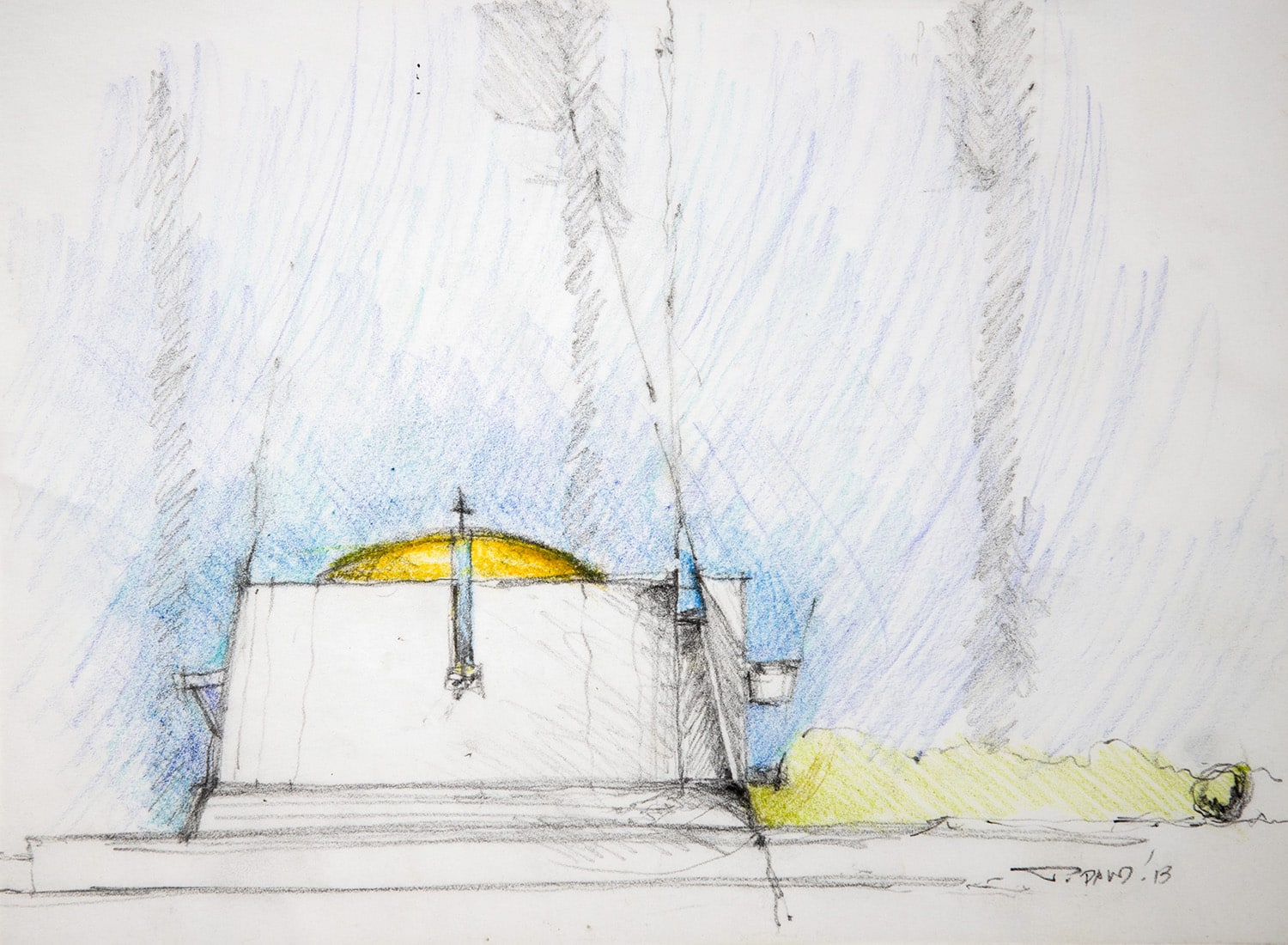
More than 30 years after Bernard Tschumi inaugurated ‘paperless studios’ at Columbia to usher in the age of computer-based design, it is breathtaking to contemplate the sketch as a case study in the durability of architecture’s representations. The sketch—small, simple, entrenched in its mediums—would seem primed as the first casualty of the digital takeover. The computer, after all, is emblematic of everything opposite. Computation is neither small nor large, but vast, capable of describing any architectural object with extreme fidelity, irrespective of size. It is complex, not simple. It’s quintessentially post-medium, in that computation is no more specially aligned with paper-based doodles than it is with carving wood or bending steel.
If the computer were not enough to end architecture’s long entanglement with the sketch, it seems the crisis would finish the job. We’re simultaneously drowning and burning, on the brink of civil war, and seemingly hellbent on increasing inequality to consolidate all wealth and power in a few pairs of hands. Our crises redouble the effects of computation almost item by item. Our difficulties are large to the point of being total in scale, with no escape, and they are intractably complex. As for the medium? These seem irretrievably quaint. When all the dimensions of our troubles can be described in terms of fungible measures like energy consumption, carbon, or capital, what does it matter that materials and their methods of handling once seemed sacrosanct?
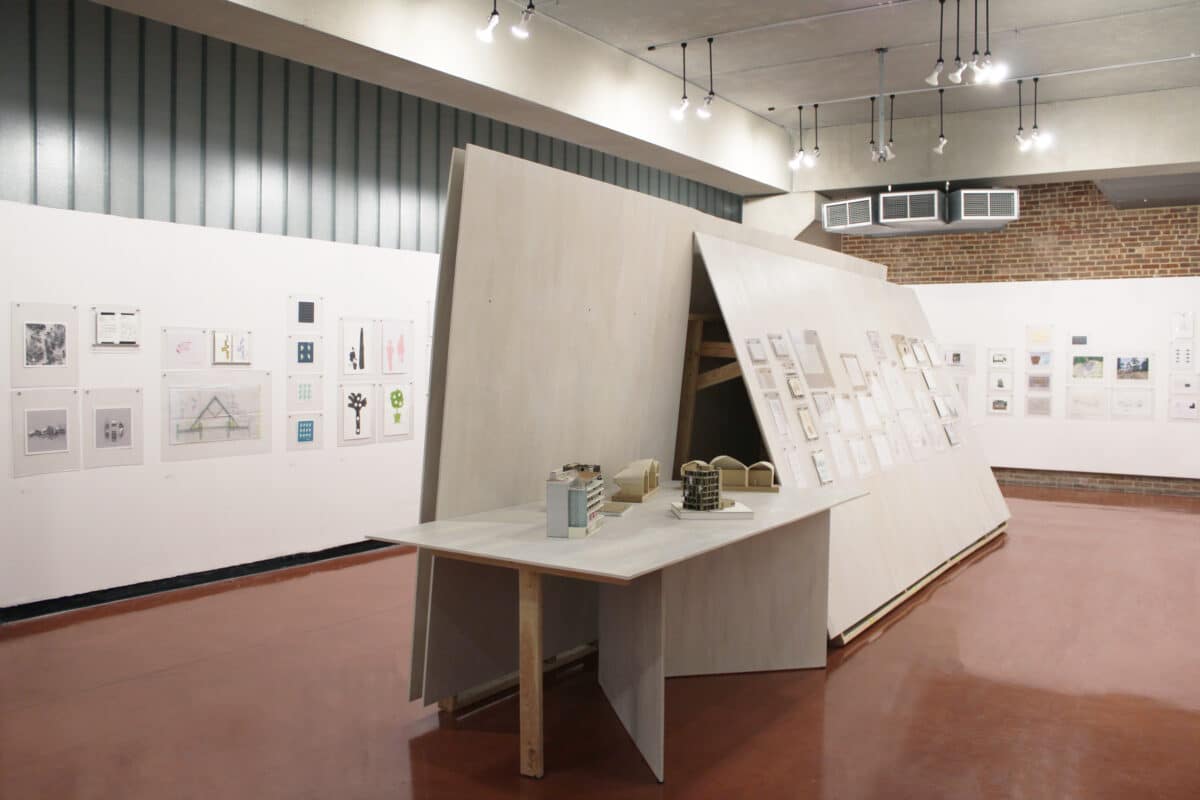
Exhibition view of Levers Long Enough to Move the World at the Pratt Institute. Photo by Ashley Grey. 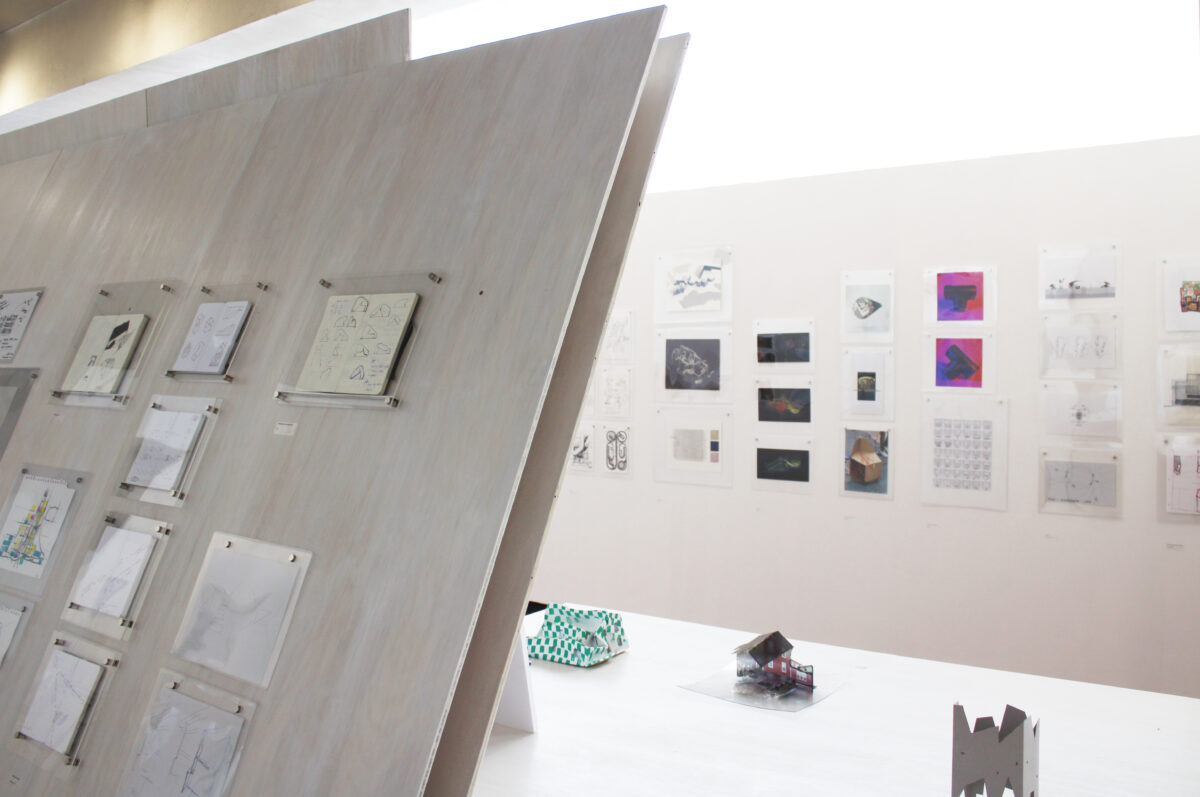
Exhibition view of Levers Long Enough to Move the World at the Pratt Institute. Photo by Ashley Grey.
But here it is, circa 2026, and the sketch is not only present but pandemic. Students show them alongside glossy renderings without betraying any anxiety at the contrast. They’re visible on websites of firms large and small, displayed alongside photographs of finished projects as though the sketched and the finished entertained an equivalence. In competitions, they show up scrawled or superimposed across boards, sometimes larger than the plans, sections that presumably would be the ‘real’ or ‘more important’ representation of a given project.
*
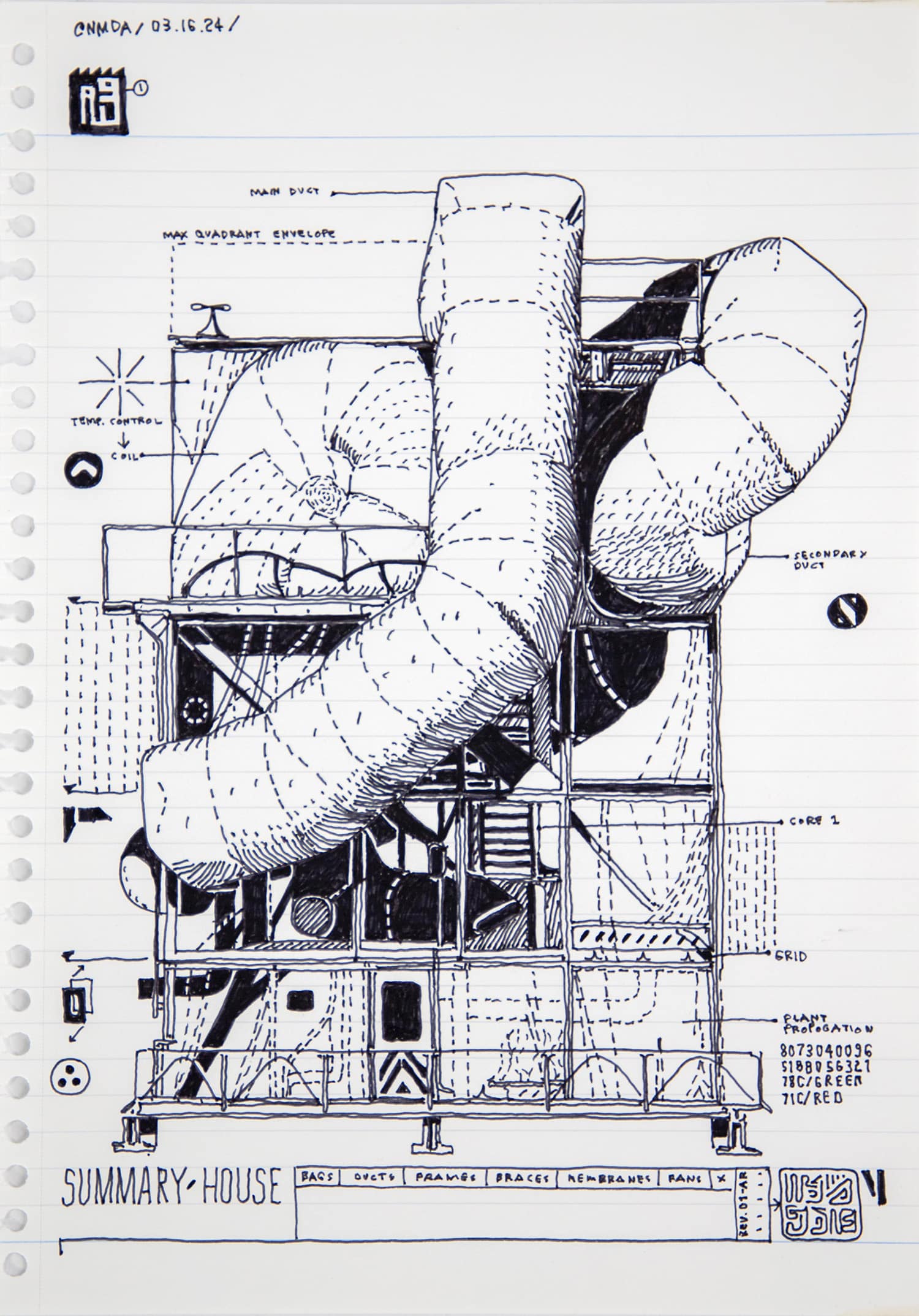
Below is the email correspondence between Andrew Holder and Neil Denari following the invitation to participate in the exhibition.
FROM: Neil Denari
Fri, Nov 14, 2025, 12:54 PM
Hi Andrew,
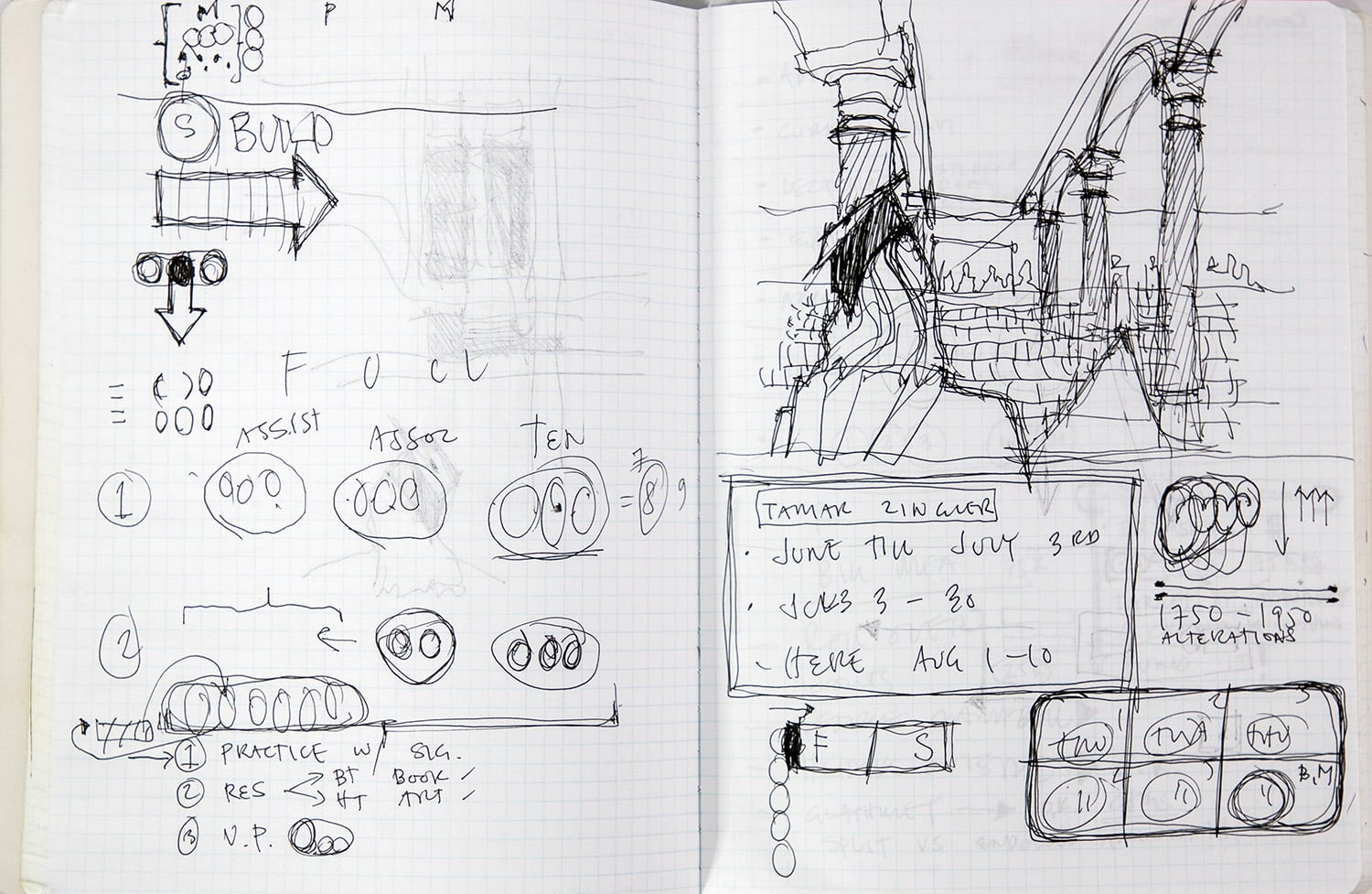
Thanks, Count me in – BUT – you’ll want to read this email to decide if my acceptance is within the spirit of your exhibition. I may be the one person who accepts but claims not to make sketches. At the outset, it’s all semantics: I only make drawings and illustrations, not sketches. Even in the most improvisational mode, I make my hand slow down and execute a line as if either A) like a koh-in-nor pen in hand being moved across a mayline or B) clicking / snapping a line in place with software. I am interested in expression, but only through precision. In fact, I’ve got such little interest in sketches, I’ve barely got interest in drawing. I’m generally only interested in design, and drawings serve a purpose to illustrate that. That my drawings take on a life of their own is (possibly) merely incidental. It’s like treating food just as fuel, as inhuman as that may seem. But as instinctive as that may be for me (I’ve always operated this way, even in school), I’d be lying if I also didn’t enjoy the clear difference between all the architects in the world who cherish their super-personal moments of inspiration, their ambitions and possibilities embedded in the pregnancies of the sketch. In this, I operate in reactionary mode: “You do this, I do that.” “You are truly human, flesh and blood.” “I am a nothing but a robotic arm with software messages.” The irony: if only considered at the level of design, I am human, an autuer, a seeker of original thought. Since 1990, I’ve only been drawing in Japanese notebooks with a Pentel (Niji Stylist while in Japan). IMG 1196 is from 1990. It concerns periodicity (sonic/sound references) in the Japanese Garden. The last two are more recent, and much more elaborate now.
You’ll have to decide if my antipathy towards the sketch has a place in your show.
All the best,
Neil
Faculty co-curators of the show included Alex Tahinos, Inmo Kang, and Fernando Garrido Carreras. Jack Daley, Ashley Gray, Stephen Favale, Harsh Panchal, and Nathan Trecker were exhibition assistants.
Special thanks to Quilian Riano, Dean of the Pratt School of Architecture, Alicia Imperiale, Assistant Dean, Kelsey Haddorff, Department Coordinator, and Alexandra Banach, Department Coordinator, for their support of the exhibition.
*
Andrew Holder is chair of Graduate Architecture, Landscape Architecture, and Urban Design at Pratt Institute and coprincipal of The Los Angeles Design Group (LADG).
