My Parish Drawings
From an early age I was in love with China and all things Chinese. I don’t know what inspired this passion, but a few years ago I came upon a Rupert Bear cartoon strip and there was the Emperor of China aloft on a flying carpet. I know my father and mother didn’t take the Daily Express, where the strip appeared, because they were avid followers of Flook, the cartoon in the rival paper, the Mail, to which he had subscribed for my southern Italian mother, to give her a handle on English life and manners. I probably had an album of Rupert Bear’s adventures, which took the hero all over the world. I also revelled in Tintin’s doings, but though he travels to Africa, from what I can remember, he never goes to China. In 1952, when we all came back from living in Cairo, the first Chinese restaurants were opening in London, and one of them was in South Ken near my grandparents’. Chopsticks, bowls with rice baked translucent into the porcelain, red and gold fringed lanterns, dolls in extravagant costumes, spareribs—all this novelty sealed my youthful Sinophilia.
Whatever the initial spark, my interest was encouraged. I was given a poster for my bedroom showing the fairytale heroine, Chang’e, flying to the moon with her pet, the Jade Rabbit, in her arms and her robes streaming and fluttering and curling around her. I copied out the characters on the image without understanding them, and later, was enthralled by Chinese poetry in Arthur Waley’s genre-defining versions. For my twelfth birthday, back from boarding school, I found waiting in my bedroom a real live Pekingese dog.
I wanted to study Chinese but was warned off by my teachers. Stick to what you know, I was told, otherwise you risk not getting in. In Paris, before going up to Oxford, I met Irène Pih—our paths crossed in the street near the Sorbonne, as we both arrived at the same time at a photo booth to have a photo taken for our student cards. The booth was chained up, so we walked together to find another, and I discovered she was from Shanghai via São Paulo, and studying for a PhD on Portuguese Jesuits in Ming Dynasty China. She became my closest friend and from her I learned worlds of Chinese history, not all of it as beautiful and wise as my fantasy would have it, but irresistible: such an ancient civilisation, one which valued scholars above soldiers, revered poets who retreated to mist-wrapped mountains, found art in rocks and stones, and practised such astonishing customs as presenting beloved parent with a lavish coffin to demonstrate filial piety.
After taking a degree in French and Italian, I still tried to find a way to learn Chinese and applied for a Harkness Fellowship to go to Harvard, where there was a famous department, under the sinologist J. K. Fairbank. No success. It was a loop: in those days, it seemed you couldn’t study Chinese without knowing Chinese. I still persisted. My first book, The Dragon Empress, was a biography of Tz’u Hsi (Ci Xi) the Empress Dowager who in practice ruled the Empire, after the death of her husband, as regent for her son, the Tongzhi Emperor. She presided during the decades when, in the second half of the nineteenth century, the old China was cracking under the strain of foreign aggression and colonial expansion. The book came out in 1972; four years later, my first novel, In a Dark Wood, partly took up my friend Irène’s theme, and included made-up journals of an imaginary Jesuit in Ming China.
During the research for the biography of the Empress Dowager, I noticed that Christie’s was offering for sale works connected to the first British embassy to China, led by Lord Macartney. There had been many frustrated attempts to open relations but in 1793, permission was at last granted: for the first time the Chinese Emperor agreed to meet an envoy of the King of England. This mission would be the historic prelude to the turbulence of the following century, which would culminate in the end of imperial China in 1904.
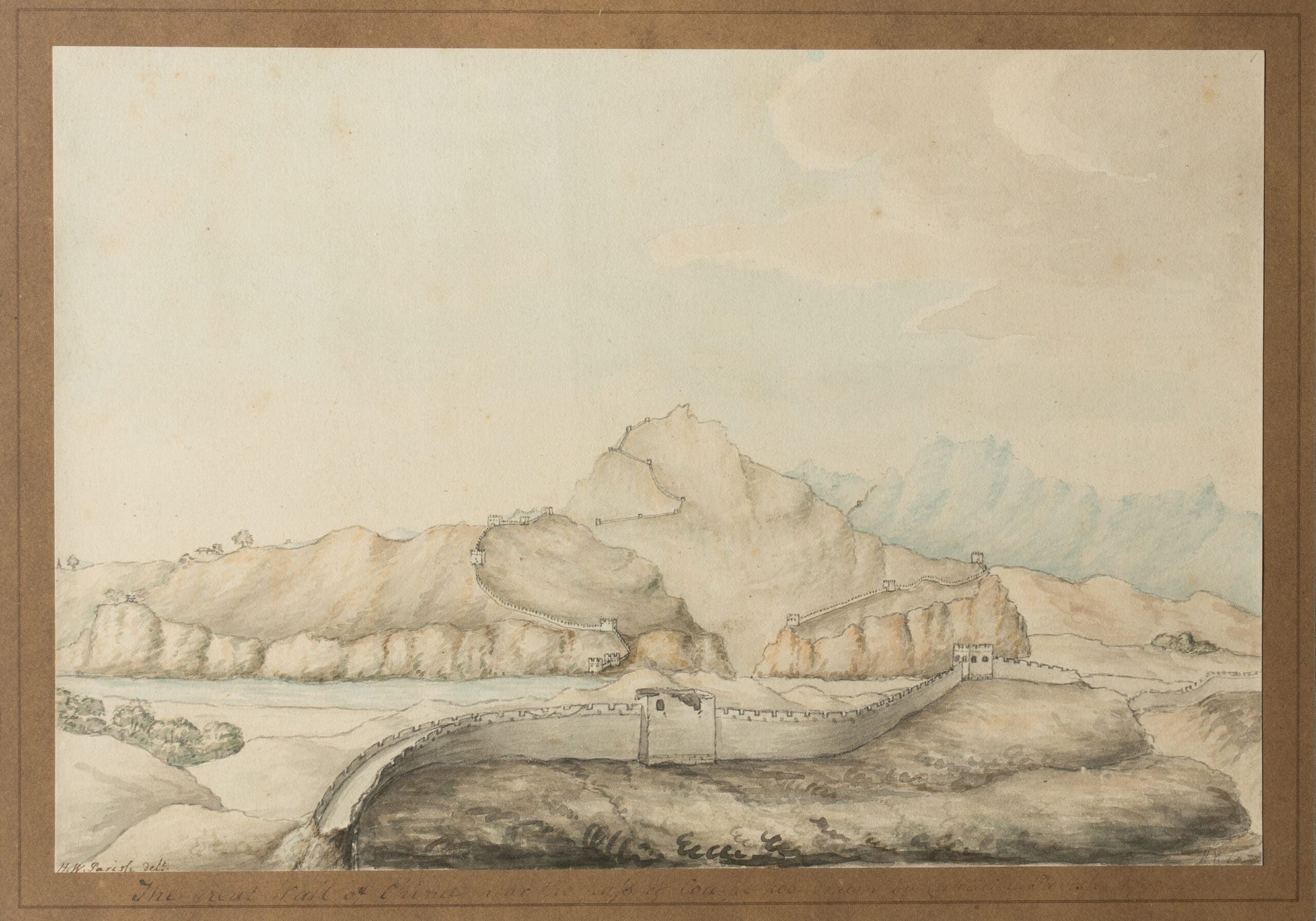
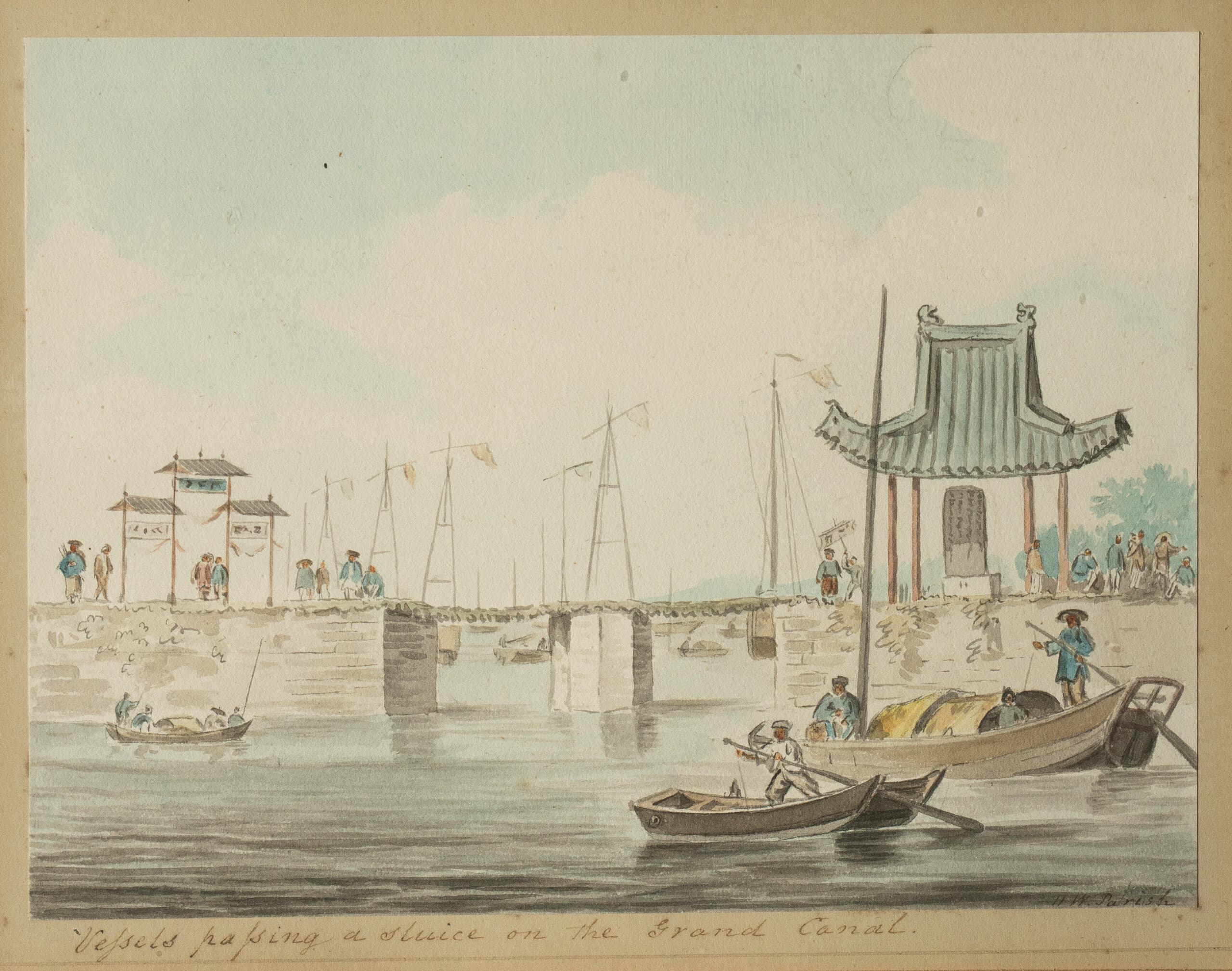
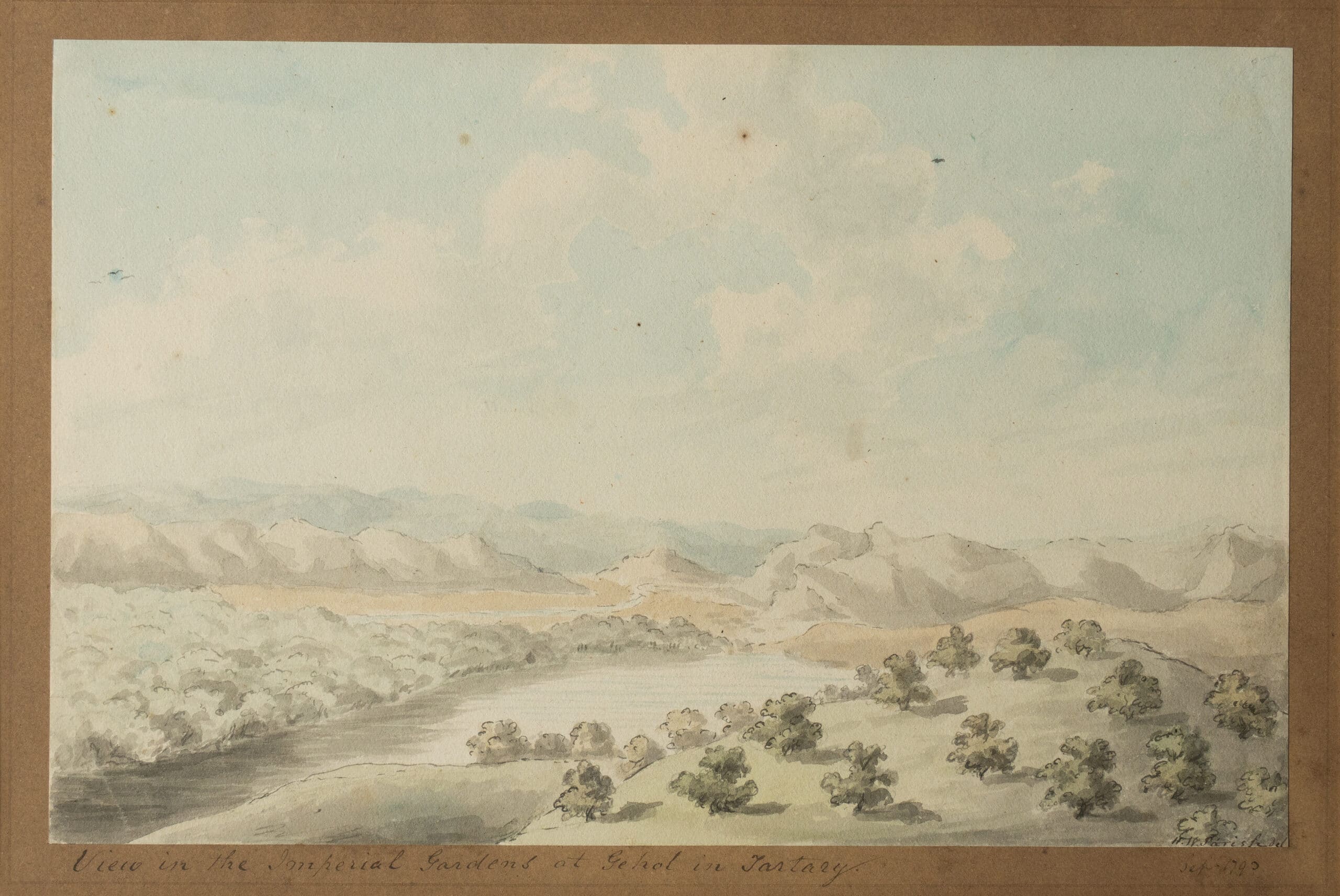
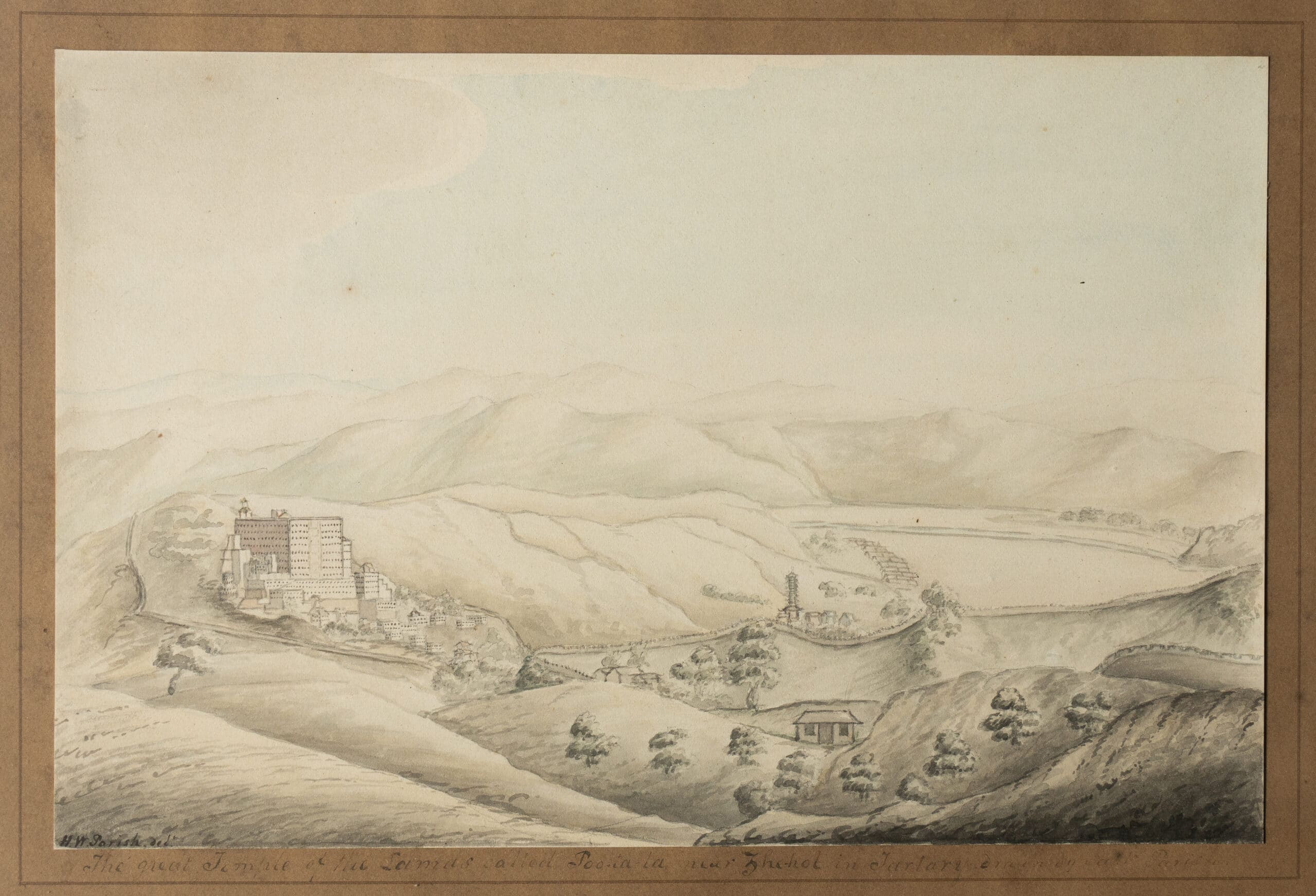
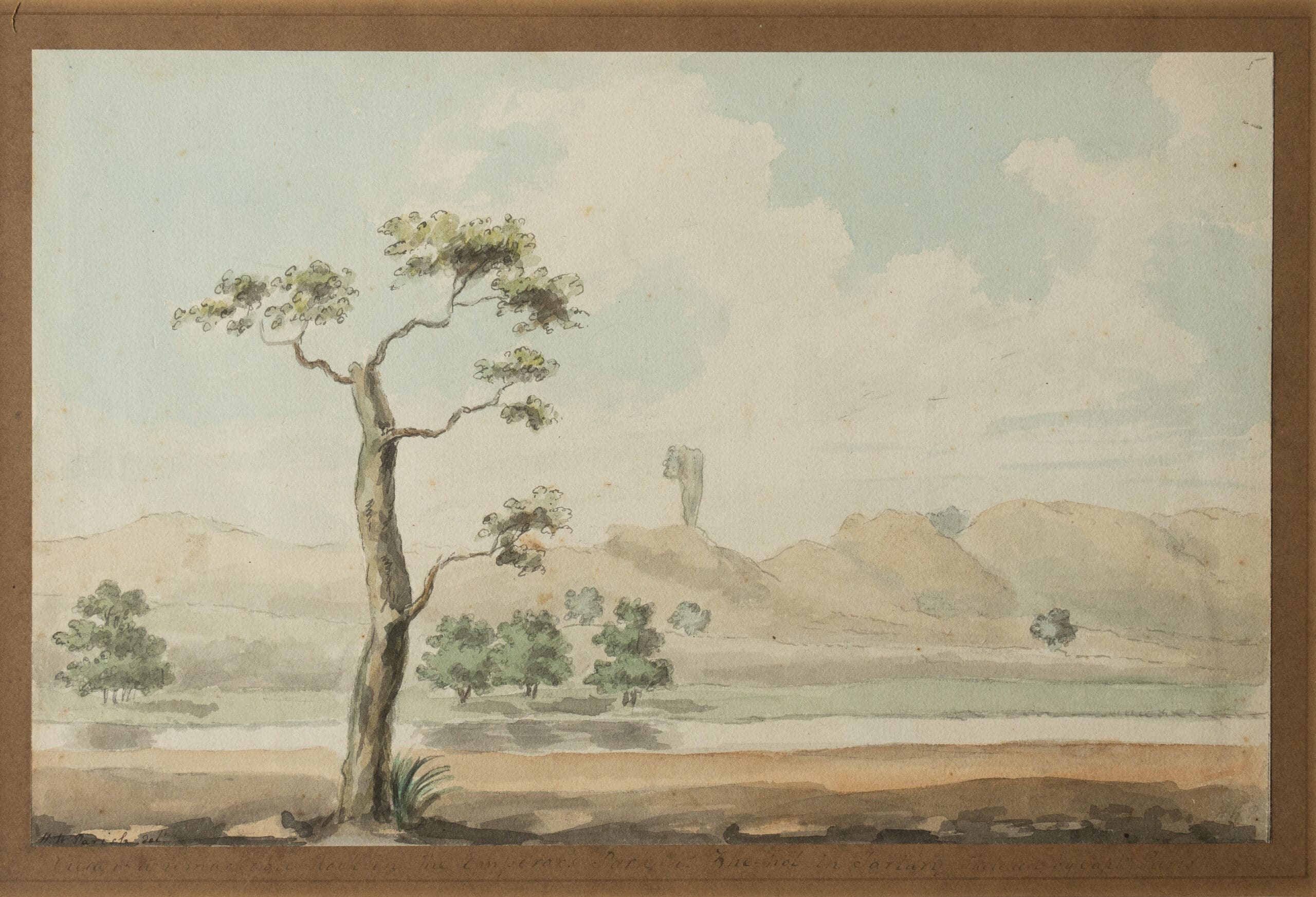
I went to the showrooms to bid in the sale. Works by William Alexander, the official artist on the mission and the maker of many very attractive and richly observed scenes of Chinese life, went for prices beyond my means, but Henry William Parish wasn’t of interest to anyone else at the time. I bid for and acquired—for very little money—the drawings of the Great Wall and six more leaves from perhaps another album, two of an unspecified stretch of the Grand Canal. The Canal, like the Wall, impressed the visitors from Britain with its engineering ingenuity—and, judging from Parish’s watercolour, their attention was also caught by the flamboyant upturned eaves of the roof of an open pavilion on the bank, sheltering a stele. Perhaps a tablet invoking divine protection for travellers? The other four leaves show the palace of Jehol and its extensive parkland, cultivated in the informal wilderness, ‘sharawadgi’ style already in fashion in England, which would eventually lead to the pagoda at Kew Gardens, another spark of my childhood passion for China.
The embassy was of huge importance to British interests. The government badly wanted to improve trading arrangements: the country was importing huge quantities of tea from China, as well as porcelain and silk, and paying for these goods in silver. They were therefore keen to redress the trade deficit and tempt the Chinese to buy goods made in Britain—guns, clocks and other technical marvels, such as machine-woven textiles, many examples of which they brought with them as gifts for the Emperor. It was an opportunity of huge significance, and both powers were to put on a lavish show to outdo each other in magnificence.
The expedition sailed from Portsmouth on 26 September 1792. Three ships (later joined by a fourth), laden with the precious cargo which would inaugurate a new era of Anglo-Chinese relations, set out carrying a delegation a hundred strong: alongside Macartney, his right-hand man George Staunton and George’s young son Thomas (who was learning Chinese), assorted doctors, scientists, botanists, gardeners, and four priests who were acting as interpreters, there were two artists on board, William Alexander and the Irishman Thomas Hickey. All were escorted by many military men. Among the latter, Henry William Parish of the Royal Artillery, an army engineer, was a trained technical draughtsman, as can be seen from his meticulous measurements and annotations of the Great Wall of China.
During the long sea voyage, Lieutenant Parish of the Royal Artillery made several quiet, pale watercolours, many of them views of the coastline, as can be seen in an album kept in the Yale Center for British Art. For a seafaring nation, these delicate observations would provide valuable reconnaissance of harbours, inlets, fortifications, landmarks. The embassy was intent on gathering intelligence, but its aims were not only diplomatic and commercial. It was also an expedition of exploration, amassing as much knowledge as it could of the mysterious other world of China—its peoples, culture, society, language, ways of doing things.
The embassy arrived in Tianjin, the port near Beijing, on 11 August 1783, almost a year after setting out, and were told that the meeting with the Qianlong emperor would be happening in the palace of Jehol north of the Wall. About 200 km. from Beijing, Jehol spread over hills and valleys, where the Manchu dynasty enjoyed hunting; it offered less steamy days in summer and the imperial court would retreat there for long periods.[1]
The ambassadorial party crossed the Wall at Gubeikou and was met by an extravagant ceremonial escort. Parish was told to survey the Wall, and his drawings are the very first made, according to European architectural conventions, of this awesome, unparalleled wonder of the world.
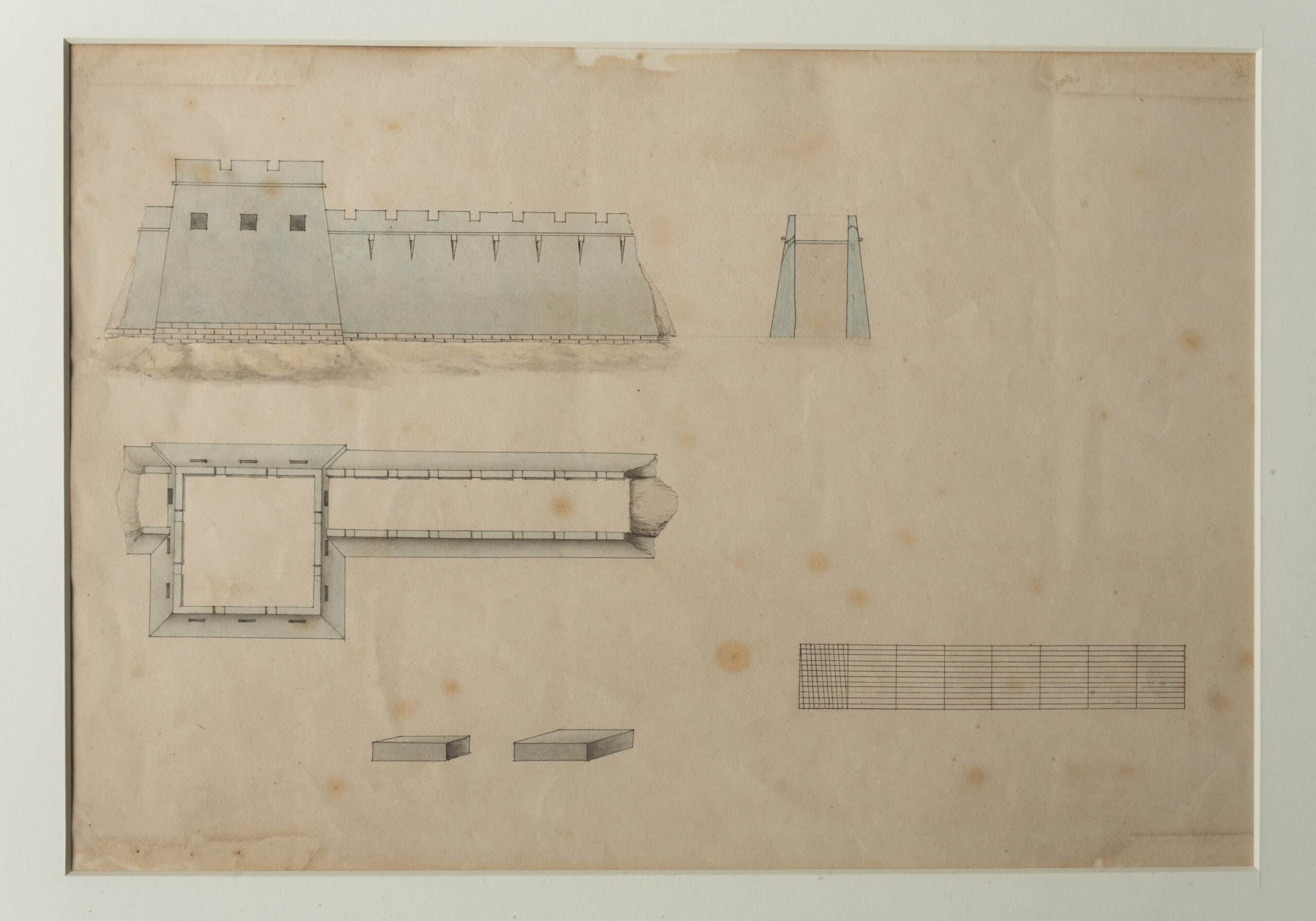
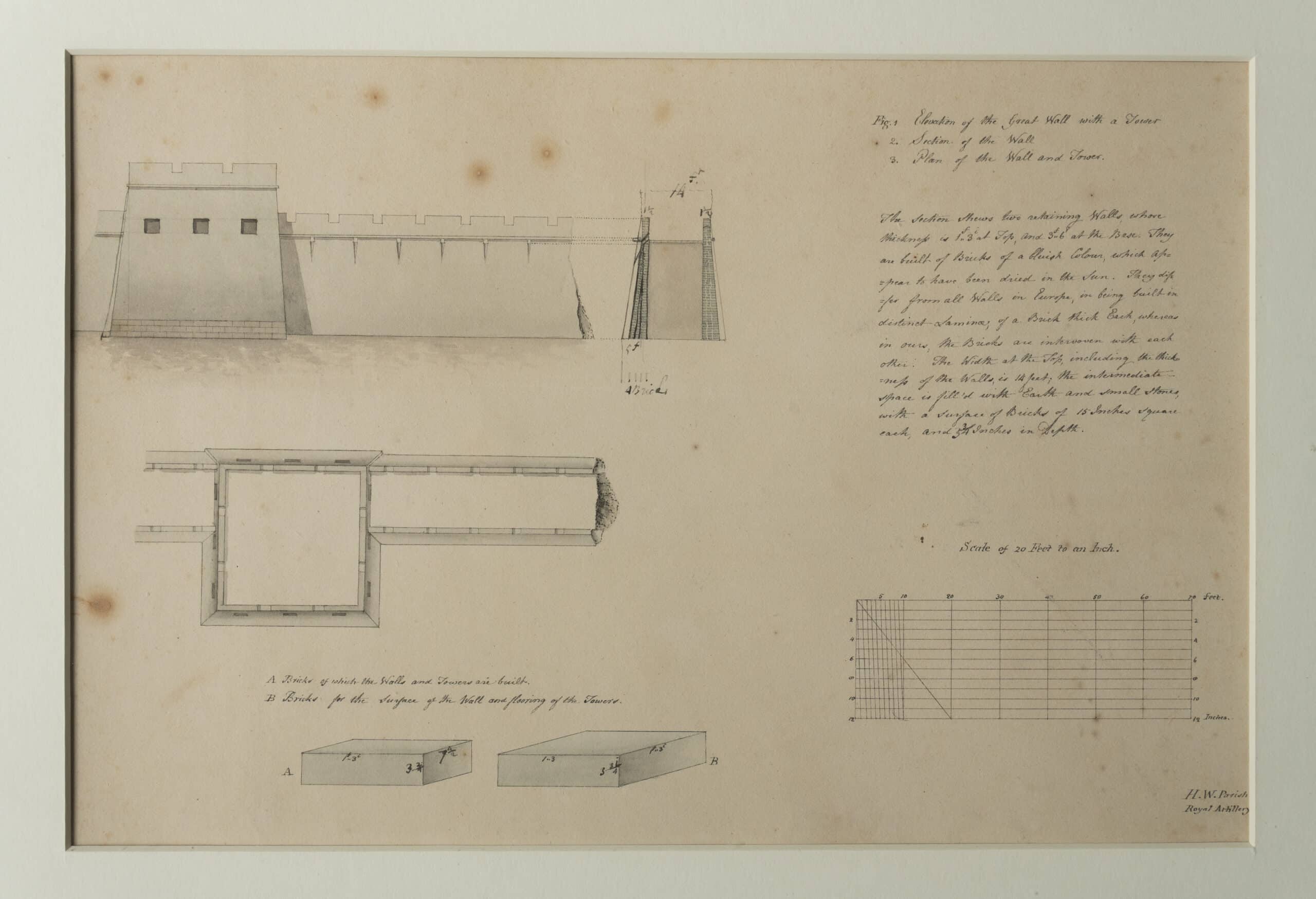
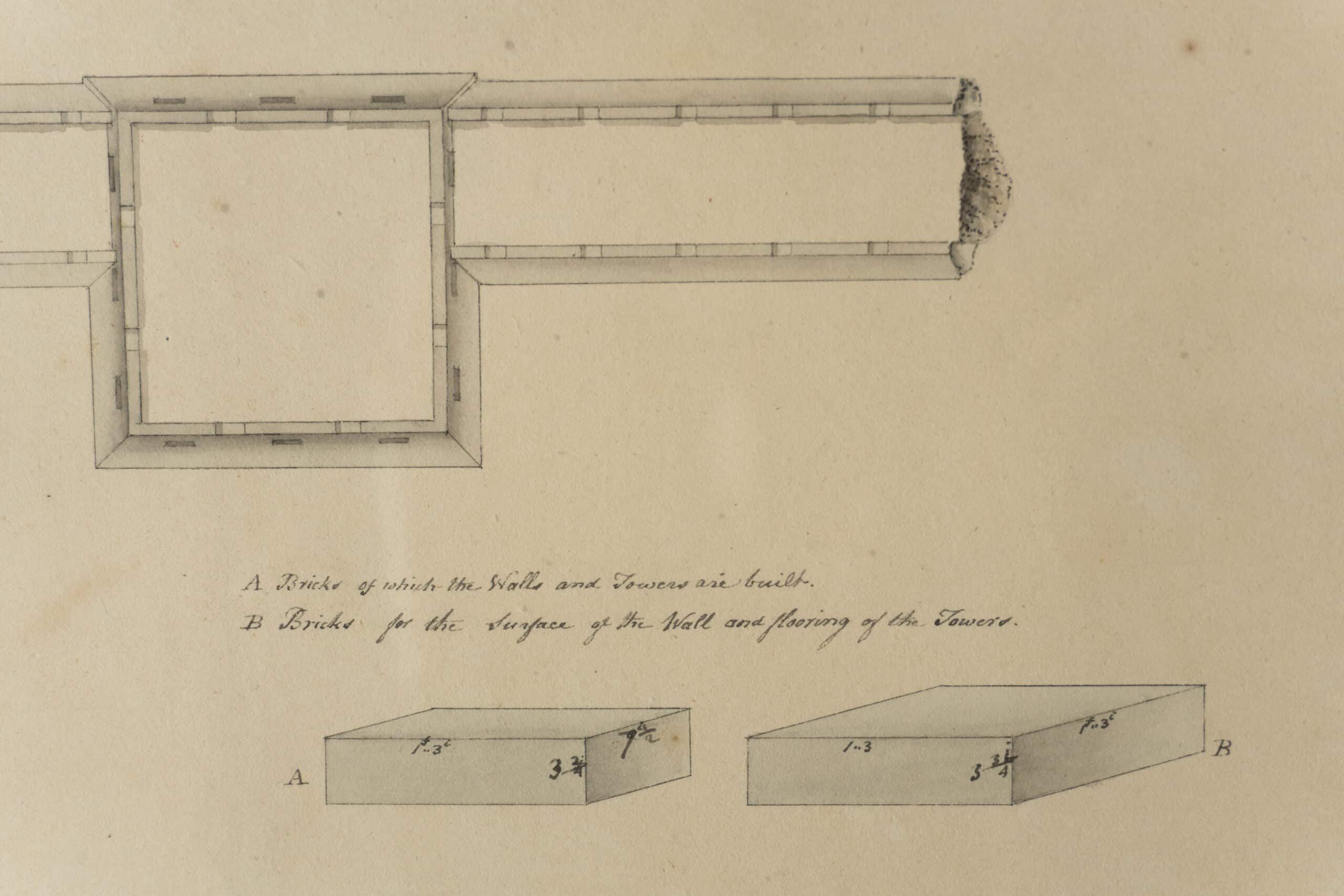
I bought the three of them on offer. There are two prints from Parish’s drawings, made by James Baker and published in l796, in the Government Art Collection. But mine are originals. One of them gives ‘Section, Elevation and Plan’ of the Wall itself to a precise ‘Scale of 20 Feet to an Inch’. The annotation reads:
‘The Section shows the Walls whose thickness is 1f 3i at the Top and 3f 6i at the Base. They are built of Bricks of a blueish Colour, which appear to have been dried in the Sun. They differ from all Walls in Europe in being built in distinct Laminae, of a Brick thick each, whereas in ours, the Bricks are interwoven with each other. The Width at the Top, including the Thickness of the Walls is 14 feet; the intermediate space is fill’d with Earth and small Stones, with a surface of 15 Inches square each and 5 and 3/4 Inches in Depth.’
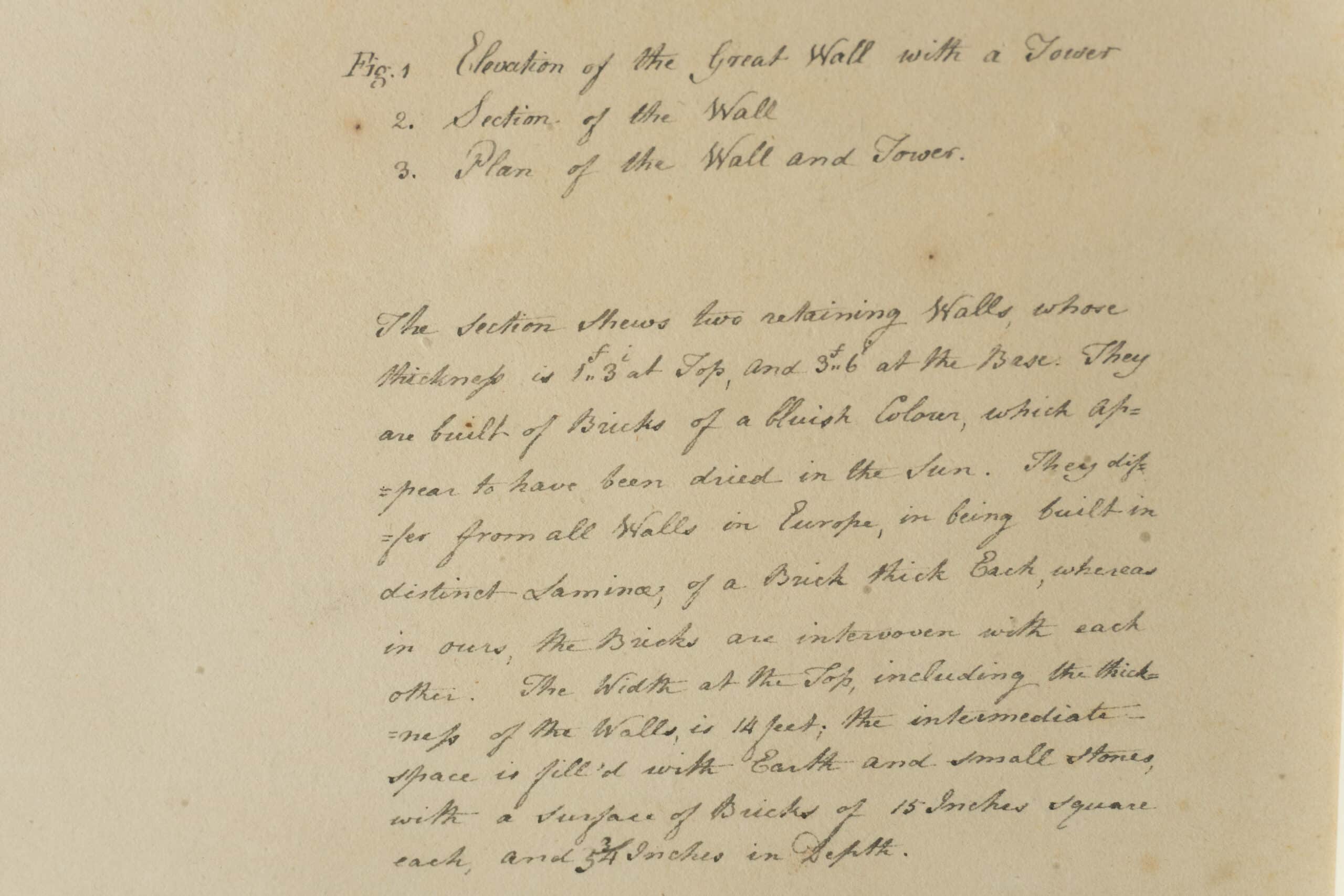
The handwriting is very fine—such as is rarely seen today.
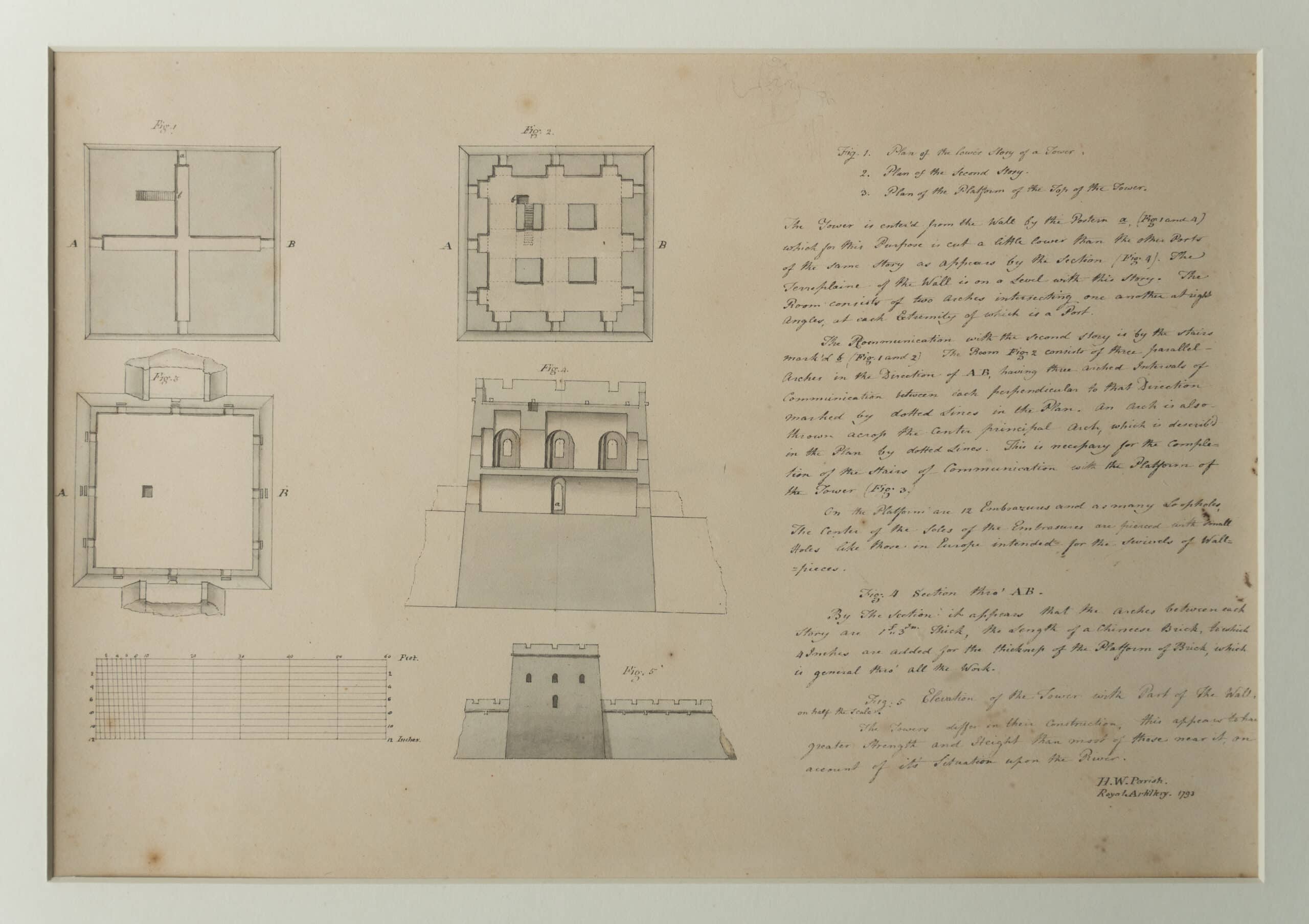
Parish continued his observations, surveying one of the square Towers which cadence the Wall’s serpentine winding—the Wall provides a super-highway for moving men and matériel as much as it stands as a barrier. He made ‘Plans of its lower Story … Second Story… and Platform at the Top of the Tower’. Such gen would be useful if an assault were planned, or an invasion and the Chinese authorities became anxious when they saw Parish and his Royal Engineers busily at work, taking measurements, and even lifting out a few bricks to measure them as well. Some helped themselves to a brick as a souvenir.
Unlike the technical drawings, Parish’s watercolours are a bit amateurish in their handling of perspective—without a tape measure or dividers Parish was at a loss, and as studies in the picturesque they lack Alexander’s eye for drama. But they speak of the foreign visitors’ curiosity and admiration for what they were seeing.
Anglophone historians have generally dismissed the Macartney embassy as a failure on both sides, seeing the Chinese doubling down on their superannuated customs and premodern culture, and the British failing to secure the concessions—or the trade—they wanted. The consequence was the iniquity of the opium trade, when the drug was grown in India to sell to China and rebalance that trade deficit—and led, eventually, to the opium wars. But it should be noted that the Macartney embassy was impressed by China and its civilisation and culture, and their sense of Western superiority and the ensuing condescension, and worse, was not total.
One view of Jehol shows the tall, fortress-like palace building, a replica of the Forbidden City so the emperors, far from their capital, would feel at home. Another picturesque watercolour includes in the distance a tall standing stone, a pillar of rock that at the summit turns ninety degrees and juts out like one half of a Stonehenge arch. Could this have been carved and raised by human hands? It seems improbable. (There is no sign of its survival in the Chengde Mountain Resort and UNESCO heritage site that Jehol has now become.)
The Macartney embassy was part of a far broader Enlightenment enthusiasm for travel, of the era’s quest for learning: since Marco Polo the exotic and faraway had beckoned to the savants of Europe. Joseph Banks had returned from Australia with many hitherto unknown plants, and he urged the China mission to do likewise. Chinoiserie was in fashion, hence the appetite for silk, tea, pagodas. The 1001 Nights and other Oriental tales had inspired a craze both in France and England; the stories roamed far to the east, and several (Aladdin, Turandot) were set in far Cathay. The fascination of the Orient continues to colour Kafka’s fables. In a story called ‘The Great Wall of China’, Kafka dwells on the endlessness of the Wall and the impossibility ot ever finishing building it, and his sober, colourless, clerical diction seems to echo the plainness of a survey like Parish’s:
‘ It was done in this way: gangs of some twenty workers were formed who had to accomplish a length, say, of five hundred yards of wall, while a similar gang built another stretch of the same length to meet the first.’ etc. etc.[2]
The task is interminable; like the empire it encircles, the Wall baffles, it cannot be deciphered any more than the message from the emperor, in another brief tale, can ever reach its addressee.
Parish’s skilled execution of his scale drawings, his performance of mastery and of detached, impersonal objectivity, like a modern, imperturbable St George facing a huge fire-breathing dragon, enhances their aura for me. The Great Wall of China can’t be captured by a tape measure and dividers. The rainbow cannot be unwoven. Parish was obediently facing the hugeness of his subject and taming it by his acquired discipline, but the matter-of-fact approach doesn’t conceal his awe. In spite of his weak claim to being an artist and his technical drawings’ equivocal status as works of art, his survey of the Great Wall is suffused for me with that marvellous historical moment, when a few visitors from England saw the Wall for the first time, and in that encounter, some of the mystique of China still lingers.
Notes
- See here: Chengde Mountain, <https://en.wikipedia.org/wiki/Chengde_Mountain_Resort> [accessed 28 April 2026].
- Franz Kafka, The Complete Stories, tans. by Willa and Edwin Muir (London: Vintage, 1999), 235.
*
Marina Warner is a writer of fiction, criticism and history; her works include novels and short stories as well as studies of art, myths, symbols and fairytales.

– Ethan Loo