The House Stands Still While Life Moves
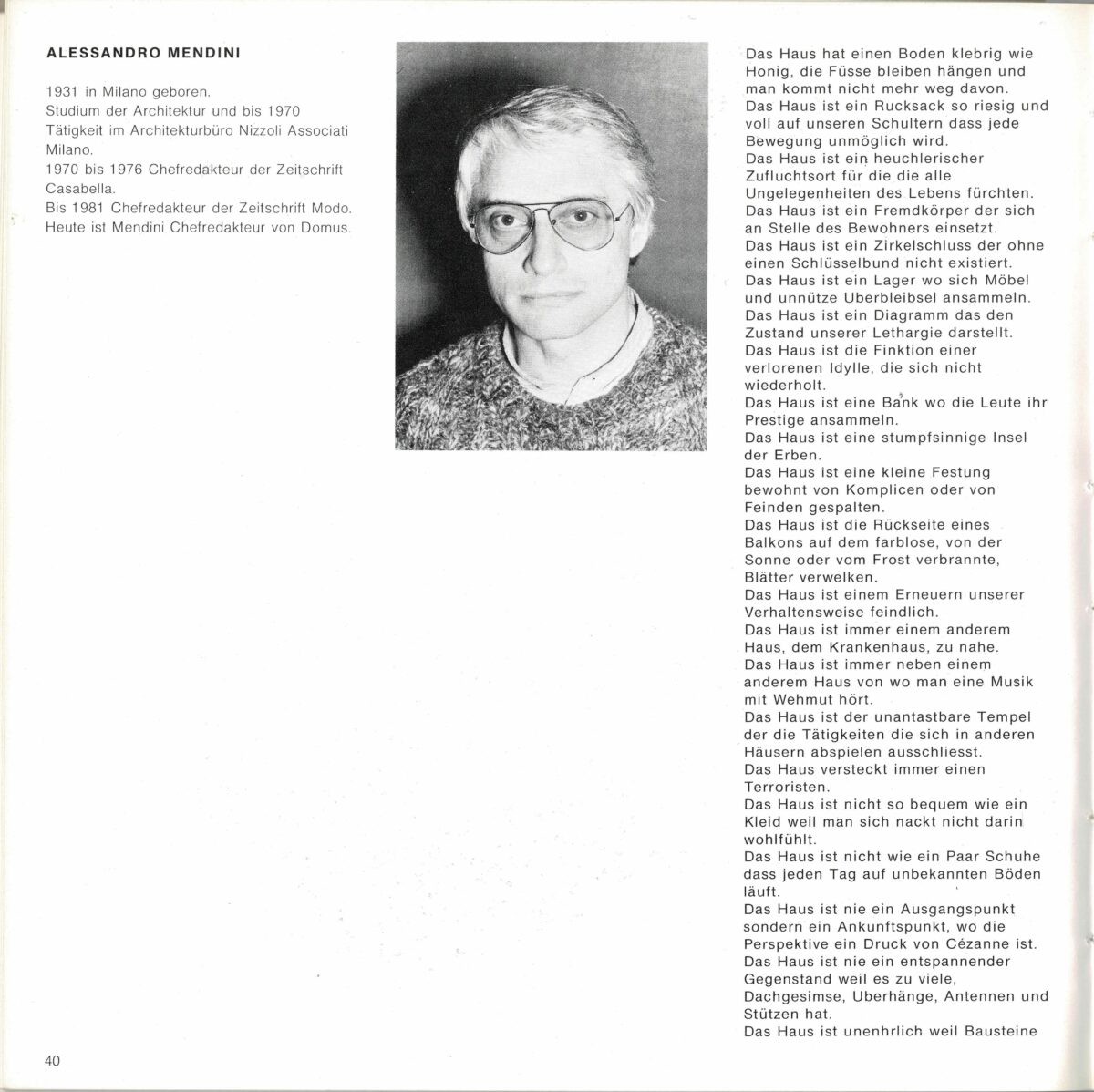
The house has a floor sticky like honey; our feet cling to it and we cannot get away from it.
The house is a rucksack so huge and full on our shoulders that every movement becomes impossible.
The house is an unconditional refuge for those who fear all the mishaps of life.
The house is a foreign body that takes the place of the inhabitant.
The house is a vicious circle that cannot exist without a bunch of keys.
The house is a storehouse where furniture and useless remnants accumulate.
The house is a diagram that represents the state of our lethargy.
The house is the fiction of a lost idyll that does not repeat itself.
The house is a bank where people accumulate their prestige.
The house is a dull-witted island of heirs.
The house is a small fortress inhabited by accomplices or split by enemies.
The house is the back side of a balcony where colorless leaves, scorched by the sun or frost, wither.
The house is hostile to renewing our ways of behaving.
The house is always too close to another house—the hospital.
The house is always next to another house from which one hears music with melancholy.
The house is the untouchable temple that excludes activities that take place in other houses.
The house always hides a terrorist.
The house is not as comfortable as a garment, because one does not feel at ease naked inside it.
The house is not like a pair of shoes that walks every day on unknown ground.
The house is never a point of departure but a point of arrival, where perspective is a pressure by Cézanne.
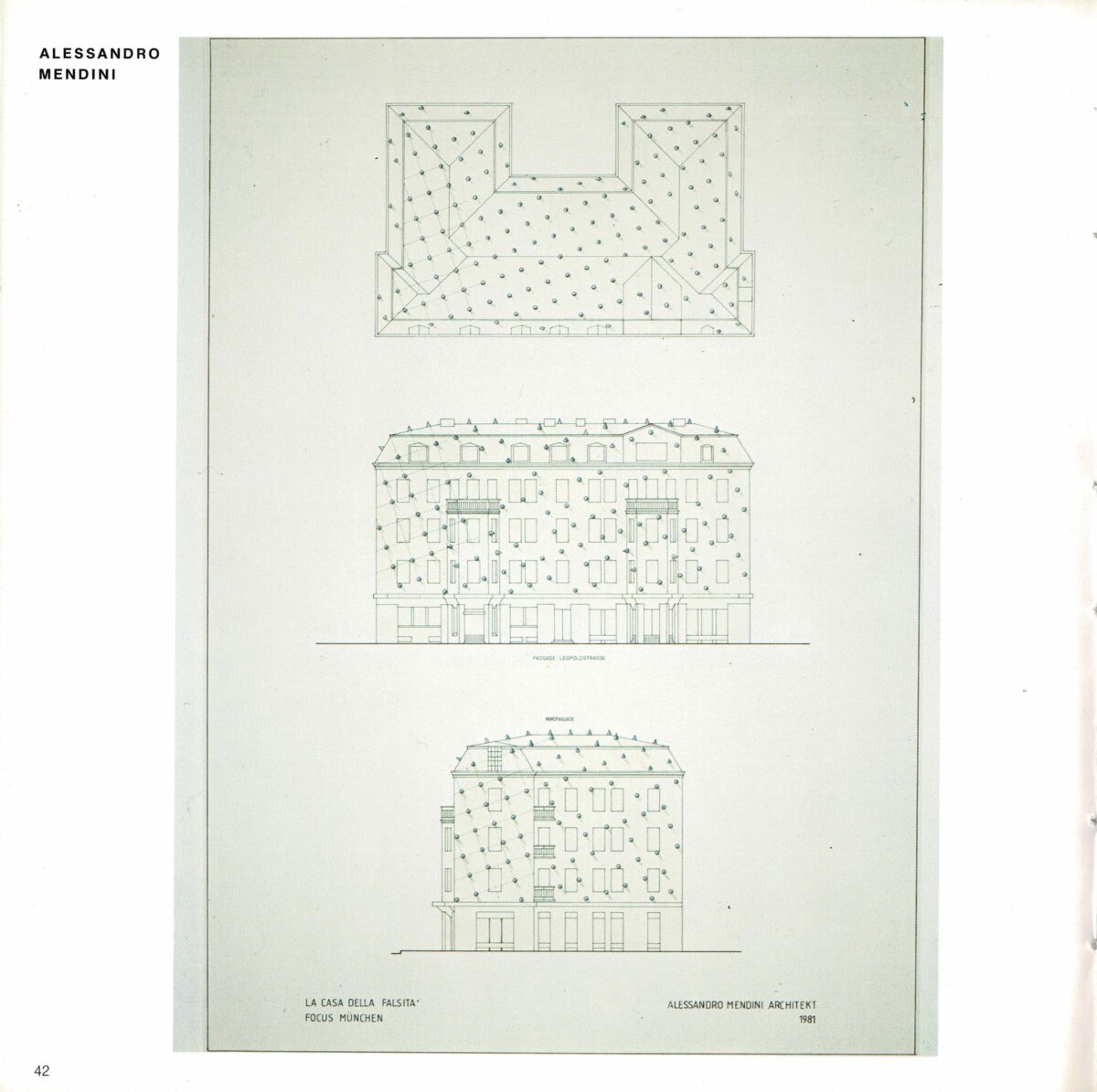
The house is never a relaxing object because it has too many roof cornices, overhangs, antennas, and supports.
The house is uncanny because building materials bring too much money.
The house is not fair because it always has a little room where a fully packed suitcase is standing.
The house has no imagination because it has no wings.
The house is not a pure place, because through too many holes our excrement is expelled.
The house never has an unfamiliar sunset before it.
The house never has a cozy room like the waiting rooms of a railway station.
The house never has a corridor like an uninhabited heath, where one feels like a vagabond.
The house always has the flaw that it is furnished.
The house always has a telephone that can strike us in the heart.
The house is a place of order; it has a washbasin, a trash bin, an iron, and a tin of tomatoes.
The house is a banal calendar for turning over the time of everyday life.
The house is a spy that records our intimate acts.
The house is an inventory of our disposition to repeat the same gestures.
The house is the catalogue of our personal egoism.
The house is the school where exclusion is taught.
The house is a strict master who scolds the children with his tradition.
The house always consists of rooms.
The house always has too many corners for pretended conversations, too many light sockets, too many shoes.
The house always has another house opposite, pressing against it.
The house always has an alarm clock to send us to work.
The house allows us to be lazy only on Saturday mornings.
The house is like a bedsheet in which someone has already slept.
The house has few pillows and too many ghosts.
The house is a unit of walls that frightens us, carrying within itself the lives of those who died there.
The house always contains a share of pangs of conscience and a share of death.
The house is the corpse from which we will emerge as corpses.
The house stands still while life moves.
*
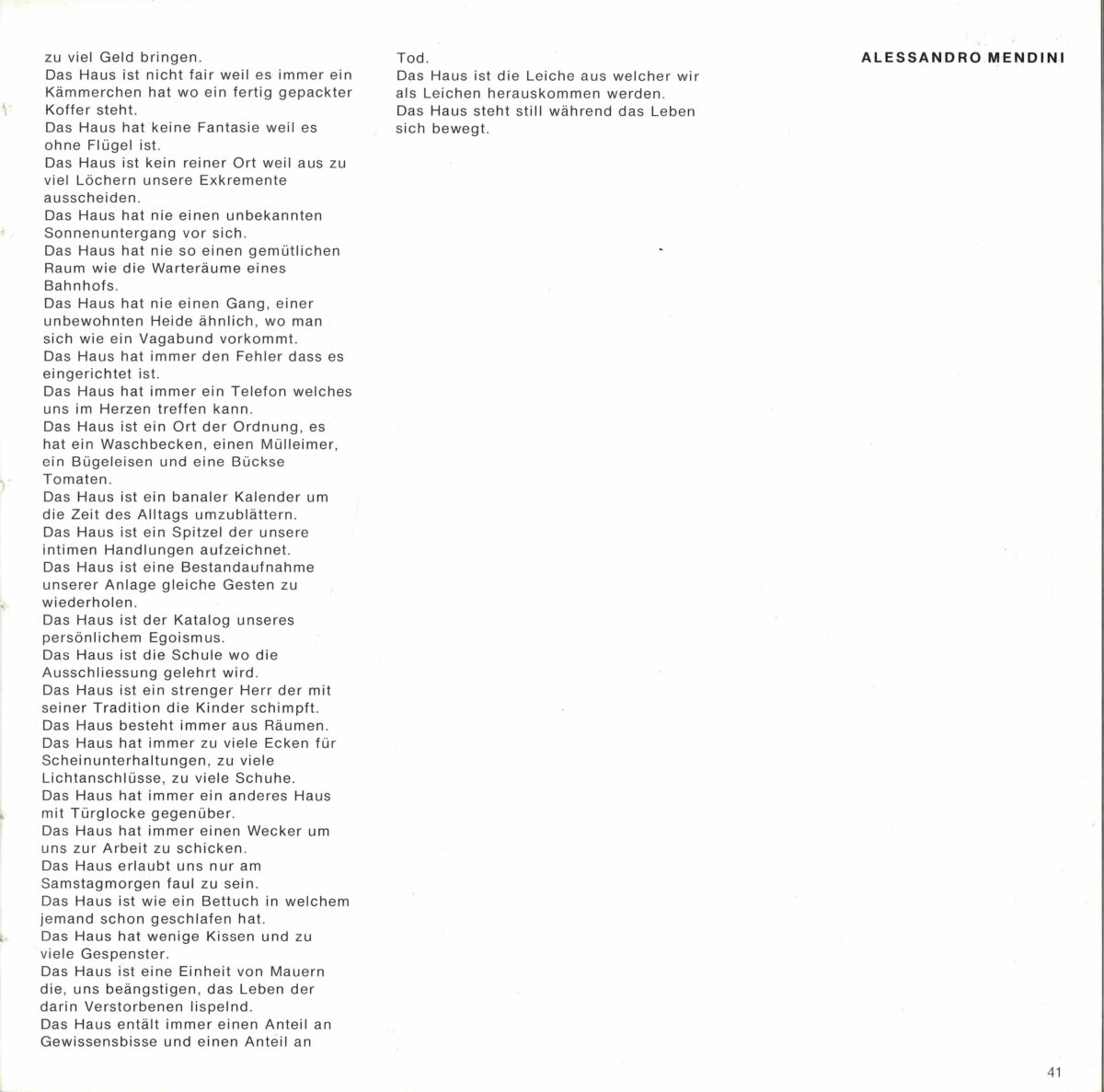
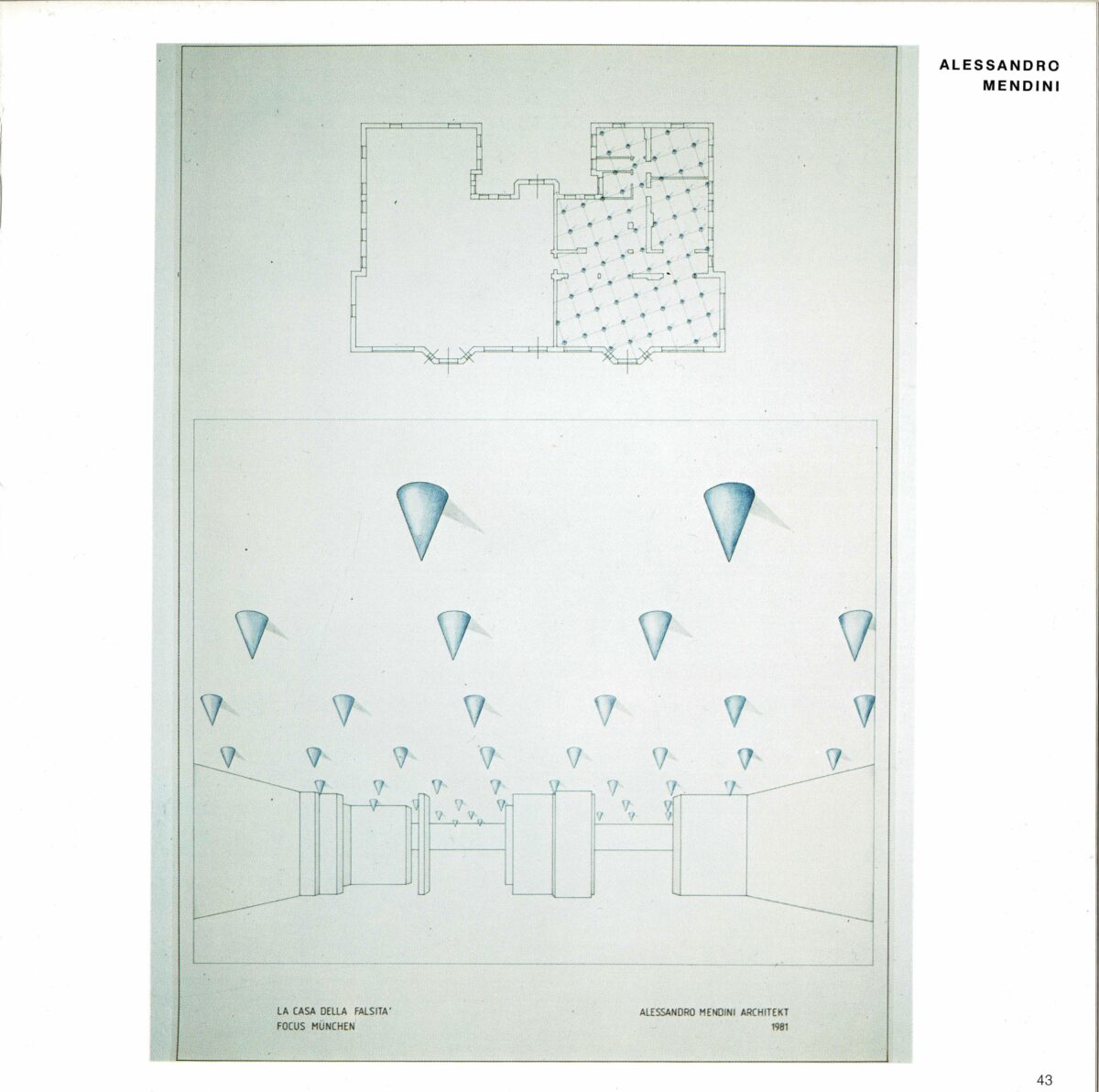
This text is extracted from La Casa Della Falsità, featuring alongside his proposal for the redevelopment of Peter Pfeiffer’s house on Leopoldstrasse in Munich.
Britain’s first solo exhibition of Alessandro Mendini’s work is on at The Estorick Collection, London, until 10 May 2026.

– Sophia Banou