The Open Hand Reloaded
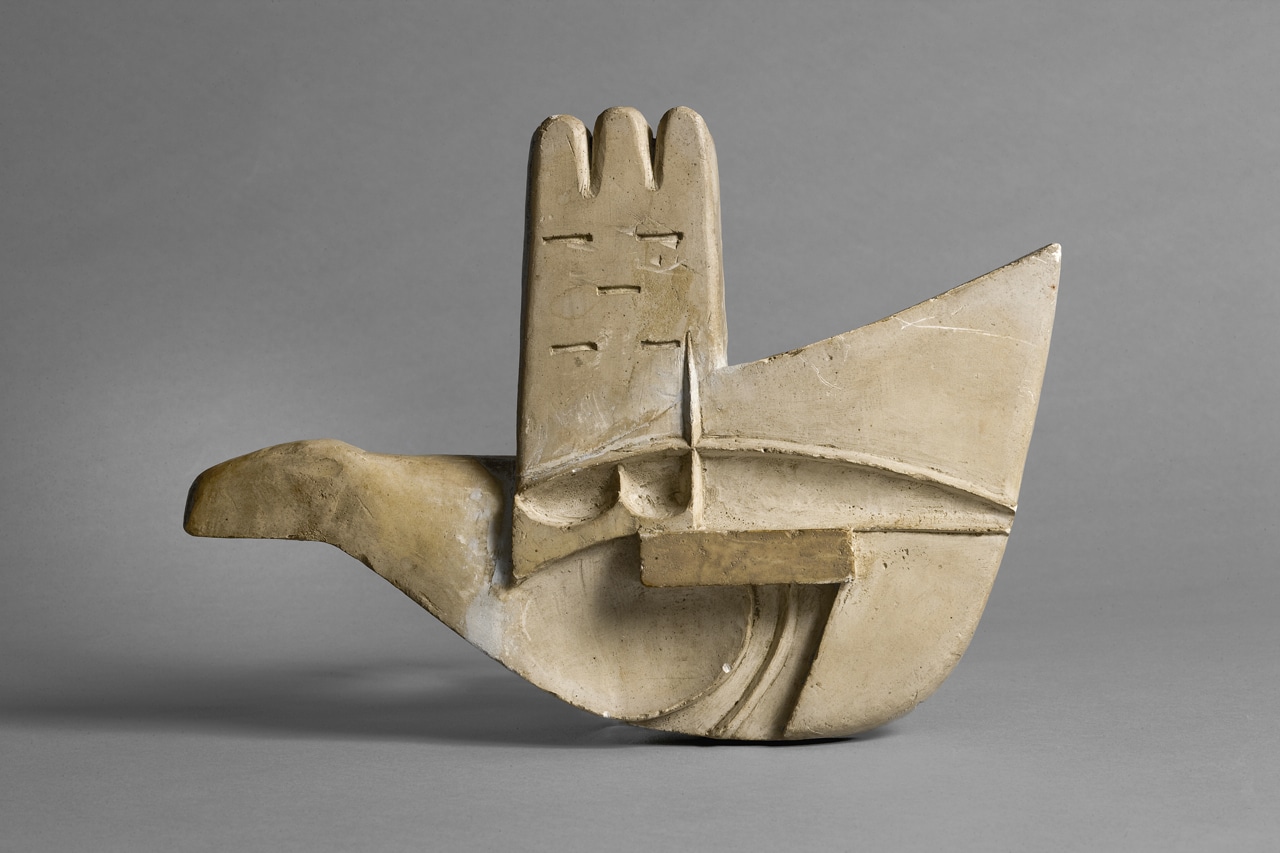
A sculpture described by its designer, architect Le Corbusier, as a ‘sign of the second era of machinist civilisation,’ the Open Hand merits close examination. These observations draw upon Peter Kalliney’s work on the transfers and translations of ‘modernism’s aesthetics’ (2016), and more specifically on his writing on cultural diplomacy (2022)—a concept that embodies the significance of the Open Hand.
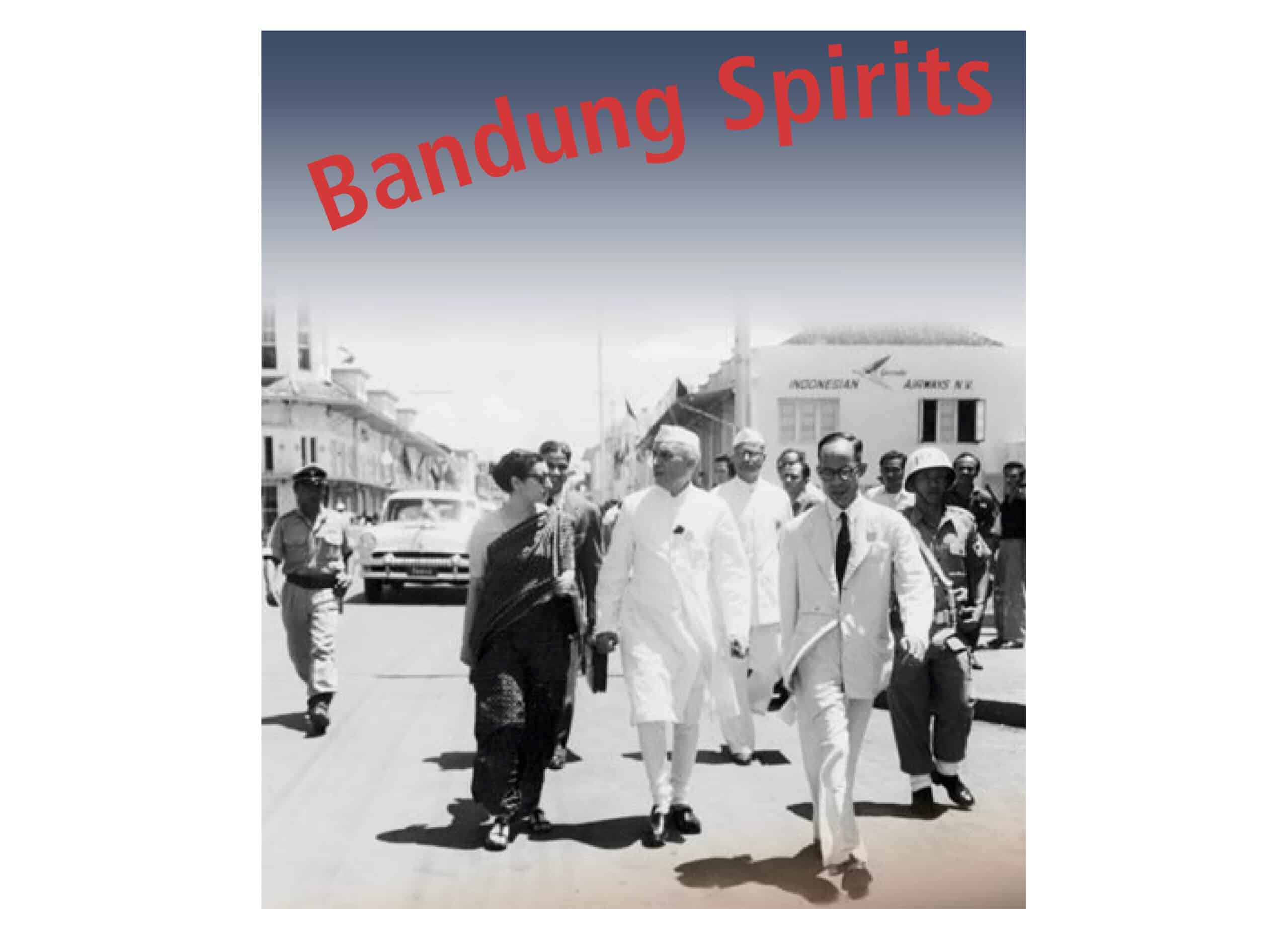
The encounter between Le Corbusier and Indian Prime Minister Nehru over the planning of Chandigarh, the new, modern city of independent India, serves to reinforce my assessment of the Open Hand’s significance. It represented a mode of cultural production associated with the political aspirations of the non-aligned movement.
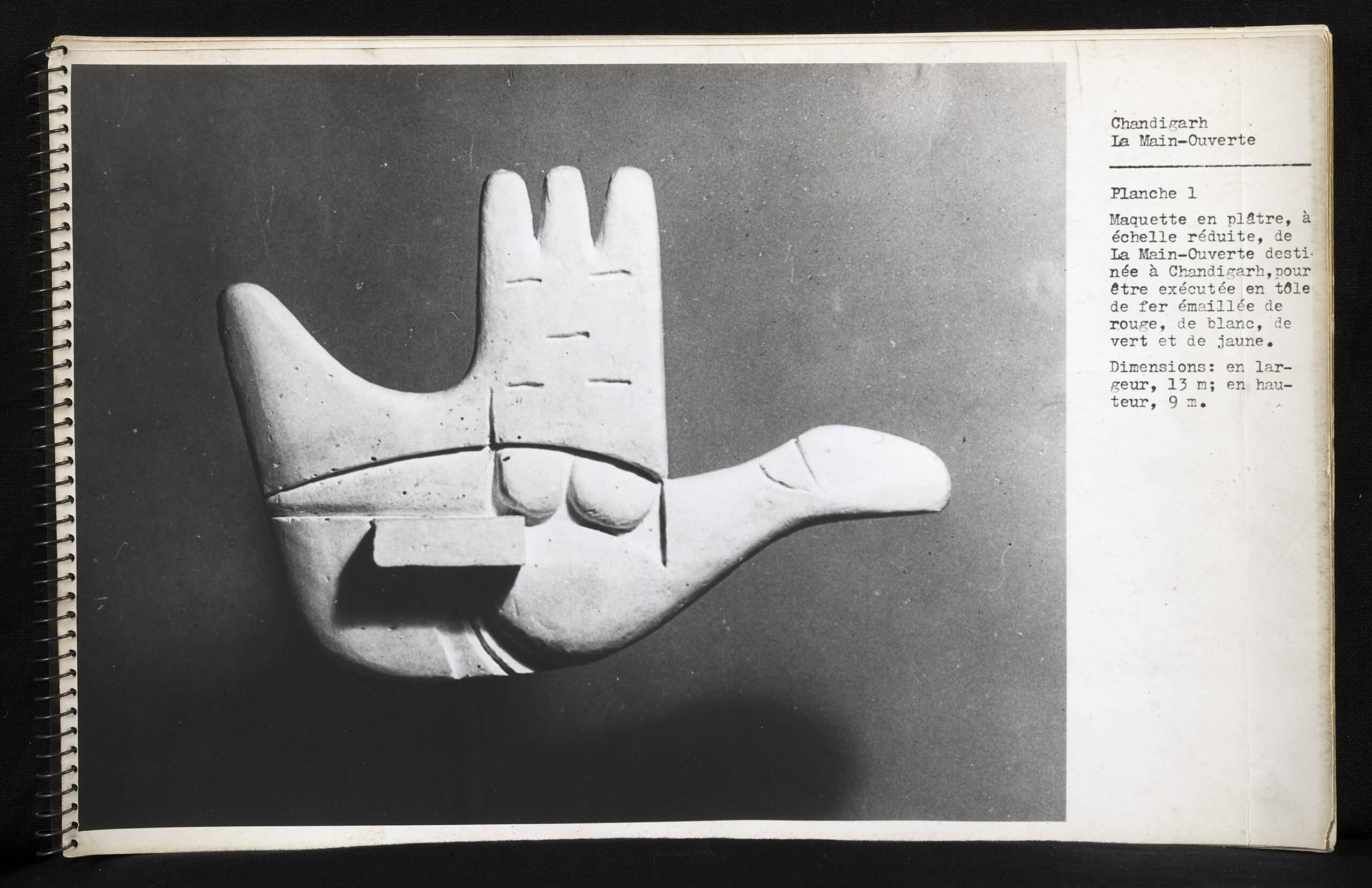
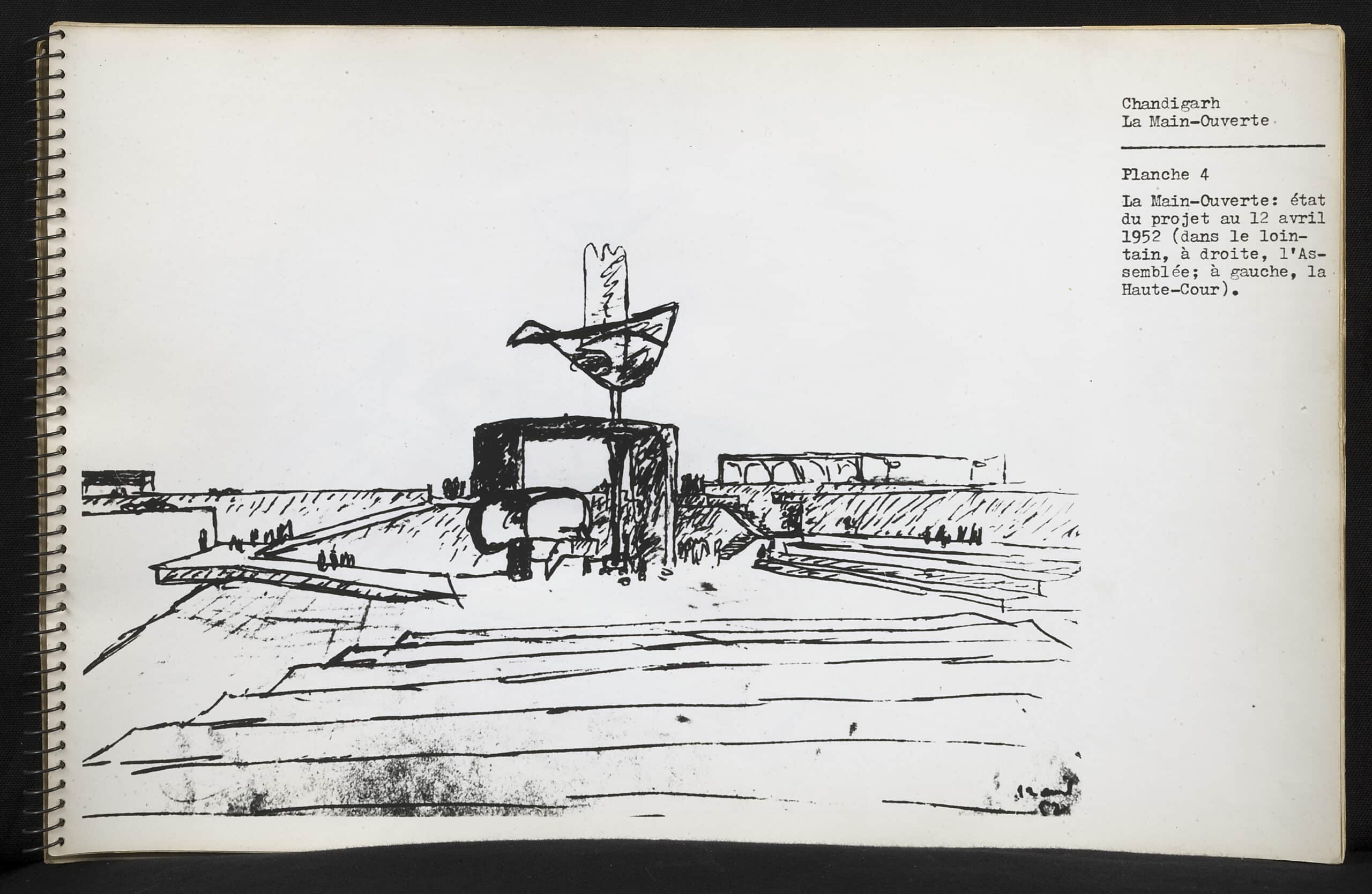
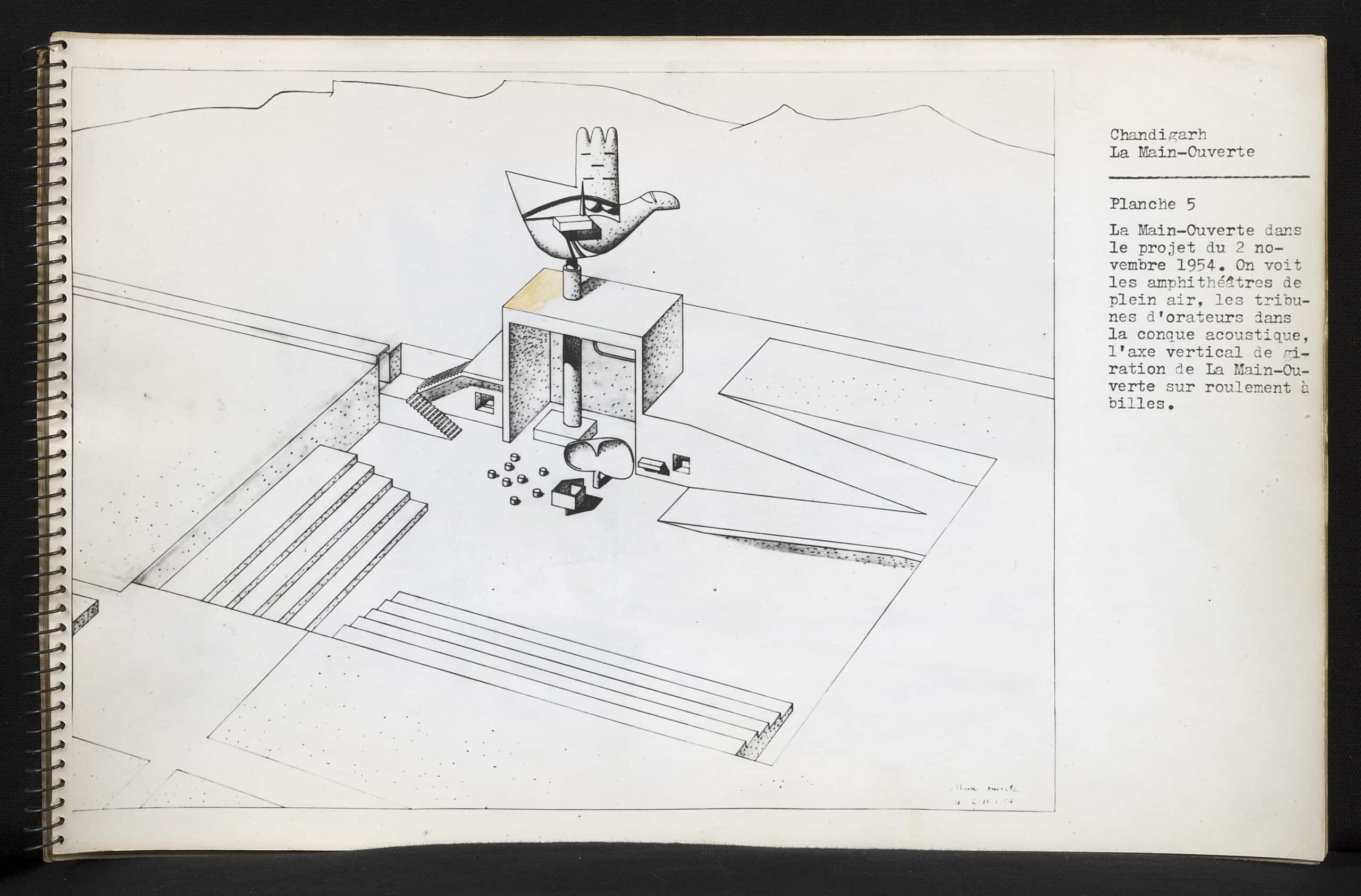
The 24-page plaquette titled ‘Chandigarh. La Main Ouverte’ was produced at Le Corbusier’s atelier, presumably as a presentation device. In total, ten plaquettes were realised, dated between 1951 and 1964. Their assemblage was assigned to office assistants such as Julian de la Fuente, José Oubrerie, and Jean Petit, to mention a few. All were designed on standard sheets measuring 21 x 33 cm and spiral-bound.
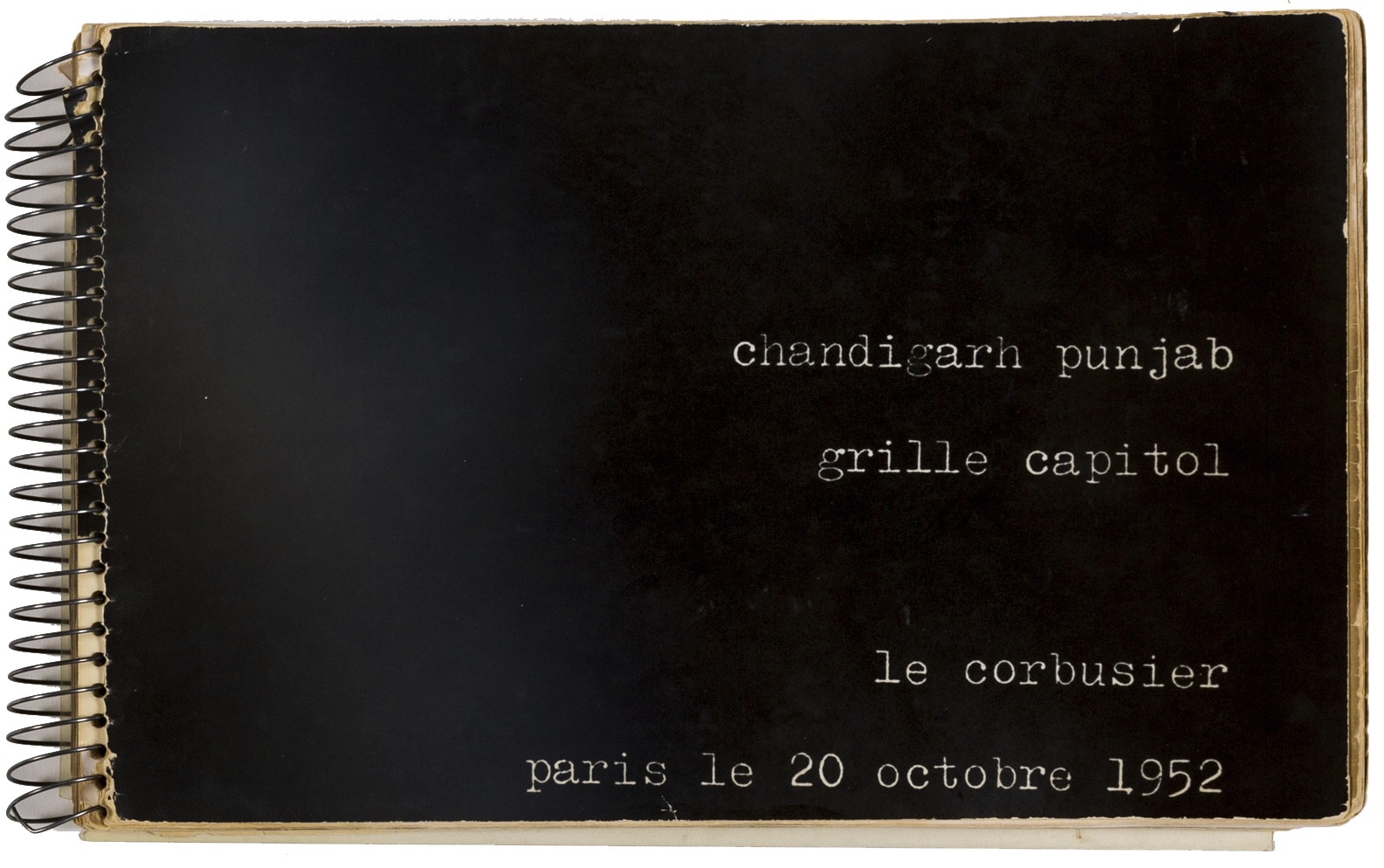
‘Chandigarh. La Main Ouverte’ exists in two copies—one in Paris and one in London—while ‘Chandigarh Punjab. Grille Capitol’ is held only in the collections of Drawing Matter in London.
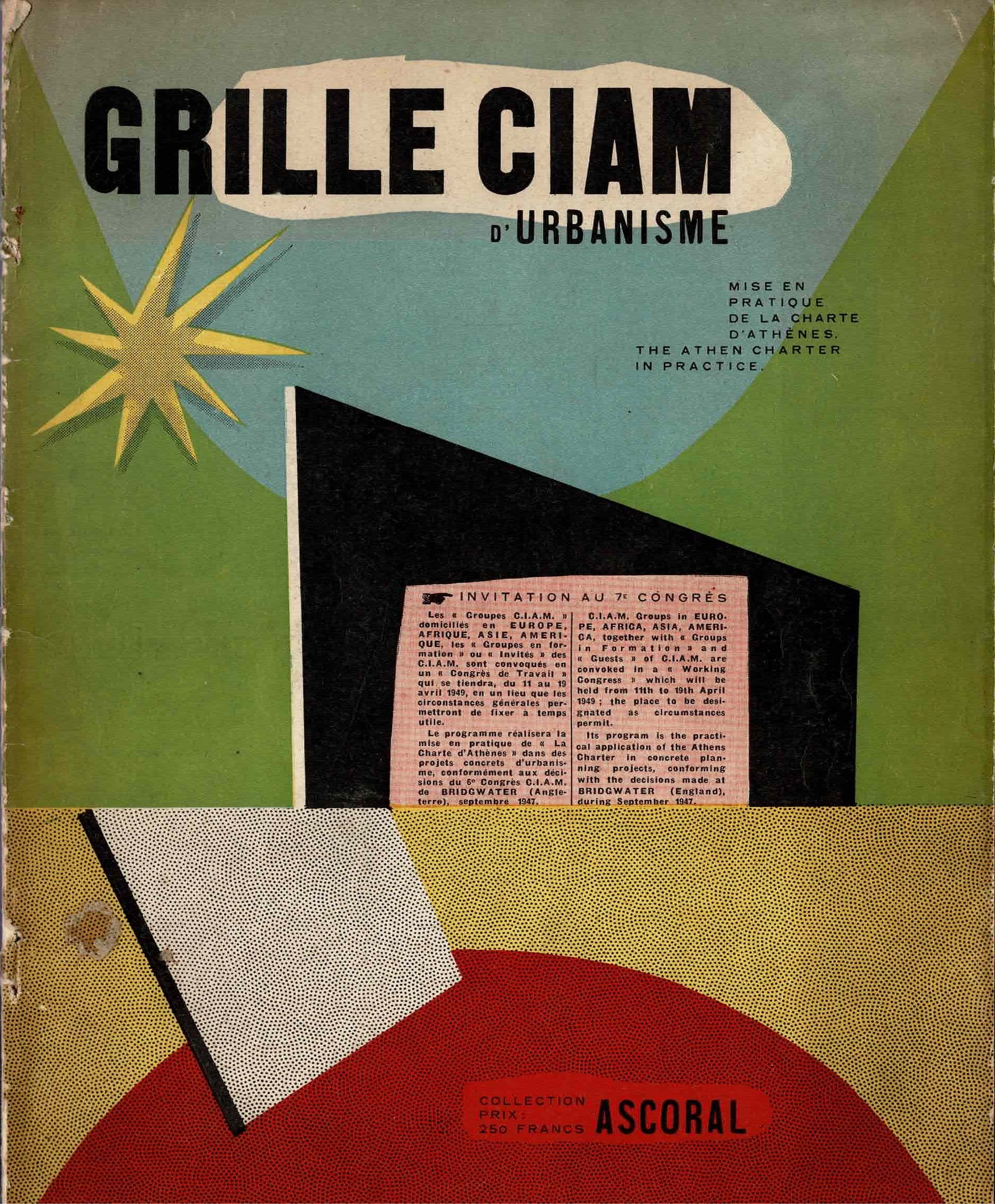
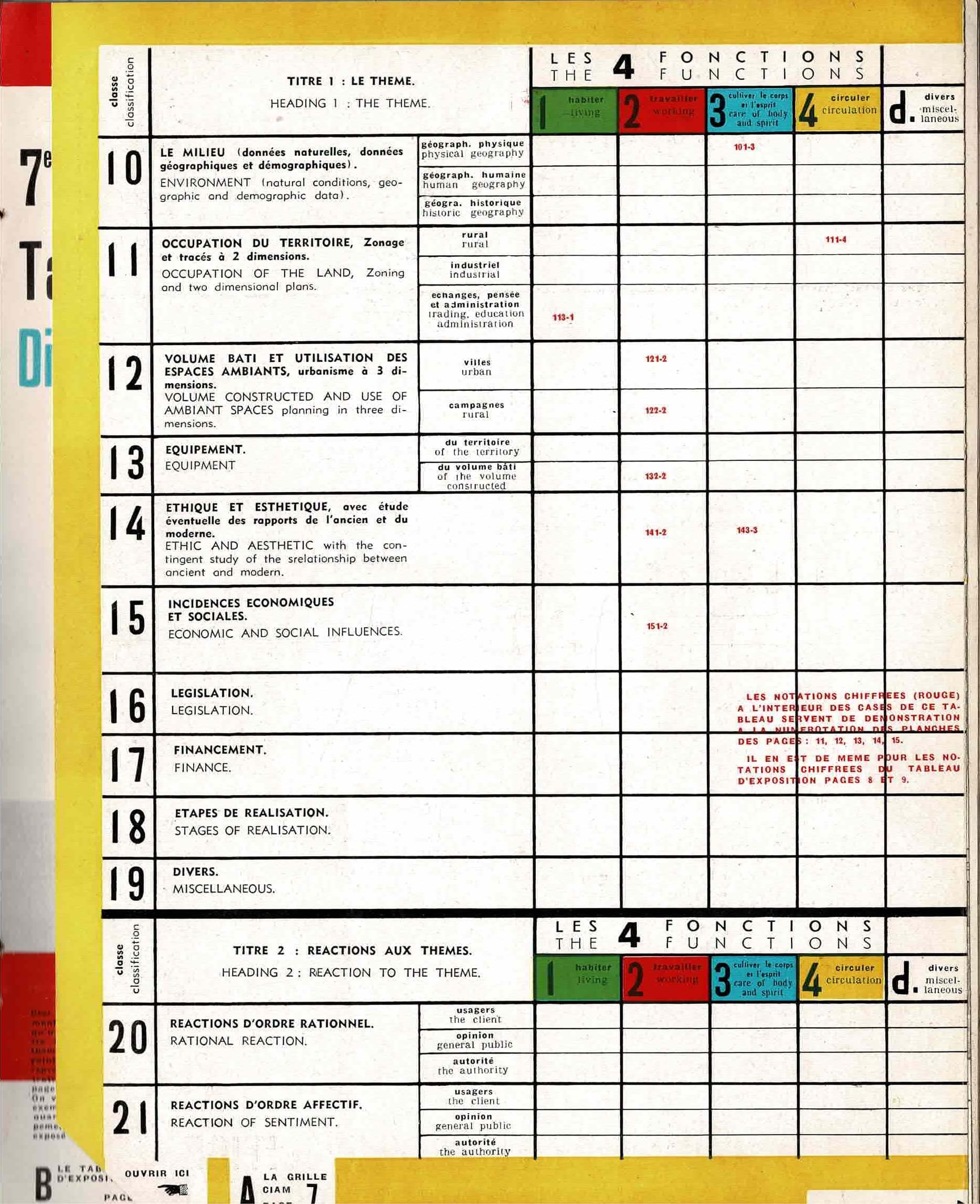
These plaquettes represent the most convincing examples of the so-called CIAM Grid, published in 1948 as a conceptual development of the Athens Charter (1933).
The Open Hand can be interpreted as an Idea, a Sign, a Symbol, or a Monument. De facto, this plaquette played the role of a political statement, charted through a carefully selected set of documents and a comprehensive narrative.
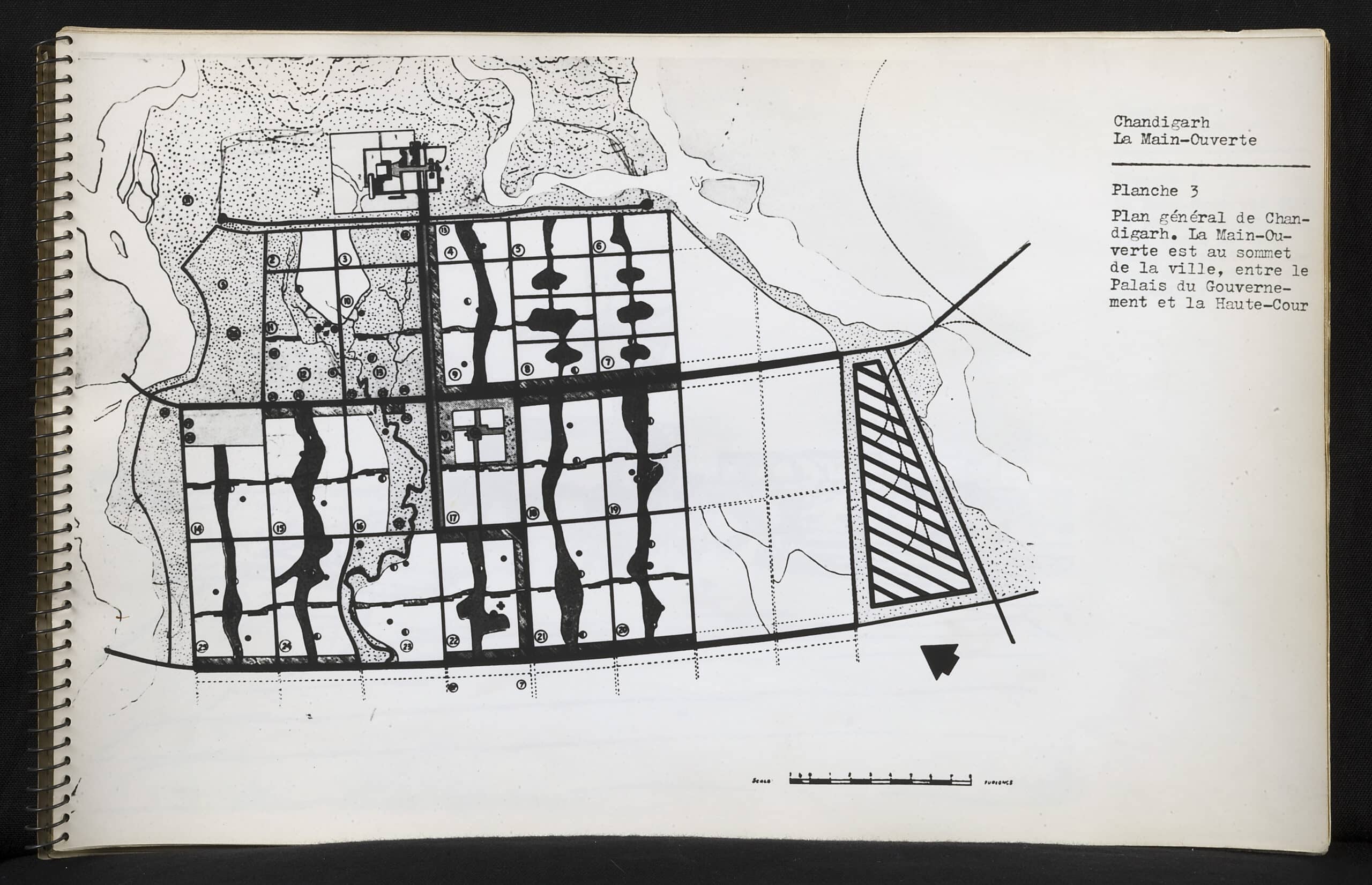
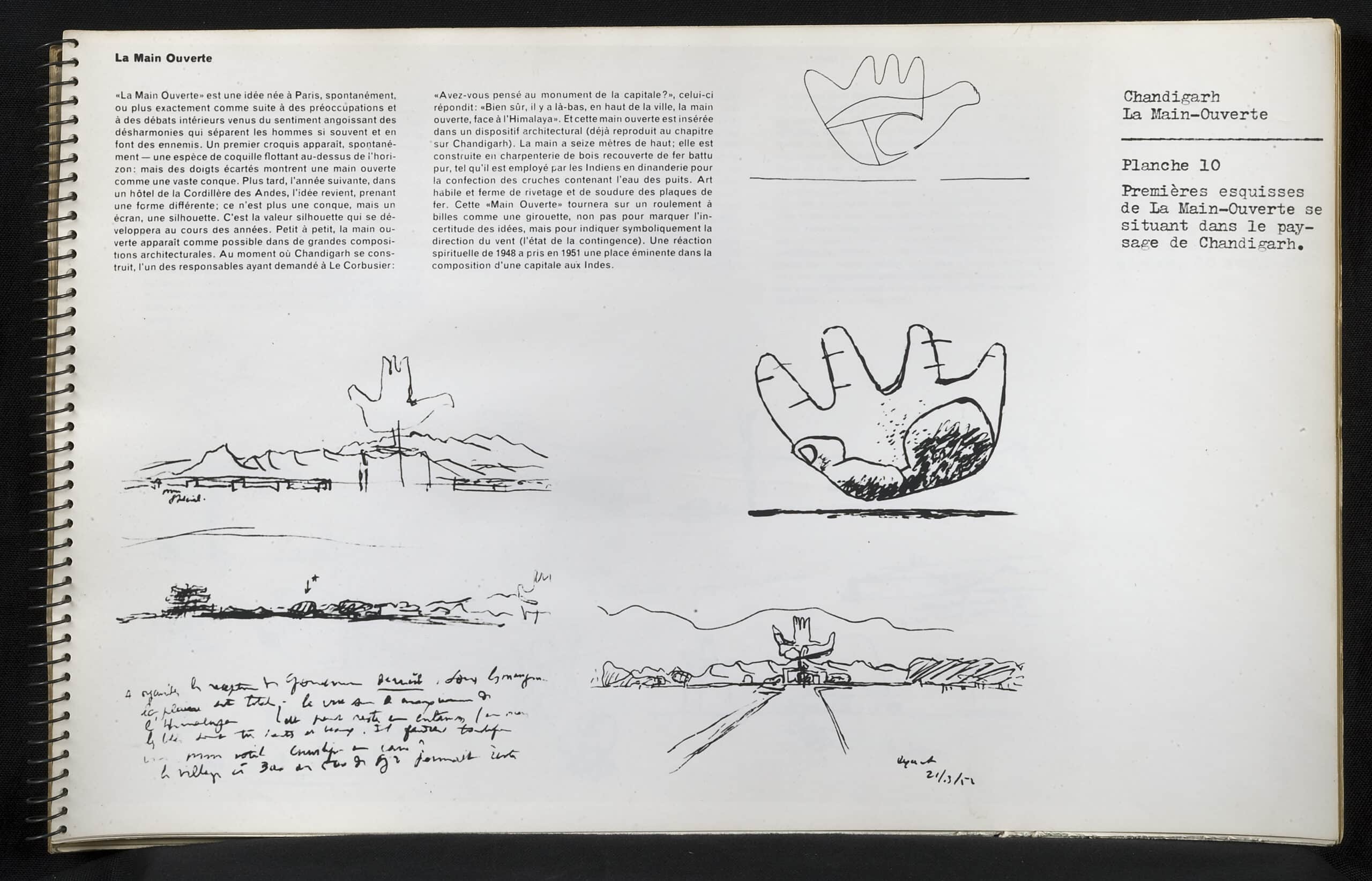
It begins with the master plan of Chandigarh, the new capital of Punjab, developed under Nehru’s leadership (1951-52). The above sheets retrace the history and representation of the Open Hand, from its publication in volume 5 of Le Corbusier’s Œuvre complète (1946-52) to various letters and reports.
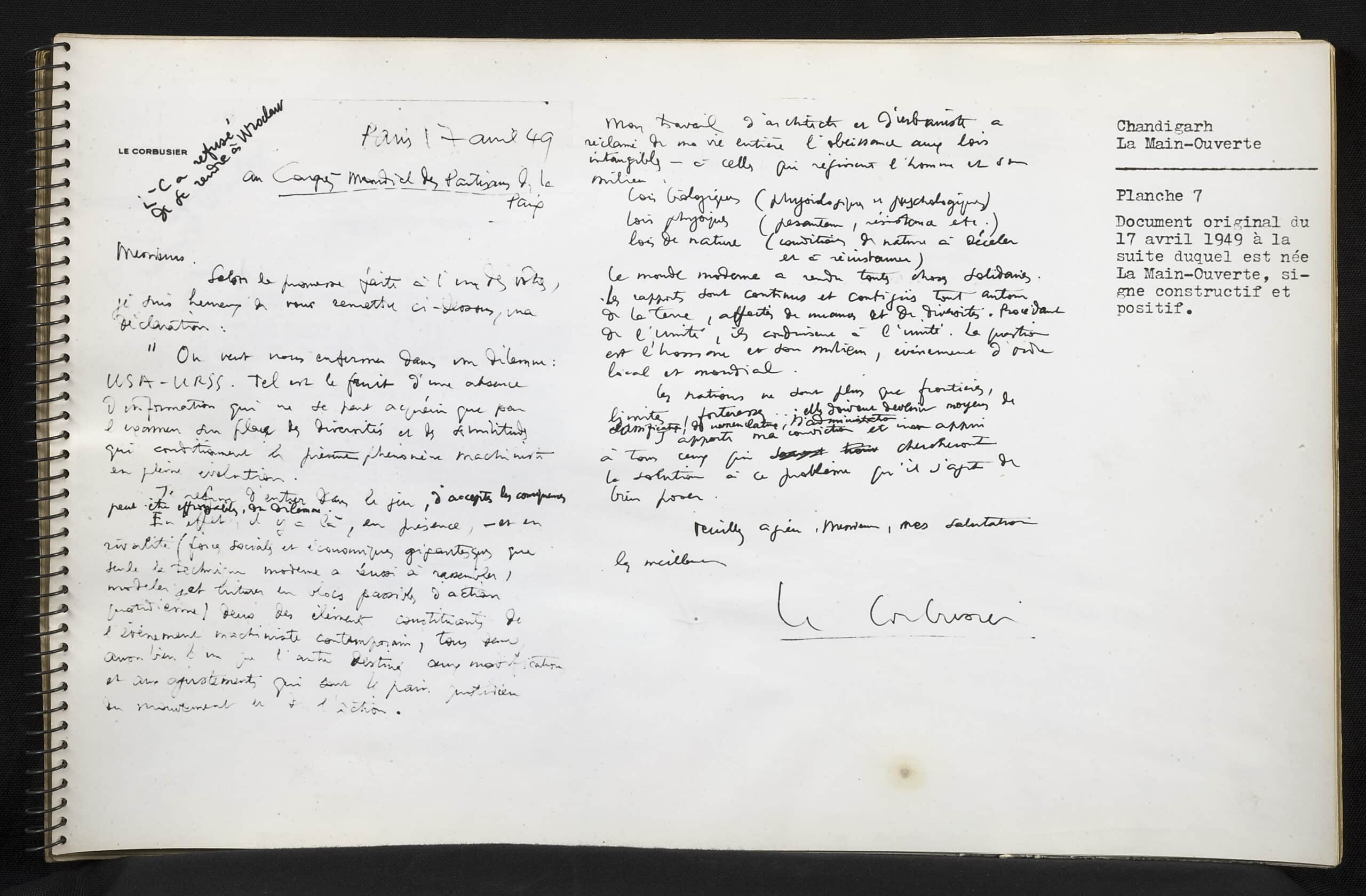
A change of tone and perspective in the narrative becomes visible in sheet number 7. Here Le Corbusier included the letter he addressed to the organisers of the World Congress of Intellectuals for Peace held in Wrocław in 1948—an invitation he declined. In the message he wrote: ‘[The organisers] wish to place us on the horns of a USA–USSR dilemma… I refuse to participate in this play… They face each other as rivals… the modern world has made all things reciprocally dependent.’ Le Corbusier’s rejection of Cold War binaries and his alignment with Nehru’s vision made the Open Hand function as cultural diplomacy supporting non-alignment.
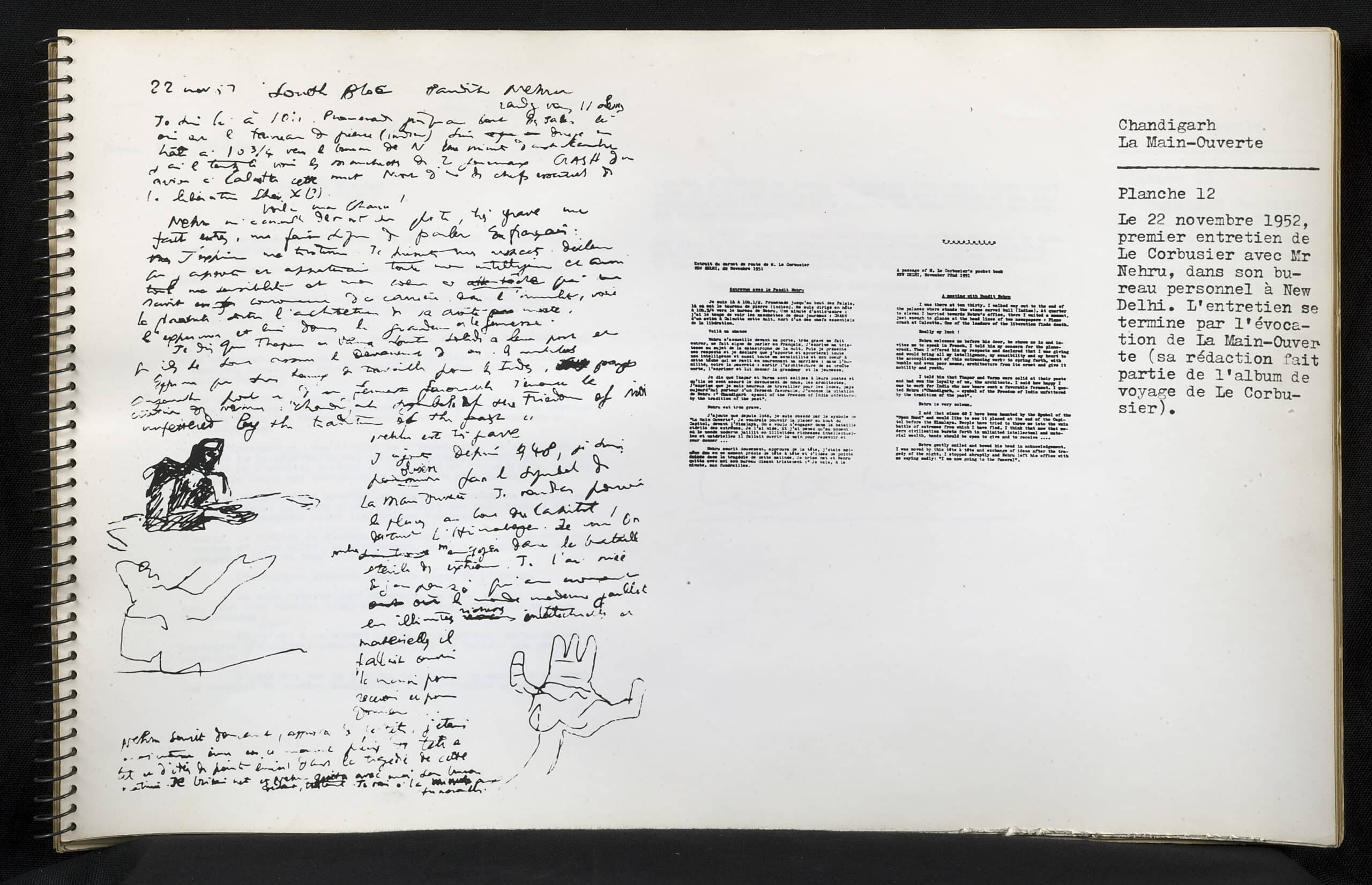
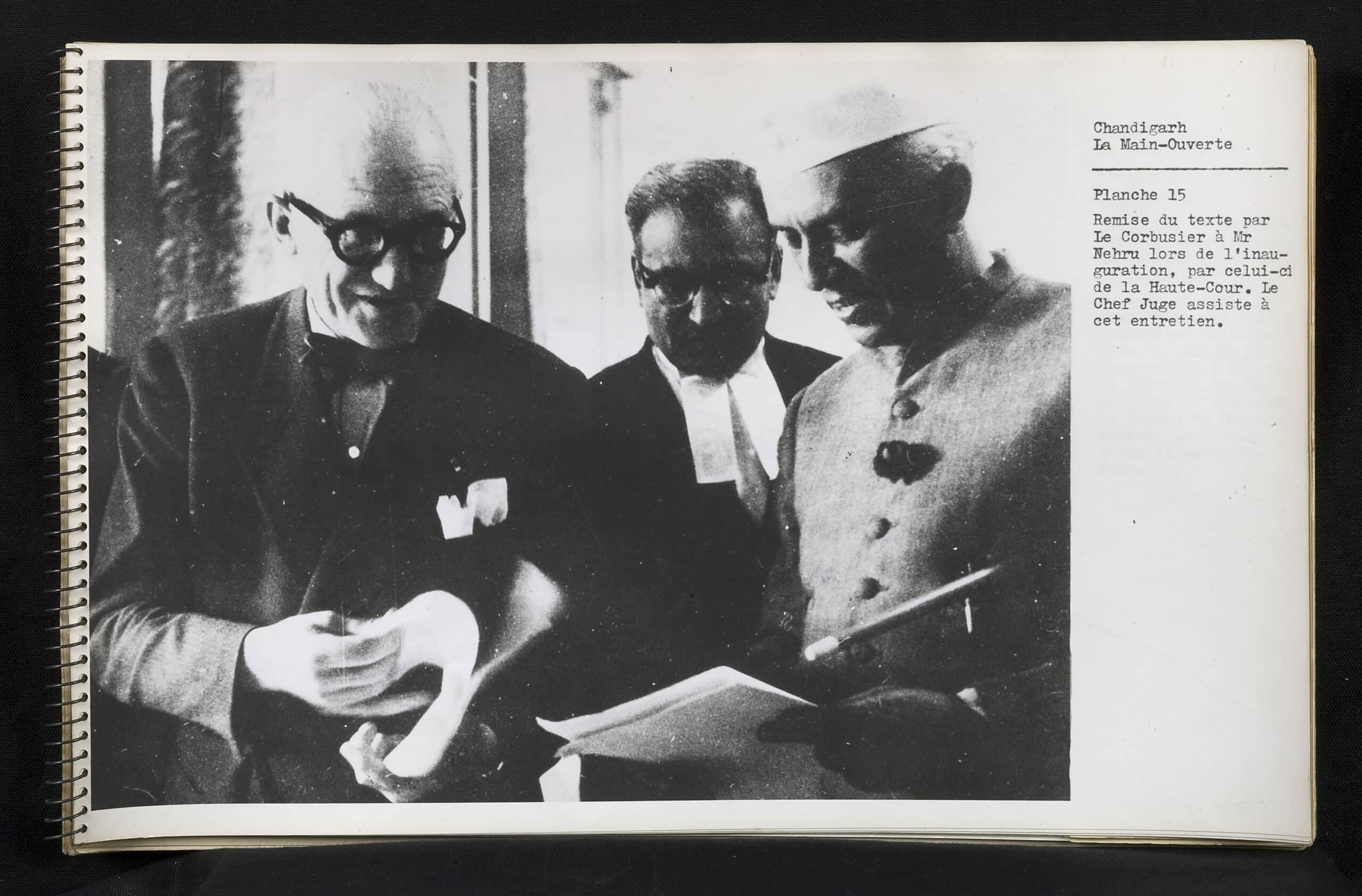
Though absent from Wrocław, Le Corbusier offered the Open Hand as an idea of constructive optimism and progress. When he met with Nehru in November 1952, four years after the Wrocław Conference, he remarked: ‘Since 1948, I have been obsessed by the symbol of the Open Hand and would like to see it placed at the end of the Capitol before the Himalayas. People have tried to throw me into the vain battle of the extremes—the two blocks—from which I fled.’
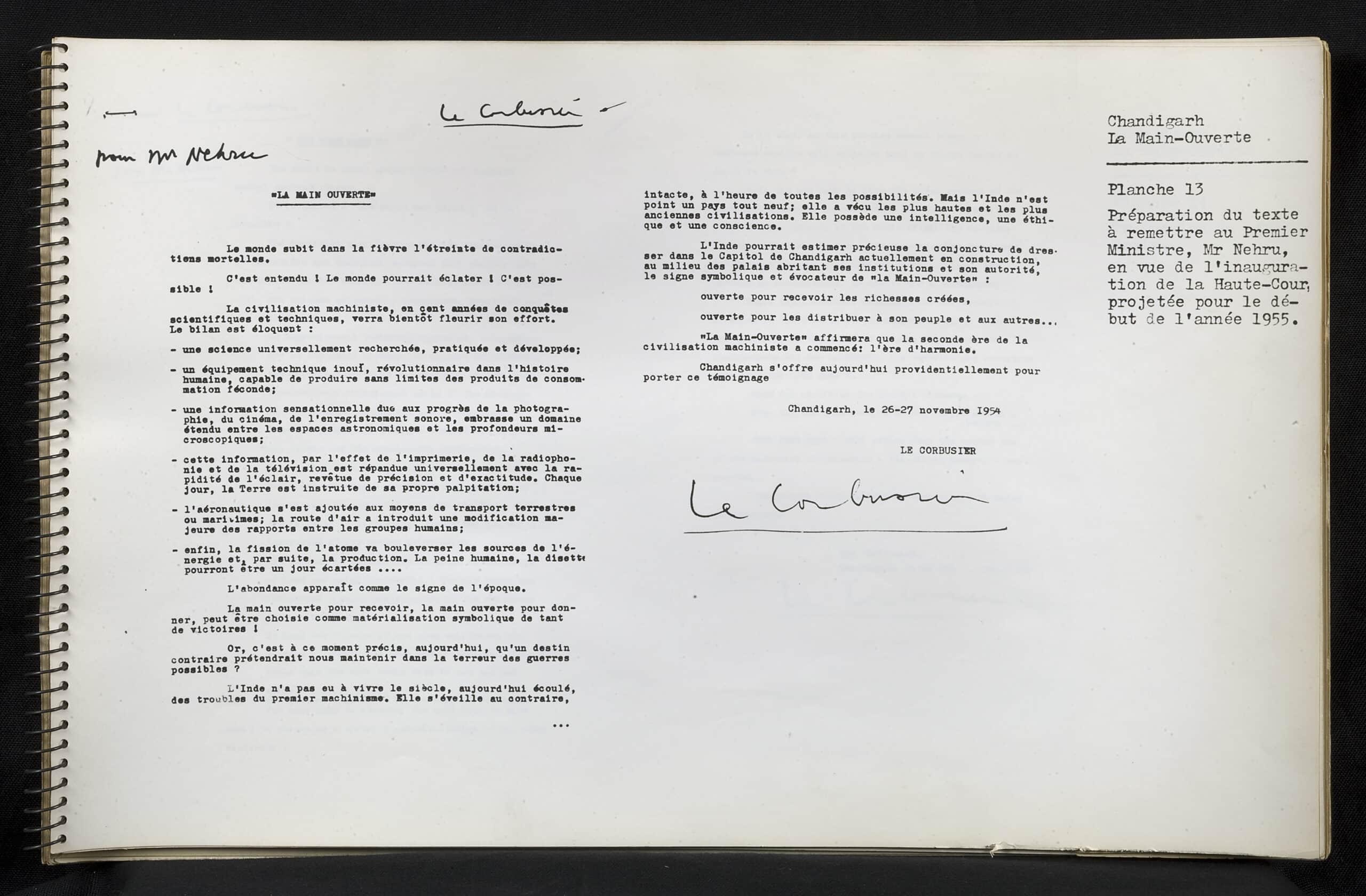
The conversation continued when Nehru and Le Corbusier met at the opening of the Palace of Justice on March 19, 1955. On that occasion, the architect offered the politician a note stating: ‘THE OPEN HAND will affirm that the second era of the machinist civilisation—the era of harmony—has started. Chandigarh today offers providentially to bear this witness.’
The above notes are based on a paper first presented at the workshop Long Table Conversation on ‘NonAligned Modernism’ held at the University of Washington in Seattle on October 31, 2025, moderated by Adair Rounthwaite (Art History) and with an introduction by Vikram Prakash (HHF/Architecture).
*
Maristella Casciato (architect, architectural historian, and educator) is senior curator, head of architectural collections at the Getty Research Institute in Los Angeles.

– Maristella Casciato