Working (with) Drawings from the Drawing Matter Collection
– Rosie Ellison-Balaam and Maria Mitsoula
The following text was first published in Stoà 14 – SCUOLE, SYLLABUS / SCHOOLS, BRIEF (Autumn 2025).
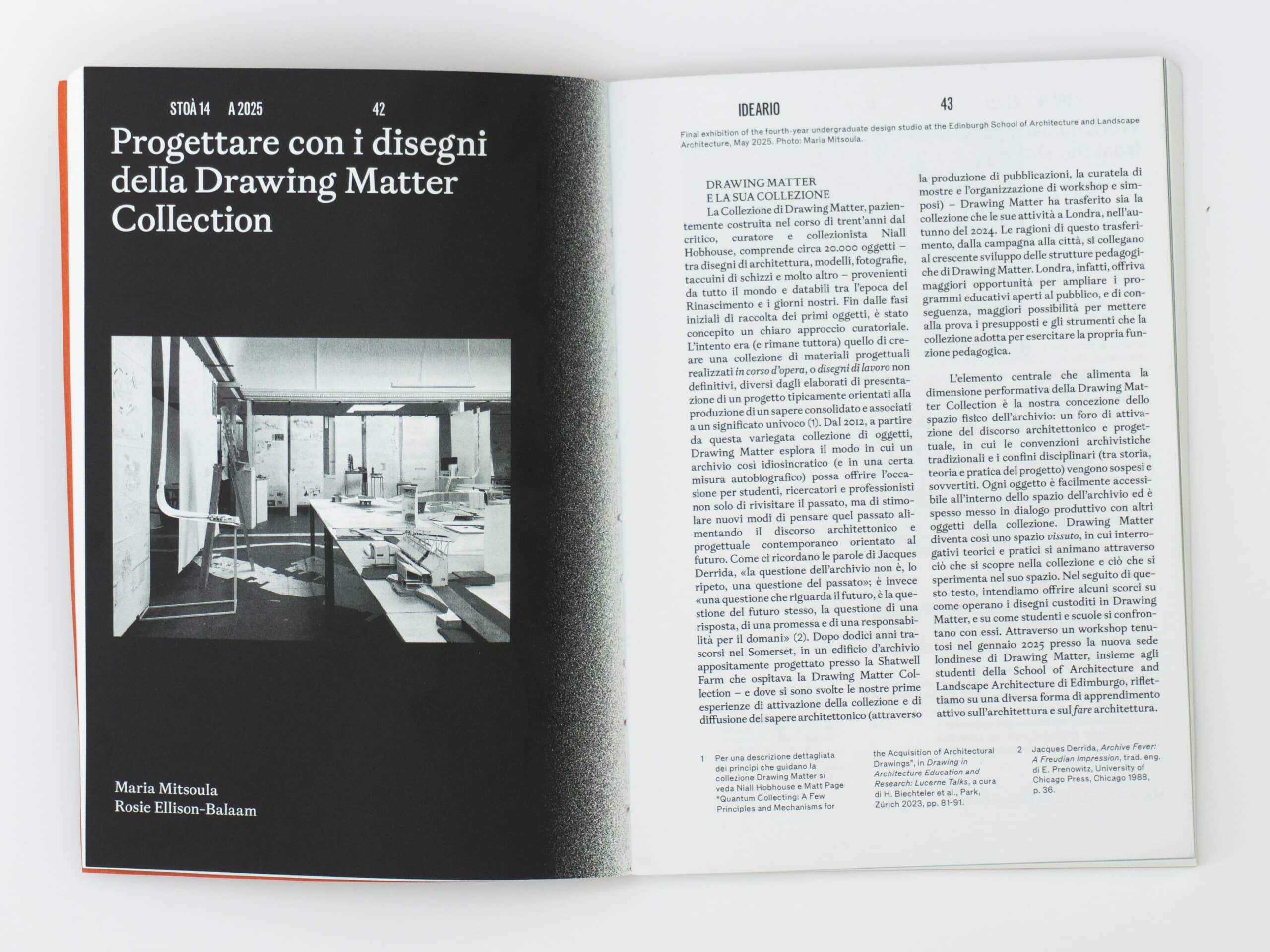
*
Drawing Matter and its Collection
The Drawing Matter Collection, carefully assembled by collector, curator, and critic Niall Hobhouse over thirty years, comprises around 20,000 objects—including architectural drawings, models, photographs, and sketchbooks, among others—from around the world, spanning from the Renaissance to the present day. From the early days of collecting the very first objects, a particular curatorial framework was considered. The aspiration was (and still is) to create a collection of in-progress design work, or working drawings, rather than mere presentation drawings of a project, which tend to focus on the production of fixed knowledge or are associated with a single meaning.[1]
Since 2012, grounded in this diverse collection of objects, Drawing Matter has been exploring how an idiosyncratic (and to a certain degree autobiographical) archive can offer opportunities for students, scholars and practitioners not only to revisit the past but also to provoke new thinking about the past, as well as to stimulate contemporary architectural and design discourse about the future. Or, as Jacques Derrida reminds us, ‘the question of the archive is not, I repeat, a question of the past’; it is ‘a question of the future, the question of the future itself, the question of a response, of a promise and of a responsibility for tomorrow.’[2]
After twelve years in Somerset, where the Drawing Matter Collection was housed in a specifically designed archive building at Shatwell Farm—and where our first experiences with the activation of the collection and dissemination of architectural knowledge took place (through the production of publications, the curation of exhibitions, and the organisation of workshops and symposia)—Drawing Matter relocated both its collection and activities to London in the autumn of 2024. The impetus for this relocation, from the countryside to the city, was tied to the further development of Drawing Matter’s pedagogical structures. In many ways, London offered more opportunities for expanding the educational and public programmes of Drawing Matter, and by extension, more possibilities for challenging the scope and means of the collection’s pedagogical agency.
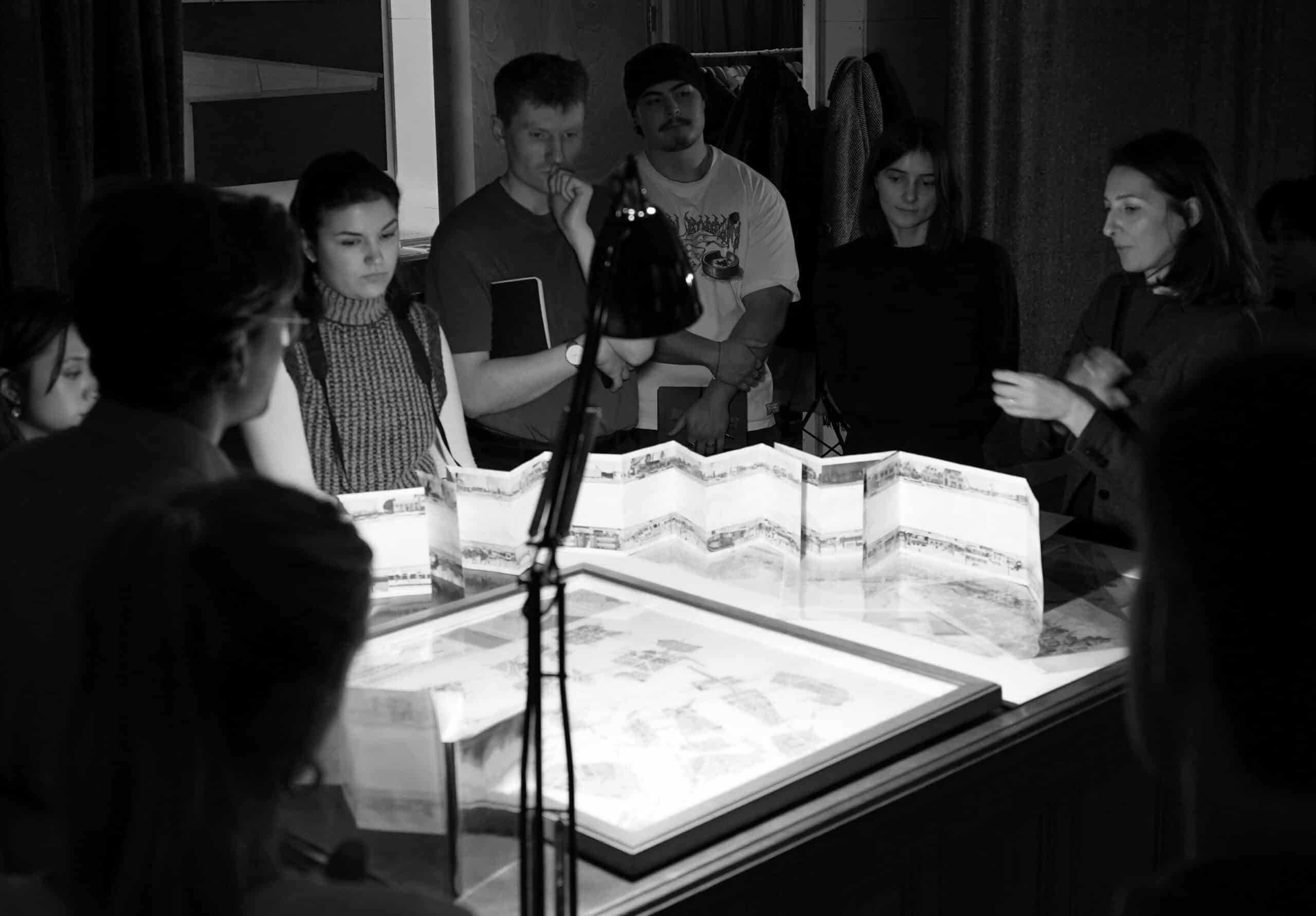
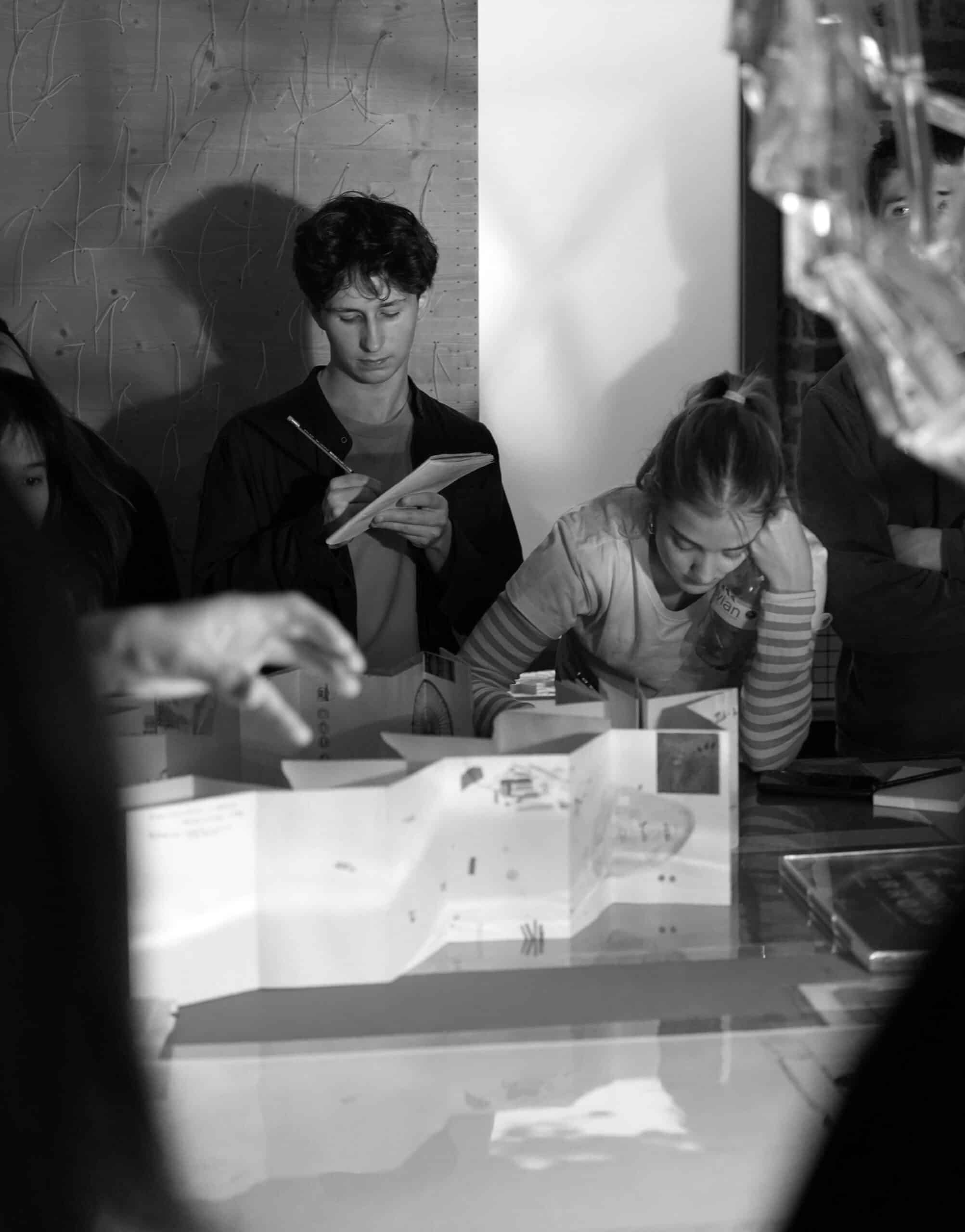
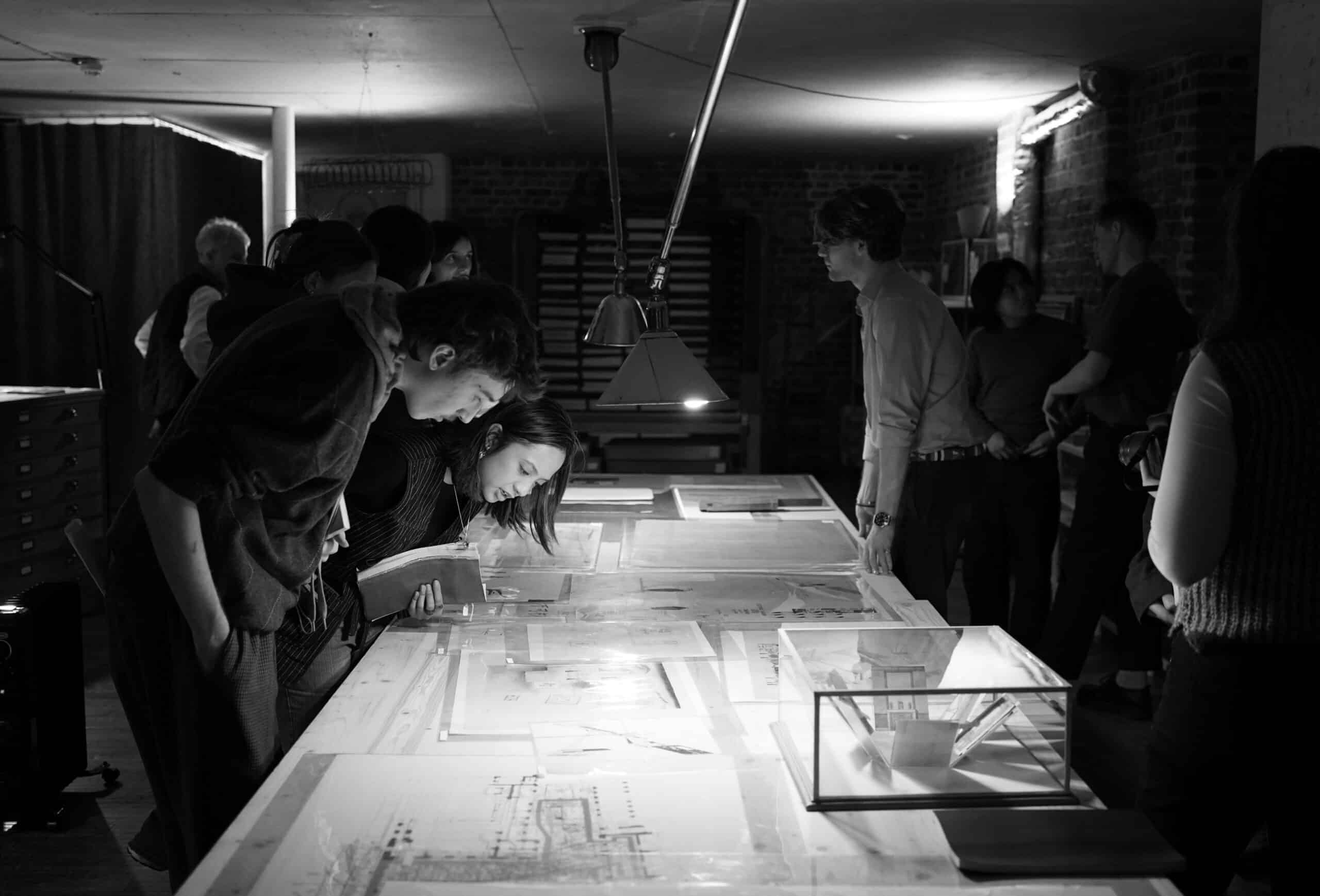
Central to the performative quality of the Drawing Matter Collection is our conception of the physical space of the archive as a forum for enabling architectural and design discourse, in which conventional archival assumptions and disciplinary boundaries (between history and theory and the practices of architectural design) are suspended and upended. Every object is easily accessible within the space of the archive and often put in a productive dialogue with other objects from the collection. Drawing Matter becomes then a living space where questions, both theoretical and practical, are animated by what one discovers in the collection, and experiences in the space of the archive.
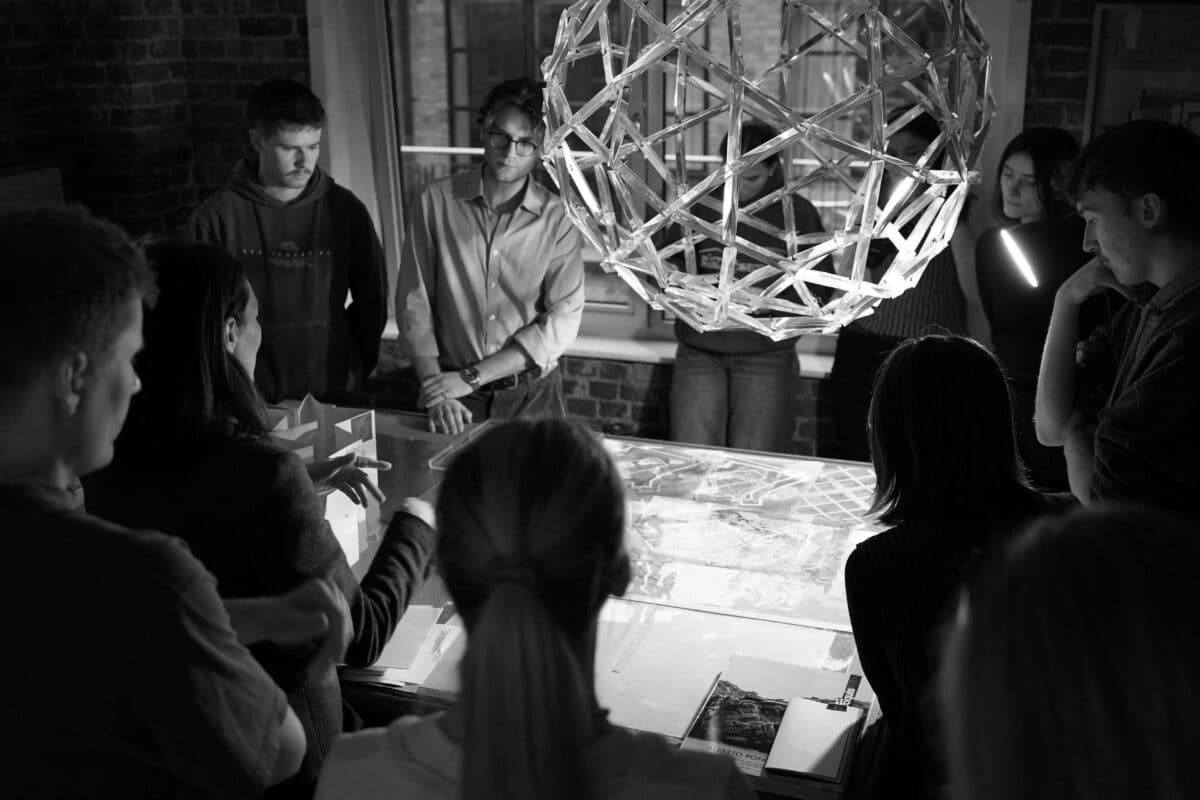
In what follows, we offer a few glimpses into how drawings within Drawing Matter work and how students and schools work with them. Through a workshop held in January 2025 at Drawing Matter in London, with students from the Edinburgh School of Architecture and Landscape Architecture, we reflect on another form of active learning about, and making of, architecture.
*
Collecting Drawings
To determine an object’s place in the Drawing Matter Collection, two questions are posed. First, does the object align with our conception of what constitutes an architectural drawing? Second, what agency does it possess as an architectural drawing?[3] Our definition of architectural drawing is broader than conventional interpretations. We consider any artefact, in any medium, to be a drawing if it demonstrates immediate agency in the articulation of an architectural idea. The architectural idea encapsulates all works generated with the production of space in mind, from gardens and theatre design to cities and pieces of furniture. To the second question, the agency of the drawing is understood as the capacity of the drawing to fulfil its intended function in the design process.[4] What is its mode of representation, and at what point in the timeline of a life or project does it appear—is it a preliminary sketch, the third iteration of a technical drawing, or a presentation render?
Each drawing in the collection is not assessed in isolation, confined to the archive’s single room. All drawings become integrated into a whole, and with any new addition, however modest, they alter the overall texture of the collection, whether it is a small wrinkle or a large wave. Here, the agency of the drawing is understood in relation to the other objects in the collection that surround it. The drawings have no hierarchy, frames and mounts are removed upon accession, and all materials are subject to the same practical mylar sleeves. An essay by Adelphi publisher Roberto Calasso gives shape to this approach. Reflecting on the art of threading singular cultural objects into a coherent whole, he states the art is one’s ‘capacity to give form to a plurality of books as though they were the chapters of a single book.’[5] Calasso’s insight can be applied to the way the archive operates: a connected chain of drawings that capture the snaking stages of architectural progression, the drawings culminating into a collective whole. Yet the acquisitions that contribute to this wholeness do not seek completeness; they are not predicated on obtaining entire projects or comprehensive architectural archives.
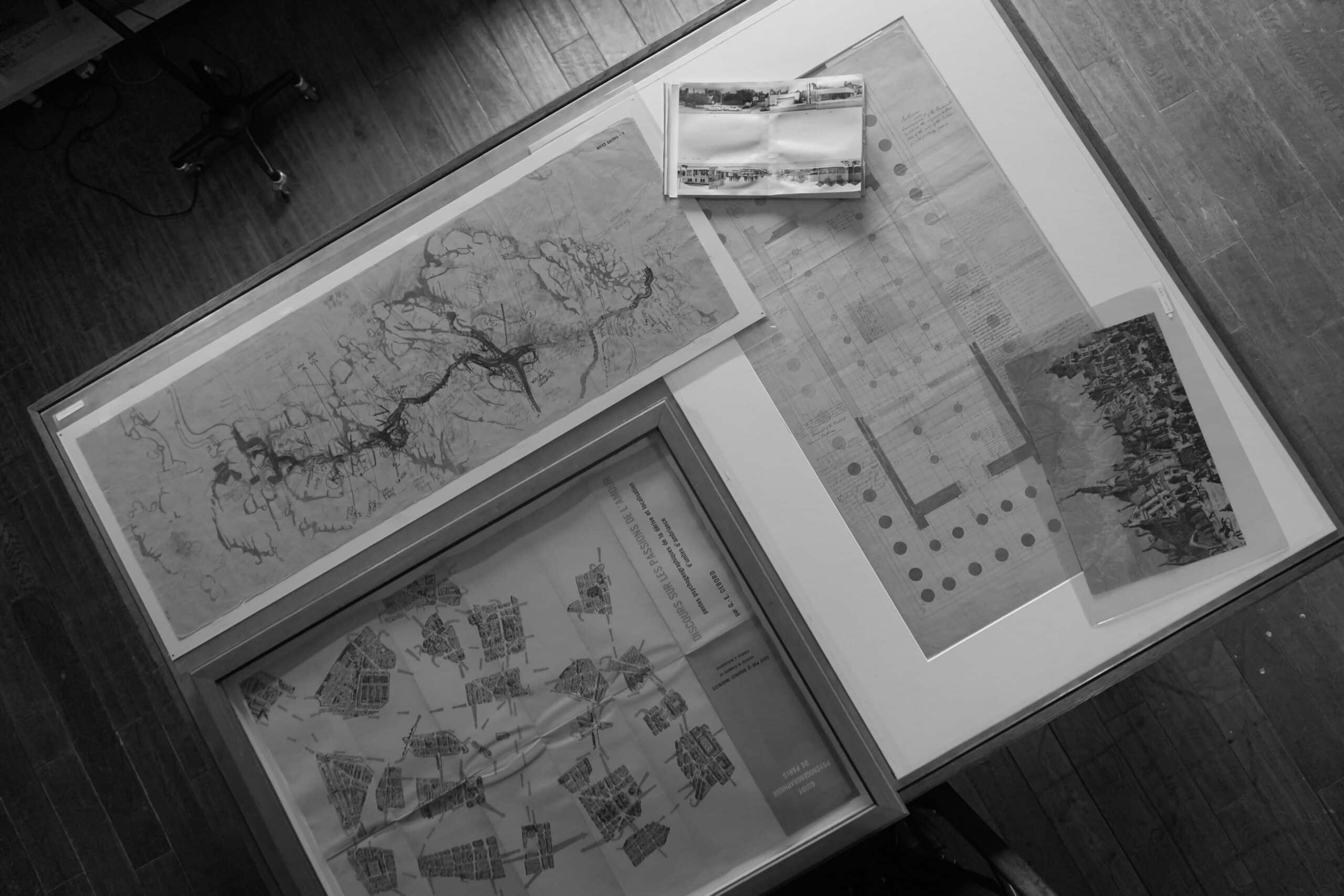
As a collective whole, the archive functions to encourage new knowledge, expressed through writing, exhibitions and publications, but most significantly, to be utilised as a pedagogical tool within academic frameworks. During a workshop with fourth-year undergraduate students from the Edinburgh School of Architecture and Landscape Architecture (ESALA), a selection of survey drawings was put together by the authors (Rosie Ellison-Balaam as the organiser of the workshop and Maria Mitsoula as the tutor of the design studio course). In particular, students encountered Charles Robert Cockerell’s ink and wash study of the Parthenon’s floor plan; Alberto Ponis’ scrawling felt tip path through a printed craggy coastline; Jiří Kolář’s crumplage of a historic engraving of London’s Royal Courts of Justice; Guy Debord’s psychological lithograph of Paris; and Ed Ruscha’s concertina photobook of Los Angeles’ Sunset Strip, among others.
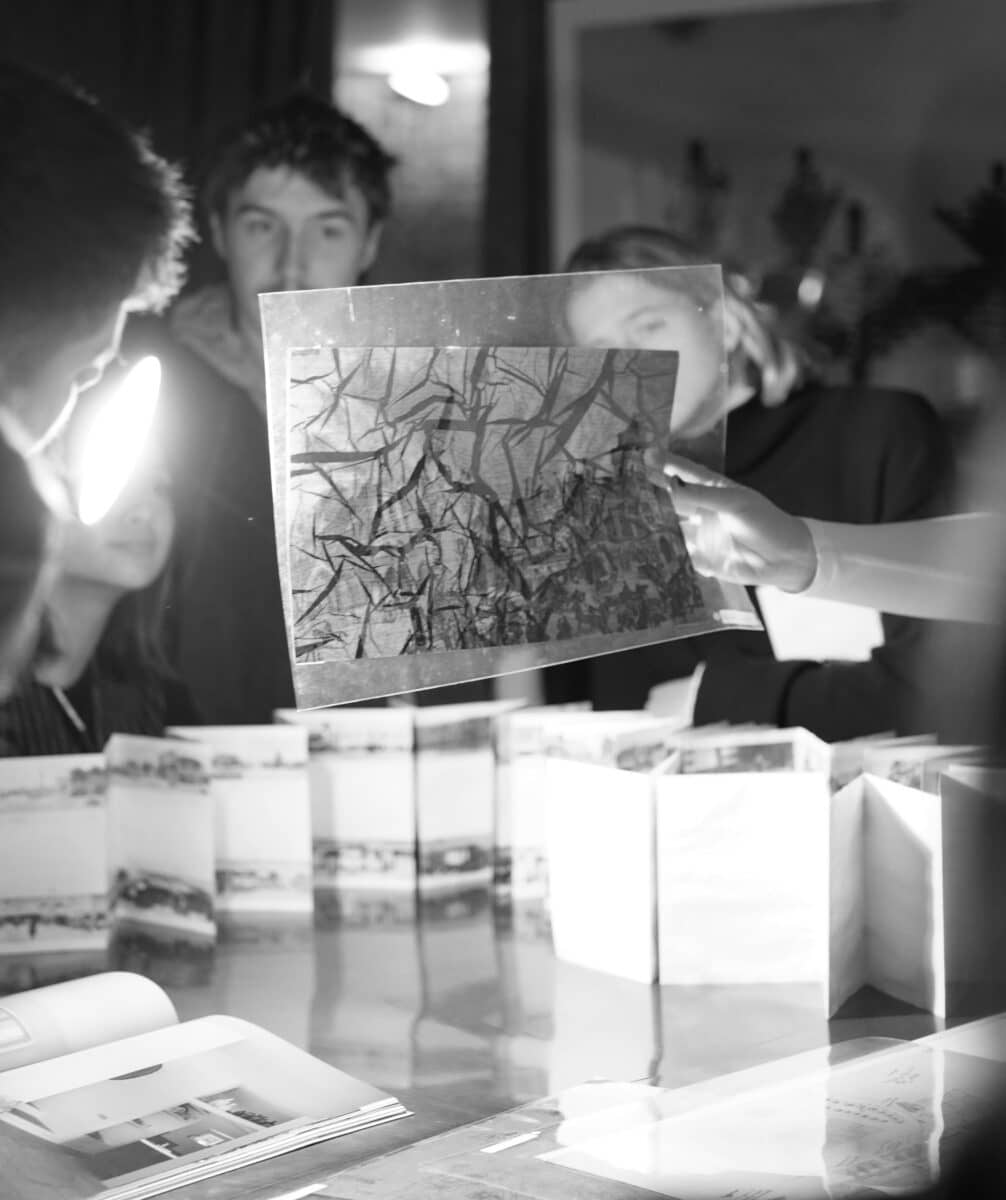
As a group spanning continents, chronologies, and mediums, the drawings sit together on the top of the planchest—reflecting the diverse subject matters encompassed by the notion of survey drawing. In their multiplicity, they pose questions: What is a survey drawing, and what has been surveyed? How does a survey drawing represent a context, and what kind of representation has been employed? What is the drawing’s agency? These questions linger in the air above the planchest—prompting a second round of a more personal set of inquiries: What is my definition of a survey? How would I represent a site? What is the agency of my drawing? In its plurality, the collection poses questions not only of itself but also of the students engaging with it. The drawings become reflective, students turn towards their own work, and in this sense, the drawings, plural, themselves become the brief.
*
Between the Archive and the Architectural Design Studio
Before visiting Drawing Matter with the sixteen students from ESALA and interacting with the drawings in the archive, students had started working on another brief. They were tasked with a) printing to scale eight drawings from the digital catalogue of the Drawing Matter Collection, and b) working in pairs to conceive of these reproductions as working drawings.
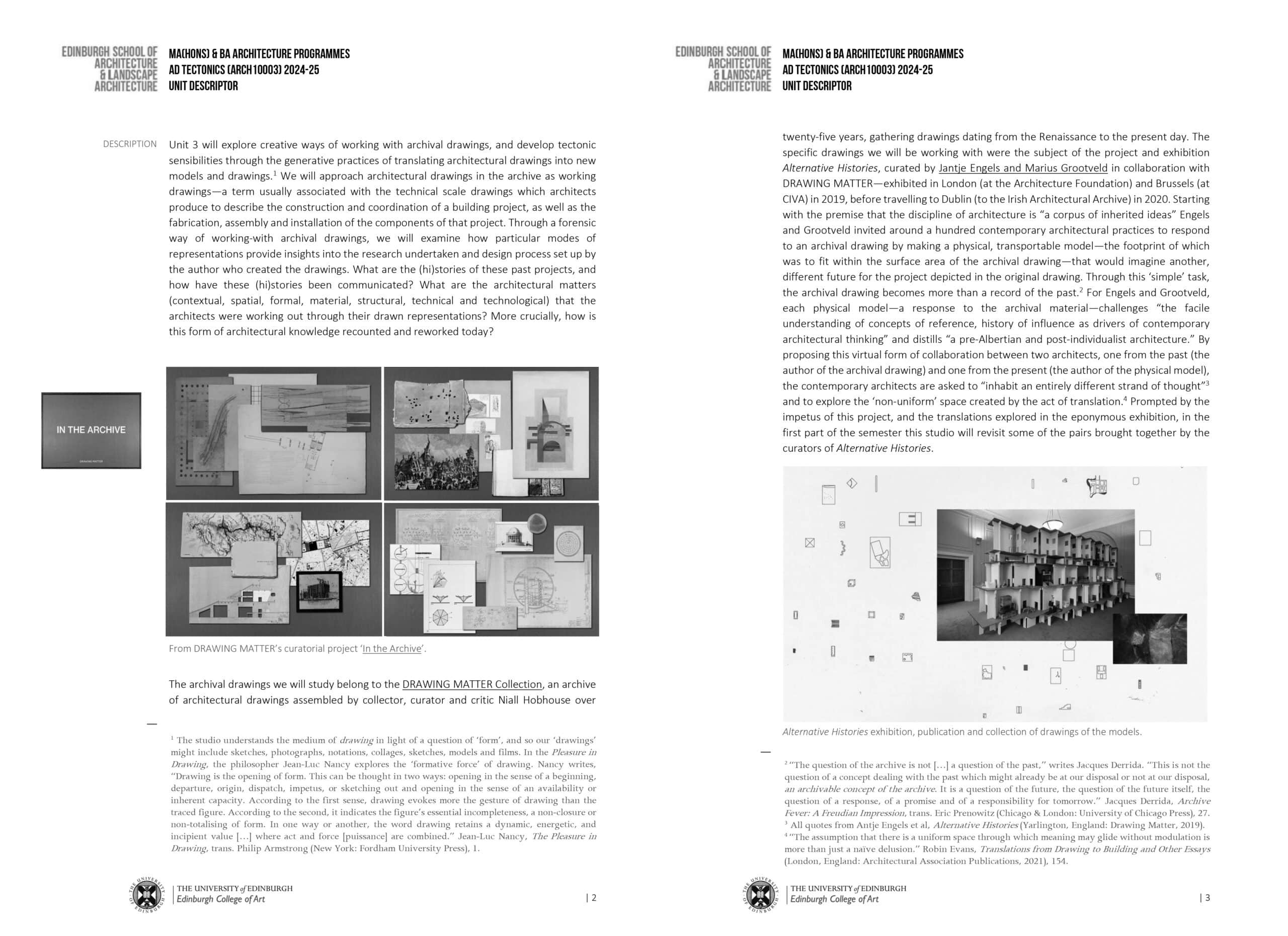
Brief for a fourth-year undergraduate design studio at the Edinburgh School of Architecture and Landscape Architecture, written by Maria Mitsoula.
Within the profession of architecture, the term working drawings refers to the technical scale drawings that architects produce to describe the construction and coordination of a building project, as well as the fabrication, assembly and installation of the components of a project. However, in the space of the studio, our definition expanded to accommodate the forensic methods the students undertook to interrogate and react to the content of the eight archival drawings. The students investigated: how particular modes of representations provide insights into the research conducted and design process set up by the author(s) of the drawings; what are the (hi)stories of the past projects represented in the drawings, and how have these (hi)stories been communicated; what are the architectural matters—contextual, spatial, formal, material, structural, technical, and technological—that the architects were working out through their drawn representations; and, more crucially, how is this form of architectural knowledge recounted and reworked today.
These eight archival drawings were also the subject of the project and exhibition Alternative Histories, curated by Jantje Engels and Marius Grootveld in collaboration with Drawing Matter—and exhibited in London at the Architecture Foundation and in Brussels at CIVA in 2019, before travelling to Dublin to the Irish Architectural Archive in 2020. Starting with the premise that the discipline of architecture is ‘a corpus of inherited ideas’ Engels and Grootveld invited around a hundred contemporary architectural practices to respond to an archival drawing from the Drawing Matter Collection by making a physical, transportable model—the footprint of which was to fit within the surface area of the archival drawing—that would imagine another, different future for the project depicted in the original drawing.[6] For Engels and Grootveld, each physical model—a response to the archival material—challenges ‘the facile understanding of concepts of reference, history of influence as drivers of contemporary architectural thinking’ and distils ‘a pre-Albertian and post-individualist architecture.’ [7]
By proposing this virtual form of collaboration between two architects, one from the past (the author of the archival drawing) and one from the present (the author of the physical model), the contemporary architects are asked to ‘inhabit an entirely different strand of thought’[8] and to explore the non-uniform space created by the act of translation—as Robin Evans discusses in his essay ‘Translations from Drawing to Building’, noting that ‘[t]he assumption that there is a uniform space through which meaning may glide without modulation is more than just a naïve delusion.’[9]
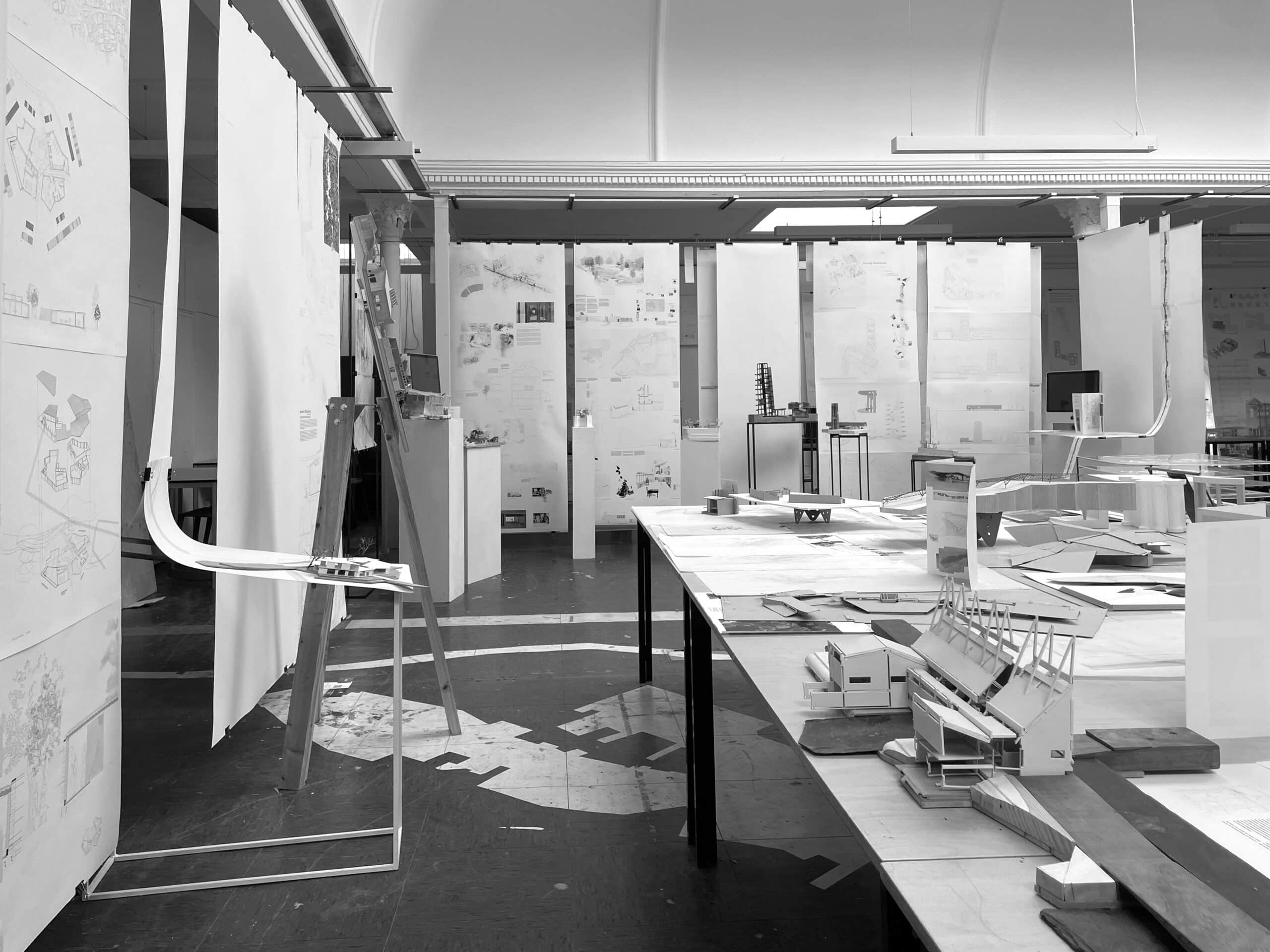
Prompted by the impetus of the Alternative Histories project, the first modulations of the eight archival drawings that appeared in the design studio—as re-workings, re-iterations and re-imaginations of objects of the past—were then brought to the space of the archive to be juxtaposed with their sources.
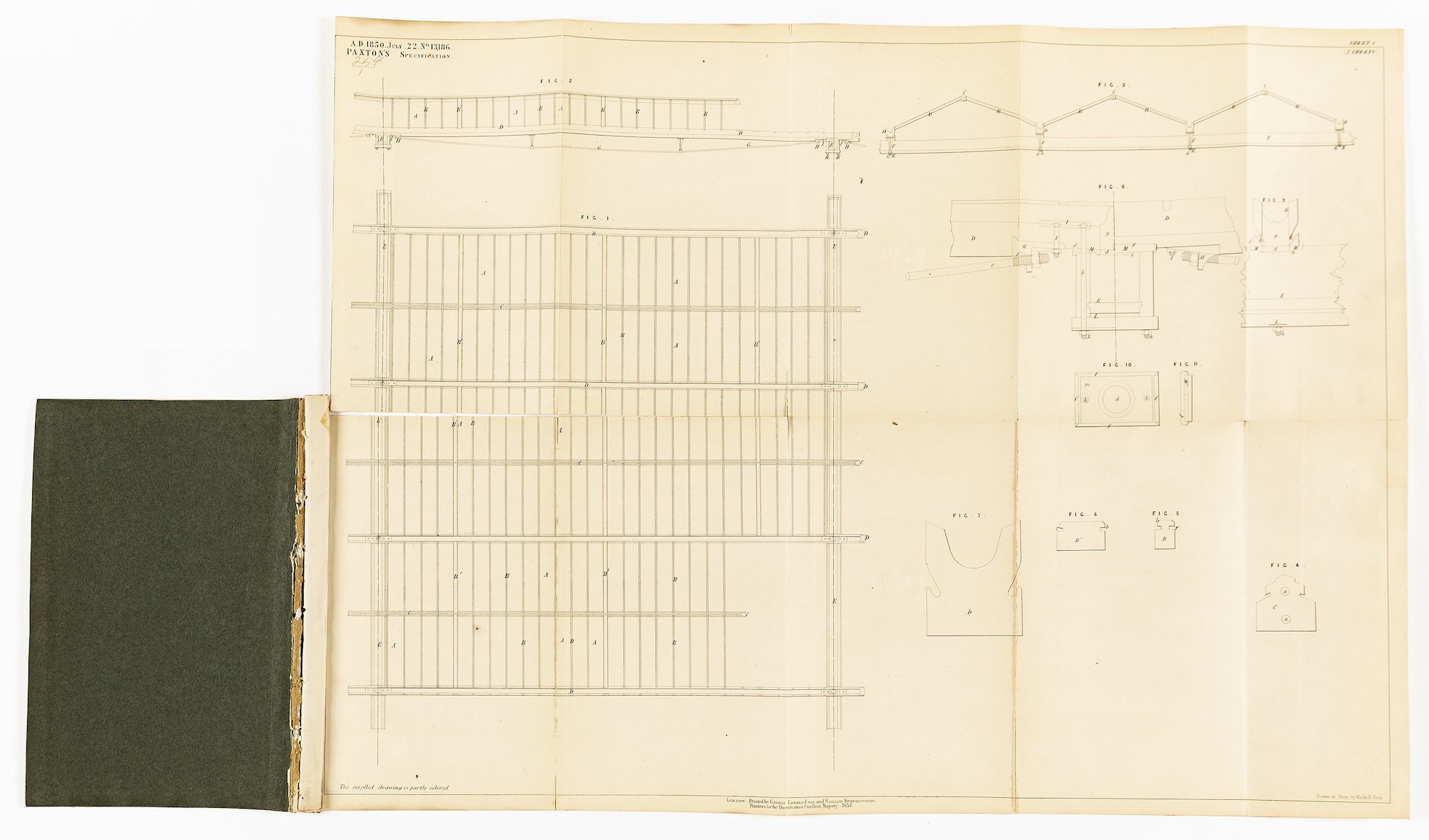
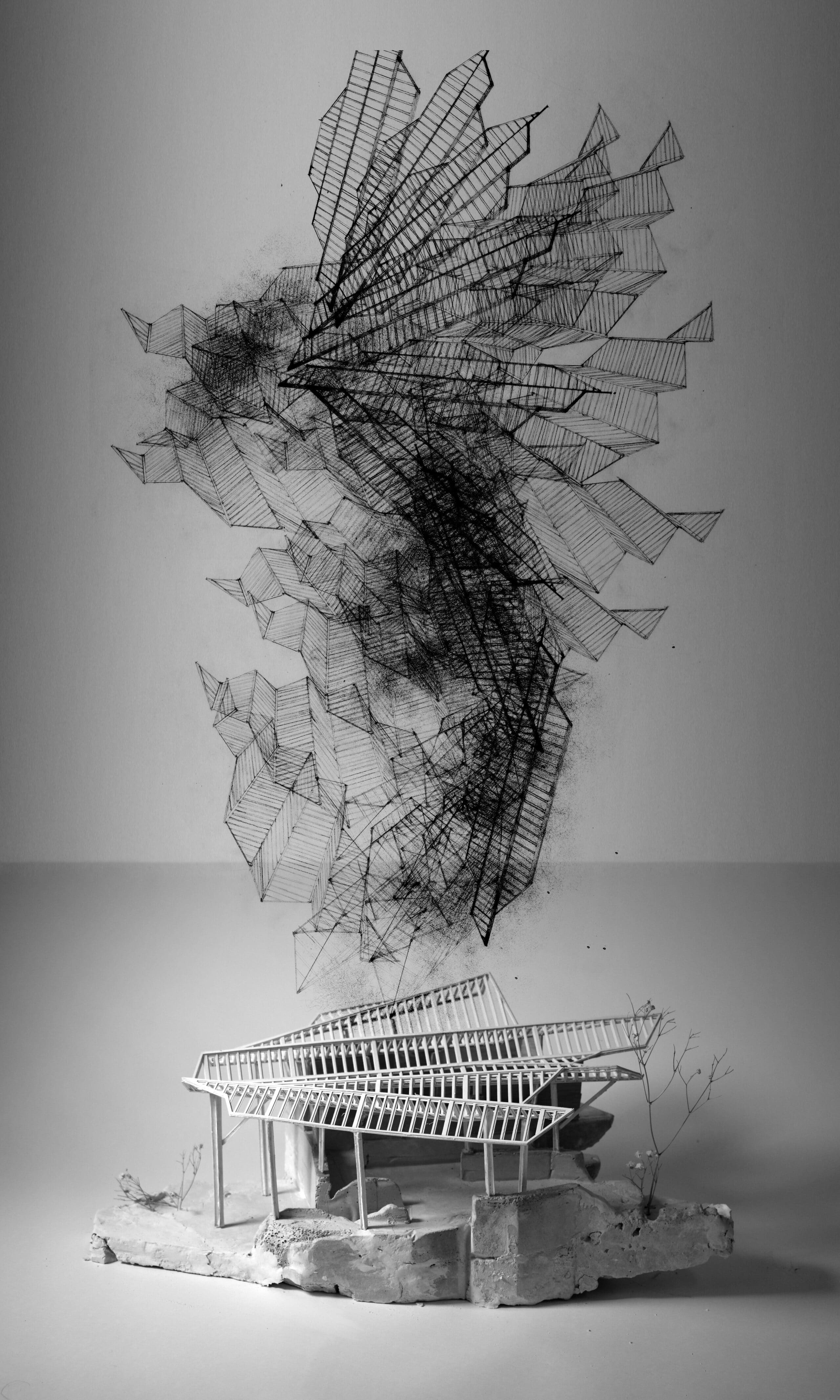
By way of example, Harry Bladwin and Joanna Saldonido worked with Sir Joseph Paxton’s 1857 patent specification for roofing improvements, and explored the architectural ideas of cultivation, preservation, and concealment through: drawings of structural grids; conceptions of natural landscapes (gardens) and artificial, controlled environments (greenhouses); representations of the atmospheric qualities of water and questions of weathering as well as technical constructions of gutters. The ability of text (and of annotations) to describe space, or the power of written accounts to image spaces, was also a theme emerging from their translations.
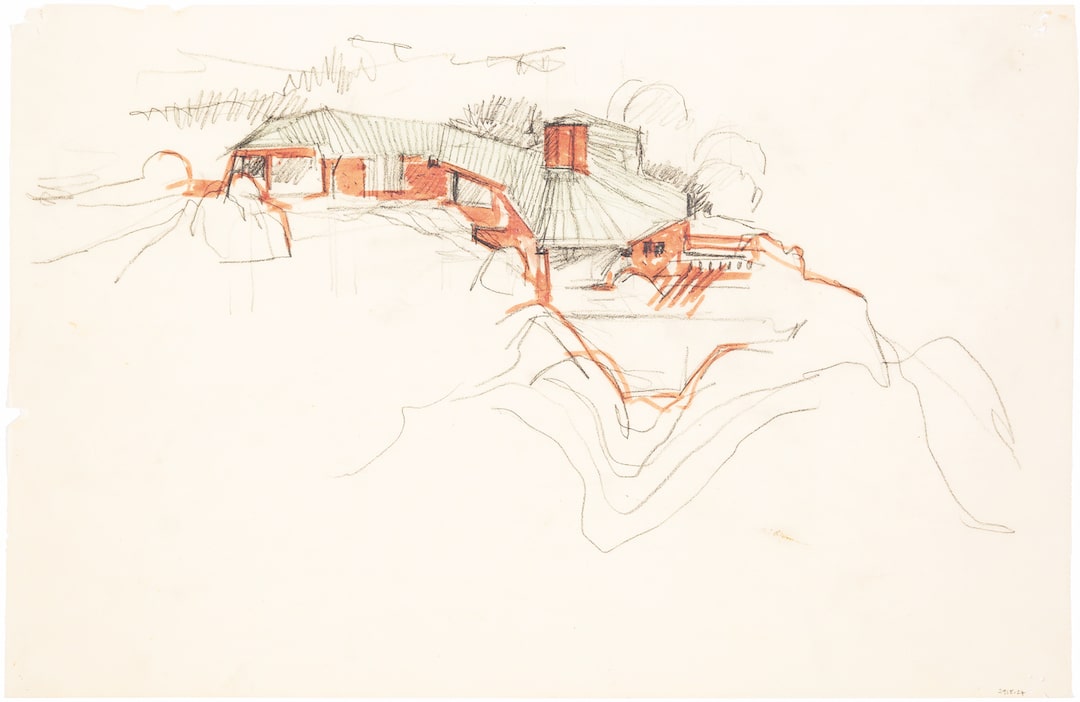
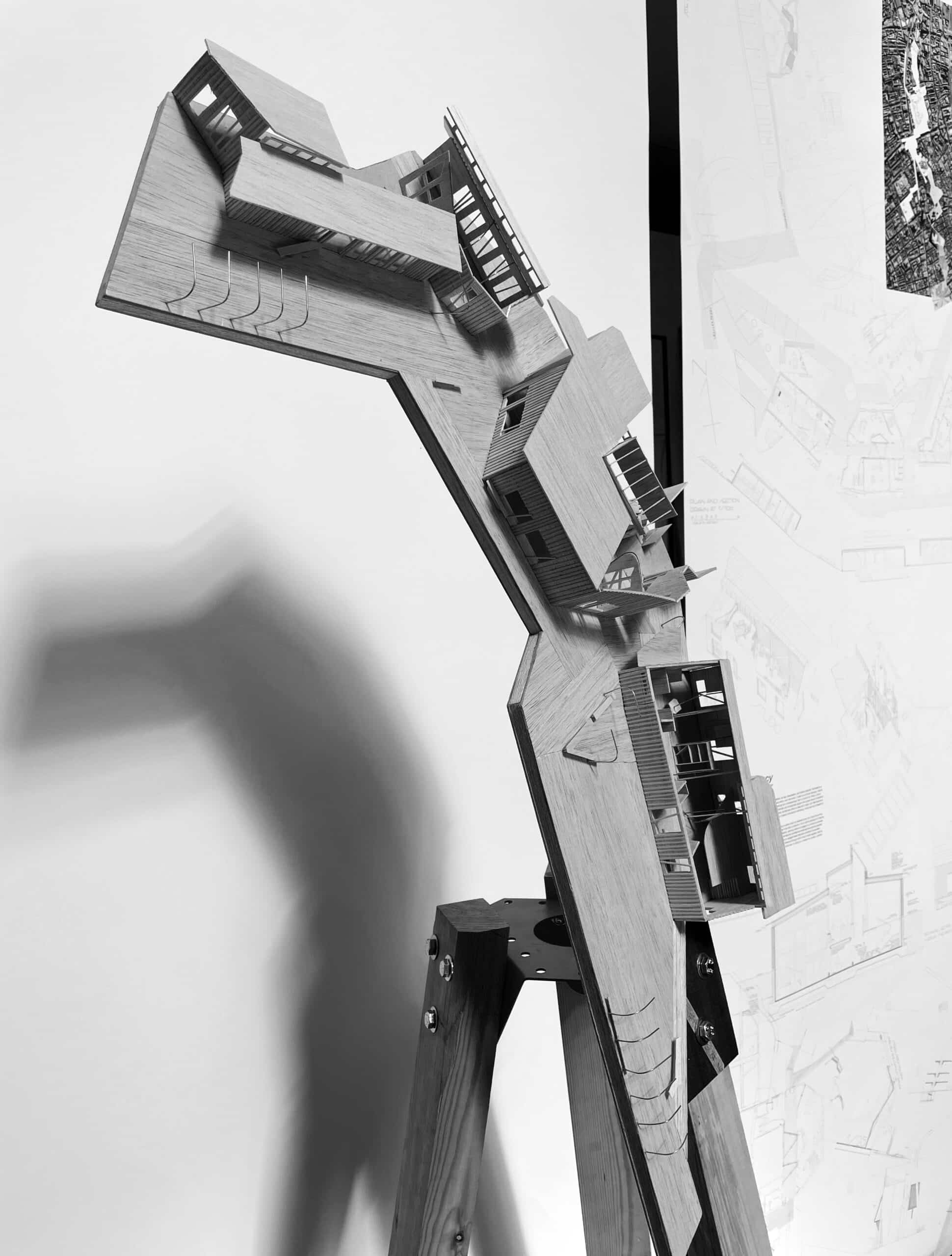
For Bella Fane and Holly Taylor, who worked with a 1977 elevation drawing of Casa Scalesciani by Alberto Ponis, paying close attention to the materialities of the landscape and the surgical siting of an architecture within an intricate ground led to the production of sectional representations that register the fluidity, flow, and folds of the earth. Their translations also explored the possibilities of an architecture that becomes almost invisible within a given context as it renders the unpredictability of a sculptural piece.
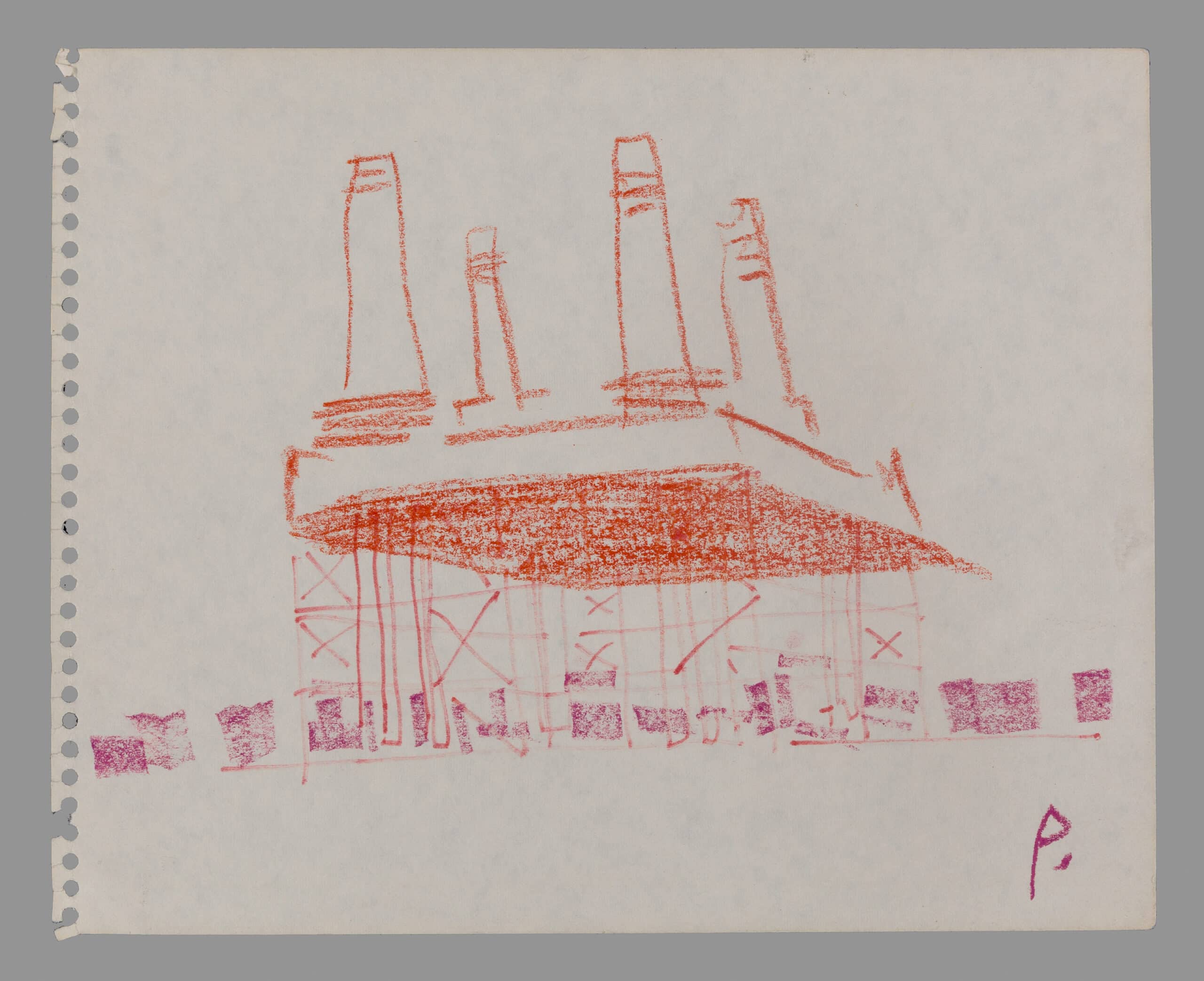
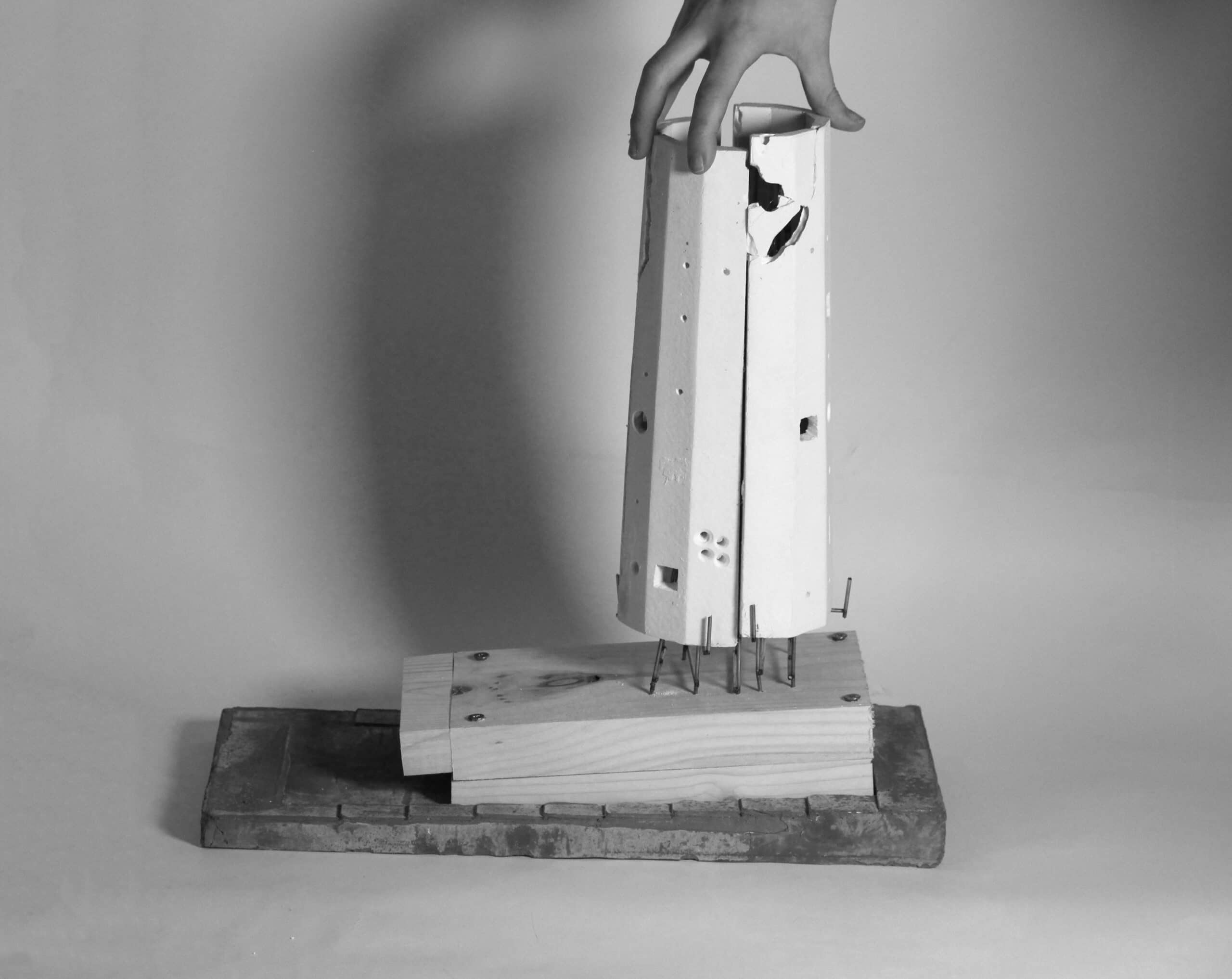
Re-framing Cedric Price’s 1990 Battersea Power Station sketch allowed Isla Murphy and Sam McKewan to comment on the monumentality of vertical buildings and to reflect on the fragility of our urban environment and the loss of industrial architecture, the social implications of demolition and the contemporary approaches to repurposing redundant buildings. Their architectural translations also focused on the role of community-centred programmes and issues of flexibility, accessibility, and adaptability, ideas often explored in Price’s design provocations.
By unearthing and reanimating these precedents, the Drawing Matter Collection becomes more than a static repository of objects. The archive becomes a site of learning that transforms the act of learning that takes place in the design studio, as the student’s work starts to reflect on contemporary architectural matters.
*
A Kinship System
In the introduction of her book Architecture’s Theory, Catherine Ingraham stresses the importance of the role of precedents and creativity for posing informed future design inquiries. Ingraham presents precedent as a kinship system and invites us to question the architectural canons and the architectural production of the past, not as a way of merely rediscovering historical figures and obsolete ways of thinking, but as a way of identifying what is at stake today—of becoming more attentive to contemporary issues that are worth pursuing. Ingraham writes that:
‘This involves, methodologically, ways of handling knowledge and precedents through time so that the newness of creation is pushing against something worth pushing against and contextualising itself as a reflective practice. This makes design an informed and critical inquiry, not a slavish tribute to past or present ideas.’[10]
Working between past projects (with drawings from the Drawing Matter Collection)—or the past futures embedded in these architectural drawings—and future projects presently (within the architectural design studio), and by extension between the cultures of two spaces associated with the production of architectural knowledge, new forms of collaborations as critical pedagogies can be constructed. For Ingraham, and we would argue for the Drawing Matter Collection, ‘space-time configurations of history and contemporaneity’ are relevant to ‘ways of interpreting and representing cultures’ and to ‘how we conceive the world and create the panoramic scenes [and architectures] that ground our identity and placement in the world.’[11]
Notes
- For a detailed description of Drawing Matter’s collecting interests, see Niall Hobhouse’s and Matt Page’s essay ‘Quantum Collecting: A Few Principles and Mechanisms for the Acquisition of Architectural Drawings’, in Drawing in Architecture Education and Research: Lucerne Talks, ed. by H. Biechteler et al. (Zürich: Park Books, 2023), 81–91.
- Jacques Derrida, Archive Fever: A Freudian Impression, trans. by E. Prenowitz (Chicago: University of Chicago Press, 1988), 36.
- It is interesting to think here of the medium of drawing in light of a question of form. In Pleasure in Drawing, the philosopher Jean-Luc Nancy explores the formative force of drawing. He writes: ‘Drawing is the opening of form. This can be thought in two ways: opening in the sense of a beginning, departure, origin, dispatch, impetus, or sketching out and opening in the sense of an availability or inherent capacity. According to the first sense, drawing evokes more the gesture of drawing than the traced figure. According to the second, it indicates the figure’s essential incompleteness, a non-closure or non-totalising of form. In one way or another, the word drawing retains a dynamic, energetic, and incipient value […] where act and force [puissance] are combined.’ In Jean-Luc Nancy, The Pleasure in Drawing, trans. by P. Armstrong (New York: Fordham University Press, 2013), 1.
- Niall Hobhouse and Matt Page, op. cit., 89.
- Roberto Calasso, The Art of the Publisher (London: Penguin, 2015), 9.
- Jantje Engels et al., Alternative Histories (Yarlington: Drawing Matter, 2019).
- Ibid.
- Ibid.
- Robin Evans, Translations from Drawing to Building and Other Essays (London: Architectural Association, 2021), 154.
- Catherine Ingraham, Architecture’s Theory (Cambridge (MA), London: The MIT Press, 2023), 4.
- Ibid.
*
Rosie Ellison-Balaam is an architectural historian, working as one of the editors of Drawing Matter and as a collections researcher, running workshops with university groups and practitioners.
Maria Mitsoula is an architect, a senior editor at Drawing Matter and a tutor at the Edinburgh School of Architecture and Landscape Architecture.

– Niall Hobhouse and Matt Page