Figuring Out
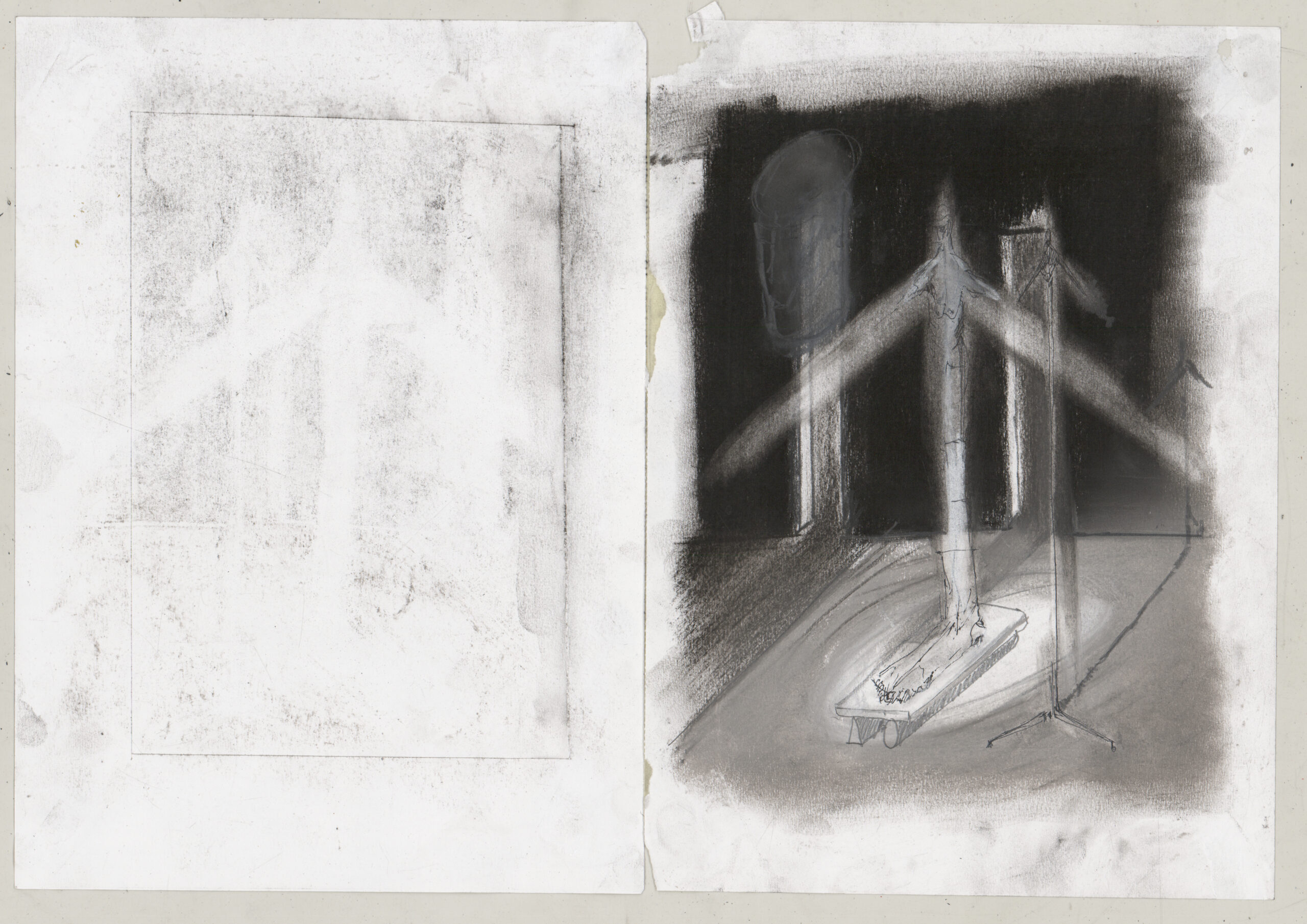
One
The cycle begins almost accidentally. Quick marks in the margins of books, scribbles hidden on the back of documents: these are selfless lines made on the nearest surface while talking aloud to others. They carry the residue of whatever the mind was working through at that moment. Their importance is momentary, as their usefulness serves only until the answers found are documented elsewhere.
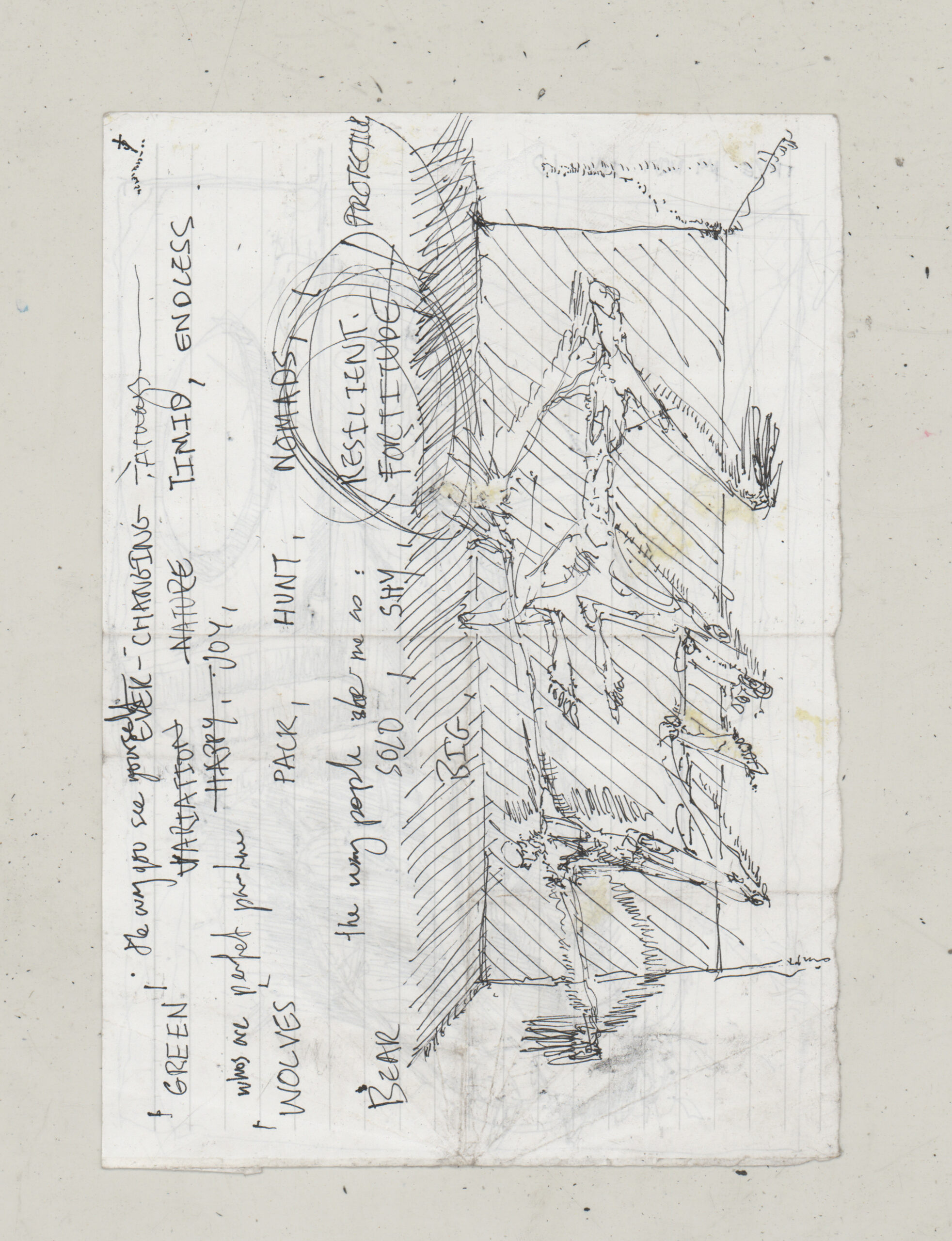
Two
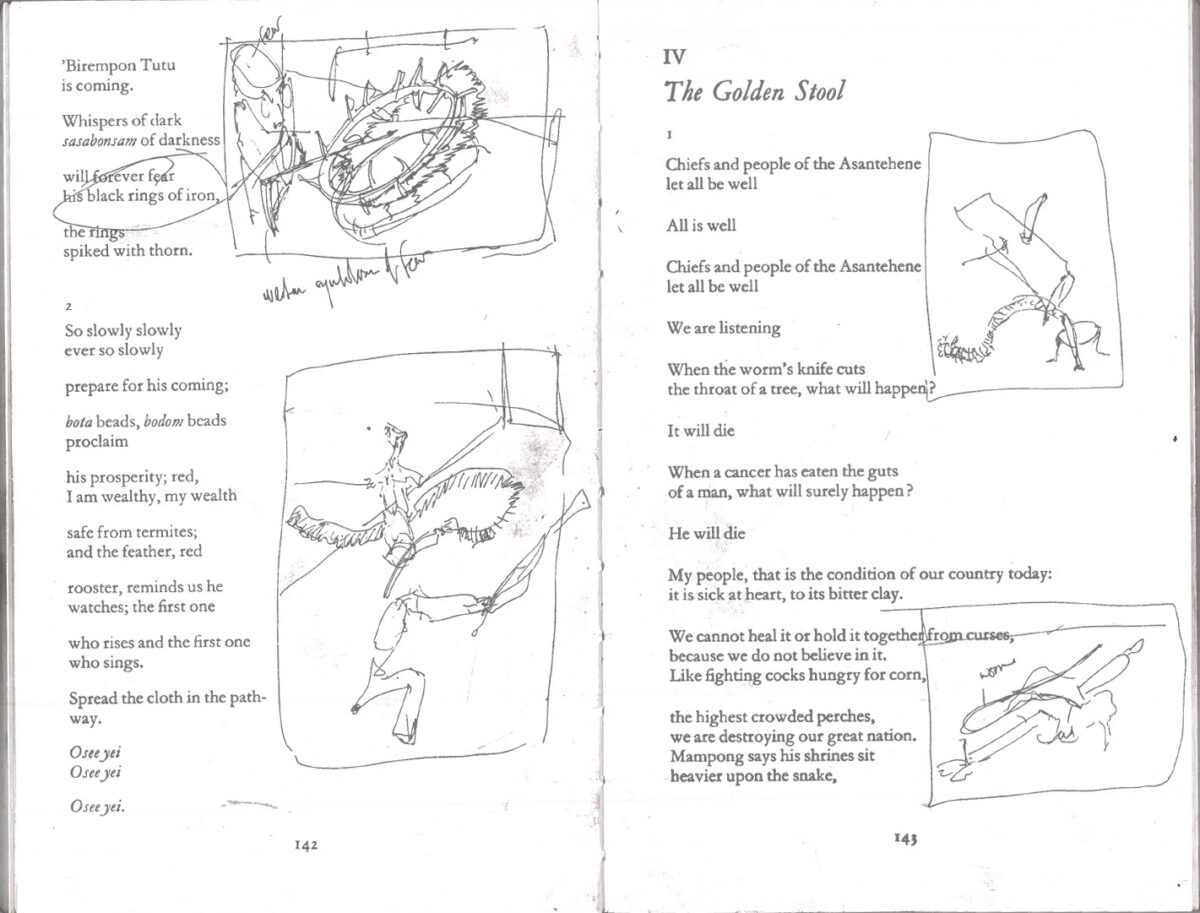
My sketches follow these quick marks. They interpret texts that speak to belonging, movement, the politics of place and the poetics of elsewhere. Discovering the work of the Barbadian poet and historian Kamau Brathwaite was a turning point. Brathwaite has a form he called nation language, a sonic, rhythmic, and spatial way of writing that captures the histories of dispersal and migration across the Black Atlantic.[1] His work is architectural in a different register: it creates structures out of memory, and offers a way of understanding space through gestures rather than through forms. Opening my copy of Brathwaite’s trilogy The Arrivants, I follow his tracing of the diaspora journey with my own tracings from a Pilot Gel Microtip Rollerball 0.4 mm.[2] These lines attempt to spatialise the smallest forms of literature: ‘city of gold’ or ‘ivory altars’. Though these marks are shy, unable to be fully sure of themselves, they form the first visual vocabulary.
Three
I return to this new found vocabulary, this time using charcoal pencils, whose softness can register the poem’s depth—into a suggestion of sunlight and shadow. This time, the sketches take on more than single sentences, and begin to visualise entire sections—the sketches below are two pairs from a series of 68 charcoal drawings. I made each stanza of Brathwaite’s poem, II Kumasi, into a sketch.[3]
city of gold,
paved with silver,
ivory altars,
tables of horn,
the morning sun of
seven hills
greets you best,
knows you blessed.
To the west
Denkyira dreams,
south the Akyems
seek their rest.
Asante Kotoko
Asante Kotoko
The drum grows
in the moonlight, the porcupine
knows what is best;
Denkyira rests.
Kumasi
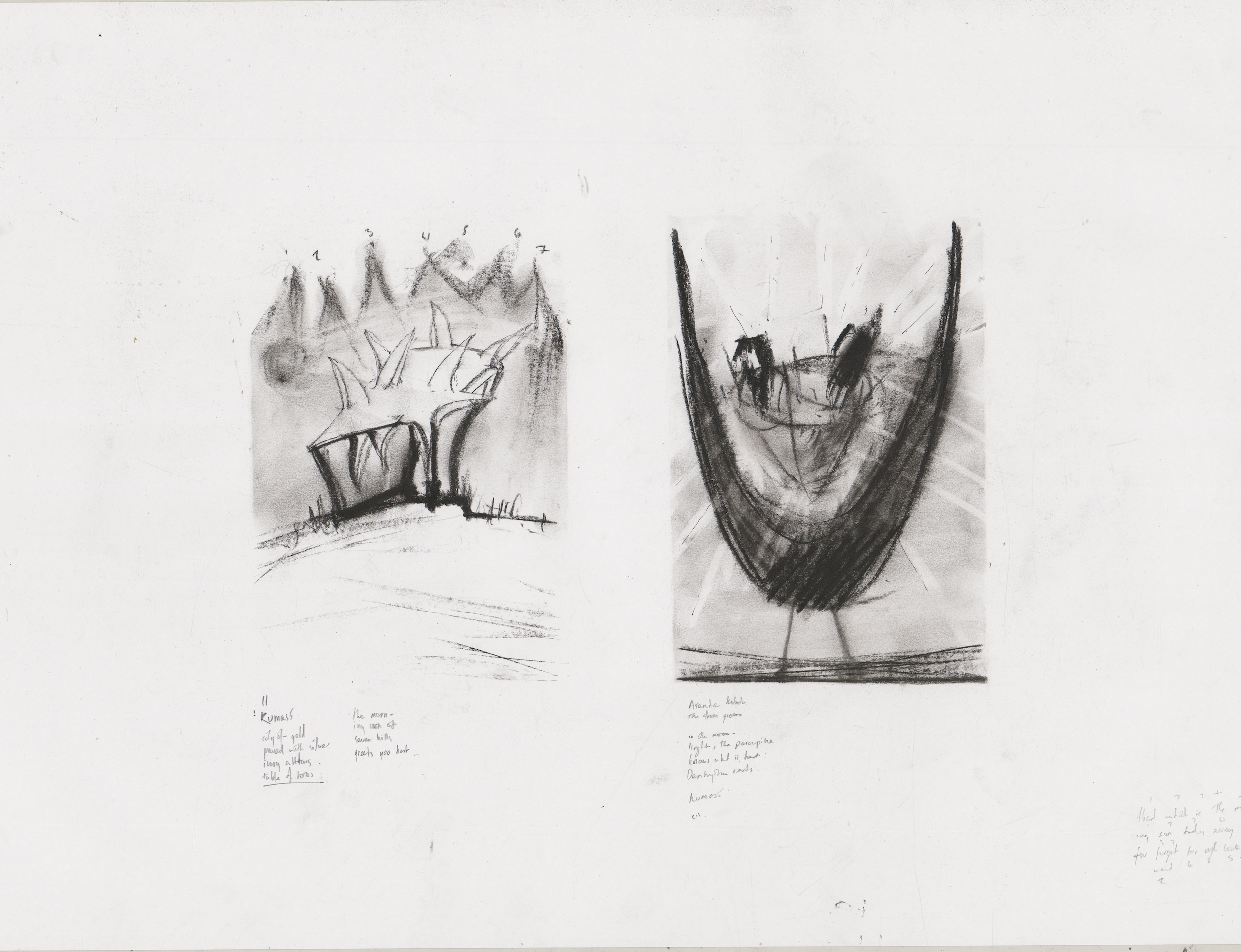
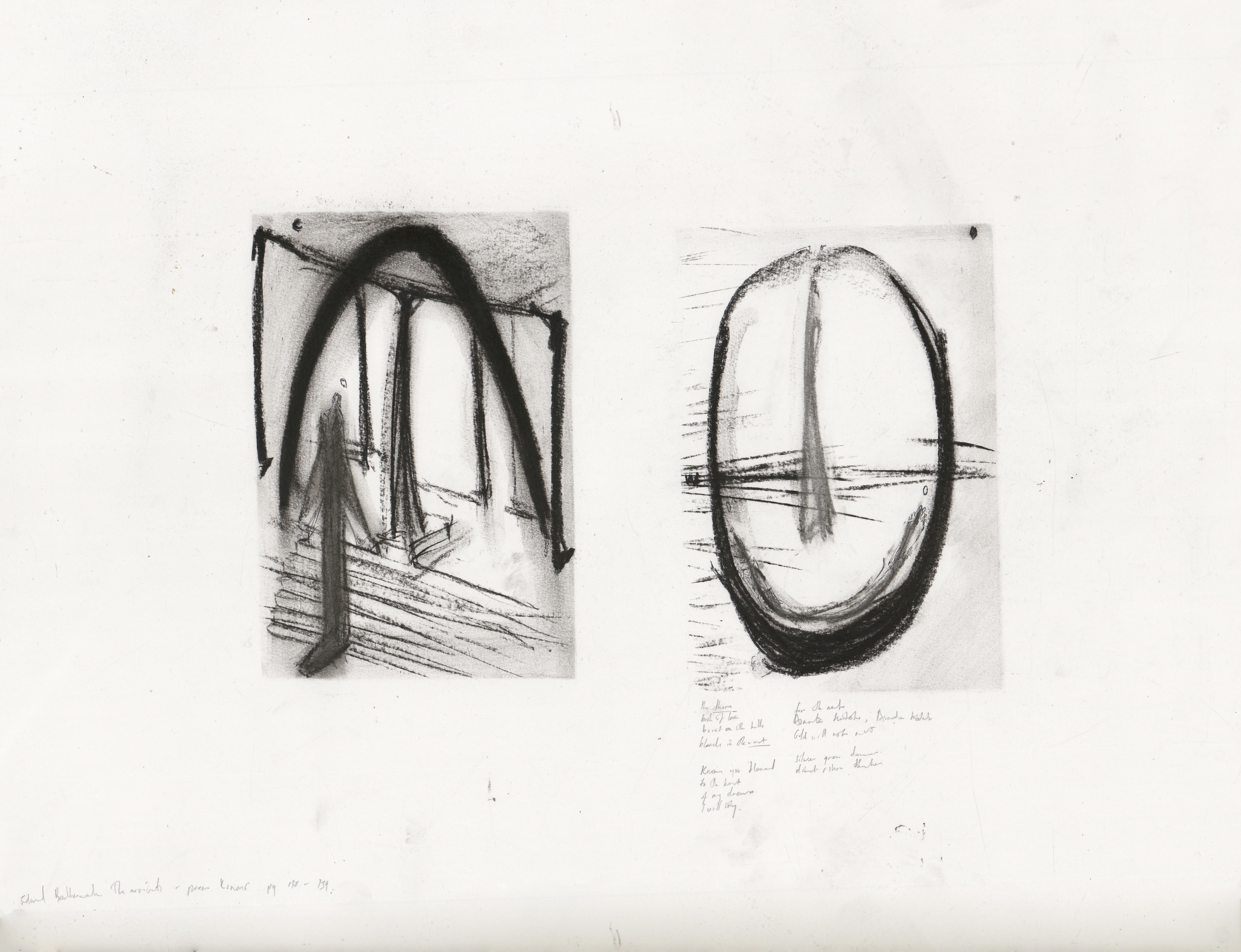
Once the language begins to materialise, once the sketches show hints of what may be deemed a vocabulary fitting for architecture, I enlarge them. A5 becomes A4, A4 becomes A2. The forms begin to take hold. Seeing these forms, I speculate whether my sketches can also be ‘architecture without architecture’ and whether I can build objects that hold form without reaching the resolution or stillness of a building or structure.
Four
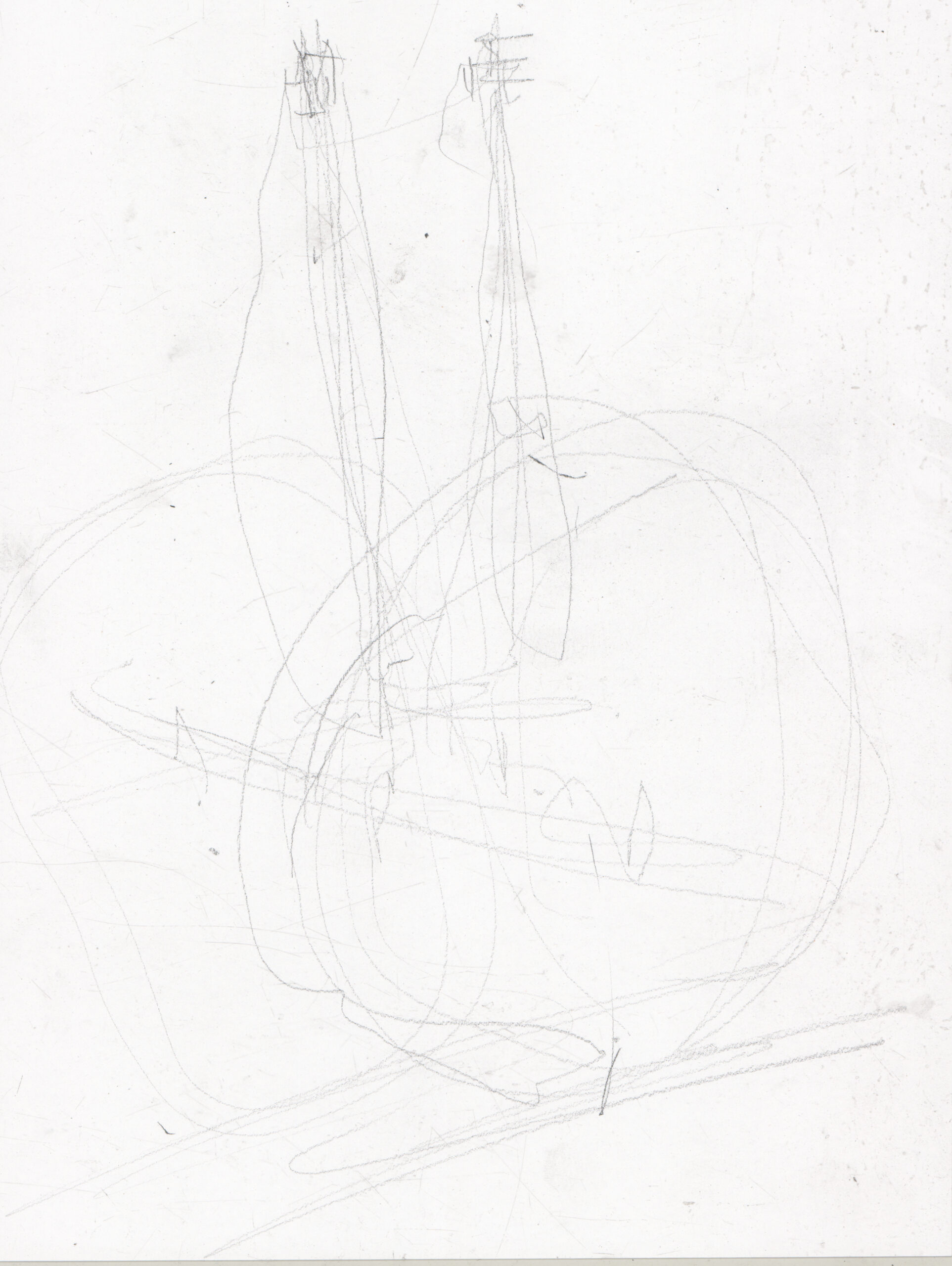
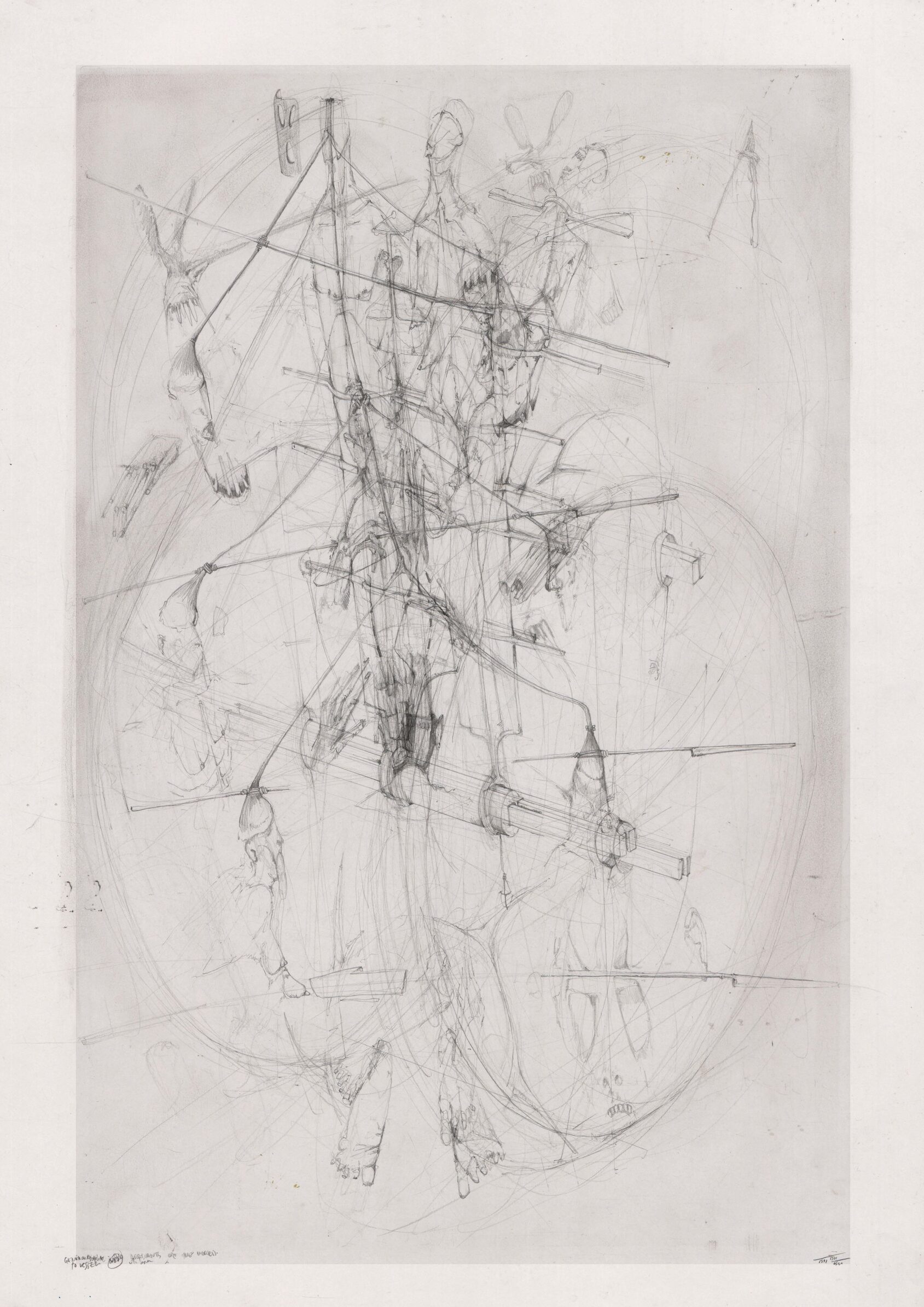
With all these visual elements formed from literature, a reworking starts through new mediums, new speeds, new constraints. I attach a graphite stick to the end of a one-metre branch and draw beyond my arm’s length, relinquishing fine control. The line becomes shaky and unsteady. It loses control but gains rhythm. This, too, is part of figuring out: letting the drawing teach me something I cannot reach directly, and to draw in a way that feels migratory and always in motion.
Five
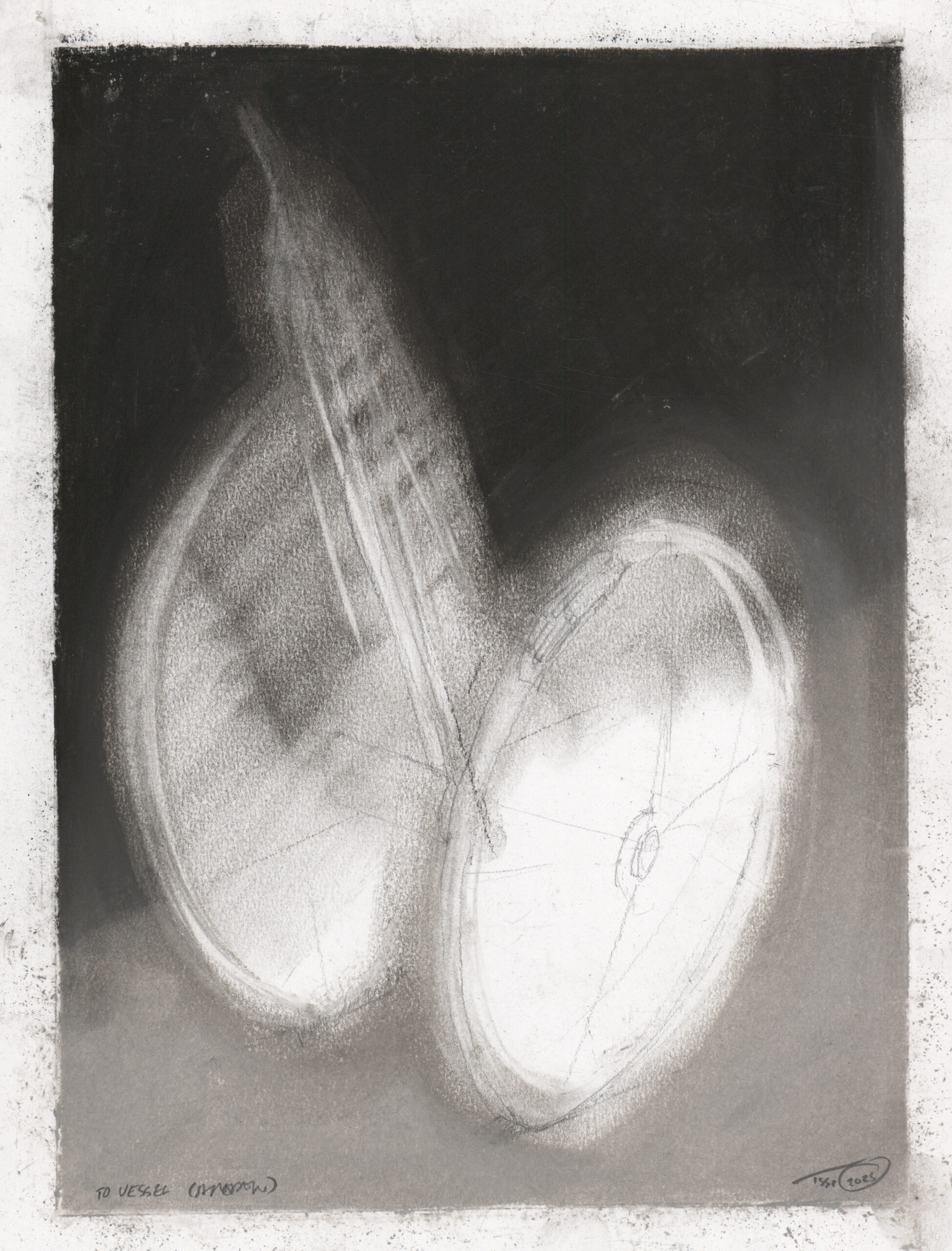
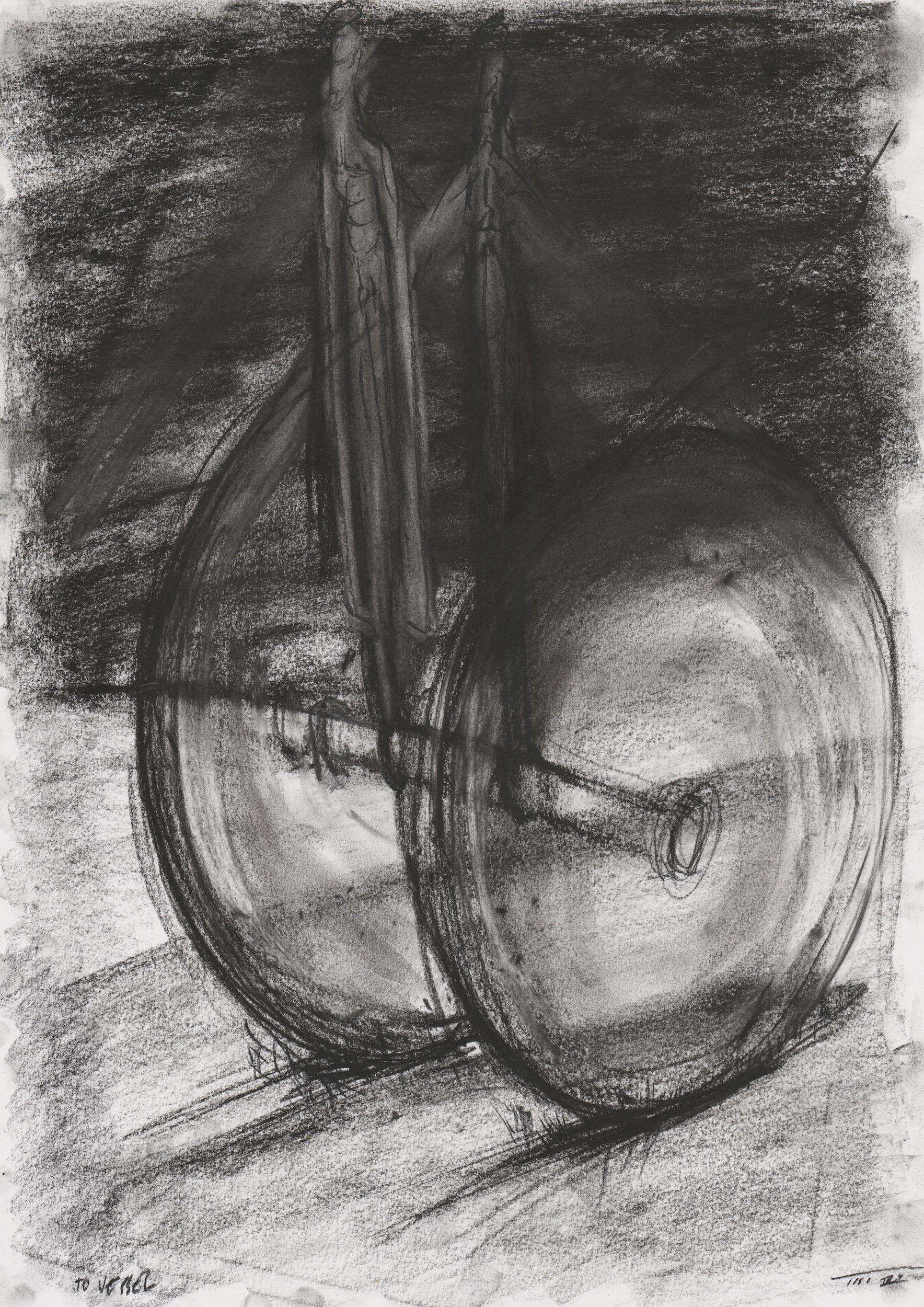
At some point, a form appears—it becomes something that is neither figurative nor architectural but hovers between the two, an in-between shape that feels translated rather than designed. This is usually the moment when the unseen drawings accumulate into something with direction. A comfort, or perhaps a confidence settles into the line. Enough to start imagining their context, materiality or lighting conditions. The marks move from searching to asserting, and in this shift, further levels of detail become possible. These forms, still provisional, still unresolved, carry the sense of a body becoming architecture, or architecture becoming a body.
Repeat
Across this cycle, many unseen sketches begin with a figure drawn in motion or in rest. Common for diasporic practitioners, this figure sometimes emerges from memory, as I am often working from my experiences of migration and movement. The body precedes its environment and architecture arrives afterwards as an echo. My response emerges from the figure, rather than from architecture but over the course of these cycles the distinction blurs and the figure starts to look like a structure; where structures move like figures. Sketching, in this process, is a translator. The drawing becomes a site of mutation in its search for a diasporic figuring. They are the often unseen sites of figuring out, before they become ‘architectures’.
Notes
- Kamau Brathwaite, History of the Voice: The Development of Nation Language in Anglophone Caribbean Poetry (London: New Beacon Books, 1984), 309–313.
- Kamau Brathwaite, The Arrivants: A New World Trilogy (Oxford: Oxford University Press, 1973), 142–143.
- Brathwaite, The Arrivants, 138.
*
Issi Nanabeyin is an artist trained in architecture whose research-based work translates diasporic entanglements and encounters into form.
This text is one of the selected responses to the second category of the Open Call 2025: Visibility, and the Unseen—a series of short contributions that either bring to the surface the unseen drawings within the Drawing Matter Collection (I. In the Archive) or explore original architectural drawings, created by the author(s) of the contribution, which make visible the unseen (II. In Practice).

– Aikaterini Antonopoulou