Michael Gold: The Dialogue of Representation
– Michael Gold and Dalibor Vesely
The following text, ‘The Dialogue of Representation’ by Dalibor Vesely, was published in People in Architecture, the book featuring the exhibition of work by Michael Gold’s AA Unit 5 students held at the Architectural Association, 4–29 October 1983. Read a response to the exhibition by Peter Wilson here.
Drawing Matter was saddened to hear of Michael Gold’s passing. Below, we also share the drawings from the collection for his competition entry, Crossed Swords, Gateway to Mecca, alongside his description of the project.
*
The territory of experience where architecture meets painting was always a source of fascination as well as of uncertainty and fear among architects. It was a source of fascination for those who felt uneasy about the limits of architecture seen as pure tectonics, and fear for those who believed that architecture had some magic essence which should be preserved, uncontaminated by sculpture, painting or anything which was not ‘purely’ architectural.
A random recollection of a few examples reveals that the most sensitive territory where the encounter between architecture and painting usually occurs is space, and that it is through the experience of space that we come closest to understanding their common ground. A simple room with paintings on its walls illustrates well enough how difficult, if not impossible, it is to draw a line between architectural space and the space of painting, but also how unimportant it is for the overall meaning and reality of the room.
What seems to be at stake instead is the power of painting to transcend the limits of architectural articulation towards a more imaginative world of representation. The tension between different levels of representation, and different levels of reality is in the end the most concrete manifestation of the real tension and ambiguity which exist, or can exist, between architecture and painting.
The ambiguity between representation and reality is a powerful source of meaning, but it can also be a source of illusion which obscures the distinction between architecture and pure scenography. It is not, therefore, surprising that in times of cultural crisis there is always a tendency to make things simpler and to clear the scene of all ambiguities and tensions. The result, which we know very well today, is the purity, but also the inevitable poverty of an ‘autonomous’ architecture.
In such a situation, it requires a great deal of courage to claim that painting still has anything to tell us. And yet at the same time such a claim is not only extremely valid but also rewarding. Architecture is not in the end made out of architecture only, but also out of culture; and where the relations between architecture and culture have been so seriously severed, painting could be the first step towards restoring them again. The tradition of painting, and pictorial representation in general, has preserved at least some links with poetry, literature, drama, etc., which in turn contribute to its vitality and meaning. As a result, pictorial representation still has the capacity to explore the dimensions of human life or inhabited space which architecture for the most part lost a long time ago and has never found in the cultivation and typicity of empty enclosures.
Speaking about inhabited space, we are inevitably referring to the presence of human beings, which means to the reciprocity between human body and space, and to the embodied experience. These are very concrete and rich, but also very tough conditions for design. Pictorial representation has not only the capacity, but also the freedom to take us through distant visual associations, metaphorical meanings and potential symbols, either close to what is essential in a particular human situation, and what may constitute the meaning of a genuine architectural space, or away from it, towards an ephemeral and purely scenographic reality. The latter is perhaps the inevitable price that one should be prepared to pay for the sake of the former, which has all the virtues of a promising, original and relevant approach to design.
Both the difficulty and beauty of the approach are well illustrated in the following projects, particularly in those which come closest to the positive ambiguity between representation and reality of future or possible architectural space.
*
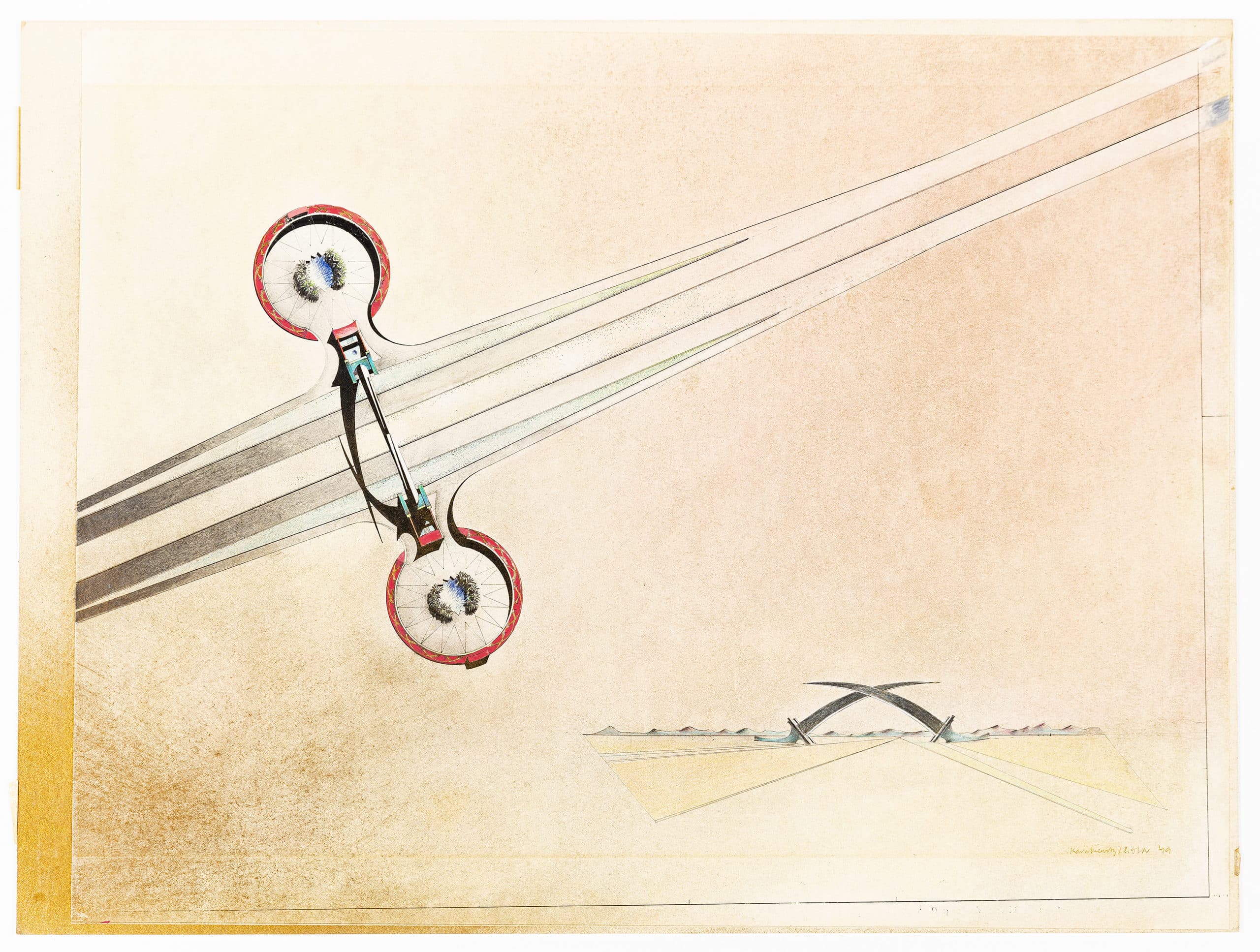
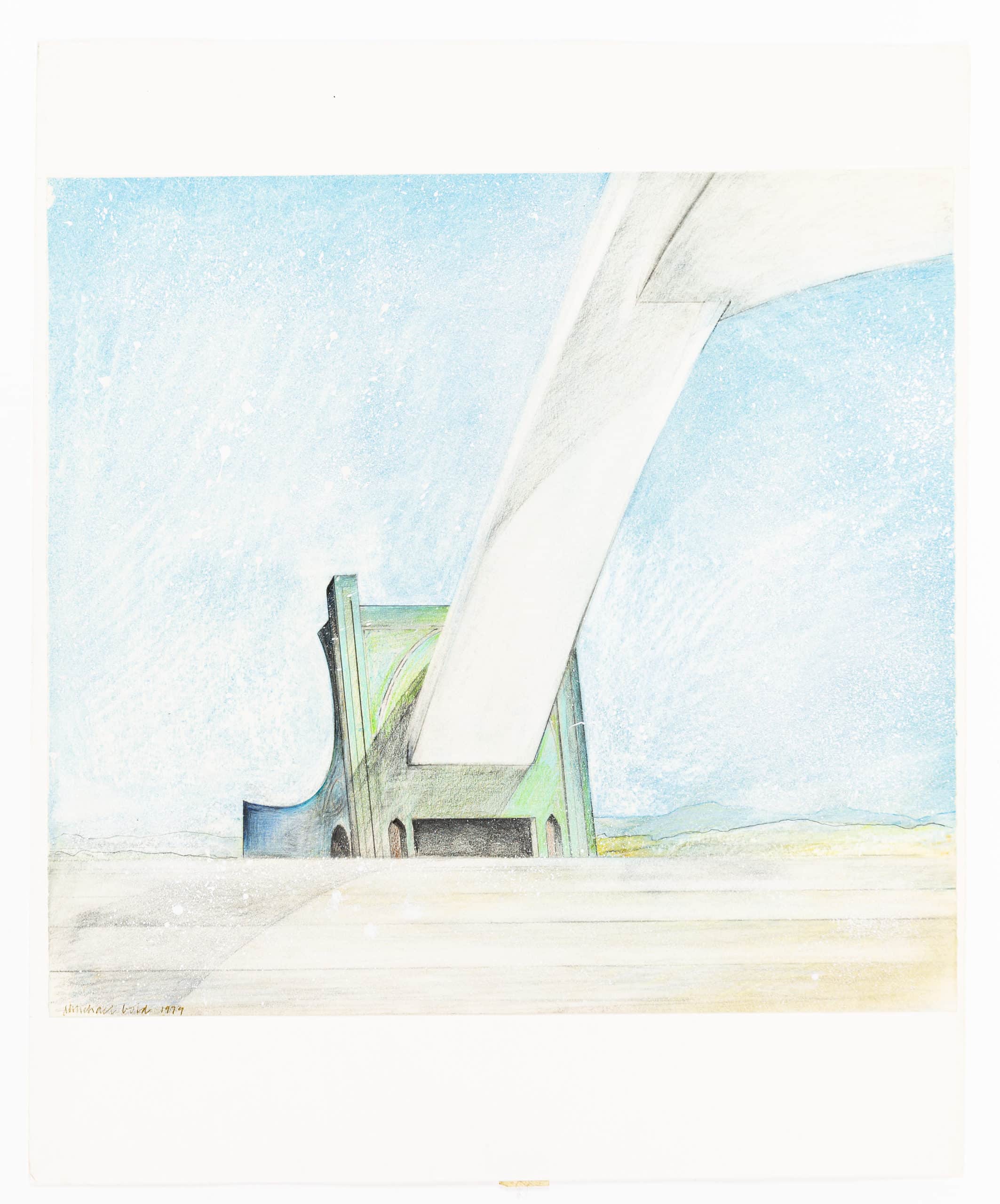
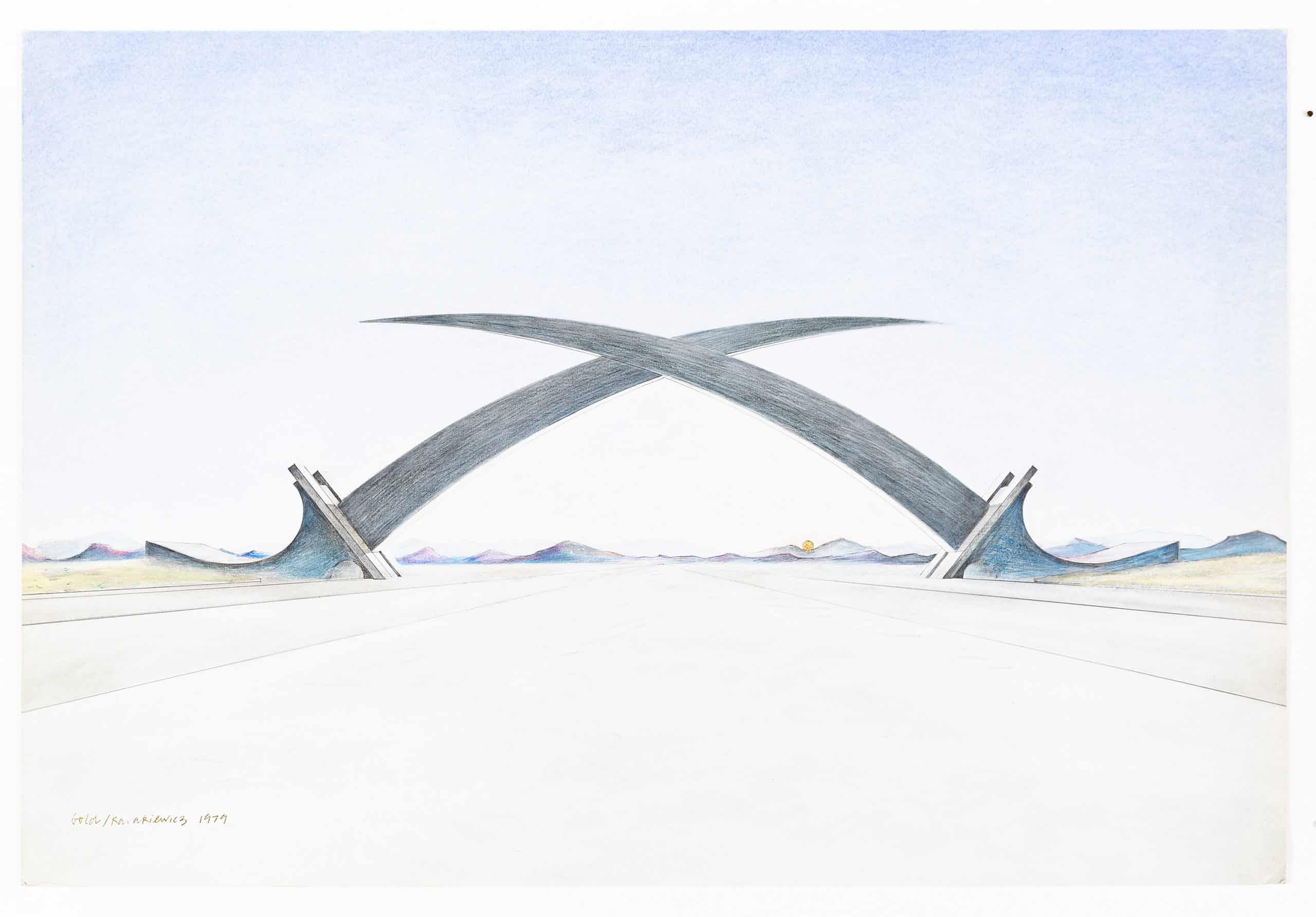
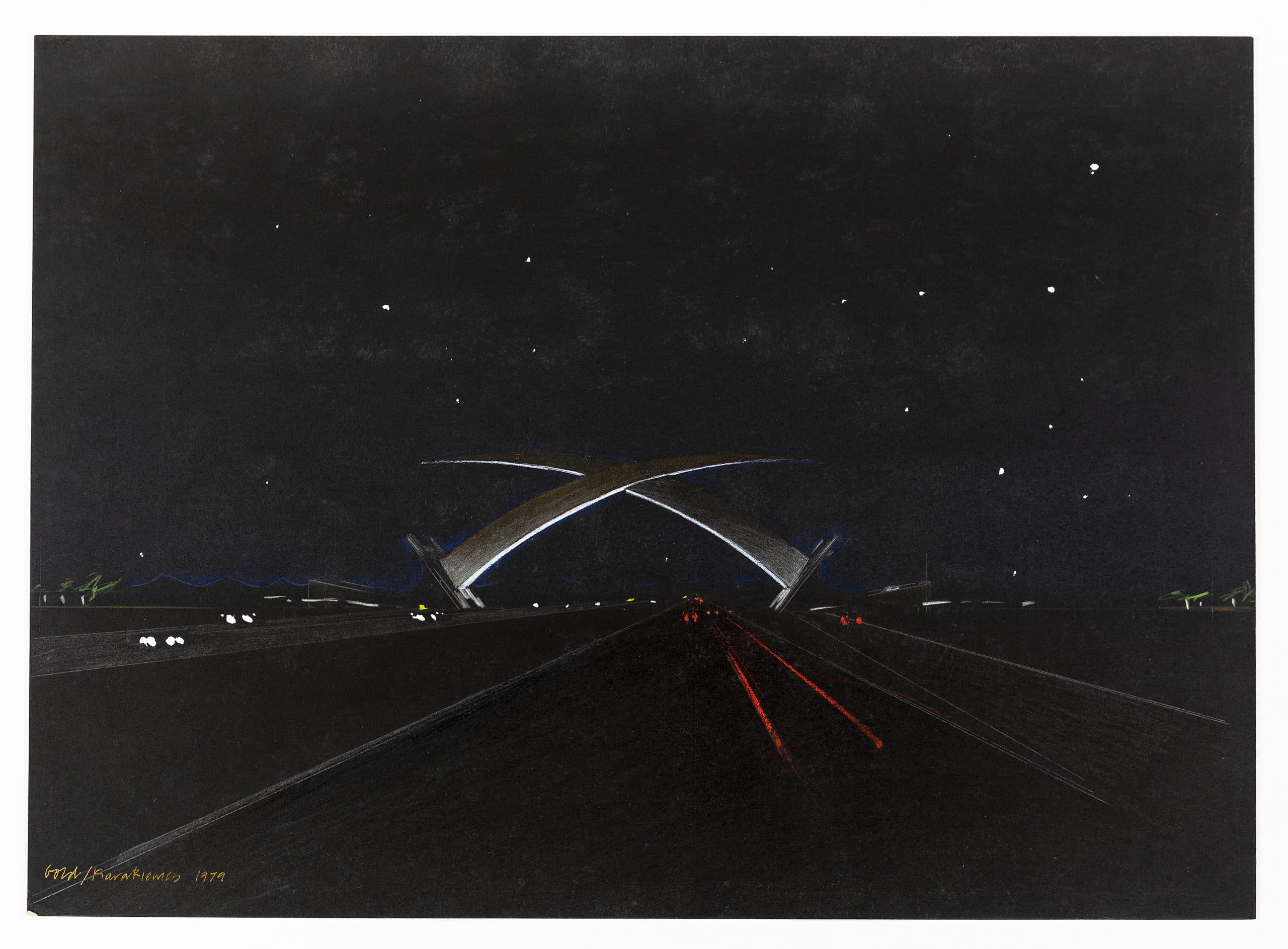
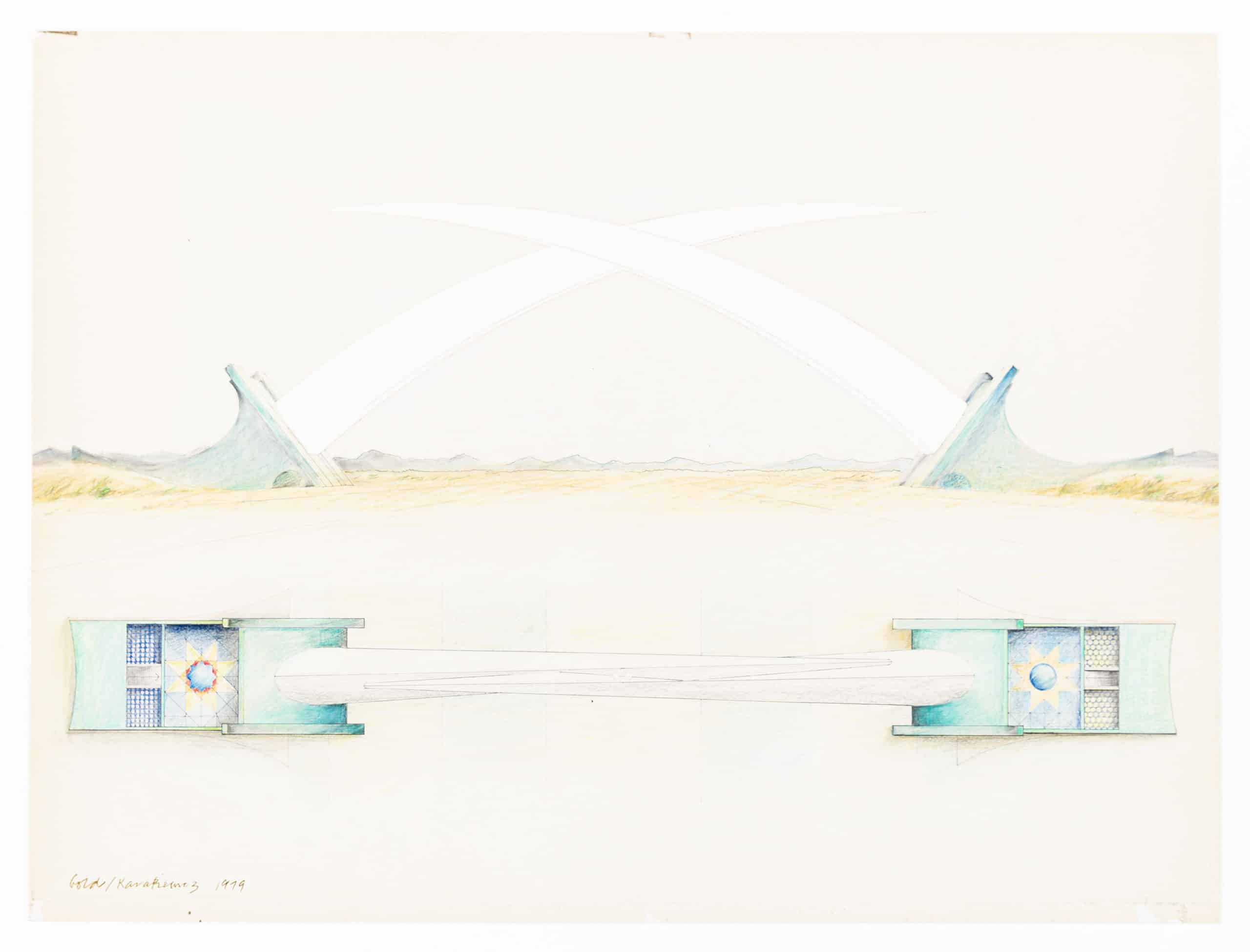
The idea for this design for a sacred monument on the desert highway from Jeddah Airport to Mecca came from Justina Karakiewicz, then a student in my Architectural Association Diploma Unit. I joined her, and we won the international competition organised by the Mayor and the city of Mecca.
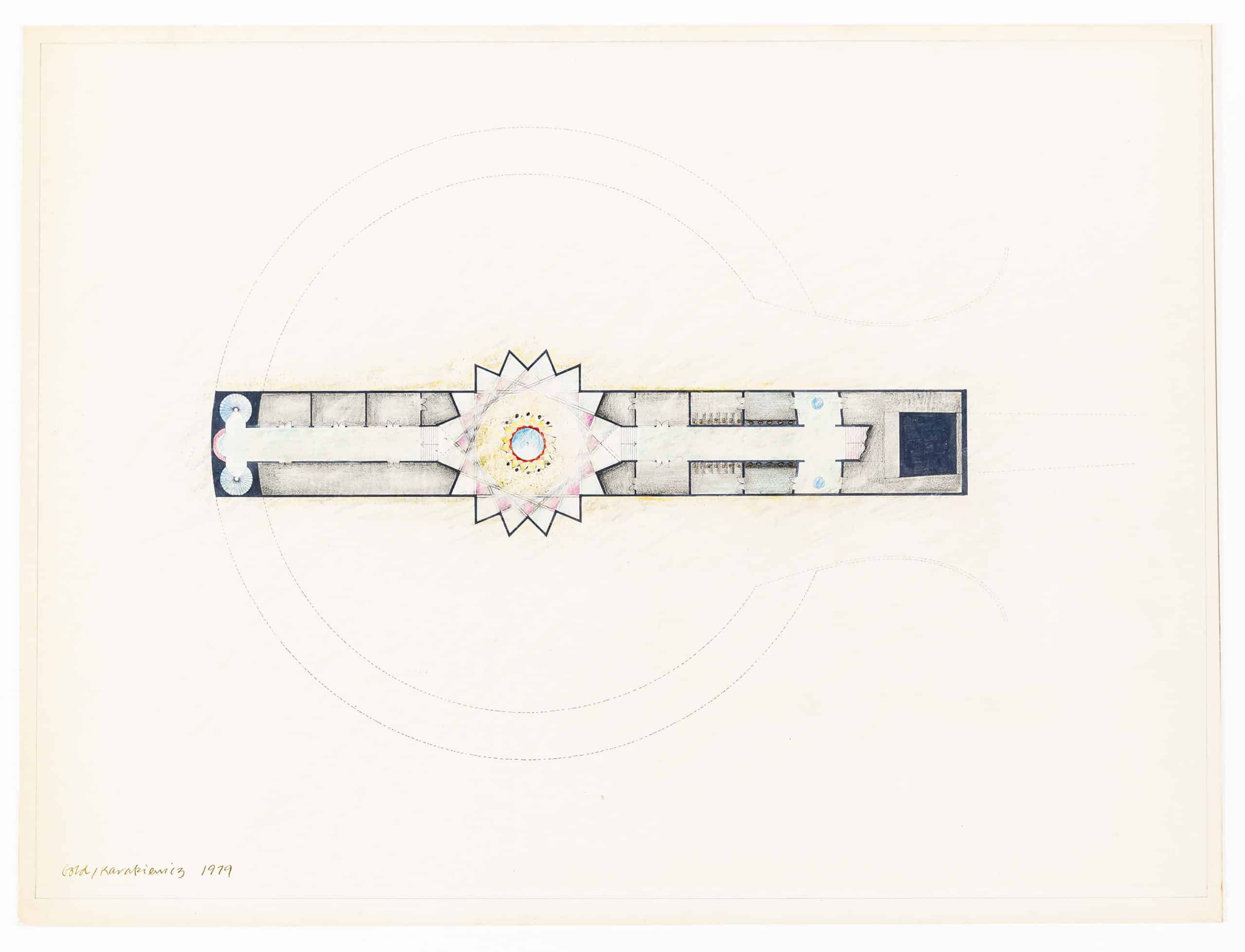
At each side was a circular sunken coach park, designed as formalised oases with glass ponds and palm trees in the middle.
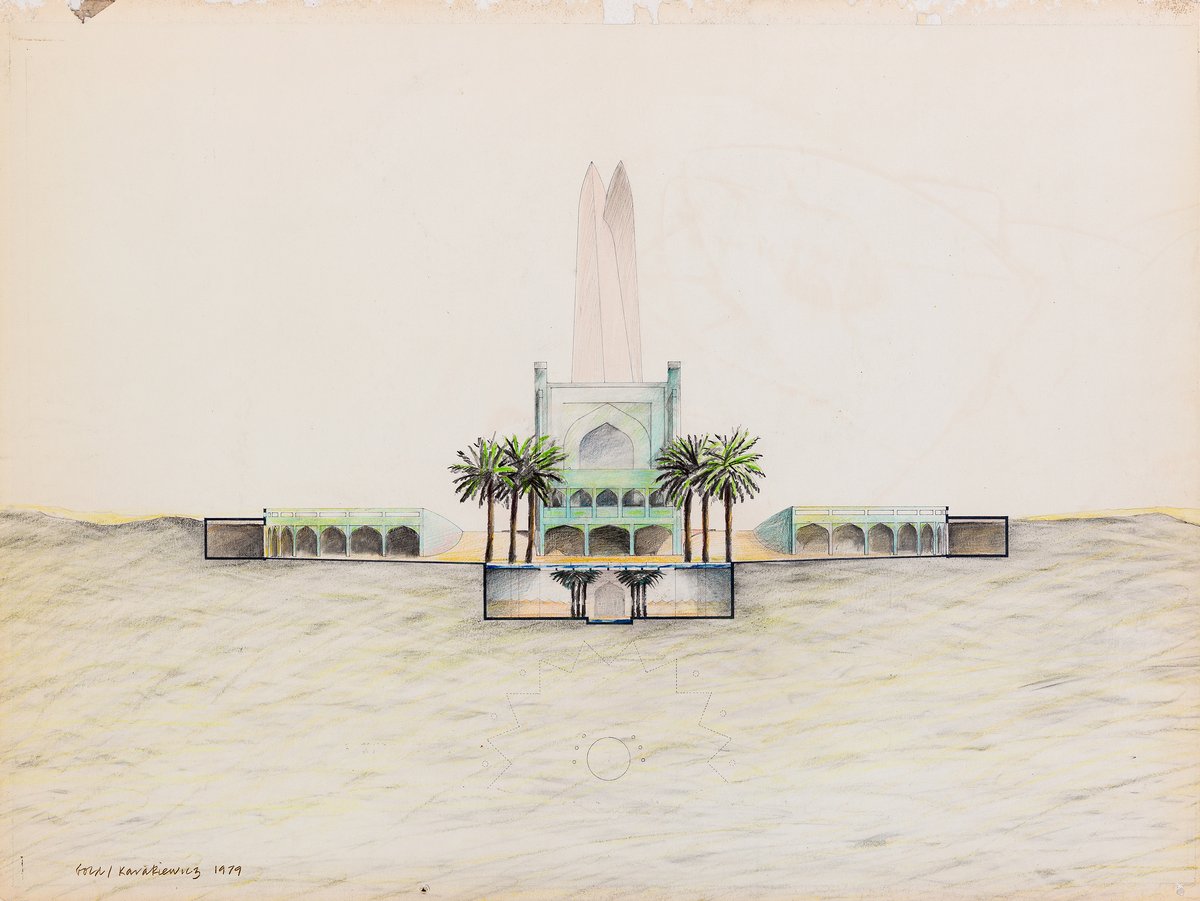
Arcades around the circles offered shade to the pilgrims’ vehicles, with inlaid marble floored terraces above. Under the car parks were circular, oasis styled restaurants with distant, mountainous panoramic dados reflecting the real view above, and real water ponds with a ring of artificial palms-columns, at their centre.
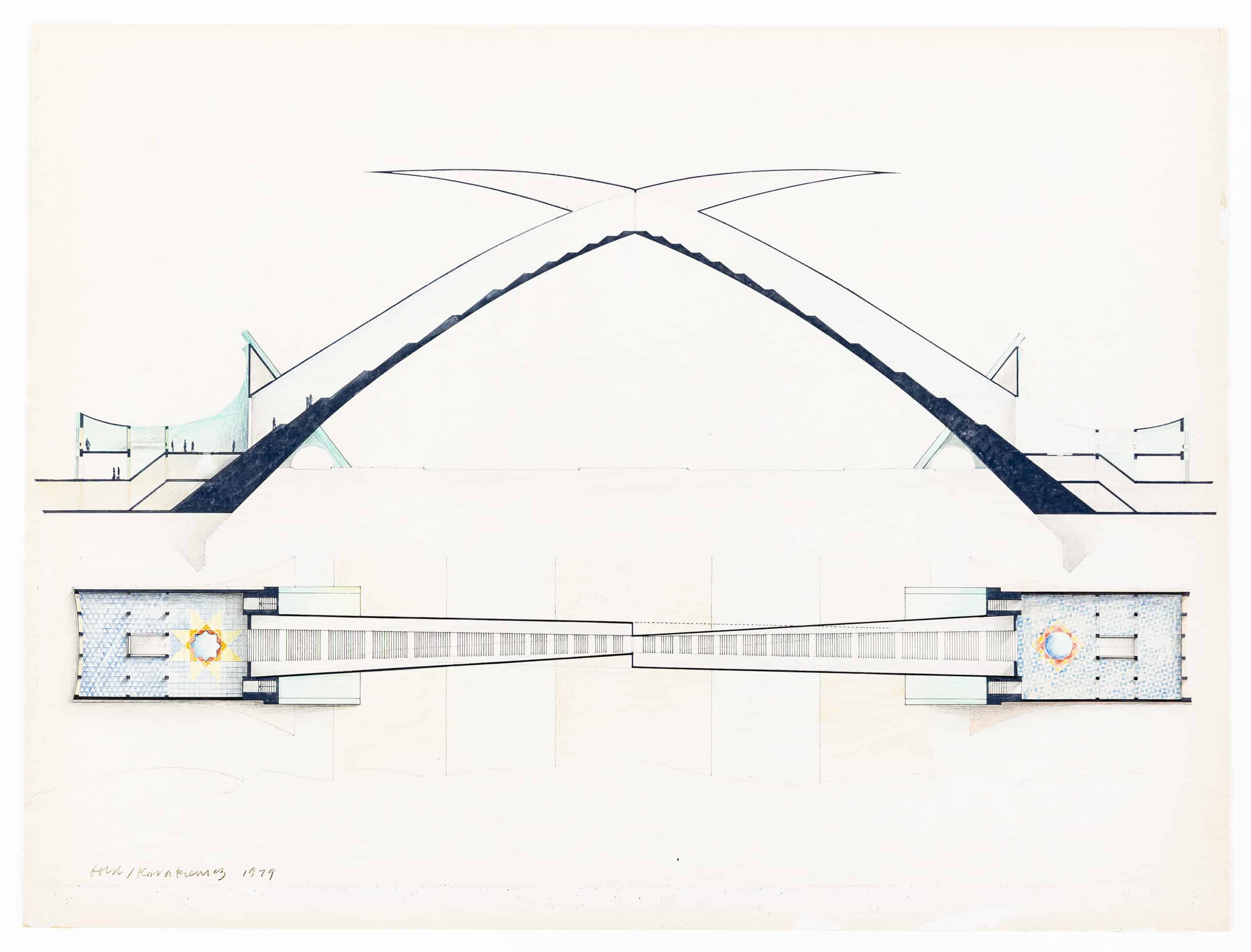
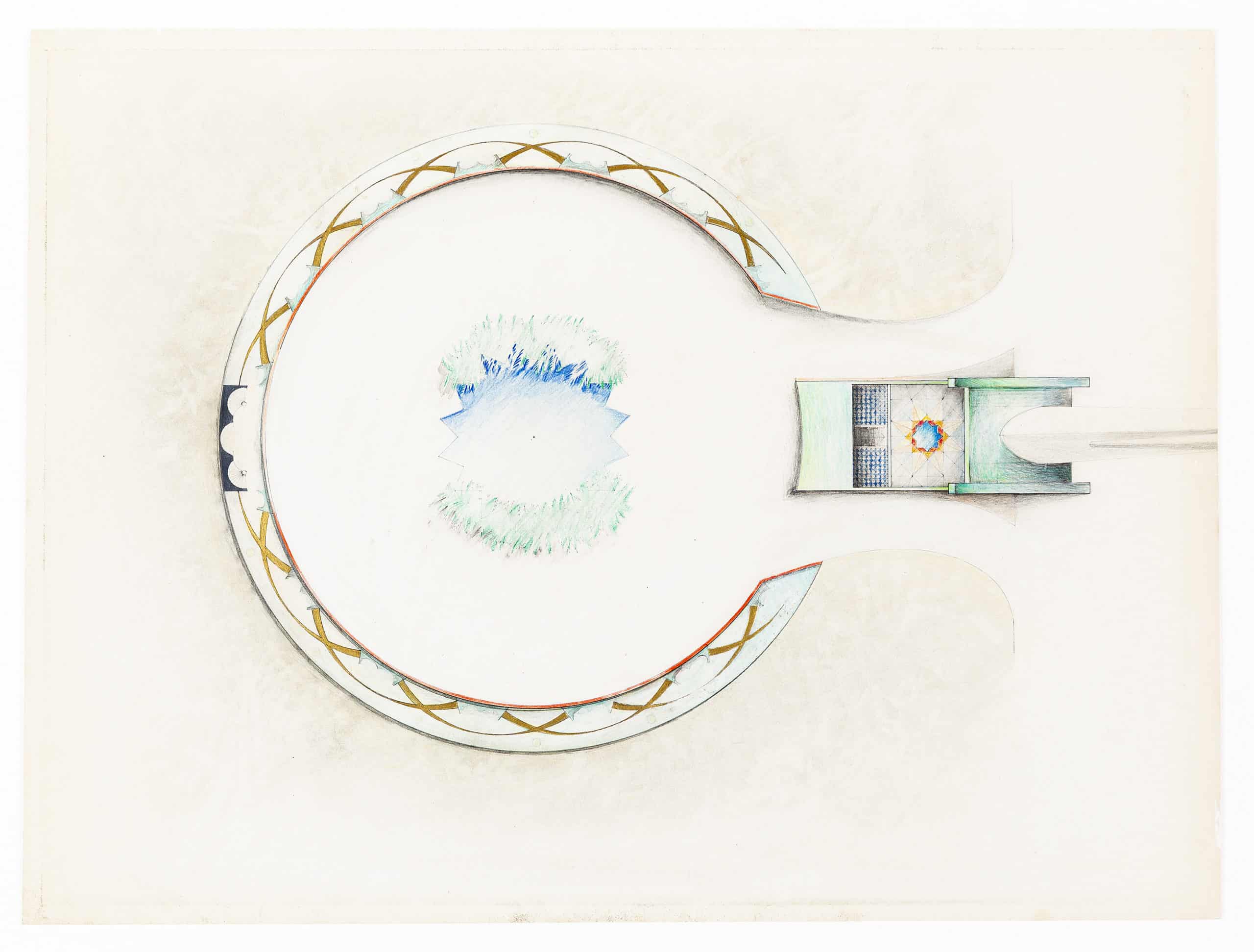
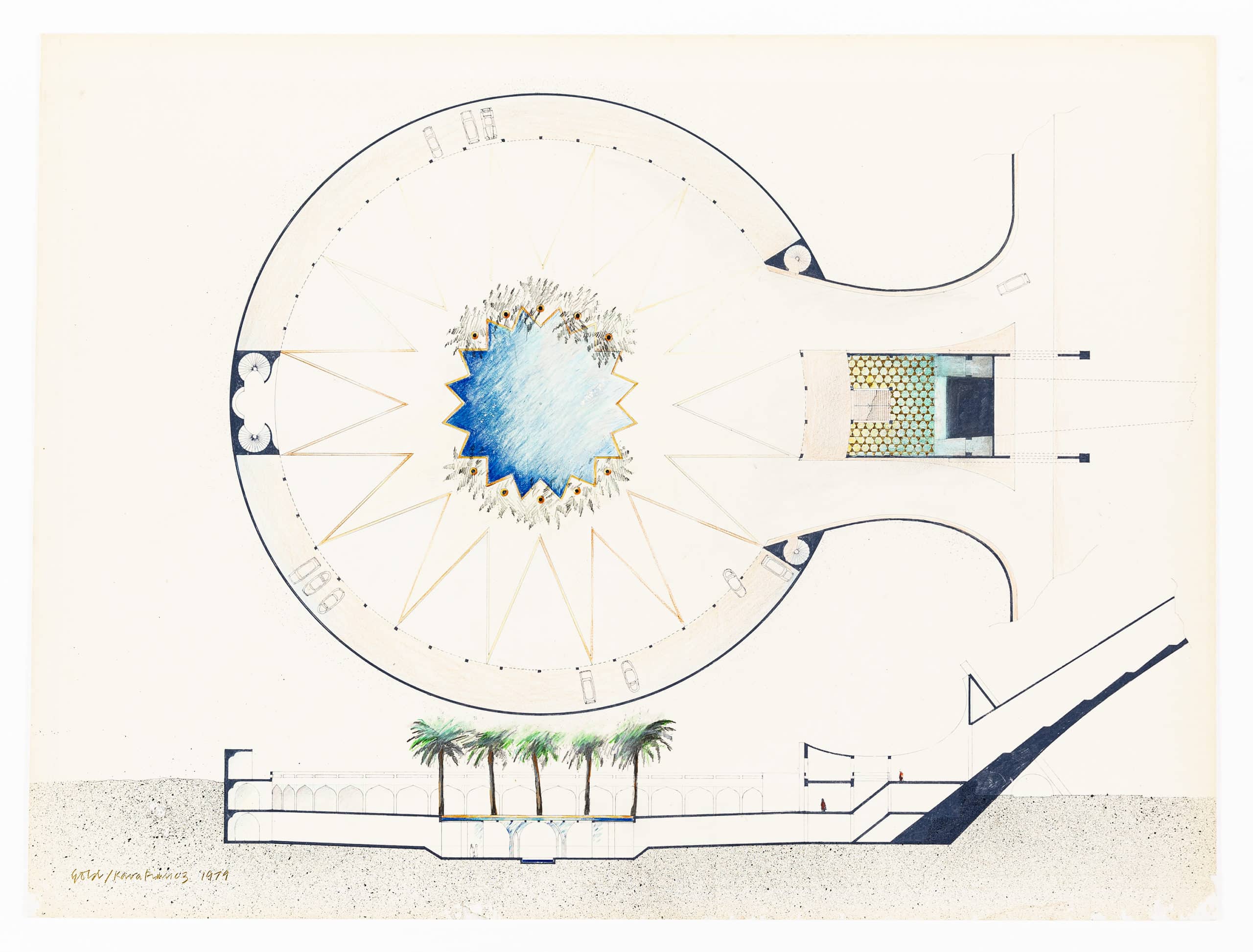
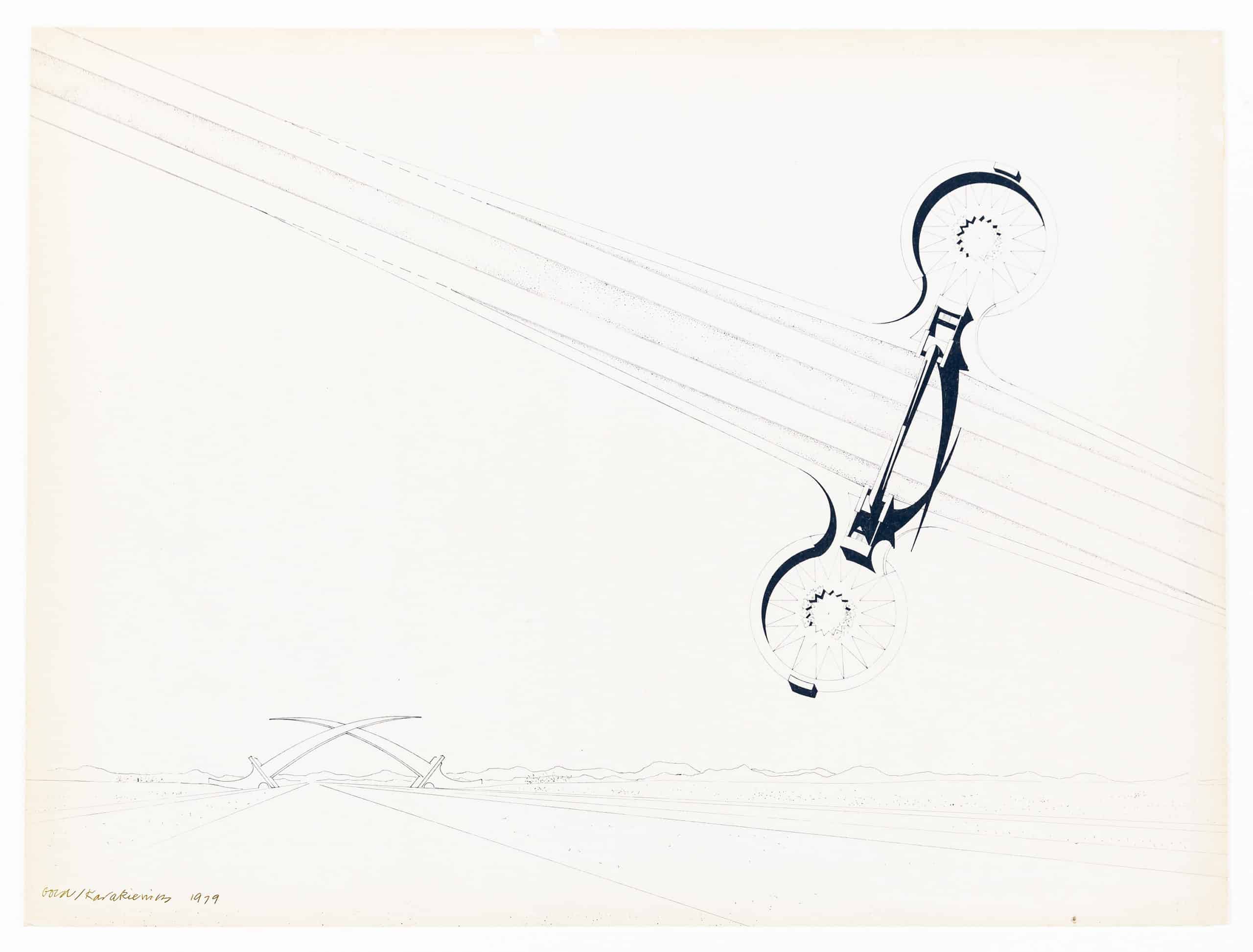
From the coach arcades, pilgrims may proceed to the tiled courts in the sword handles, via first triple and then 5 arched screens representing texts from the Koran, thence up the curved staircases inside the white marble swords, lined with scripture, and with water cascading on either side, to reach the summit from which Mecca, 14km away, could be observed through small apertures in the marble.
We were joined by a Saudi partner architect to complete the project (who said, ‘I will die for this project—but you must put a neon sign across the top saying God is Great and Muhammad is his witness’). Submitted for the Royal approval, it was eventually rejected without explanation. Justina being a woman and myself being Jewish were finally insurmountable problems. The project was exhibited and published by the Venice Biennale at its first international architecture exhibition, The Presence of the Past. A few years later, we saw the crossed swords at Baghdad, a gruesome war monument. We consulted lawyers regarding copyright, but were advised that pursuit may be both impractical and dangerous.