Eye, Hand and Mind: An Interview on the Drawing Process
– Bryan Cantley and Helen Castle
The following conversation between Bryan Cantley and Helen Castle, publishing director at RIBA, was conducted on 30 December 2021 and has been adapted from a text, originally presented in Speculative Coolness: Architecture, Media, the Real, and the Virtual (Routledge, 2023). It traces the development of Cantley’s experimental drawing practice through Form:uLA—a body of work sustained since 1992 that operates at the intersection of machinic logic, spatial speculation, and the hand-digital continuum. Drawing is discussed here not as a representational tool but as the primary site of architectural inquiry.
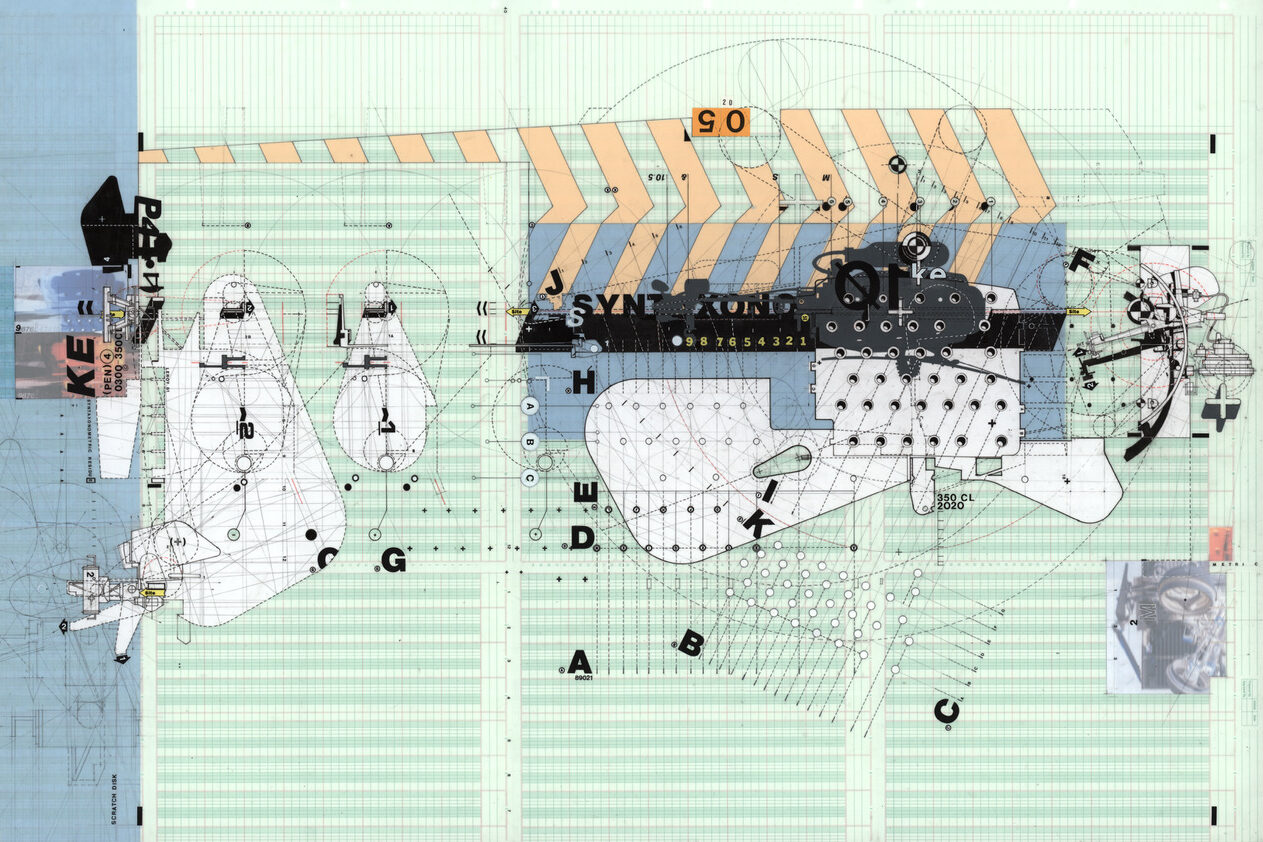
*
Helen Castle: At this moment, when consumption of architectural drawings has shifted to social media, where visual images are viewed in a fast-paced, continuous feed at the speed of a like, there is incongruously a huge appetite for original work like Bryan Cantley’s: artwork that expresses Juhani Pallasma’s ‘the thinking hand’ with its embodied and existential qualities of dexterity and unique creative vision. At the time of writing, Bryan has 35.9k followers on Instagram. This is a huge audience in architectural terms. It is tantamount to more than half the registered architects in the UK following him. At RIBA, we regularly talk to architects and students about what they want more of in the journal—online and in print—and from our books. The resounding response is always more drawings and more about the underlying design process. It’s as if the primacy of the visual, with the omniscience of the online image, has left designers with an insatiable yearning for what lies behind it: the individual handprint (whether analogue or digital) and greater insight into the thinking and making process. The best way to respond to this craving in academia and practice was to interview Bryan, in order to explore directly with him how his eye, hand and mind converge in the drawing process. How does he employ observation, expression, technical process, imagination and critical thought? The visual quality of Bryan’s work can perhaps best be characterised by duality. It draws on both observation and expression. It simultaneously explores the gritty specificity of the real world of iron and steel mechanical components while speculating on the possibilities of an imagined world. It is this that gives it its heightened sense of an alternative reality. So how did the process of observation and expression begin?
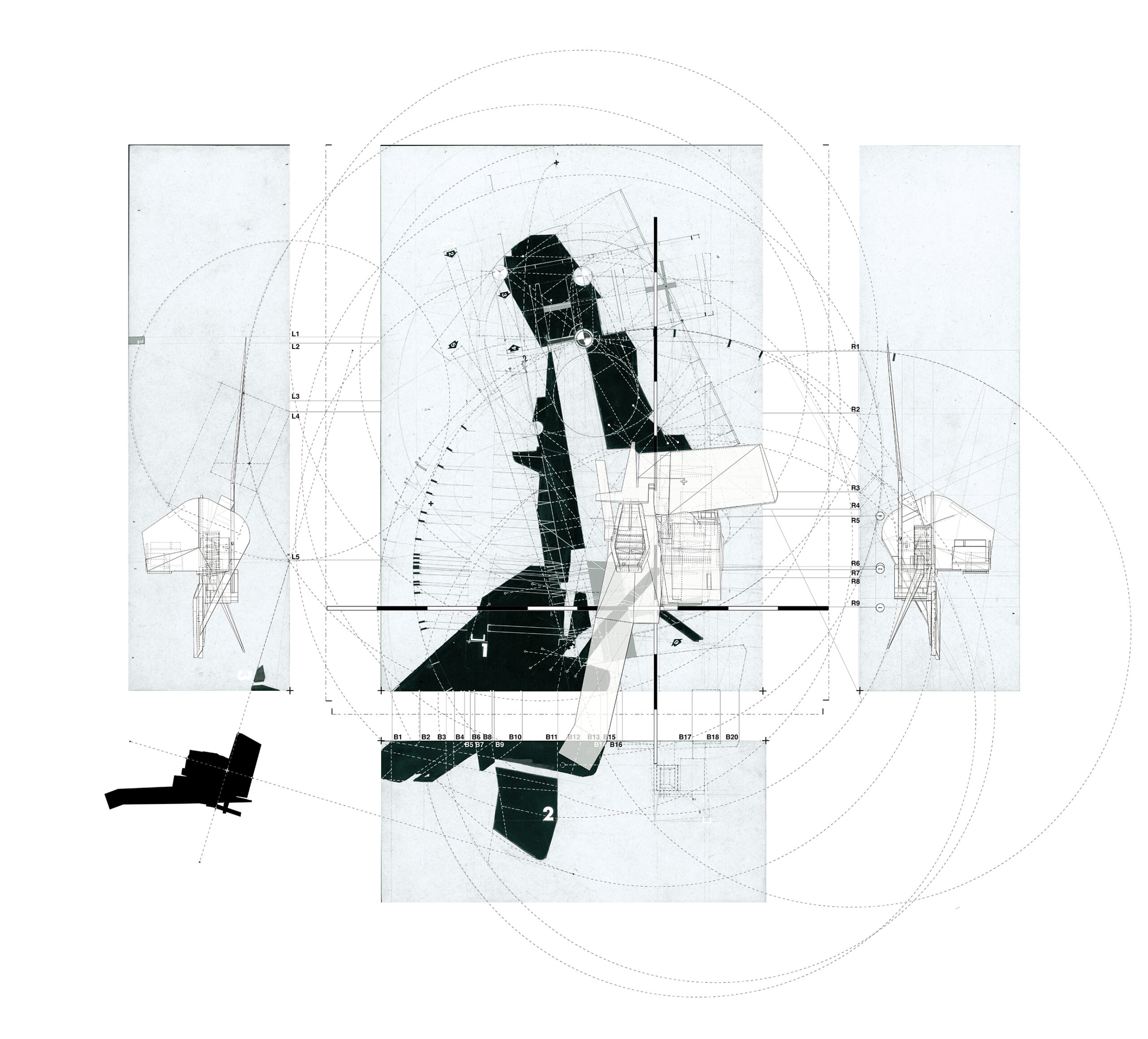
Bryan Cantley: It originally started as a set of observations, and the explorations were not as much speculative as they were observations. And then at some point, I started to deconstruct the observation and started to reconstruct, reassemble and rethink the mechanical components. All of the drawings and certainly all of the projects rethink the internals and the externals of how machines and the machines’ systems within the technology work. The projects all have circulation, and they have structure, and they have a programme. The drawings do as well, but none of them necessarily look like a traditional building or an architectural configuration, so it’s been a sort of deconstruction and then a reconstruction of machine elements.
The introduction of machine elements originally started from extreme observations growing up in a rural community in the South, in North Georgia, where I had access to a large host of machine forms to climb and play in as a child. I was influenced by these elements without an architectural metric. The farm and road construction equipment were large enough for you to inhabit as a child. They were the size of small houses. My dad was a textile worker. At times, he would take me into the plant. I remember climbing into one of the machines where they dyed massive amounts of fabric. These things were the size of small buildings, and it became a natural way for me to visually navigate and experience the machines.
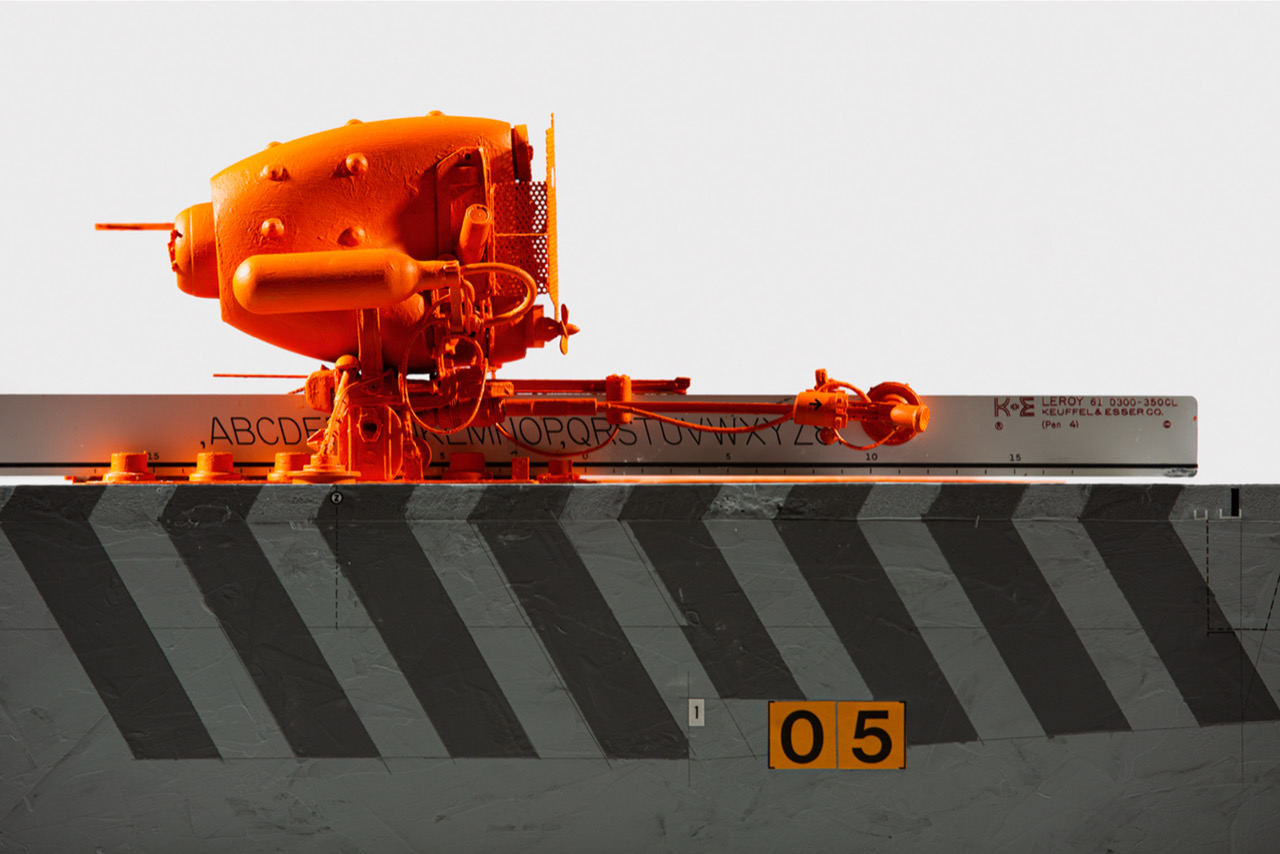
I was raised around machines that both made other machines and that made architecture. Machines that were stripping the land for housing developments and building roads, and machines that were making other machines to do those roles as well.
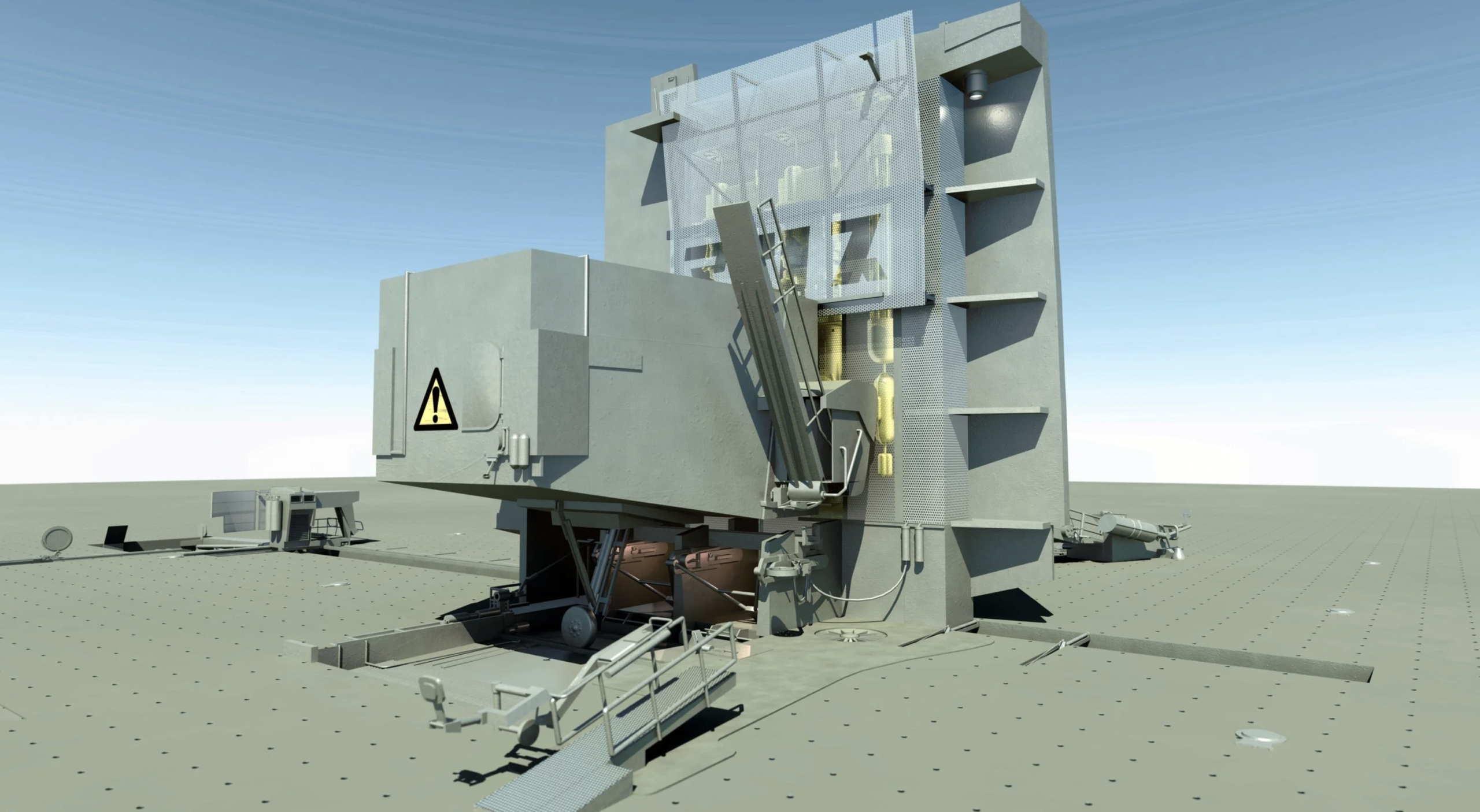
I had to, though, suppress all of that in my undergraduate education. It was in the mid 80s in the South, where architecture was taught a certain way, and you had to learn the standards of architecture. I had to learn the rules before I could go back and start decoding them and kind of making them a bit of my own at UCLA. It was only when I was a graduate at UCLA that the machines started showing up as elements within the buildings. Certainly not the building or the building components themselves. One of my professors, Doug MacLeod, said: ‘You know your work, it reminds me a lot of this guy, Neil Denari. Much to my chagrin, I had not heard of Neil at that time. MacLeod showed me Pamphlet Architecture #12, featuring his work. It was a watershed moment for me. It was the moment that I realised that buildings don’t have to look like buildings, that buildings could look and perform like machines. It was a breakthrough point. Mechanical components stopped becoming components or installations within the interior building and started to become the buildings or the architecture themselves.
HC: How do you set out to nurture students’ explorations?
BC: As a musician, well, a drummer (the guy who likes to hang out with the musicians), I often use the analogy of a cover band. As an undergraduate, you learn how to reproduce quite faithfully other people’s sounds. In graduate school, you’ve stopped being a cover band and become original. You start writing and recording and then you start that journey all over again. You have to write your own rules and learn them. You have to figure out which ones are working and which ones aren’t. It’s a perpetual learning curve. I’ve been in both kinds of bands. I’ve been in so many cover bands and probably four or five original bands, and it’s a very similar thing. Unless you are one of the gifted ones you can’t start as an original band.
HC: Can you describe the typical steps when working on a drawing?
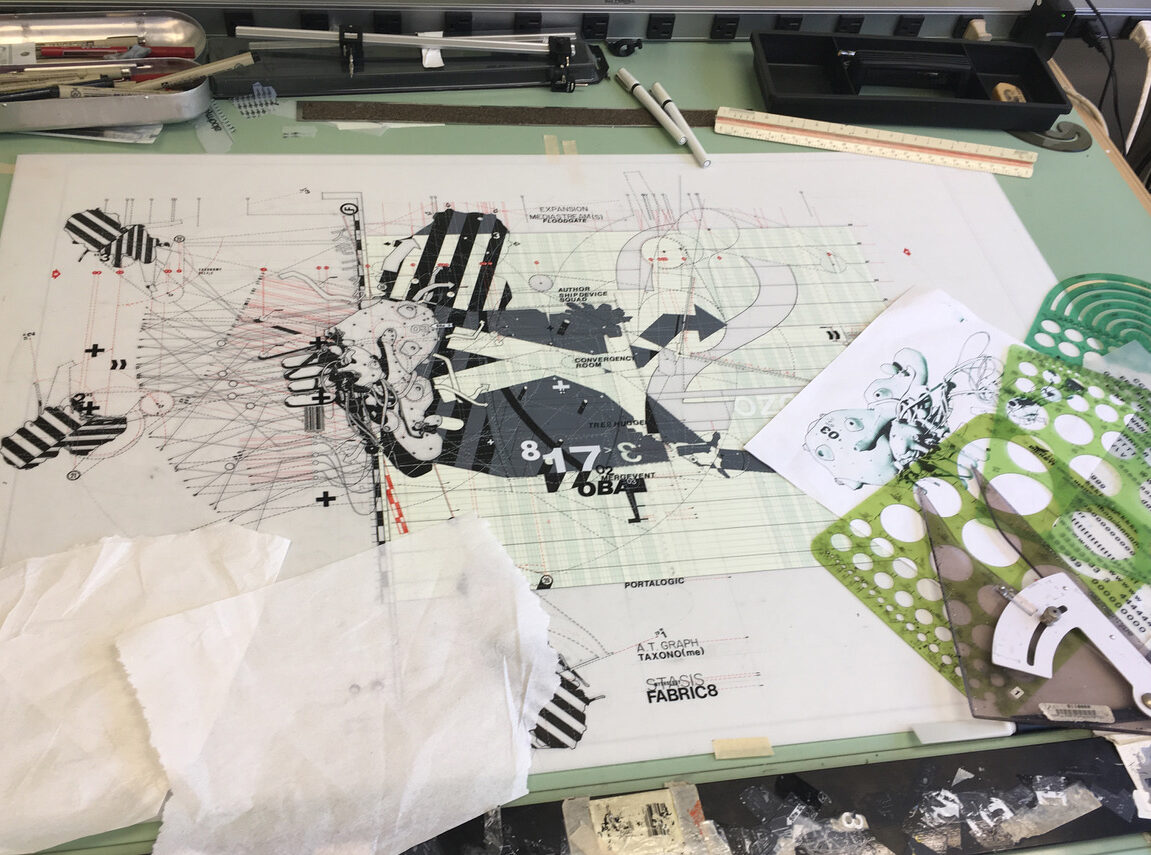
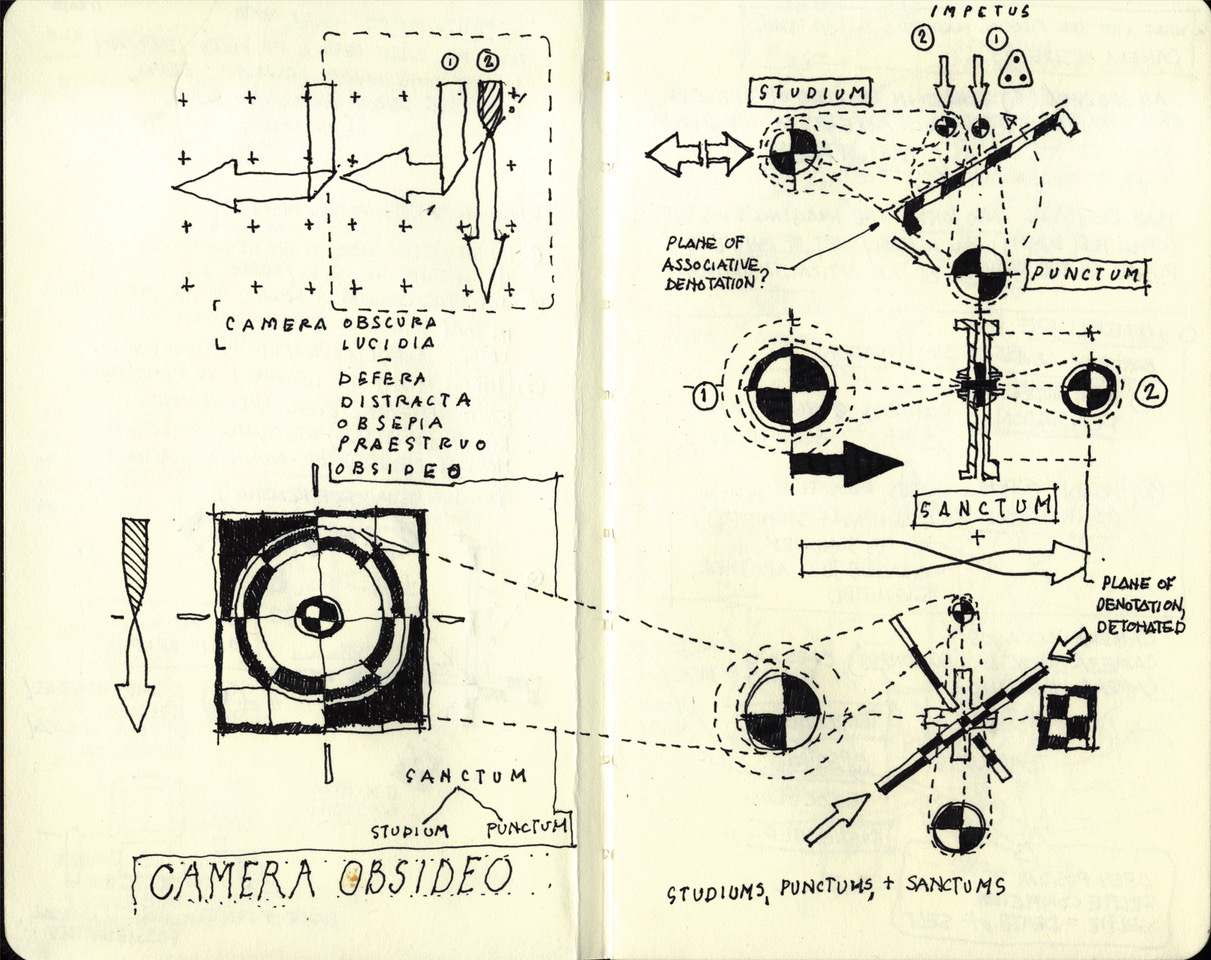
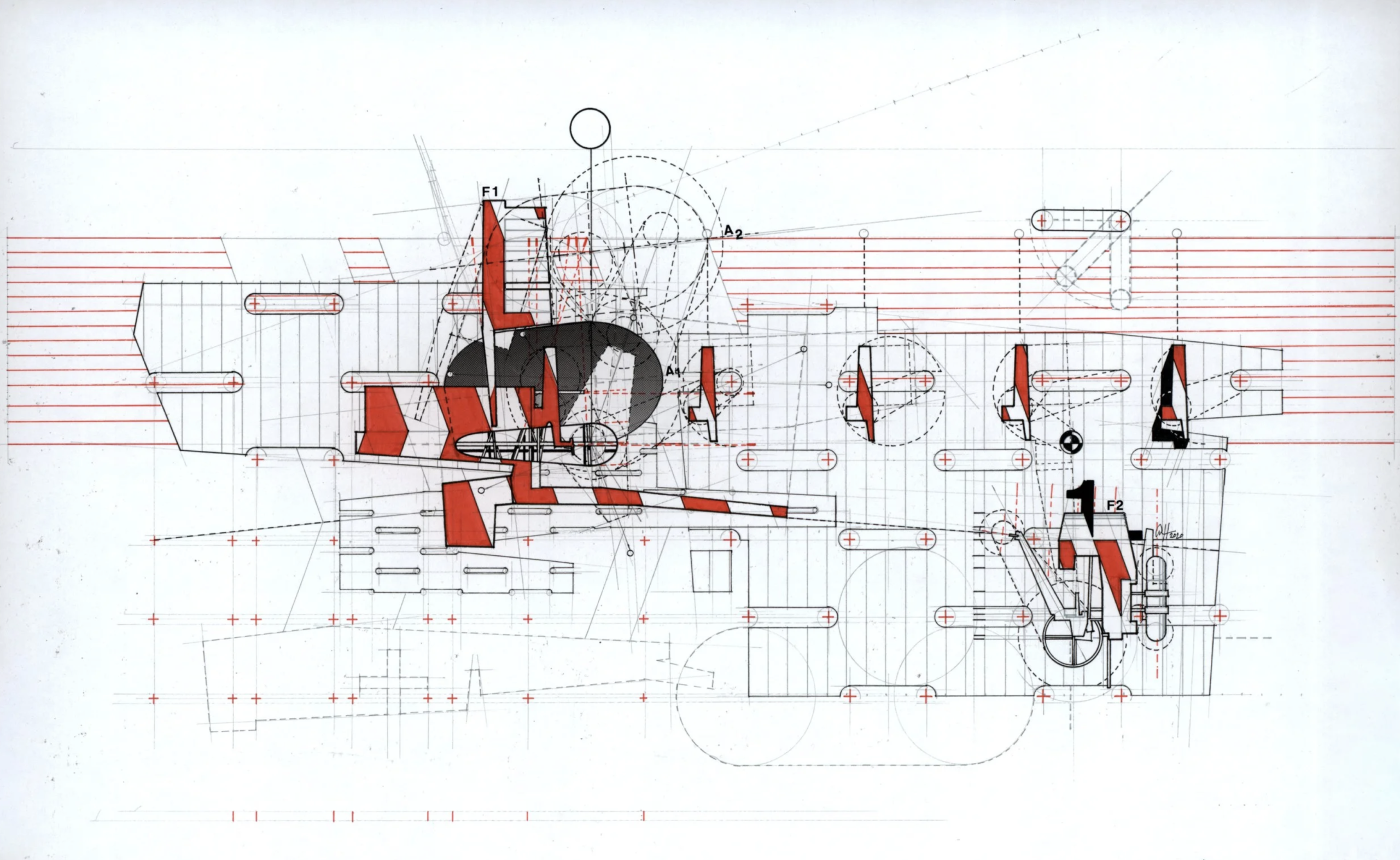
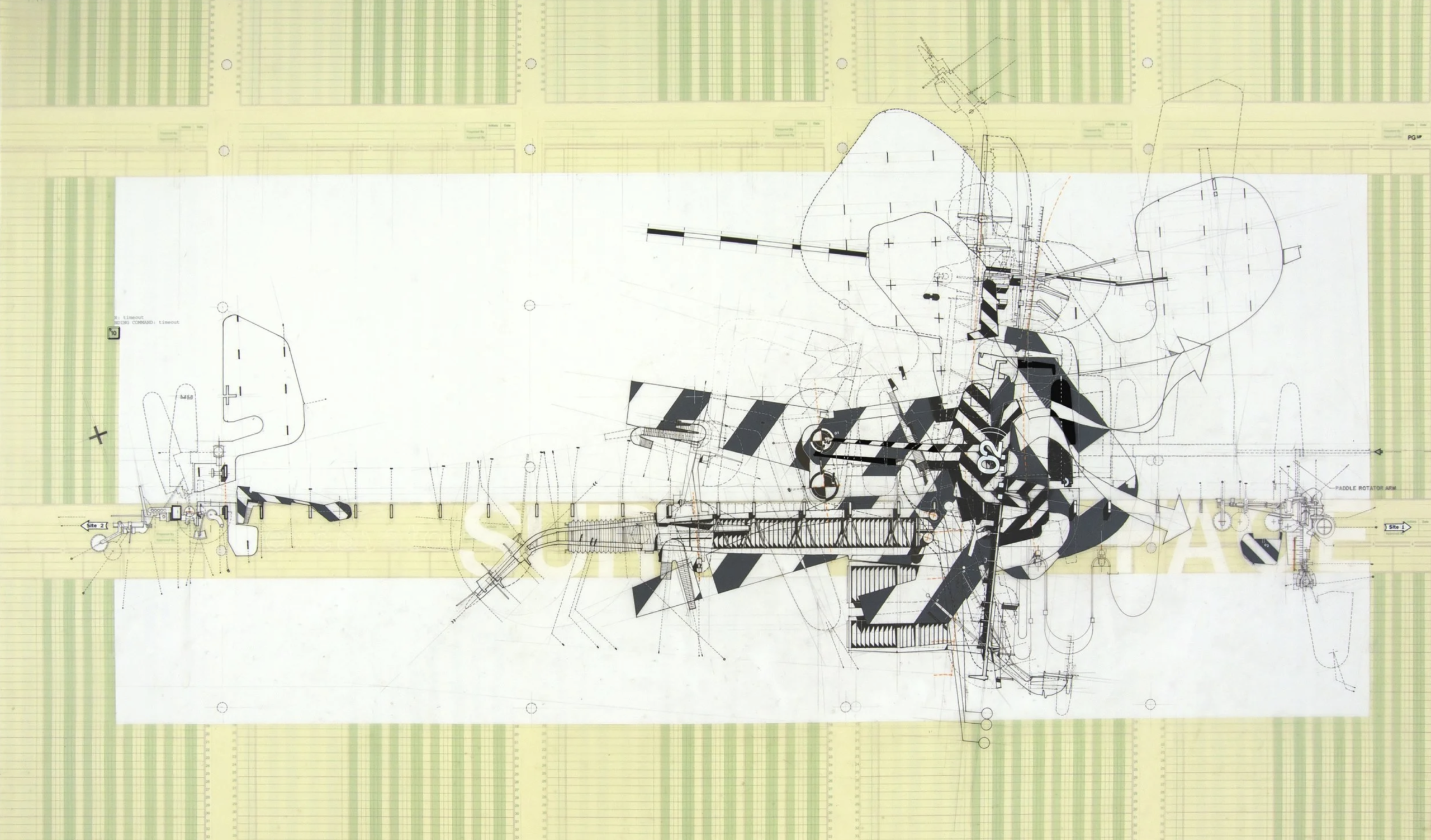
BC: A lot of the initial components with the drawing start with looking at related behaviours in sketchbooks before we even start getting into the form. I call them line politics. With the trusted yellow trace, I start to look at formal relationships. It’s a great medium because it behaves much like Photoshop layers: you can draw on layer #2 and then shift it to layer #4. This drastically changes relationships with everything above and below. I will typically do some pencil constructions of larger massing relationships, figuring out how components are going to start relating to each other within the geography of the page without becoming too set in their positions. I’ll often do three or four of those large sheets. On the overlay sheets of DuraLar or Mylar polyester film, I do the inking process and shading. The shading is done fairly early; I don’t use the shadows in their traditional sense: they are not generated from items. The absence of light on an object means it starts to become its own formal component and a reservoir of conceptual and physical information. Giving the components the ability to start, then relocating themselves. Not only on the X&Y, but also on the Z axis. The introduction of other media occurs penultimately. It can be paper or collage work, or photographs or something else that might occur, such as multiple layers of Mylar at different levels. The pragmatics of the medium is that I’ll put the letters, numbers and graphic information on last. In the large part, they are done with the old transfer Letraset. They haven’t been made for about 15 years, and it can be hard to find stock. Now I am lucky if I get 20% usage out of it because most of the information won’t come off the page. If you rub it slightly too hard, then it picks up everything else that you’ve done. It’s convoluted, but it’s a pretty straightforward technical process that has a lot to do not only with the conceptual way that I’m thinking about the drawing, but also the physicality of the material palette that I use.
HC: So, where does the digital relate to this painstaking technique of hand-drawing, layering and collaging?
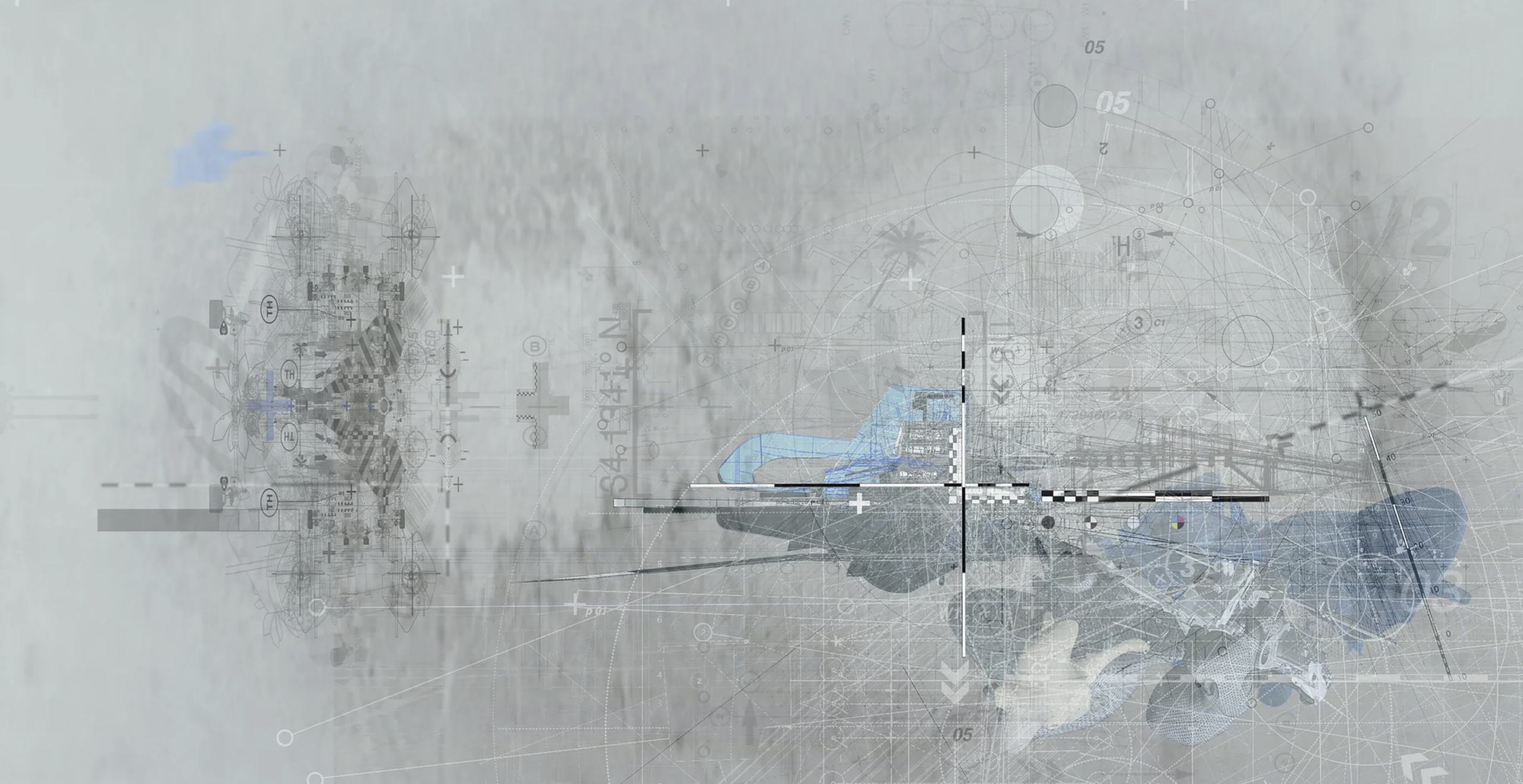
BC: The digital is just another tool. Photoshop has taught me to think of a drawing as a conceptual layering, which translates to a physical layering. I go back and forth between the two so fluidly, it’s hard to sometimes isolate them. I am a victim of the chronology of the analogue.
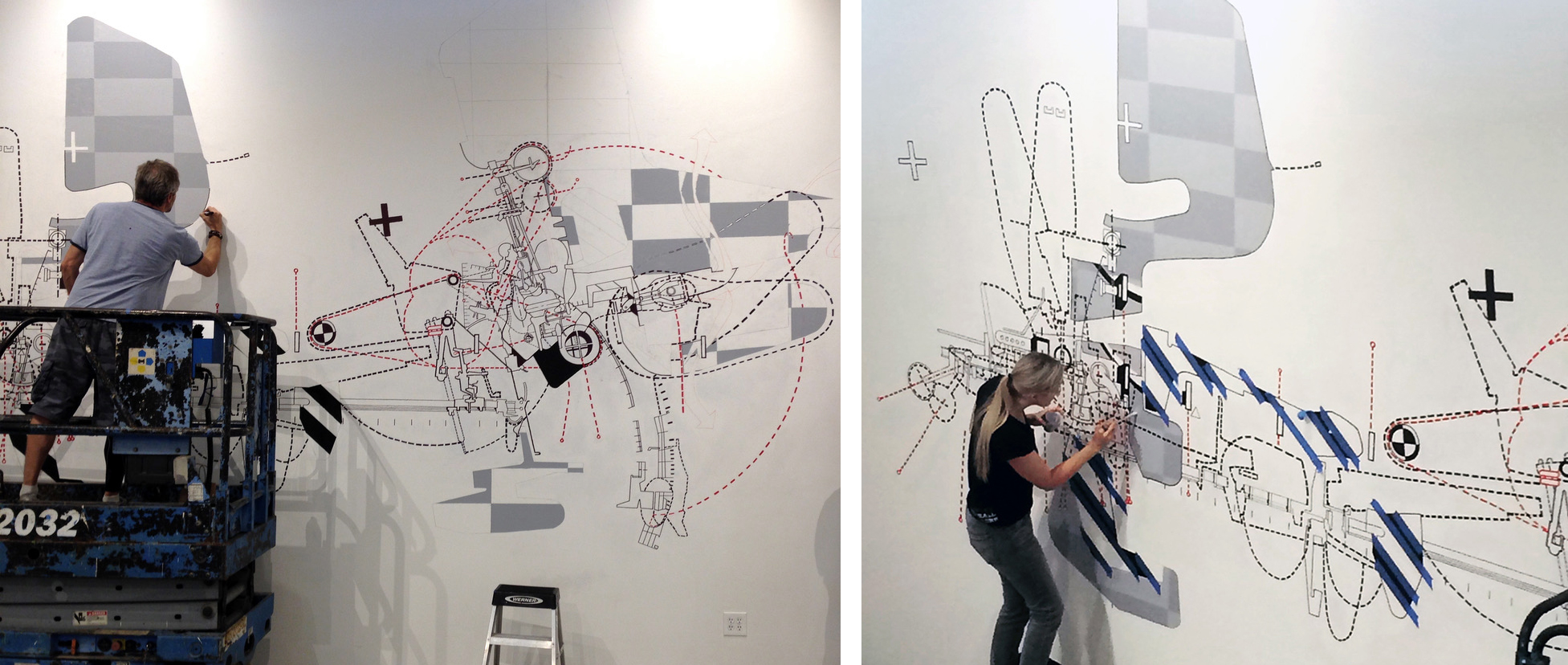
HC: How do you take this approach to students who have grown up with a different digital tool set?
BC: I’m an inventor, and so I encourage students to take whatever tools they have at hand and use them to the best of their ability. Then to turn them upside down and to use them in ways that they wouldn’t have, and then to find other tools that they wouldn’t have thought of using before, just to see where the speculation is going to take them. If you can, you need to get a student to embrace it by letting go of the safety net and venturing out into the areas of the unknown. They need to understand what the options might be, once they understand rule-based systems and which rules can be bent, and which can be broken.
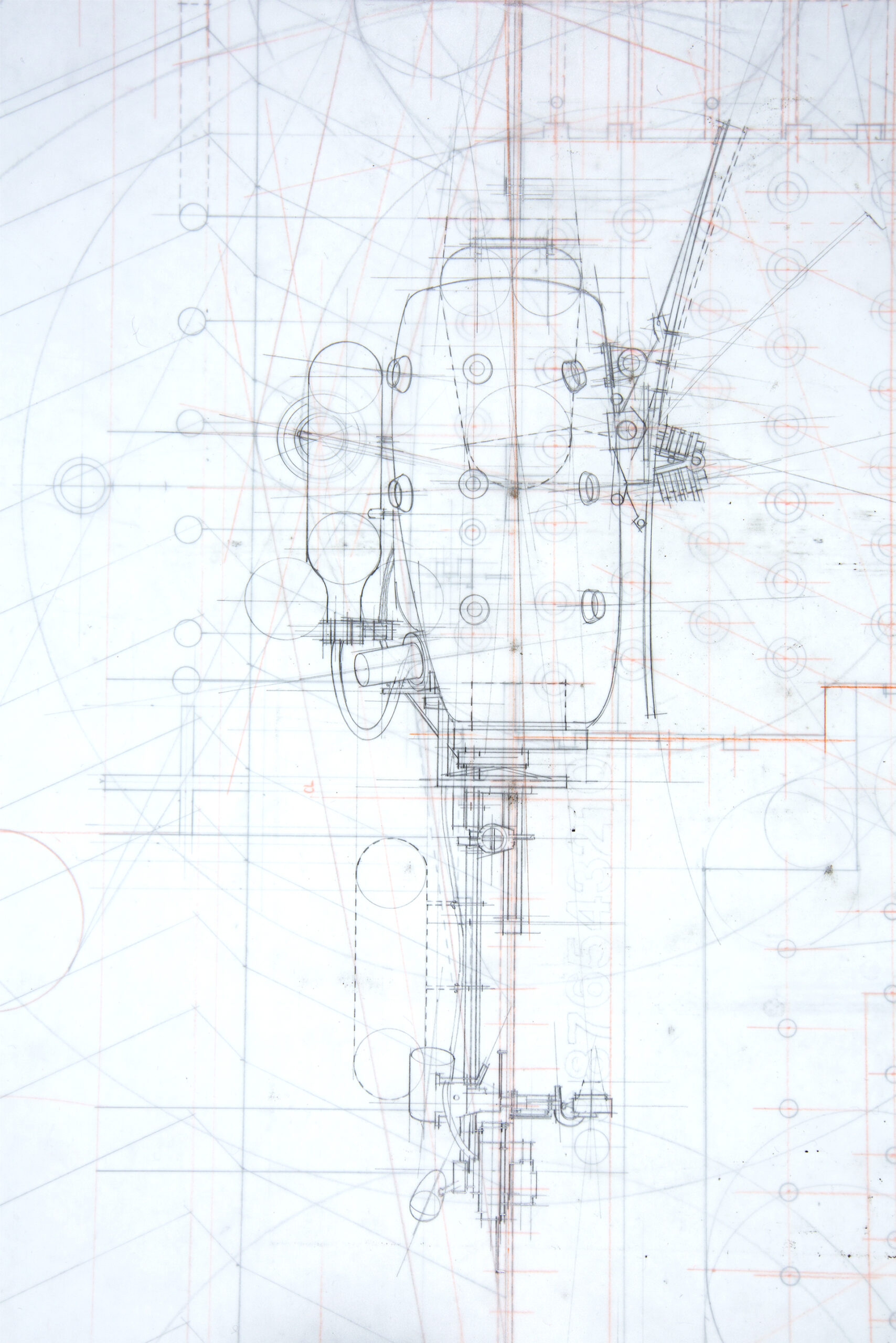
HC: For any designer or artist, a perennial quandary is knowing when to finish an artwork or project…
BC: Before I start a project or drawing, I write a set of rules or parameters—the issues that I want to deal with. They set out how things are going to behave, if a certain situation happens: if X then Y occur. Within these parameters, I build in the potential for a generative set of responses. These challenges will lead to new rules to emerge as the drawing emerges. Often, they conflict with the original rules. It is like writing a code for a project and then, in the middle of coding the project, writing it afresh. When the conscious and unconscious have answered the questions that have been posed, and they are somewhat resolved, then a particular drawing is done for the time being, and you move on to something else.
*
Bryan Cantley is an alumnus of UCLA and has an experimental design practice called Form:uLA. Bryan has lectured at several architecture schools internationally and has been a visiting faculty member at SCI-ARC and Woodbury. He is currently a tenured professor of Design in the Visual Arts Department at California State University, Fullerton.
Helen Castle is publishing director at RIBA, where she oversees The RIBA Journal. She was editor of Architectural Design (AD) for 18 years at Wiley and executive editor on the global architecture list.

– Mark Dorrian and Michael Webb